On Saturday evening, the Los Angeles Angels added another arm to their organizational depth by signing left-handed pitcher to a minor league contract. The move came shortly after Peralta entered free agency following his exit from the Colorado Rockies system, marking yet another transition in what has become a well-traveled professional journey for the 28-year-old hurler. (MLB.com)
His availability on the open market stemmed from a series of roster decisions made by Colorado earlier in the week. The Rockies had designated him for assignment, a procedural move that removed him from their 40-man roster and exposed him to other teams.
After passing through waivers unclaimed, He was assigned outright to Triple-A Albuquerque. However, rather than accepting that assignment, he exercised his right to decline and instead chose free agency, opening the door for a new opportunity elsewhere. (MLB.com)
It did not take long for that opportunity to materialize. The Angels, a familiar organization for Peralta, stepped in and offered him a minor league deal. This marks a return to a franchise he had already joined once before, having signed a similar contract with Los Angeles in May 2025. That prior stint gave him a foothold within the organization and likely played a role in their willingness to bring him back into the fold once again. (MLB.com)
Peralta’s 2026 season has been defined by movement between organizations and levels of play. Earlier in the year, the Rockies had claimed him off waivers from the Milwaukee Brewers in early April, adding him to their pitching depth.
During his time with Colorado, he experienced multiple call-ups to the major league roster, though his opportunities at the highest level were limited. Despite being shuffled between Triple-A and the majors, he ultimately appeared in just two big league games for the Rockies. (fantasypros.com)
In those appearances, the results were mixed at best. Over 2 2/3 innings of work, Peralta surrendered three earned runs on three hits while issuing two walks. On the positive side, he demonstrated some swing-and-miss capability by striking out four of the 15 batters he faced. While the sample size was small, the outings reflected both his potential to generate strikeouts and the inconsistency that has characterized much of his major league tenure so far.
MORE: Angels-Dodgers Trade Land Electricfying Pitcher In 2-Player Blockbuster Deal
One notable moment during his time with Colorado came in his first appearance, which doubled as a milestone in his career. That outing marked the first time he had ever started a game in the major leagues.
Serving in an opener role against the Texas Rangers, Peralta handled the initial portion of the contest before giving way to Tanner Gordon, who took over bulk pitching duties. The appearance highlighted the versatility teams see in him, as he can be deployed in different roles depending on roster needs.
Peralta’s professional path over the past few seasons underscores his status as a journeyman pitcher trying to establish consistency at the big league level. Since making his MLB debut in 2023, he has appeared in the majors in four consecutive seasons, suiting up for multiple organizations along the way. His time has been split among the Chicago White Sox, Los Angeles Angels, and Colorado Rockies, with additional stops in the minor league systems of other teams. (Wikipedia)
Across his cumulative major league experience, Peralta has logged 48 1/3 innings. Within that span, he has posted a 5.40 earned run average, a figure that reflects the challenges he has faced in limiting damage against big league hitters.
His strikeout rate of 17.9% shows a moderate ability to miss bats, while his 11.4% walk rate suggests occasional issues with command and control. Additionally, his ground-ball rate of 39.6% indicates that he does not rely heavily on inducing grounders, which can sometimes leave pitchers more vulnerable to extra-base hits.
MORE: Cardinals’ Fans Reportedly Get Heartbreaking News Regarding Left-Hander Matthew Liberatore
Despite those numbers, there are reasons organizations continue to take chances on Peralta. Left-handed pitching depth is always in demand across Major League Baseball, and his ability to generate strikeouts gives him a foundation to build upon. Teams often view pitchers like Peralta as potential contributors who can be refined through coaching adjustments or role optimization, especially in bullpen situations where matchups play a significant role.
For the Angels, this signing represents a low-risk move with potential upside. Minor league contracts typically come with minimal financial commitment, allowing teams to evaluate players without significant cost. If Peralta performs well in the minors—likely with Triple-A Salt Lake—he could earn another call-up to the major league roster at some point during the season. Conversely, if he struggles, the team can move on without major consequences. (MLB.com)
The Angels’ decision to bring him back also reflects a broader organizational strategy of maintaining pitching depth throughout the year. Injuries, workload management, and performance fluctuations often force teams to cycle through numerous pitchers over the course of a season. Having experienced arms like Peralta available in the system provides valuable insurance and flexibility.
From Peralta’s perspective, the deal offers a chance to reset and continue pursuing a more stable role in the majors. Returning to a familiar environment could work in his favor, as he already has some experience with the Angels’ coaching staff and player development system. That familiarity can sometimes help players make quicker adjustments and perform more effectively.
His journey also highlights the realities faced by many players on the fringes of major league rosters. Frequent transactions—being claimed off waivers, designated for assignment, outrighted, and signing minor league deals—are common for players in this tier. Success often depends not only on performance but also on timing, opportunity, and organizational fit.
Looking ahead, Peralta will likely begin his new stint in the minors, working to refine his command and improve his overall effectiveness. If he can reduce his walk rate and maintain or improve his strikeout ability, he may position himself for another opportunity in the majors. Consistency will be key, as teams typically look for reliability when deciding which pitchers to promote.
MORE: Braves Officially Add Veteran Slugger, Bring Longtime Major League Bat Into Their System
Ultimately, this signing is a continuation of Peralta’s ongoing effort to carve out a lasting place in Major League Baseball. While his career to date has included ups and downs, the fact that he continues to receive opportunities speaks to the underlying talent he possesses. For the Angels, it is a calculated gamble on a pitcher who has shown flashes of potential, while for Peralta, it represents another chance to prove he belongs at the highest level of the sport.
During his earlier stint with the Los Angeles Angels toward the end of the 2025 campaign, Sammy Peralta struggled to find consistency at the major league level. Across a limited sample of 10 2/3 innings, the left-hander posted a 7.59 earned run average, reflecting the difficulties he encountered against big league hitters during that stretch.
His appearances came in a relief role, and while he showed occasional flashes of effectiveness, the overall results underscored the challenges he has faced in translating his minor league success into sustained major league production. (Wikipedia)
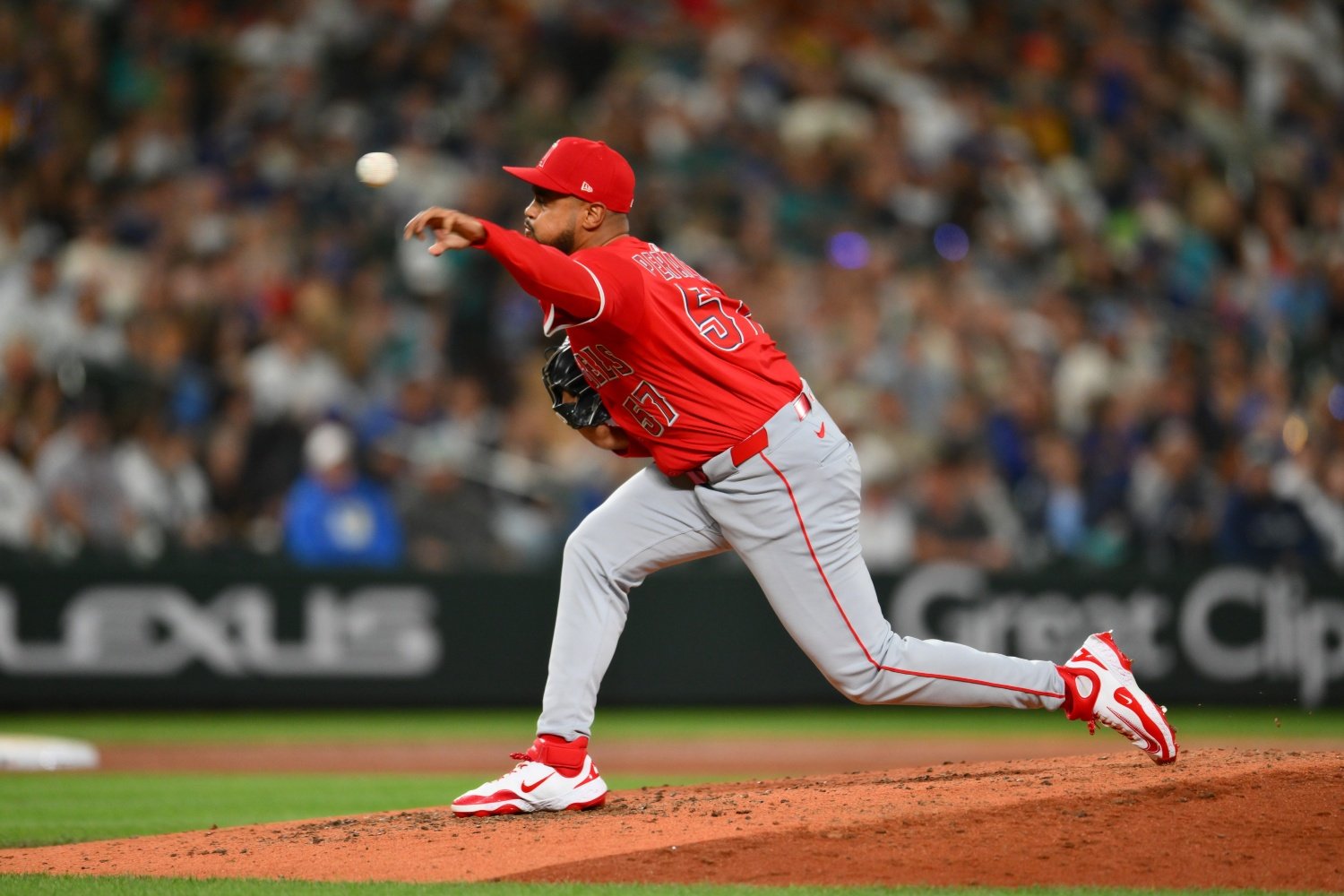
A key aspect of Peralta’s profile is his pitching style, which differs from many modern power arms. Rather than relying on high velocity, he works with a more diverse mix of pitches to keep hitters off balance.
His fastball—whether thrown as a four-seamer or a sinker—typically sits in the upper-80s range, around 89 miles per hour. This places him below the league average in terms of velocity, meaning he must depend more heavily on movement, sequencing, and command to succeed.
In recent seasons, Peralta has made notable adjustments to his repertoire in an effort to improve his effectiveness. One of the most significant changes came with the introduction of a sinker during the 2025 season. Since adding that pitch, he has steadily increased its usage, incorporating it as a central component of his approach.
MORE: Angels-Dodgers Trade Land Electricfying Pitcher In 2-Player Blockbuster Deal
The sinker complements his existing arsenal, which already included a sweeper, a traditional slider, and a changeup. Together, these offerings give him a five-pitch mix designed to create different looks and disrupt timing. (Pitcher List)
This expanded pitch selection allows Peralta to attack hitters in multiple ways, even without overpowering speed. The sinker, in particular, has the potential to induce weaker contact and generate ground balls, while his breaking pitches—especially the sweeper and slider—can be used to chase strikeouts or limit solid contact.
The changeup adds another layer by helping him neutralize right-handed batters. However, successfully executing such a varied arsenal requires precise command, which has been an area of ongoing development throughout his career.
At the Triple-A level, Peralta’s track record provides a clearer picture of his overall capabilities. Over parts of five minor league seasons, he has accumulated 229 1/3 innings with a 4.79 ERA. While not dominant, those numbers suggest he has been a serviceable and at times effective pitcher in the upper minors. More encouraging are his peripheral statistics, which point to underlying strengths in his game.
Peralta has posted a strikeout rate of 23.2% in Triple-A, indicating a solid ability to miss bats despite his modest velocity. Even more impressive is his walk rate of 7.1%, which reflects relatively strong control compared to many pitchers at that level.
These figures suggest that when he is executing properly, he can combine strike-throwing with the ability to generate swings and misses—an important combination for any pitcher looking to succeed at higher levels.
MORE: Braves-Red Sox Trade Pair Chris Sale with 2.95 ERA Star After Dose of Injuries
The introduction of the sinker appears to have played a significant role in refining his command. By giving him a pitch that naturally moves and can be located more effectively in the strike zone, the sinker has helped reduce his reliance on higher-risk pitches and improved his overall efficiency. This adjustment has been particularly evident in his recent minor league performances.
During the 2025 season with Triple-A Salt Lake, Peralta demonstrated notable progress in limiting free passes. Over 70 2/3 innings, he walked just 4.8% of opposing hitters, a marked improvement that highlighted his growing ability to consistently locate his pitches. That level of control is especially valuable for a pitcher without elite velocity, as it minimizes self-inflicted damage and forces hitters to earn their way on base. (FanGraphs Baseball)
He has carried that momentum into the current season, continuing to show improved command metrics. In the minors this year, Peralta has maintained a walk rate of 5.7%, reinforcing the idea that his control gains are sustainable rather than a one-year anomaly. In addition, he has generated a 51.1% ground-ball rate, a significant development that aligns with his increased reliance on the sinker. (FanGraphs Baseball)
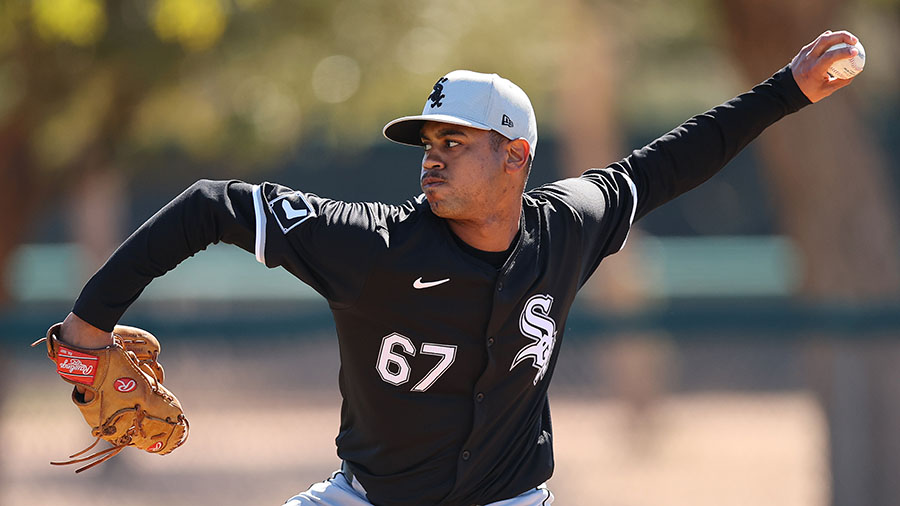
A higher ground-ball rate can be particularly beneficial for pitchers like Peralta. By keeping the ball on the ground, he reduces the likelihood of extra-base hits and home runs, which are often more damaging than singles.
This approach also allows him to pitch more efficiently, as ground balls can lead to quick outs and shorter innings. Combined with his improved walk rate, this suggests a pitcher who is learning how to better manage contact and control the flow of an at-bat.
Despite these encouraging trends in the minors, the challenge for Peralta remains translating that success to the major league level.
The gap between Triple-A and MLB competition is significant, and hitters at the highest level are typically better equipped to adjust to pitchers who rely on finesse rather than velocity. For Peralta, maintaining his improved command while continuing to refine his pitch mix will be critical if he hopes to establish himself as a reliable big league option.
Ultimately, his development reflects the path of many pitchers who must adapt and evolve to remain competitive. By embracing a more diverse repertoire and focusing on command and ground-ball generation, Peralta has taken meaningful steps toward improving his effectiveness. While his major league results have been inconsistent so far, his underlying minor league performance and recent adjustments provide a foundation for potential growth moving forward.


Be the first to comment