
Any lingering expectation that the Toronto Blue Jays might retain Him, was effectively put to rest by midweek developments.
The organization confirmed on Wednesday that it had dealt the experienced backup catcher to the Los Angeles Angels in exchange for cash considerations. This move followed closely on the heels of Toronto’s decision to designate Heineman for assignment just days earlier, a roster adjustment that occurred when the club reinstated a player from the injured list. (MLB Trade Rumors)
Once Heineman was designated for assignment, the Blue Jays entered a limited window in which they had to determine his fate. Under Major League Baseball rules, the team was given seven days to either trade him or expose him to waivers.
If another team had claimed him during that waiver period, Toronto would have lost him without compensation. Alternatively, if he had gone unclaimed, the Blue Jays could have outrighted him to the minor leagues. However, given Heineman’s level of major league service time, he would have had the right to decline such an assignment and elect free agency instead.

Faced with those circumstances, Toronto opted to pursue a trade, ensuring that the organization would receive at least some form of return rather than risk losing the veteran catcher for nothing. By completing the deal with the Angels, the Blue Jays were able to extract value in the form of cash considerations, a flexible asset that can be used in a variety of ways within a team’s financial structure.
Although the exact amount involved in the transaction was not publicly disclosed, such cash returns can serve multiple purposes for a front office. In some cases, the money can help offset existing salary commitments, effectively easing payroll obligations.
MORE: Braves to take Giants’ shortstop off their hands
In other situations, teams may choose to allocate those funds toward their international bonus pool, which is used to sign amateur talent from outside the United States and Canada. This flexibility makes even a modest cash return a worthwhile outcome in scenarios where a player might otherwise depart with no compensation.
The trade itself reflects the practical realities of roster management in Major League Baseball. Heineman, while valued for his experience and depth behind the plate, found himself squeezed out due to roster constraints and the return of injured players. Toronto’s catching situation had shifted, leaving limited room for a backup option, and necessitating a decision on his status.
By acting within the designated timeframe, the Blue Jays avoided the uncertainty of the waiver process and maintained some level of control over the outcome. Instead of risking a scenario in which another club could claim Heineman outright, Toronto identified a willing trade partner in the Angels and finalized a deal that provided at least a minimal return.

It is also worth noting that transactions involving “cash considerations” are relatively common in situations like this, particularly when the player involved is not expected to command a significant trade package. For the acquiring team—in this case, the Angels—the cost is minimal, while the potential benefit of adding experienced depth can be worthwhile. For the team parting ways with the player, the move represents a practical solution to a roster crunch.
Ultimately, the sequence of events underscores how quickly circumstances can change for role players on a major league roster. Just days after being designated for assignment, Heineman was moved to a new organization, closing the chapter on his time with Toronto. The Blue Jays, meanwhile, managed to convert a difficult roster decision into at least a modest financial return, even if the precise use of those funds has not been specified.
The Tyler Heineman Era Ends
The Toronto Blue Jays’ decision to part ways with Tyler Heineman unfolded as one element within a broader series of roster moves carried out late in the week. These transactions were largely driven by necessity, with the most notable development being the return of catcher Alejandro Kirk from the 60-day injured list. That activation had a ripple effect across the roster, forcing the team to make corresponding adjustments to remain compliant with Major League Baseball’s roster rules.
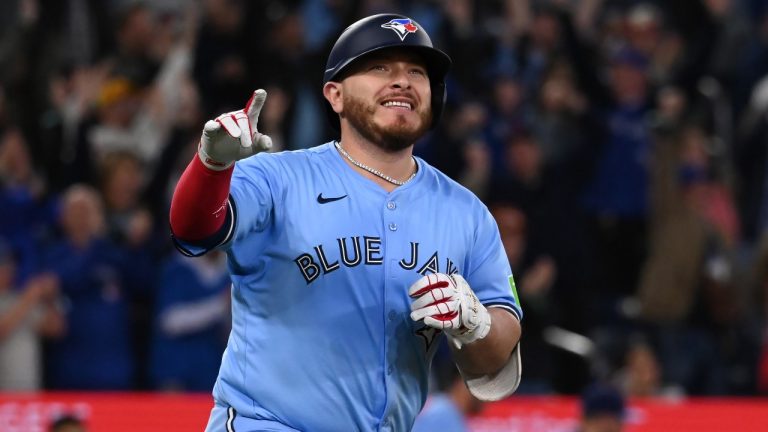
While Kirk was sidelined, he did not occupy a spot on the 40-man roster, which gave the Blue Jays a degree of flexibility. However, once he was ready to return to action, the team was obligated to reinstate him to that roster. This seemingly routine procedural step created a crunch, as someone else had to be removed to make space. Ultimately, that squeeze played a central role in Heineman’s departure.
Kirk’s absence earlier in the season had opened the door for other players to step into more prominent roles, and one of the biggest beneficiaries was Brandon Valenzuela.
MORE: Cardinals makes perfect trade offer for Giants’ designated hitter
The young catcher seized the opportunity and quickly established himself as an important contributor, particularly on the offensive side. By the time Kirk was ready to come back, Valenzuela had built a strong case to remain in the lineup, making the decision far more complicated for Toronto’s front office.
Valenzuela’s performance at the plate stood out as a major factor. Entering midweek play, he had compiled a respectable slash line of .254/.338/.454, complemented by seven home runs and 18 runs batted in.
Those numbers reflected not only consistency but also a level of power that added a new dimension to the Blue Jays’ offense. In contrast, Heineman struggled to produce offensively, carrying a .154/.205/.205 slash line with just one home run and six RBIs at the time he was designated for assignment. (Reuters)
That disparity made the decision increasingly clear. While Heineman had value as a veteran presence and defensive option, Valenzuela’s emergence gave the team a younger, more productive alternative who could contribute more meaningfully in the batter’s box. In a competitive environment where every roster spot matters, those offensive contributions can often tip the balance.

Valenzuela’s rise also underscored the importance of a previous transaction. He had been acquired at the prior year’s trade deadline in a deal that sent reliever Will Wagner in the opposite direction.
At the time, the move may have seemed like a depth addition, but it ultimately proved to be a pivotal one. By the following season, Valenzuela had transformed from a relatively unknown piece into a key contributor, validating the front office’s decision to bring him into the organization.
Once Kirk was officially reinstated, the Blue Jays suddenly found themselves with a surplus at catcher. With Kirk resuming his role as the primary option behind the plate and Valenzuela firmly entrenched as a capable backup—or even a part-time offensive contributor—there was simply no room left for Heineman on the active 26-man roster. (MLB Trade Rumors)
MORE: Brewers to Fix Power Problem by Trading for Angels’ Top Outfielder
The situation highlighted how quickly circumstances can change in baseball. Just a season earlier, Heineman had been an integral part of the team’s success. After joining Toronto in September 2024 via a waiver claim from the Boston Red Sox, he carved out a meaningful role.
He not only made the roster the following year but also became a reliable backup to Kirk during a memorable campaign that culminated in an American League pennant and a trip to the World Series. (Wikipedia)
During that run, Heineman delivered one of the best stretches of his career. Over 64 games, he posted a strong .289/.361/.416 slash line, along with three home runs and 20 RBIs.
His offensive production exceeded expectations for a backup catcher, and his defensive work behind the plate added further value. He developed a reputation as a steady receiver who could effectively manage the pitching staff, providing stability on days when Kirk needed rest. (MLB Trade Rumors)

However, baseball can be unforgiving when performance dips, especially when younger players are ready to step up. Heineman’s struggles at the plate in the current season made it difficult for the team to justify keeping him, particularly when compared to Valenzuela’s productivity. The Blue Jays were ultimately forced to prioritize present performance and future potential over past contributions.
The organization’s depth chart at catcher also evolved in other ways. Earlier in the year, the Blue Jays had acquired Willie MacIver in a trade with the Texas Rangers, sending cash considerations in return.
At the time, MacIver was viewed as an additional depth option, someone who could provide insurance behind both Valenzuela and Heineman. His role was largely seen as organizational support rather than a direct competitor for a major league roster spot.
MORE: Atlanta Braves Officially Make Crucial Roster Move, Land Top-Star Catcher
But with Kirk back in the fold and Valenzuela solidifying his position, MacIver’s place in the hierarchy shifted as well. Instead of being depth behind Valenzuela and Heineman, he now projects as a reserve option behind Valenzuela and Kirk. This subtle but important change reflects how quickly the composition of a roster can evolve based on injuries, performance, and opportunity.
The sequence of moves ultimately illustrates the delicate balancing act that teams must manage throughout a long season.
Injuries create openings, and those openings can lead to unexpected breakthroughs. In this case, Kirk’s absence allowed Valenzuela to showcase his abilities, and he capitalized on that chance in a way that forced the organization to rethink its plans.
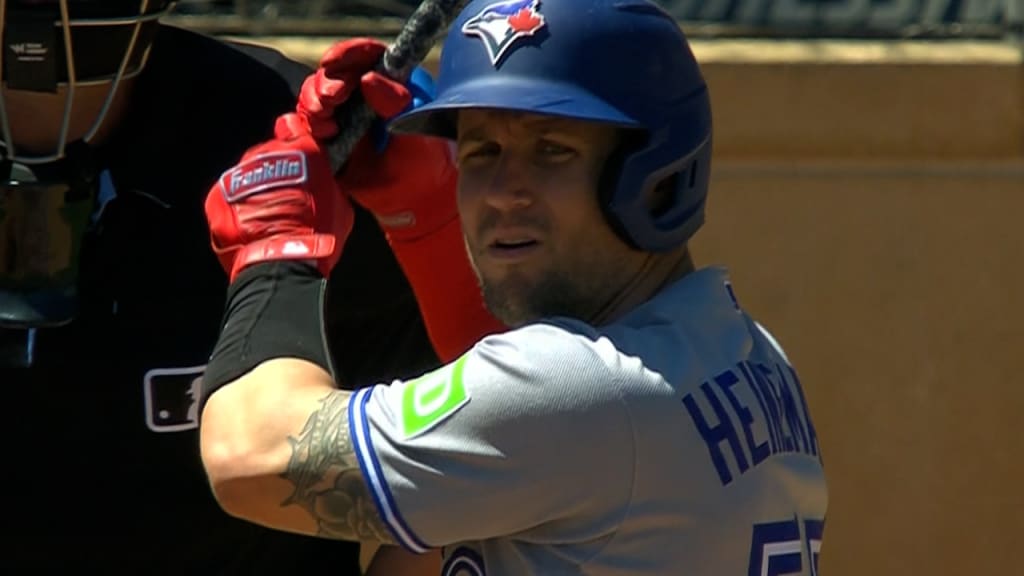
When Kirk returned, the Blue Jays were left with a difficult but unavoidable decision. Carrying three catchers on the active roster is rarely practical, particularly when flexibility is needed for other positions. As a result, Heineman became the odd man out, despite his previous contributions and experience.
From a broader perspective, the move reflects a common theme in professional sports: roster spots are constantly earned and re-earned. Past performance can provide a foundation, but current production often carries more weight, especially for players in supporting roles. Heineman’s strong showing the previous season was not enough to offset his struggles in the present, particularly when compared to a rising player like Valenzuela.
In the end, the Blue Jays’ decision was driven by a combination of factors—roster constraints, individual performance, and long-term outlook. Kirk’s return restored stability at the starting catcher position, Valenzuela’s emergence provided a dynamic and productive complement, and the organization’s depth allowed it to move forward without Heineman.
While the transaction marked the end of Heineman’s stint with Toronto, it also highlighted the organization’s ability to adapt and evolve. By capitalizing on Valenzuela’s development and managing their roster effectively, the Blue Jays positioned themselves to maintain strength at a critical position while continuing to compete at a high level.



Be the first to comment