
The Los Angeles Angels have made a notable roster move by designating veteran first baseman and outfielder Trey Mancini for assignment, according to reports from Andy Kostka of the Baltimore Banner. The development was first hinted at by MLB.com’s Rhett Bollinger, who observed a subtle but telling detail inside the clubhouse: Mancini no longer had a locker assigned to him.
At the same time, infielder Vaughn Grissom—who had been sidelined due to an oblique strain—did have a locker prepared, signaling an imminent roster change. Not long after, the organization officially confirmed the move, announcing both Mancini’s designation for assignment and Grissom’s reinstatement from the 10-day injured list.
This transaction reflects the constant balancing act teams must perform when managing their 40-man roster, particularly when injured players are ready to return. In this case, Grissom’s recovery necessitated a corresponding move, and Mancini ultimately became the odd man out despite his recent return to Major League Baseball. According to reports, Grissom had been out since early June with a left oblique injury but was healthy enough to rejoin the active roster, prompting the Angels to clear space. (Reuters)
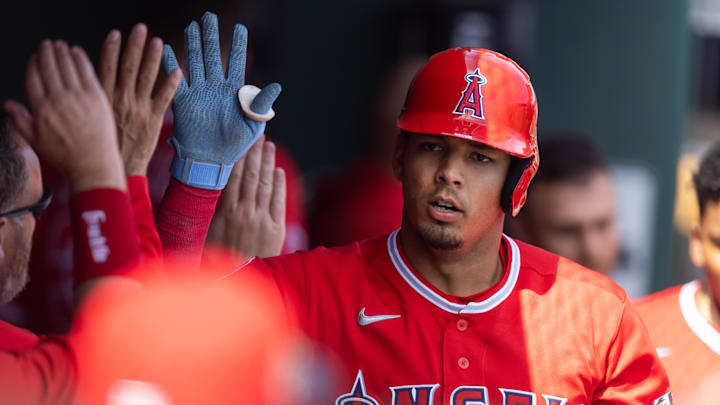
For Mancini, this moment marks another twist in what has already been a remarkable and often emotional career journey. Now 34 years old, he had only just returned to the majors after being absent for nearly three full calendar years.
That return alone was noteworthy, considering how rare it is for a player in his mid-30s to re-emerge at the MLB level after such a prolonged absence. His comeback story carries even more weight given that it is not the first time he has overcome significant adversity.
MORE: Blue Jays Officially Trade Top Catcher to Angels
Earlier in his career, Mancini became widely known for his inspiring battle against Stage 3 colon cancer. He received the diagnosis during spring training in 2020, forcing him to miss the entire season while undergoing treatment. At the time, his baseball future was uncertain, but Mancini persevered, ultimately announcing that he was cancer-free and in remission.
His return to the field in 2021 was met with widespread admiration across the baseball world, and he quickly reestablished himself as a productive player while also becoming a symbol of resilience and determination.
Although his most recent comeback does not carry the same life-and-death stakes as his return from cancer, it is still impressive in its own right. Prior to rejoining the Angels, Mancini’s MLB career had stalled.
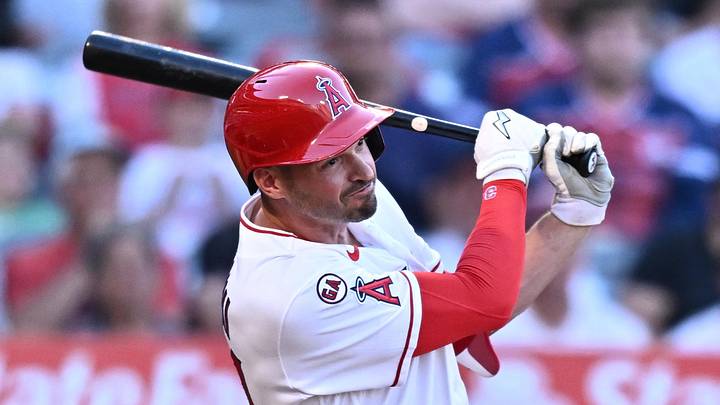
He last appeared in the majors during the 2023 season with the Chicago Cubs, where he posted a modest .234 batting average along with a .299 on-base percentage and a .336 slugging percentage over 79 games. That performance led to his release midway through the season, leaving his future in professional baseball uncertain.
Following that release, Mancini’s path back to the majors became a long and winding one. He did not play at all during the 2024 season, a full year away from competitive baseball that further distanced him from the big leagues.
MORE: Braves to take Giants’ shortstop off their hands
In 2025, he attempted to rebuild his career within the Arizona Diamondbacks’ organization, appearing in 74 games at the Triple-A level. While that stint showed some flashes of his previous abilities, it was far from a guarantee that he would earn another shot in the majors.
Given these circumstances, Mancini’s return to MLB in 2026 stands out as a rare achievement. Players in their mid-30s rarely make successful comebacks after such extended layoffs, particularly in a league as competitive as Major League Baseball.
In fact, it had been approximately four years since Mancini was last considered a consistently impactful contributor at the big-league level. Despite those odds, he managed to work his way back and earn another opportunity.
When he finally did return, Mancini made the most of his limited chances. In his first game back, he delivered an impressive three-hit performance, immediately demonstrating that he could still compete at a high level despite his long absence. (NBC Sports) That outing provided a glimpse of the player he once was and offered a feel-good moment for fans who had followed his journey.

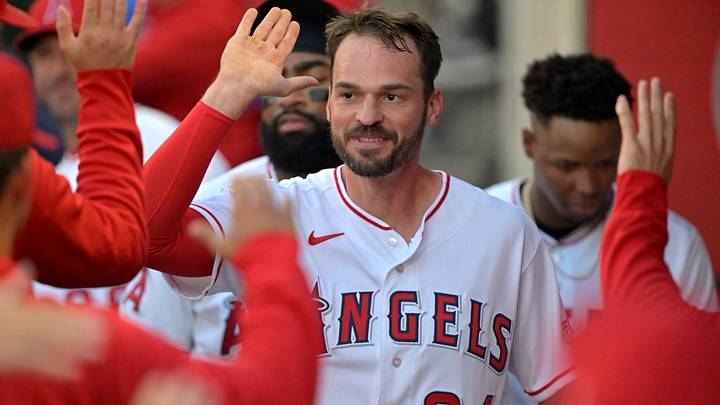
During his brief stint with the Angels, Mancini appeared in a small sample of games but still managed to produce some solid results. He collected four hits in 13 at-bats, including three singles and a triple, along with a sacrifice fly.
Those numbers resulted in an unusual statistical line: a .308 batting average paired with a .286 on-base percentage and a .462 slugging percentage. The oddity of that slash line stems from the small sample size and the specific combination of outcomes—namely, the absence of walks and the presence of extra-base hits like the triple.
MORE: Cardinals makes perfect trade offer for Giants’ designated hitter
Even though his time with the Angels was short-lived, Mancini’s performance showed that he still has the ability to contribute offensively. However, roster decisions are rarely based solely on small sample sizes, and the Angels ultimately had to consider the broader picture. With Grissom returning and other players competing for limited roster spots, Mancini’s role became expendable.
Looking beyond his brief major-league stint, Mancini’s recent performance at the Triple-A level provides additional context. Across the past two seasons, he has been relatively productive in the minors.
Combining his time with the Diamondbacks’ affiliate in Reno and the Angels’ Triple-A team in Salt Lake, he posted a .295 batting average, a .375 on-base percentage, and a .500 slugging percentage over 559 plate appearances. During that stretch, he hit 22 home runs and recorded 33 doubles, indicating that he still possesses some power and extra-base hit potential.
On the surface, those numbers appear quite strong. However, it is important to consider the environment in which they were achieved. The Pacific Coast League (PCL), where both Reno and Salt Lake compete, is known for being an extremely hitter-friendly league.
High altitudes, favorable weather conditions, and other factors often lead to inflated offensive statistics. As a result, Mancini’s production in Triple-A, while solid, was only about 8% better than the league average when adjusted for context using metrics like wRC+. This suggests that while he was effective, he was not necessarily dominating the competition.
Ultimately, the Angels’ decision to designate Mancini for assignment reflects the realities of roster construction rather than a definitive judgment on his abilities. Teams must constantly evaluate their needs, balance positional depth, and make difficult choices when players return from injury. In this case, Grissom’s reinstatement created a situation where someone had to be removed from the roster, and Mancini was the player who lost his spot.
MORE: Brewers to Fix Power Problem by Trading for Angels’ Top Outfielder
Now that he has been designated for assignment, Mancini enters a period of uncertainty. The Angels have a limited window—typically five days—to determine their next course of action. During that time, they can attempt to trade him to another team or place him on waivers. If he is placed on waivers, other teams will have the opportunity to claim him, which would allow him to continue his career elsewhere.
The waiver process itself takes approximately 48 hours, meaning that it could be up to a week before the situation is fully resolved. If no team claims him, the Angels could choose to outright him to the minor leagues or release him entirely, giving him the chance to sign with another organization as a free agent.
Despite the uncertainty, Mancini’s recent performance and track record could make him an appealing option for teams in need of veteran depth, particularly at first base or designated hitter. His experience, resilience, and ability to produce in short bursts may still hold value, especially for clubs looking to bolster their roster with a seasoned player who has overcome significant challenges.
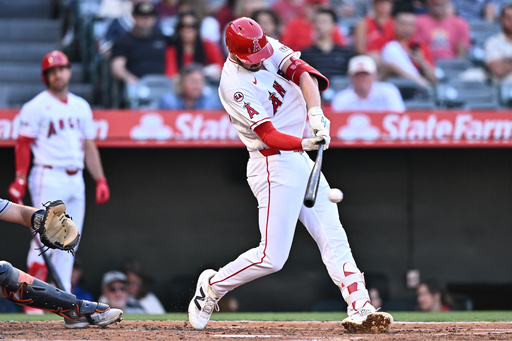
Fan reactions to the move have been mixed, reflecting both the emotional connection many people feel toward Mancini and the practical realities of roster decisions. Some supporters expressed disappointment at seeing a player with such an inspiring story being let go so quickly, especially after his strong return to the majors.
Others acknowledged that the move was likely unavoidable given the team’s roster constraints and the need to activate Grissom.
As Mancini awaits the next chapter in his career, his journey continues to stand as a testament to perseverance. From battling cancer to navigating the ups and downs of professional baseball, he has consistently demonstrated a willingness to fight for another opportunity. Whether he lands with a new team or continues working his way back through the minors, his story remains one of resilience and determination.
In the end, while his latest stint with the Angels may have been brief, it serves as another reminder of how unpredictable and demanding life in Major League Baseball can be. For Mancini, the hope is that this is not the final stop, but rather another step in an already remarkable career journey.

Be the first to comment