As the Philadelphia Phillies continue to navigate a stretch impacted by injuries, their front office is not simply waiting for players to return to full health. Instead, the organization is actively exploring ways to strengthen the roster, including monitoring the trade market for potential upgrades.
One of the most intriguing possibilities involves a blockbuster scenario: pursuing Los Angeles Angels superstar Mike Trout. While such a move would be complicated and highly dependent on multiple factors, it’s a situation that has captured attention across the league.
The Phillies are widely viewed as one of the most logical and well-positioned teams to make a serious push for Trout if the Angels ultimately decide to make him available. This idea has gained traction among analysts, including those at The Athletic, who believe Philadelphia stands out as a particularly strong match. There are several reasons why this pairing makes sense, both from a baseball standpoint and from a narrative perspective that would resonate with fans.
To begin with, the Phillies have a clear need in their outfield, especially in the corner positions. Injuries and inconsistent performances have left the team searching for stability and production in those spots.
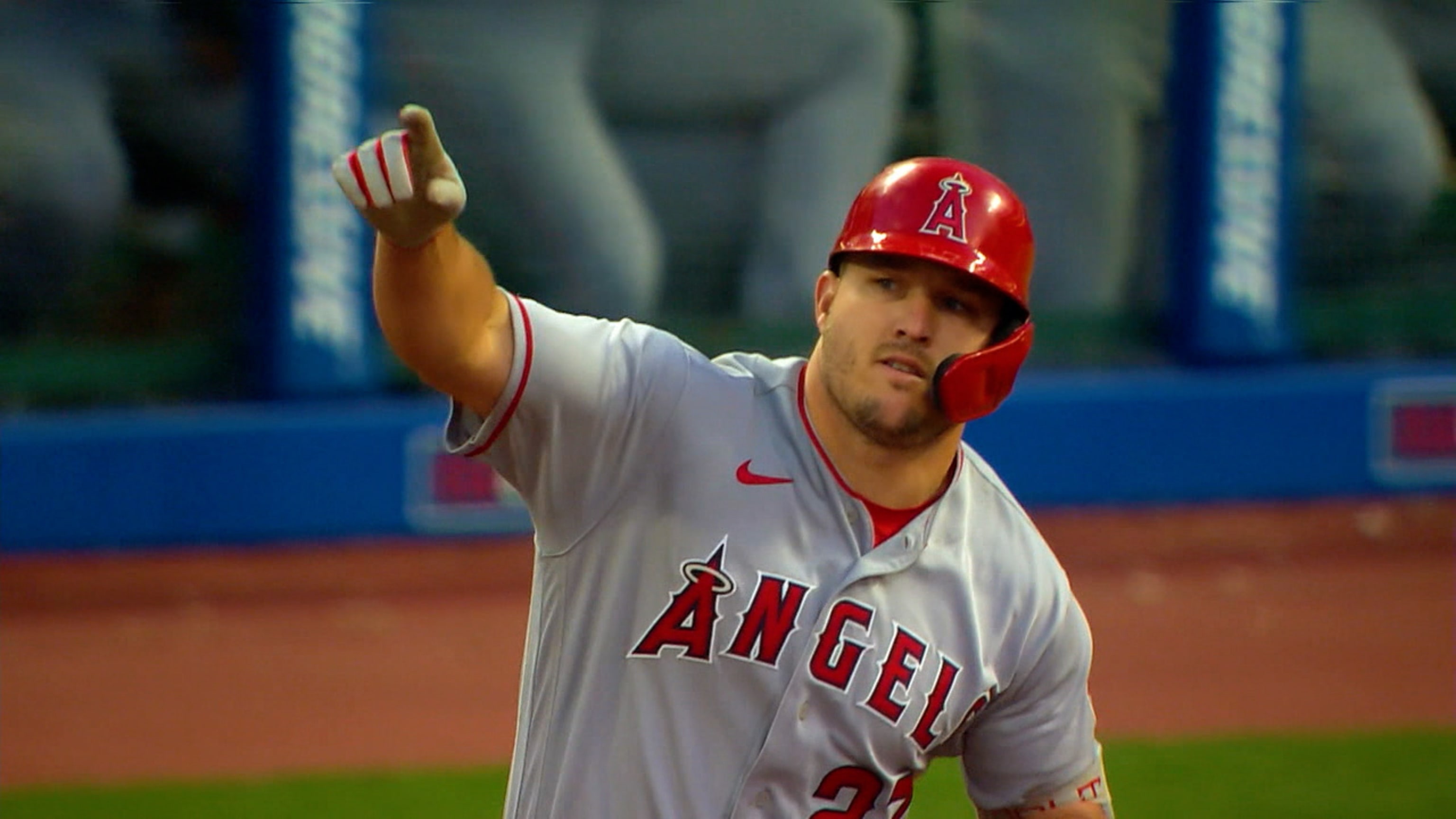
Adding a player of Trout’s caliber would not only address that weakness but could also dramatically elevate the team’s overall offensive output. Even at this stage of his career, Trout remains one of the most impactful players in the game, capable of changing the trajectory of a lineup almost instantly.
Beyond the on-field fit, there is also a compelling hometown connection that adds another layer of intrigue. Trout hails from Millville, New Jersey, which is relatively close to Philadelphia. He has long been known as a passionate Philadelphia Eagles fan, and the idea of him returning to play near his roots carries a certain emotional appeal. For Phillies fans, the opportunity to welcome a local superstar could create an energizing atmosphere and strengthen the bond between the team and its community.
MORE: Braves officially strike late-night trade as roster reckoning begins
From a front-office perspective, the Phillies are led by a general manager who is no stranger to bold moves. Dave Dombrowski has built a reputation over the years for aggressively pursuing elite talent, often prioritizing immediate contention over long-term prospect retention.
His track record suggests that he would not hesitate to engage in serious discussions if a player like Trout became available. Dombrowski has consistently demonstrated a willingness to part with promising young players if it means improving the major-league roster and increasing the team’s chances of winning now.
However, acquiring Trout would not come cheaply. Even with the Angels potentially needing to absorb part of his contract to facilitate a deal, the Phillies would still be expected to offer a substantial package in return. This would likely include a mix of top prospects and possibly young major-league contributors. The exact composition of such an offer would depend on negotiations, but it’s safe to assume that the Angels would demand significant value in exchange for a player of Trout’s stature.
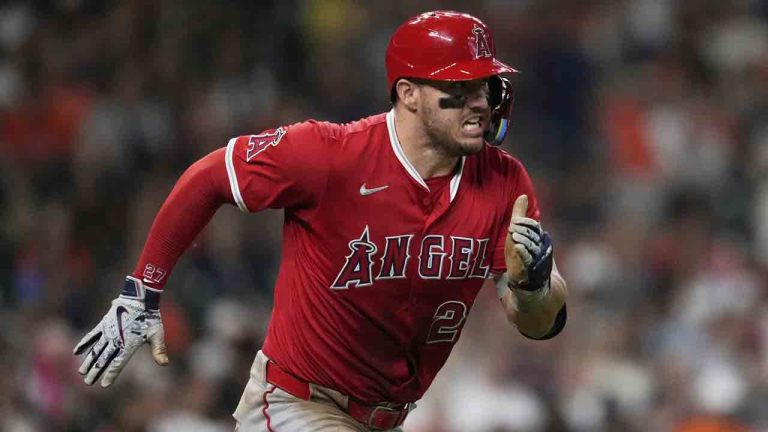
Another factor to consider is Trout’s performance in the 2026 season. By all accounts, he has been playing at an elite level once again, reminding everyone why he has long been regarded as one of baseball’s premier talents. His production at the plate and overall impact on the field reinforce the idea that he can still be a centerpiece player for a contending team. This strong performance only increases his trade value, making any potential deal even more complex.
There are also financial considerations that cannot be ignored. Trout is under contract for several more years, with a substantial amount of money still owed. For the Phillies, taking on that financial commitment would require careful planning and likely some level of cooperation from the Angels in terms of salary retention. Nonetheless, Philadelphia has shown a willingness to invest heavily in its roster in recent years, which could make such a move feasible.
MORE: Angels Make Unpopular Decision With Three-Time American League MVP Mike Trout
Ultimately, while the idea of Trout joining the Phillies is far from guaranteed, it represents a fascinating possibility that aligns with the team’s current needs and organizational philosophy. The combination of a clear positional fit, a compelling hometown narrative, and a front office known for making aggressive moves creates a scenario that is difficult to ignore.
If the Angels do decide to explore trading Trout, the Phillies are expected to be among the first teams to pick up the phone. Whether a deal ultimately comes together will depend on a variety of factors, including the Angels’ willingness to move their franchise icon, the financial logistics involved, and the Phillies’ readiness to part with valuable assets. But one thing is certain: the potential of such a blockbuster trade will continue to generate significant interest as the season unfolds.
Phillies would have to clear out key farm talent to get Trout

One of the biggest questions facing the Philadelphia Phillies front office is whether acquiring Mike Trout would truly be the move that elevates the club into championship contention this season. At the time under consideration, the Phillies were sitting at 14–20 as they approached Monday’s slate of games, trailing the division-leading Atlanta Braves by a sizable 10.5 games.
MORE: Cardinals officially made notable roster move, promote versatile infielder
That deficit might seem daunting on the surface, but baseball seasons are long, and momentum can shift dramatically over the course of a few weeks. A sustained winning streak has the potential to reshape the standings entirely, especially this early in the year.
Still, the decision to pursue Trout is not as straightforward as simply adding a superstar bat. While his talent is undeniable, there are legitimate concerns tied to his recent availability. Since the 2021 season, Trout’s games played totals have fluctuated significantly: 36, 119, 82, 29, and 130.
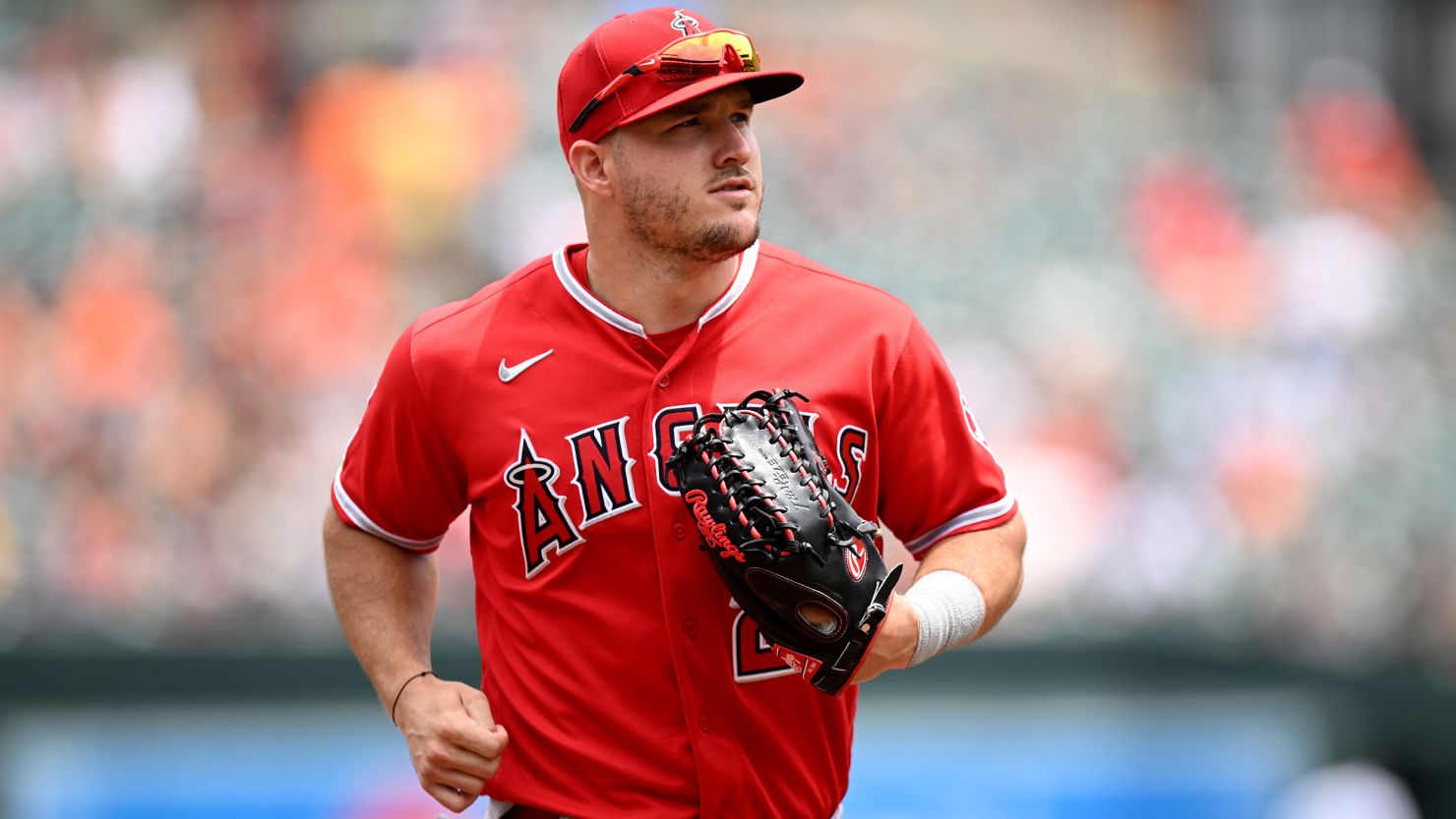
That uneven track record raises valid doubts about whether he can remain healthy throughout a full campaign, particularly during the critical late-season stretch and into October. For a Phillies team hoping to make a deep postseason run, durability is just as important as elite production.
There is also the intangible factor of motivation. Trout, widely regarded as one of the greatest players of his generation, has had remarkably limited exposure to postseason baseball. His lone playoff appearance came back in 2014, when he struggled to make an impact going just 1-for-12 with a single home run and one RBI across three games.
MORE: Trevor Story’s struggles force Red Sox to crucial roster move
That series occurred during his fourth season in the majors, and now, as a 16-year veteran, he has yet to return to that stage. One could argue that the opportunity to compete for a title might ignite an added level of urgency and performance, but there is no guarantee that such a narrative would translate into tangible results on the field.
If Philadelphia were to seriously engage in trade discussions with the Los Angeles Angels, the cost would almost certainly be steep. Any deal for a player of Trout’s stature would require a significant package of young talent, and the Phillies would likely have to part with some of their most promising prospects. Among the names that could be included are outfielders Justin Crawford and Dante Nori, along with at least one pitching prospect to round out the offer.
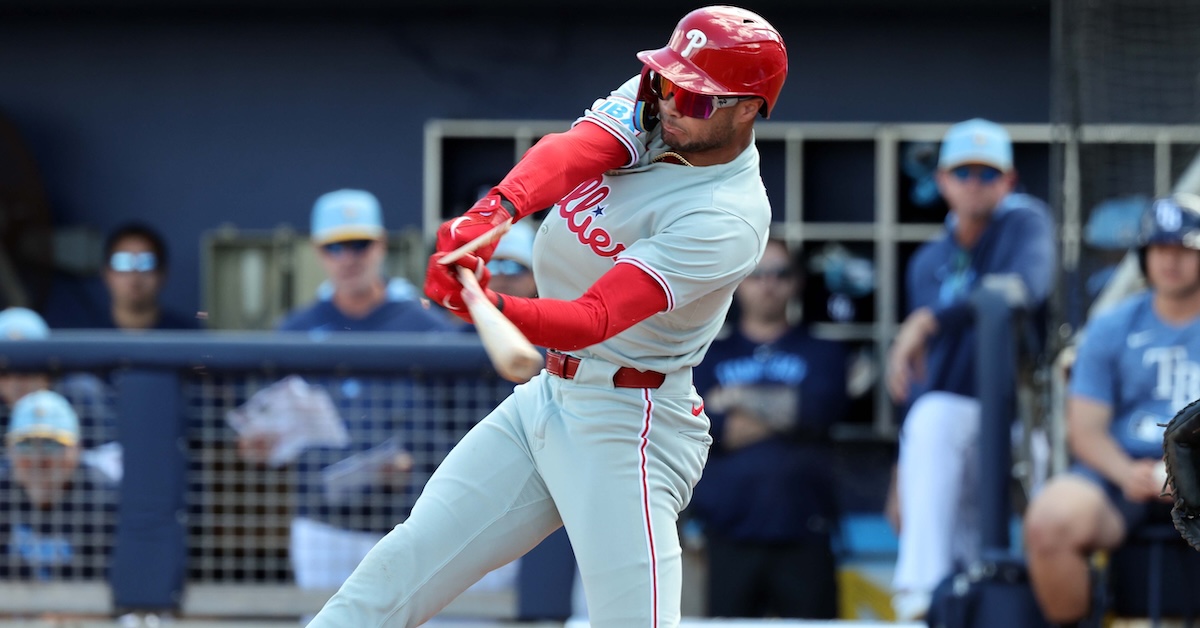
Crawford, just 22 years old, is currently ranked as the organization’s No. 3 overall prospect according to MLB.com. His skill set is built around exceptional bat-to-ball ability and discipline at the plate.
He consistently limits swing-and-miss in his game, and in 2025 he showed measurable improvement in his approach by increasing his walk rate while simultaneously reducing strikeouts. While evaluators have occasionally been puzzled by his tendency to hit a high percentage of ground balls, that issue has steadily improved with each passing season.
MORE: Blue Jays, Angels on Verge of Explosive Deadline Blockbuster
What truly sets Crawford apart, however, is his speed. It grades near the top of the scale and impacts the game in multiple ways. Offensively, he has stolen more than 40 bases in each of his three full minor league seasons, showcasing both his instincts and explosiveness.
Defensively, that same speed allows him to cover significant ground in the outfield, compensating for any occasional misreads or positioning mistakes. His athleticism gives him a high floor as a contributor, even if his power development remains limited.
Dante Nori, another potential trade piece, is slightly younger at 21 and currently sits as the Phillies’ No. 7 prospect. Unlike Crawford, Nori’s game is defined by a compact, efficient swing and a contact-oriented approach.
Standing at 5-foot-9, he isn’t physically imposing, but he plays with energy and purpose. His primary objective at the plate is simple: put the ball in play and reach base. During his first full professional season, he demonstrated an ability to do just that by drawing walks and keeping strikeouts in check.
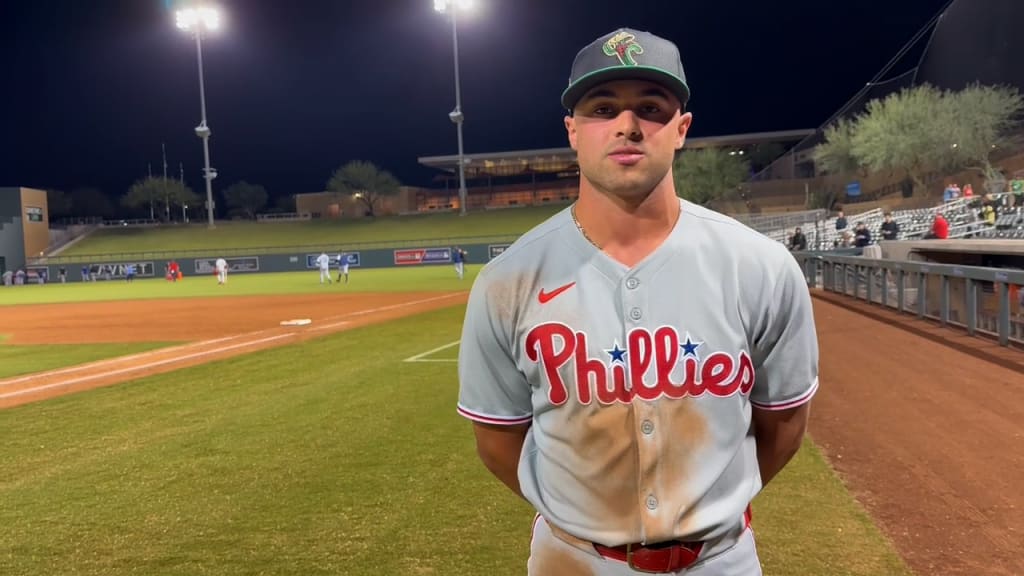
That said, questions linger about his long-term offensive ceiling. While Nori showed flashes of hitting the ball with authority during the first half of 2025, he struggled to sustain that level of production. By the end of June, his numbers had settled at a .677 OPS with a 92 wRC+, indicating slightly below-average offensive output.
Scouts have noted that his quick, contact-driven swing may limit his power potential, and he is not expected to significantly alter his approach in pursuit of home runs. Realistically, his ceiling may be around 15 homers per season, making him more of a table-setter than a middle-of-the-order threat.
MORE: Orioles Officially Make Stunning Roster Move Amid Recent Update
Given that neither Crawford nor Nori projects as a true power hitter, the Phillies might need to include additional value to meet the Angels’ demands. That could come in the form of left-handed pitching prospect Cade Obermueller. At 22 years old, Obermueller is ranked No. 9 in the organization and offers an intriguing blend of athleticism and upside.
Obermueller possesses a lean, wiry frame and stands out as a strong athlete on the mound. His delivery features a low arm slot, which contributes to the unique movement profiles of his pitches. His fastball typically sits in the 91–94 mph range but has been clocked as high as 98 mph.
More importantly, he has the ability to manipulate the pitch, generating different effects such as ride, run, or sink depending on the situation. This versatility makes his fastball particularly effective against a variety of hitters.

In addition to his heater, Obermueller throws a slider that pairs well with his arm angle, giving him a solid secondary offering. He also has a mid-80s changeup with sinking action, though it was not heavily utilized during his college career. The Phillies believe that with further development, this pitch could evolve into a reliable third option, enhancing his overall arsenal and making him a more complete pitcher.
From the Angels’ perspective, agreeing to trade a franchise icon like Trout would not be taken lightly. Even with his injury history and advancing age he is now 34 they would likely seek a return that includes at least one player with significant power potential. That type of bat is not clearly present in the hypothetical Phillies package outlined here, which could complicate negotiations.
MORE: Mets Officially Cut Ties With Tommy Pham, Sign Career Lefty-Killer
At the same time, the Angels must confront the realities surrounding Trout’s situation. His recent injuries have limited his time on the field, and as players move deeper into their 30s, maintaining peak performance becomes increasingly challenging.
While Trout has shown that he can still produce at an elite level when healthy, projecting how many more seasons of top-tier output he has left is far from certain. There is a very real possibility that his best years are already behind him, even if flashes of brilliance remain.
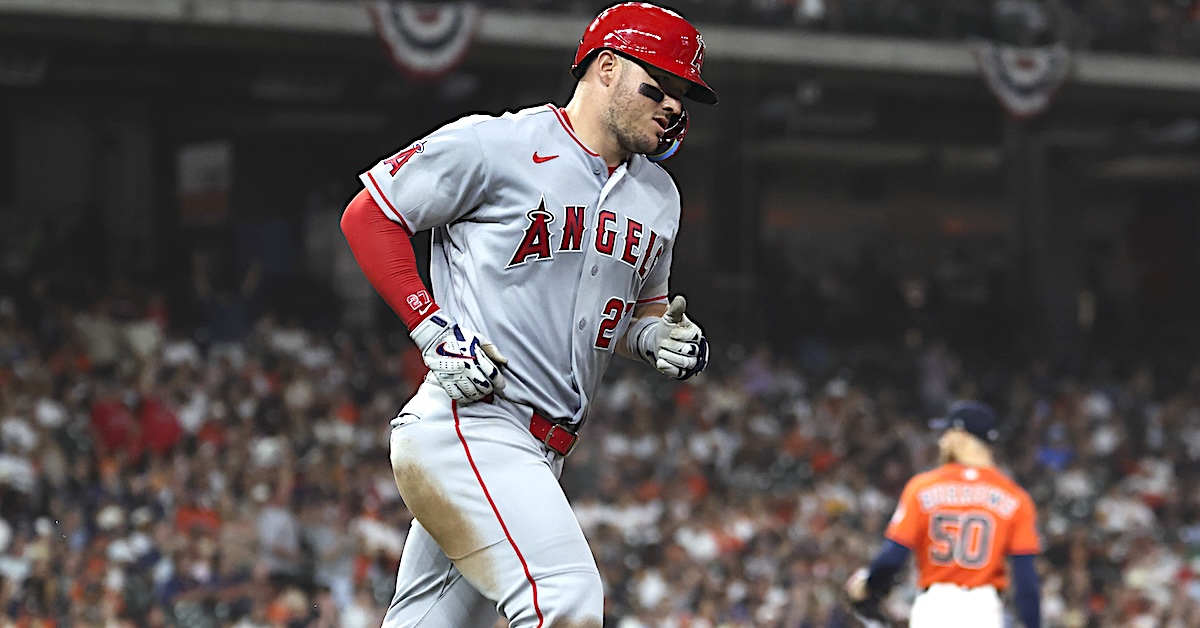
Ultimately, the decision for the Phillies comes down to balancing risk and reward. On one hand, acquiring a generational talent like Trout could inject life into their lineup and potentially spark a turnaround in the standings.
On the other hand, the cost in young talent, combined with the uncertainty surrounding Trout’s health and longevity, makes it a gamble that could shape the organization’s future for years to come.
In a sport where windows of contention can open and close quickly, bold moves are sometimes necessary. But they must also be calculated. For Philadelphia, the question is not just whether Trout can still perform at a high level it’s whether he can do so consistently enough to justify the price and truly make a difference when it matters most.

Be the first to comment