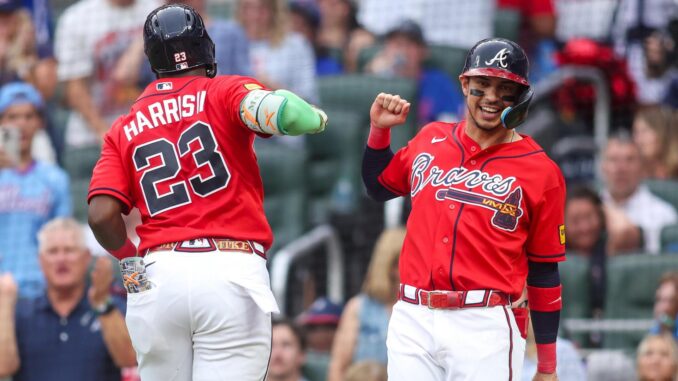
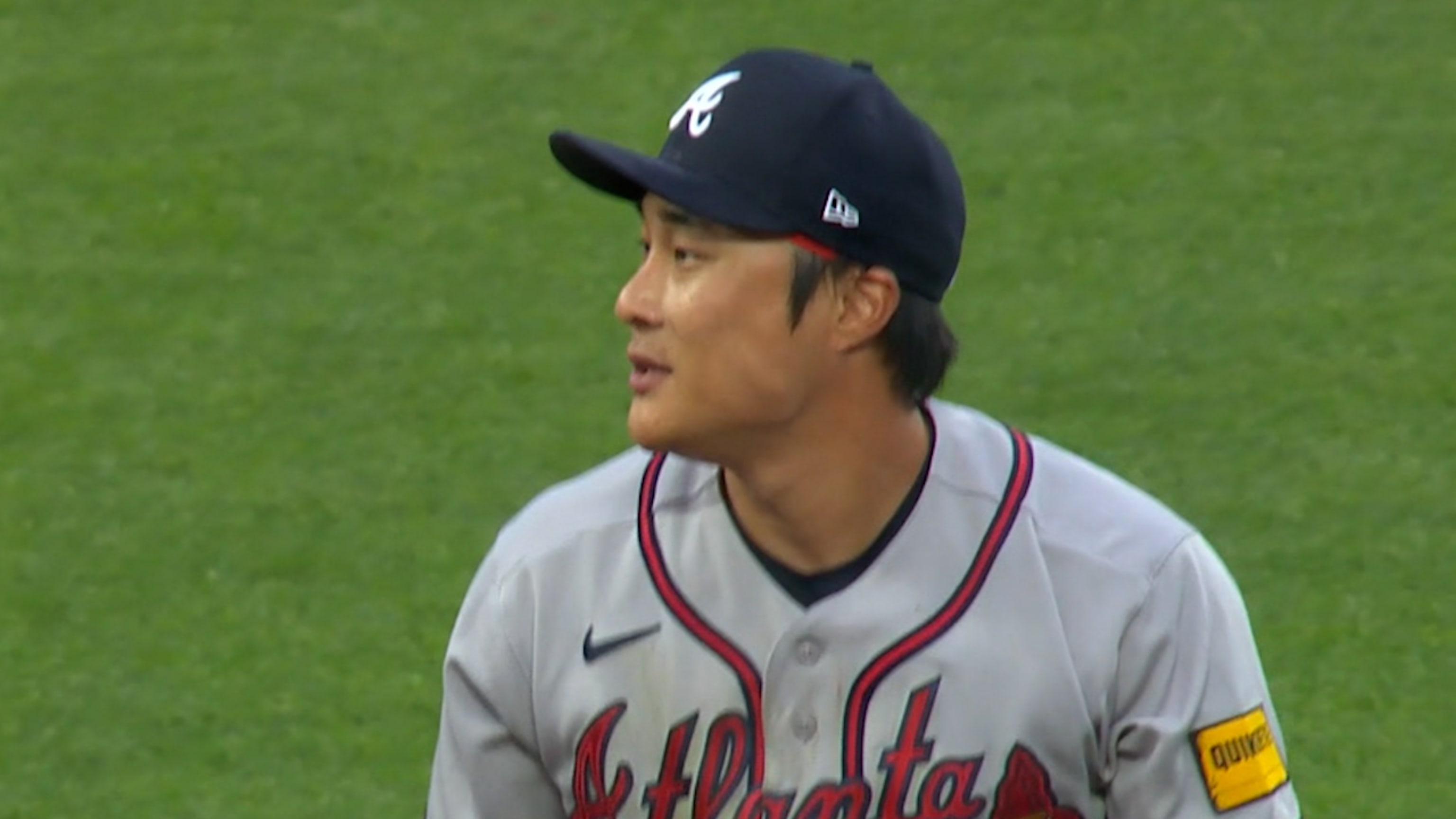
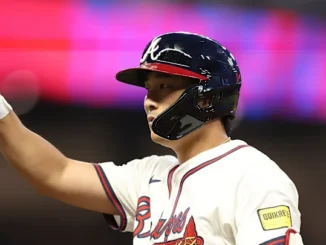
The Atlanta Braves have spent much of this season battling a wave of injuries, and unfortunately, that pattern has not let up. Their latest setback involves shortstop Ha-Seong Kim, who has been placed on the 10-day injured list due to inflammation in his right middle finger. This development adds yet another name to a growing list of sidelined players and highlights the ongoing challenges the team has faced in maintaining a healthy roster. (House That Hank Built)
Kim’s injury comes at a particularly difficult time for both the player and the organization. He has struggled significantly at the plate throughout the season, failing to produce at the level the Braves had hoped when they penciled him in as a regular contributor.
Because of those struggles, the nature of his injury has drawn some ironic attention—an issue with his finger affecting his ability to perform offensively during a year in which hitting has already been a major concern. While the injury itself is legitimate, it underscores how little has gone right for Kim during this campaign. (Battery Power)
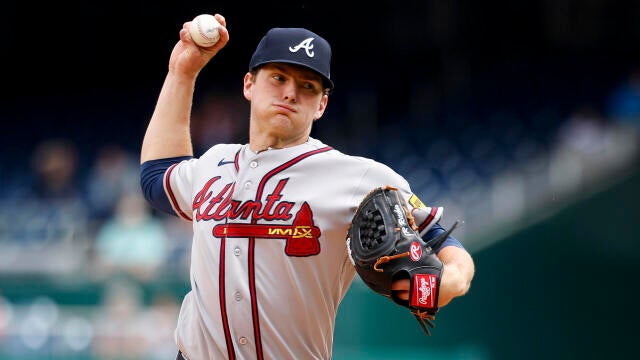
The Braves did not stop with just one roster move. In a corresponding decision, right-handed pitcher Anthony Molina was optioned back to Triple-A Gwinnett. Molina had been part of the team’s pitching depth, but with Atlanta constantly shuffling players due to injuries and performance concerns, he became the odd man out in this latest round of adjustments. Sending him down allows the Braves to create room for reinforcements while also ensuring that they maintain flexibility with their pitching staff moving forward. (Battery Power)
To help address the roster gap, the Braves turned to one of their most promising young arms. Top pitching prospect JR Ritchie was scratched from his scheduled start with Triple-A Gwinnett and instead called up to join the major league club. This move reflects the organization’s confidence in Ritchie’s potential and their willingness to rely on younger talent during a time of need. (House That Hank Built)
MORE: Cardinals quietly make another crucial roster move
Ritchie’s role with the team is expected to be somewhat flexible, at least initially. Given the current state of the Braves’ pitching staff, he will likely be used in a long-relief capacity, providing multiple innings out of the bullpen when necessary.
This type of role is particularly valuable for a team that has recently leaned heavily on its bullpen due to short outings from starting pitchers and ongoing injury concerns. By inserting Ritchie into this spot, Atlanta hopes to stabilize its pitching situation and reduce the strain on other relievers. (Athlon)
However, there is also the possibility that Ritchie could be utilized in the starting rotation in the near future. The Braves have an upcoming series against the Pittsburgh Pirates, and depending on how the rotation lines up and how other pitchers perform, Ritchie could be called upon to make a start. This would give the team an opportunity to evaluate him further at the major league level while also addressing any immediate gaps in the rotation.
Overall, these moves illustrate the balancing act the Braves are currently trying to manage. On one hand, they are dealing with injuries that continue to disrupt their roster and force frequent adjustments. On the other hand, they are attempting to remain competitive by promoting young talent and making strategic decisions about player usage. The combination of these factors has made for a challenging season, but it has also created opportunities for prospects like Ritchie to step into meaningful roles.
For Kim, the focus now shifts to recovery and the hope that time on the injured list will allow him to return healthier and potentially more productive. For the Braves as a whole, the situation serves as yet another reminder of how critical depth and adaptability are over the course of a long season.
As they continue their series against the Mets and look ahead to future matchups, the team will need contributions from both established players and emerging prospects if they hope to overcome the adversity they have faced so far. (amazinavenue.com)
Braves begin their Ha-Seong Kim exit strategy, bring JR Ritchie back to the majors
The Atlanta Braves made an additional roster adjustment following Ha-Seong Kim’s placement on the injured list, bringing infielder Kyle Farmer back from his rehabilitation assignment to fill the vacant spot. Farmer’s return provides the team with a versatile and experienced option off the bench, something Atlanta has valued throughout a season that has required constant reshuffling due to injuries and inconsistent performances.
During his brief stint earlier in the year, Farmer proved to be a reliable contributor in limited action, recording a .286 batting average across 14 at-bats. While that sample size is relatively small, it demonstrated his ability to step in and produce when called upon, reinforcing his reputation as a dependable utility player. (Battery Power)
MORE: Braves make monster trade for $182M power bat
Farmer’s versatility is arguably his most valuable trait. Over the course of his career, he has shown the ability to play multiple positions across the infield and even spend time behind the plate when needed. (Wikipedia) This flexibility gives the Braves added depth and allows the coaching staff to maneuver more freely with late-game substitutions and lineup adjustments.
Especially in a season where injuries have tested the organization’s depth, having a player like Farmer available can make a noticeable difference in how the roster is managed on a day-to-day basis.
From a broader perspective, the decision to place Kim on the injured list and bring back Farmer could ultimately serve as a positive development for the struggling shortstop. Braves insider Grant McAuley pointed out that this move might provide Kim with a much-needed opportunity to reset both physically and mentally.
Since making his season debut, Kim has endured a difficult stretch at the plate, to the point where his offensive production has ranked among the lowest in the league. His struggles have been glaring, and it has become increasingly clear that he has not been able to find any consistency. (Battery Power)
In that context, a stint away from the major league roster could be beneficial. If Kim is able to go on a rehab assignment in the minor leagues, it would allow him to work on his mechanics, regain confidence, and potentially rediscover the form that made him an appealing acquisition for Atlanta in the first place.
MORE: Cardinals In 4-Team Battle For Angels’ Top Ace
Rehab assignments often serve as a valuable bridge for players returning from injury, but they can also function as a reset button for those who are struggling. For Kim, whose season has been defined by frustration at the plate, this period away from big-league competition might be exactly what he needs to get back on track.
Meanwhile, the spotlight also shifts to young right-hander JR Ritchie, who has been recalled to the major league roster amid the team’s ongoing pitching concerns. Ritchie, one of the organization’s more promising prospects, has experienced a season filled with both encouraging performances and difficult outings. His inconsistency has been one of the defining aspects of his year, as he has alternated between showing flashes of his potential and struggling to maintain control and effectiveness. (Wikipedia)
Over his most recent stretch of games, Ritchie has encountered significant challenges. In his last three appearances, he was unable to pitch beyond five innings in any outing, which placed additional strain on the bullpen.
During that span, he surrendered 13 earned runs across 15 innings while issuing nine walks and recording 17 strikeouts. These numbers highlight a key issue that has plagued him recently: control. While his ability to generate strikeouts remains evident, the rising number of walks has undermined his overall effectiveness.
The walk totals, in particular, have become a growing concern. Allowing free passes not only increases pitch counts but also creates more opportunities for opposing teams to capitalize on scoring chances. For Ritchie, this has been a recurring problem, as his inability to consistently locate his pitches has often led to trouble. Over the course of the season, he has accumulated 25 walks compared to 37 strikeouts, along with a 4.87 ERA at the major league level. These figures illustrate both his potential and the areas that still require improvement.
MORE: “Absolutely Stunning” Angels finally move more quickly
Despite these struggles, the Braves continue to see value in Ritchie’s presence on the roster. His role is expected to remain flexible, as he could be utilized either out of the bullpen or as a spot starter depending on the team’s needs. Given the current state of Atlanta’s pitching staff, that kind of versatility is essential. The team has been forced to rely heavily on its depth options, and Ritchie’s ability to fill multiple roles makes him a useful piece, even as he works through his growing pains at the major league level.
There is also a potential opening for Ritchie to re-enter the starting rotation, particularly in light of recent developments involving Bryce Elder. Elder, who had shown promise earlier in the season, has encountered a rough patch in recent weeks.
His performance against the San Francisco Giants raised concerns, as he struggled significantly and saw his effectiveness decline. (Battery Power) Over a stretch of starts, his ERA has climbed, and his outings have become less reliable, prompting questions about the stability of the Braves’ rotation moving forward.
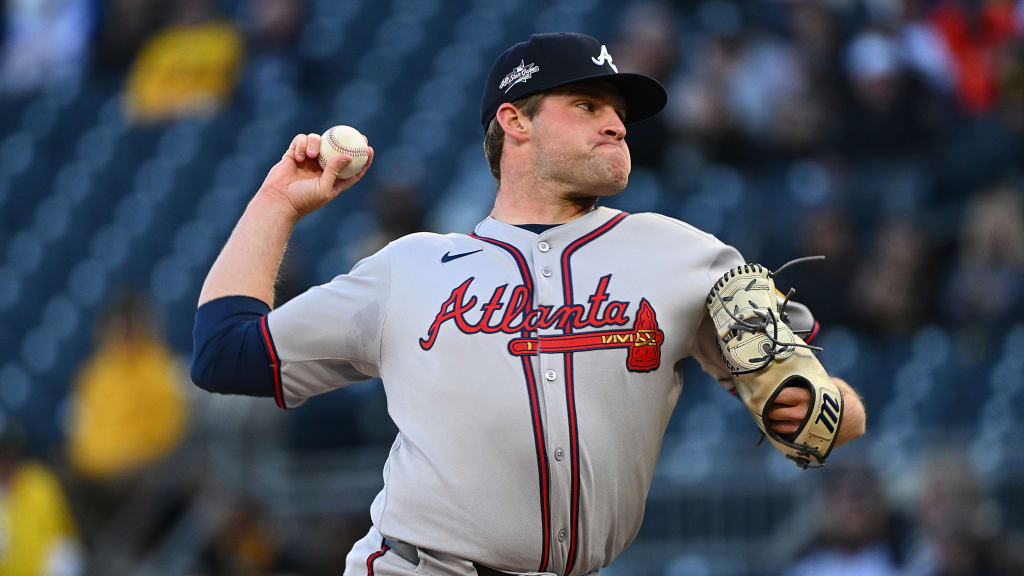
One of the more troubling signs from Elder’s recent start was a noticeable dip in velocity. For any pitcher, a drop in velocity can be an indicator of fatigue, mechanical issues, or even potential injury concerns. While the Braves remain hopeful that Elder will be able to make his next scheduled start—particularly in the upcoming series against the Pittsburgh Pirates—the uncertainty surrounding his performance has created an opportunity for others to step in.
If Elder is unable to perform at the level the team needs, or if further issues arise, Ritchie could be called upon to take his place in the rotation. This possibility underscores the importance of having young pitchers ready to contribute, even if they are still developing. For Ritchie, it represents both a challenge and an opportunity: a chance to prove that he can handle a larger role while also addressing the inconsistencies that have defined his season thus far.
MORE: Braves to cut ties with $20M Gold Glove winner
Ultimately, these roster moves reflect the balancing act the Braves are navigating as they attempt to remain competitive despite ongoing adversity. Injuries, underperformance, and the natural ups and downs of a long baseball season have all played a role in shaping the team’s current situation. Bringing back a steady veteran like Farmer provides immediate depth and reliability, while giving Kim time to recover and regroup could pay dividends in the long run.
At the same time, the continued reliance on young players like Ritchie highlights the organization’s commitment to developing its talent and adapting to changing circumstances. While Ritchie’s recent struggles are evident, his potential remains undeniable, and the Braves are clearly willing to give him opportunities to grow at the major league level.
As the team looks ahead to upcoming matchups, including their series against the Pirates, much will depend on how these adjustments play out. If Farmer can provide stability off the bench, if Kim can use his time away to rediscover his form, and if Ritchie can refine his control and deliver more consistent performances, the Braves may be able to weather this challenging stretch. However, given how unpredictable the season has been so far, it would not be surprising if further changes are needed in the weeks to come.


Be the first to comment