As the Los Angeles Angels continue to push through another disappointing campaign while trying to map out a more promising future, they are confronted with an important choice regarding outfielder. At times, Adell showcases the kind of talent that once made him one of the organization’s most exciting young players.
His combination of raw power at the plate and athletic ability in the field can be eye-catching, and in those stretches, he looks every bit like a cornerstone piece a team could build around. However, when evaluating his performance over the course of an entire season, inconsistency becomes a defining issue. His cold spells often offset his productive runs, leaving him with overall results that place him closer to league-average than star-level production.
Despite those inconsistencies, He brings a valuable skill set that could appeal strongly to certain teams—most notably, his power. He demonstrated that ability in a major way last season when he launched a career-high 37 home runs, a figure that highlights his ability to change games with one swing. (FixTheAngels.com) His underlying performance metrics further reinforce the idea that his power output is no fluke; rather, it is a legitimate strength that suggests he should continue to produce extra-base hits, including both doubles and home runs, on a consistent basis when he is at his best.
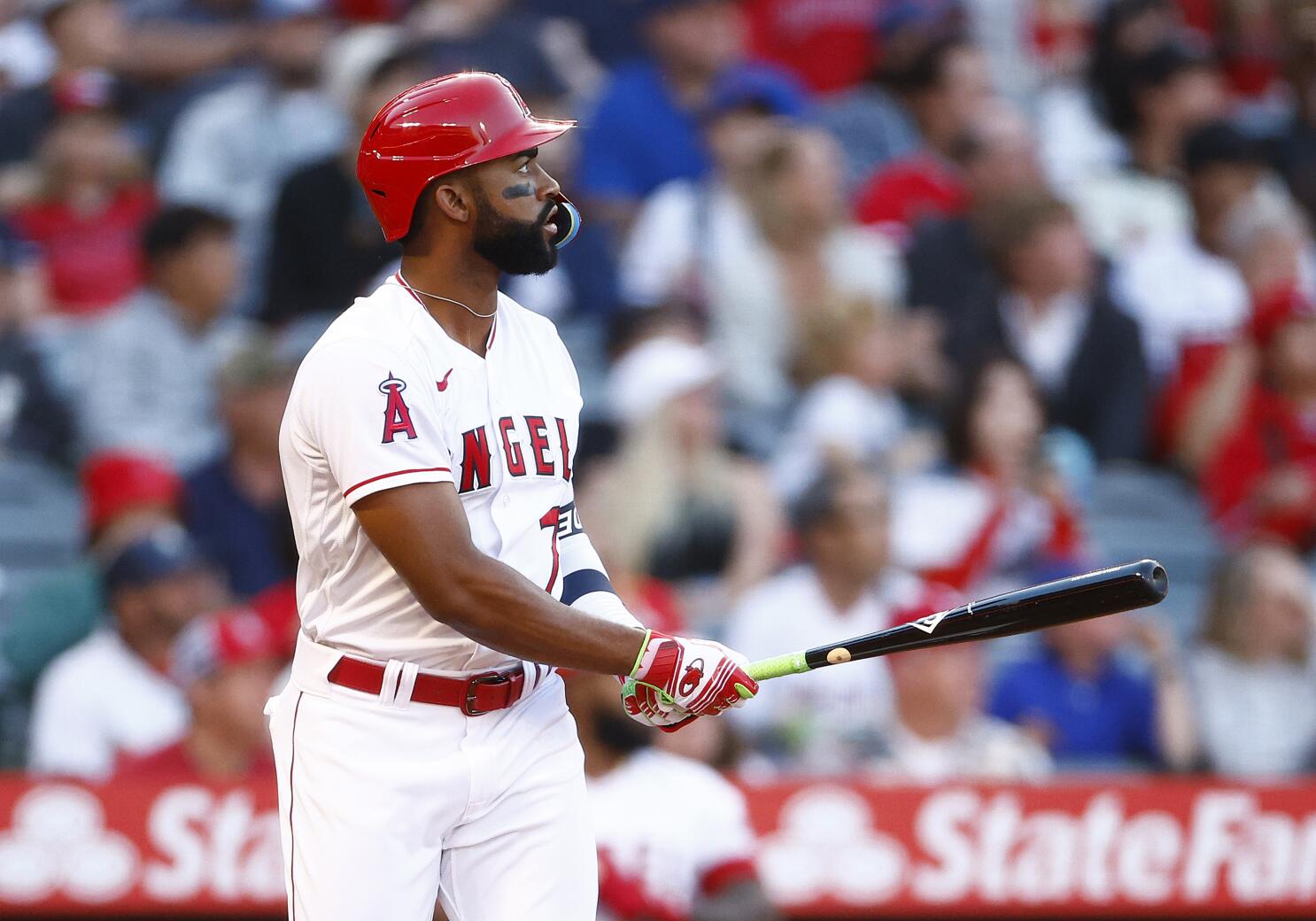

That particular strength makes him an intriguing potential fit for a team like the Cleveland Guardians. Cleveland has been in search of more offensive punch, particularly in the outfield, and Adell’s right-handed power could help address that need.
The Guardians would benefit from adding a player capable of stretching the field and providing slugging ability, something that has been lacking at times in their lineup. From their perspective, acquiring a player like Adell could represent a calculated gamble—betting that his power tools can be maximized in a new environment.
On the other side of the equation, the Angels may find themselves motivated to consider such a move as part of a broader roster reset. While Adell has been a positive presence within the clubhouse and community, and is widely regarded as a supportive teammate, the organization must weigh sentiment against long-term competitiveness.
MORE: White Sox quitely acquire Royals’ All-Star right-hander in clever trade idea
By dealing a player with his upside and remaining value, the Angels could potentially bring back prospects who better align with their timeline and help strengthen an already growing pool of young talent.
Ultimately, a trade involving Adell would not be an easy decision. It would mean parting with a player who still possesses significant upside and who has shown flashes of becoming a difference-maker. At the same time, it could be a strategic move that benefits both sides: Cleveland would gain a much-needed power bat, while Los Angeles could continue building toward a more sustainable and successful future.
Trading Jo Adell would net the Angels a solid prospect or two.

If the Angels want to build a roster capable of sustained success down the road, continuing to inject young talent into the organization will be essential. Over the course of this season, they’ve already taken steps in that direction by bringing in players like Oswald Peraza, Wade Meckler, Walbert Urena, and Denzer Guzman—each adding a blend of youth, potential, and long-term upside.
With that foundation beginning to take shape, this could be an ideal moment for the front office to go a step further by targeting prospects in the upper levels of the minor leagues—players who are close to contributing at the big-league level and can grow alongside the team’s emerging core.
One area where the Angels could clearly benefit from reinforcement is behind the plate. Catcher has been a lingering weakness, as Logan O’Hoppe, along with a revolving group of backups, has struggled to make a meaningful impact both offensively and defensively. For a team looking to become more competitive, stability and production at such a critical position are vital, making it an obvious target for improvement.
MORE: Angels Officially Cut Veteran Pitcher “Another Major Setback”
Conveniently, the Cleveland Guardians possess a farm system that is particularly strong at catcher—precisely the type of organizational depth that could match up well with the Angels’ needs. This overlap creates a natural opportunity for a deal that could benefit both sides, especially if Los Angeles is willing to move pieces in exchange for a young backstop with upside.
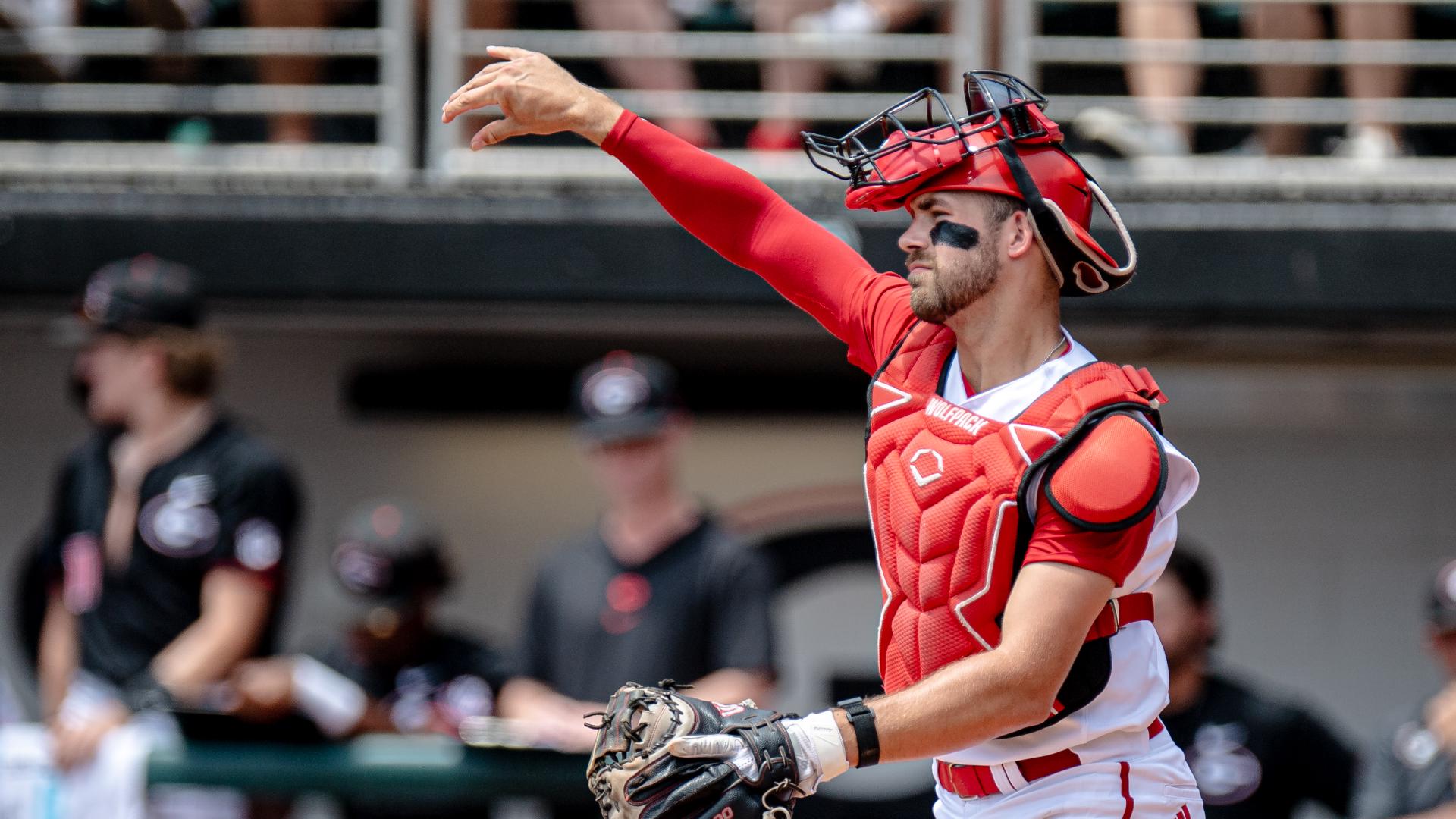
One intriguing option within Cleveland’s system is Jacob Cozart, a 23-year-old catcher currently playing at the Double-A level. Drafted out of NC State, Cozart has steadily worked his way through the minors and is regarded as a defense-first player with a solid overall profile. According to scouting evaluations, his defensive skills stand out, including his receiving ability, game-calling, and leadership behind the plate—traits that are often just as valuable as offensive production for catchers. (MLB.com)
Offensively, Cozart has shown signs of being capable, even if he isn’t projected as a dominant hitter. Across his time in the minors, he has posted numbers in the range of a .235/.341/.371 slash line, indicating a player who can contribute modestly at the plate while still developing his approach against higher-level pitching. (MLB.com) His power potential is considered average, but evaluators believe he has enough strength to produce occasional extra-base hits, making him more than just a defensive specialist.
What makes Cozart particularly appealing is how his skill set could complement another young catcher in the Angels’ system, Juan Flores. Flores has been making noise with his offensive performance, showing improved power and overall hitting ability while continuing to build on his defensive reputation. If the Angels were to pair Cozart with Flores at the Double-A level, they could create a highly effective catching duo that balances offense and defense.
Such a tandem could provide long-term stability at the position. Both players are praised for their defensive capabilities, which is crucial for managing pitching staffs and controlling the running game. At the same time, Flores’ current surge at the plate suggests he could handle a larger share of the offensive burden, while Cozart contributes steady, reliable play and leadership behind the dish.
MORE: Atlanta Braves Quietly Release Pitcher
Looking ahead, this type of pairing could evolve into a cornerstone for a competitive team. Catching depth is often overlooked, but having two capable options can make a significant difference over the course of a long season. Injuries, matchups, and workload management all come into play, and a strong duo gives a team flexibility and consistency.
For the Angels, acquiring a player like Cozart would represent more than just filling a short-term need—it would be a strategic move aimed at building a sustainable future. By continuing to add young, controllable talent—especially players who are close to the majors—they can accelerate their rebuilding process and better position themselves to compete in the coming years.
In the end, the path forward for Los Angeles hinges on smart roster construction and a commitment to developing young talent. Adding another upper-level prospect, particularly at a position of need like catcher, would align perfectly with that vision and could pay dividends as the organization works toward returning to relevance.
Moving Jo Adell allows the outfield defense to improve dramatically.
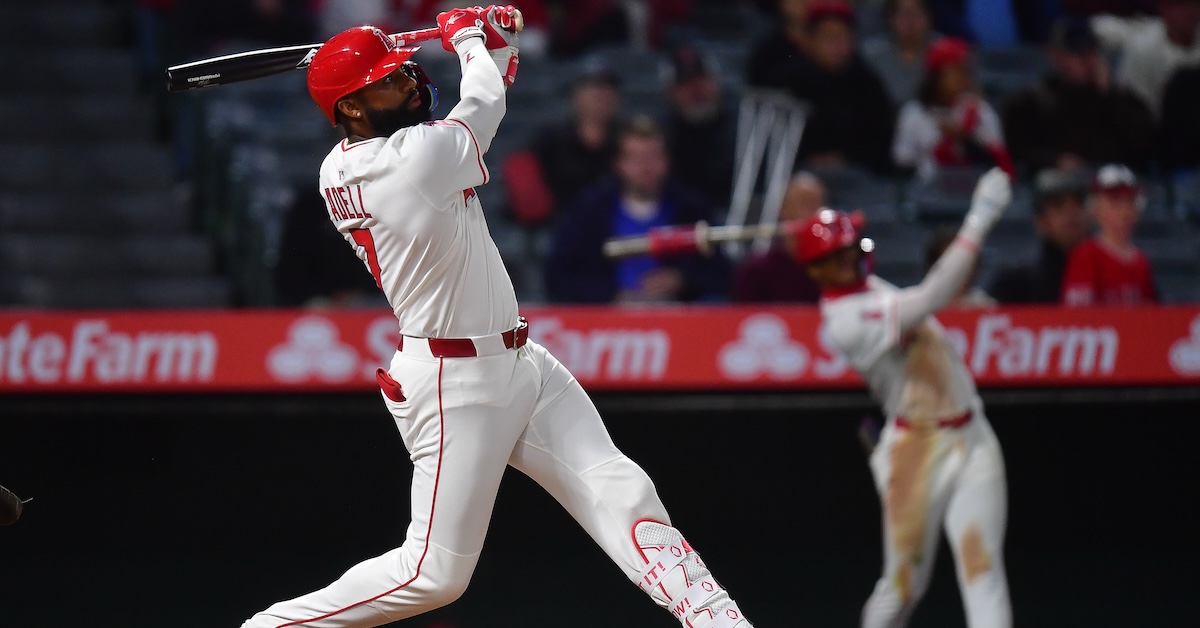
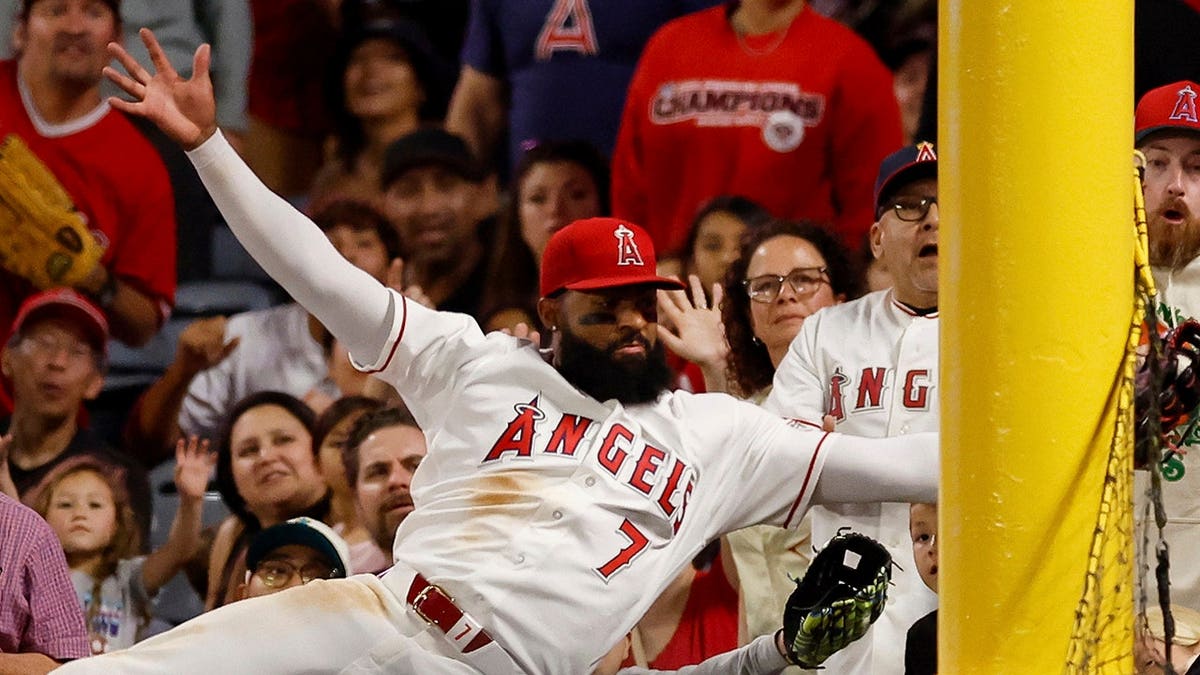
Evaluating the Angels’ outfield defense reveals a clear contrast between Jo Adell and Mike Trout. When it comes to Adell, the numbers don’t paint a completely consistent picture. Overall, he tends to rate as roughly average in right field. On one hand, he has the athleticism to make eye-catching, highlight-reel plays—such as robbing multiple home runs in a single game, showing off his leaping ability and instincts in big moments (MLB.com).
On the other hand, his defensive profile is held back by some recurring issues. He doesn’t possess elite arm strength for the position, and his routes to the ball can be inefficient at times, which limits his overall effectiveness despite the flashes of brilliance.
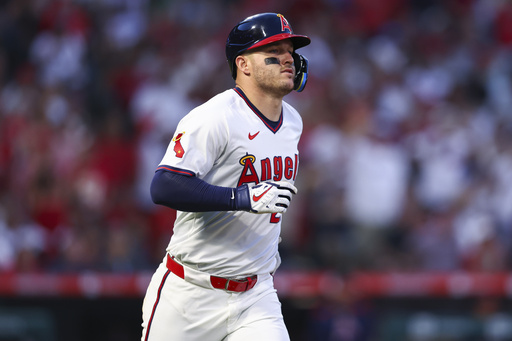
In contrast, the defensive evaluation of Mike Trout at this stage of his career is far less ambiguous. Once known as an elite center fielder and long-time face of the franchise, Trout has continued to log time in center field, but his performance there has declined. Advanced metrics like Defensive Runs Saved (DRS)—a stat that measures how many runs a player prevents or allows compared to an average defender (Wikipedia)—have not been kind to him.
Over a relatively small sample of games, he has already accumulated a negative mark in that category, indicating below-average defensive impact. When compared to elite defenders around the league, the gap becomes even more apparent, underscoring how far Trout’s defense has slipped from his peak years.
Given that reality, a positional adjustment could significantly benefit the Angels. Shifting Trout out of center field and into right field would better align his current skill set with the demands of the position.
Right field places a greater emphasis on arm strength—an area where Trout still offers value—while reducing the amount of ground he needs to cover compared to center. This move would not only help Trout but also open the door for a stronger defensive presence in center field.
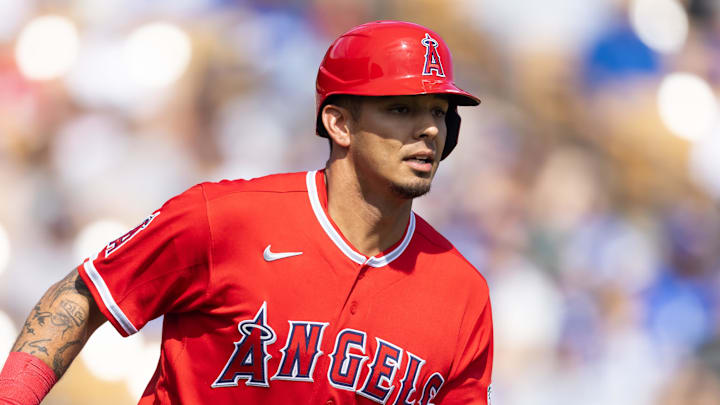
That’s where a player like Nelson Rada could come into play. Known for his defensive instincts and range, Rada profiles as the type of player capable of excelling in center field.
Installing him there would immediately upgrade the team’s coverage in the outfield, allowing for more efficient tracking of balls in the gaps and fewer missed opportunities on defense. In this scenario, both positions—center and right—would likely see improvement: Trout would be better suited to his new role, and Rada would bring high-level defense to a premium position.
Looking ahead, the Angels could soon feature an even more dynamic outfield mix. Prospect Raudi Rodriguez has been dominating at the Double-A level, showcasing the kind of speed and upside that could translate well to the major leagues. If his development continues on its current trajectory, he could join Rada and Trout in forming a younger, faster, and more defensively capable outfield unit.
Altogether, these potential changes point toward a more balanced and athletic defensive alignment. While Adell remains a serviceable, if inconsistent, option, the broader picture suggests that reallocating roles and integrating emerging talent could significantly raise the team’s defensive ceiling.
And it might help keep Mike Trout healthy.
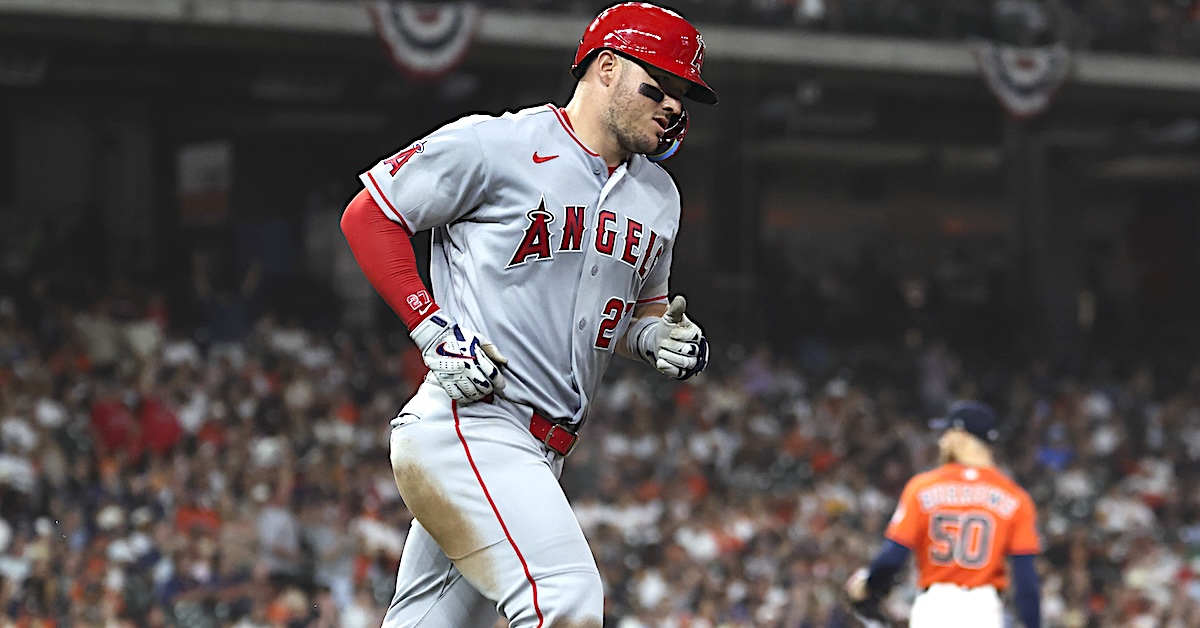
A full Major League Baseball season is a marathon, stretching across 162 games, which places a significant physical and mental demand on players over several months (SportsGearDaily). With that kind of workload, managing playing time becomes essential—especially for veterans like Mike Trout.
If the Angels were to roll out an outfield featuring Wade Meckler, Nelson Rada, and Raudi Rodriguez, it would naturally create opportunities to ease Trout’s burden. Instead of playing the field every day, he could spend a considerable number of games serving as the team’s designated hitter, helping preserve his health while still keeping his bat in the lineup. That kind of rotation would allow the team to balance performance and durability over the long haul of the season.
There’s also flexibility within that arrangement. Based on matchup advantages, particularly Rodriguez’s splits against certain pitchers, Trout could still slot into right field when facing a tough left-hander. Alternatively, he could step in to give Meckler a day off, ensuring the outfield remains productive without overworking any one player. This type of rotational usage would help maximize the strengths of each player while maintaining overall depth.
While nothing in baseball is ever guaranteed, a reduced defensive workload for Trout could go a long way toward keeping him fresh. Rather than handling the demanding responsibilities of center field on a daily basis, limiting him to right field appearances a couple of times per week—along with the occasional start in left—would significantly cut down on wear and tear. Center field requires covering more ground and constant high-intensity movement, so scaling that back could help extend Trout’s effectiveness over the course of the season.
In the end, this kind of strategic deployment isn’t just about protecting one player—it’s about optimizing the entire roster. By blending youth, speed, and careful workload management, the Angels could create a more sustainable approach that keeps their key contributors healthy while maintaining competitiveness throughout the long season.
Overall, the Angels improve defensively and in on base percentage if the return is right.
Everything hinges on whether the Angels can secure the right return in any deal—a result that’s far from guaranteed, especially considering general manager Perry Minasian’s uneven history in that area. That said, there have been some recent positives. The additions of Oswald Peraza and Vaughn Grissom have worked out reasonably well, particularly because both players bring strong defensive abilities that help stabilize the roster.
Looking at the bigger picture, two of the Angels’ most glaring weaknesses are team defense and on-base percentage. Their defensive shortcomings often show up in their inability to consistently convert balls in play into outs. When that happens, innings get extended, pitchers are forced to throw more pitches, and opposing teams are given additional chances to score. Over time, that kind of inefficiency puts a significant strain on the pitching staff and contributes directly to higher run totals allowed.
Offensively, the issues are just as clear. The Angels have struggled with plate discipline, striking out at an extremely high rate compared to the rest of the league. In fact, they recorded over 1,600 strikeouts in a recent season—one of the highest totals in MLB history—while also finishing with one of the lowest on-base percentages in the league (SI). This combination is particularly damaging because it limits scoring opportunities. Strikeouts eliminate any chance of advancing runners, and when hitters do connect, it often results in solo home runs rather than sustained rallies. Without consistent traffic on the bases, even power hitting becomes less impactful.
Improving both defense and on-base ability would go a long way toward making the team more competitive. For instance, inserting a player like Nelson Rada into center field could significantly upgrade the team’s run prevention. His defensive range and instincts would help turn more balls in play into outs, easing the burden on the pitching staff. At the same time, his ability to get on base consistently—an important metric that measures how often a player reaches safely via hits, walks, or hit-by-pitches (MLB Freaks)—would add a much-needed dimension to the lineup.
Placing a high on-base, speed-oriented player at the top of the batting order would create more scoring chances for the hitters behind him. Combined with strong baserunning, this approach could help the Angels generate offense in ways that don’t rely solely on home runs.
Finally, strengthening the catching position remains crucial. Catchers play a vital role not just defensively, but also in guiding pitchers and managing games. Adding two defensively sound options behind the plate would provide stability and support for the team’s young pitching staff as they develop. Over time, that kind of foundation could be instrumental in helping those pitchers reach their full potential while contributing to a more competitive team overall.

Be the first to comment