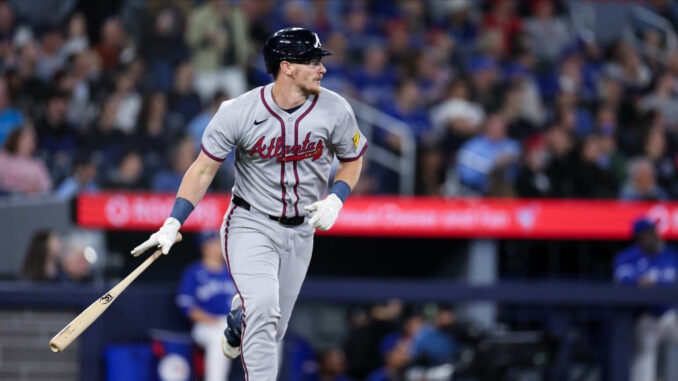
For some time now, it has been increasingly clear that the Atlanta Braves would soon face a series of difficult roster decisions. The organization managed to piece together a competitive and functional lineup despite dealing with a wave of injuries that sidelined several key contributors. Credit is certainly due to the front office and coaching staff for navigating that stretch successfully, relying on depth players and short-term solutions to keep the team afloat.
However, situations like that are rarely permanent. Injured players inevitably return, and when they do, teams are forced to make tough calls about who stays and who goes. That reality ultimately led to the departure of Jonah Heim.
From the outset, it was never realistic to view Heim as a long-term, everyday solution behind the plate for Atlanta. Those who closely follow the game understood his role clearly he was brought in as a stopgap option, a steady and experienced presence who could temporarily handle catching duties while the team awaited the return of their primary starter.

Even so, Heim filled that role effectively. He provided reliability, professionalism, and a veteran understanding of the position, helping to stabilize things during a period when consistency was especially valuable.
At the time Heim was contributing, the Braves were without Sean Murphy, who had been sidelined as he recovered from hip surgery. Murphy’s absence left a significant gap in the lineup, both offensively and defensively, and it required the team to rely more heavily on its depth.
Heim stepped into that void and did what was asked of him. While his production may not have stood out statistically, his ability to manage pitchers, call games, and provide a calming presence behind the plate gave the Braves exactly what they needed under the circumstances.
MORE: Angels Make Unpopular Decision With Three-Time American League MVP Mike Trout
Still, baseball is a business driven by constant change, and roster flexibility is essential. Once Murphy completed his rehabilitation and was ready to return to active duty, the Braves had to make room for him on the roster. Given Murphy’s status as the team’s primary catcher and a key contributor, there was no question he would reclaim his spot. Unfortunately for Heim, that meant his time with the organization had effectively run its course.
As a result, the Braves made the decision to designate Heim for assignment. Moves like this are never easy, particularly when a player has fulfilled his role and contributed positively to the team’s success. However, they are often unavoidable when a roster crunch arises. The designation for assignment process allows a team to remove a player from the 40-man roster while exploring potential outcomes, such as a trade, waiver claim, or outright assignment to the minors.
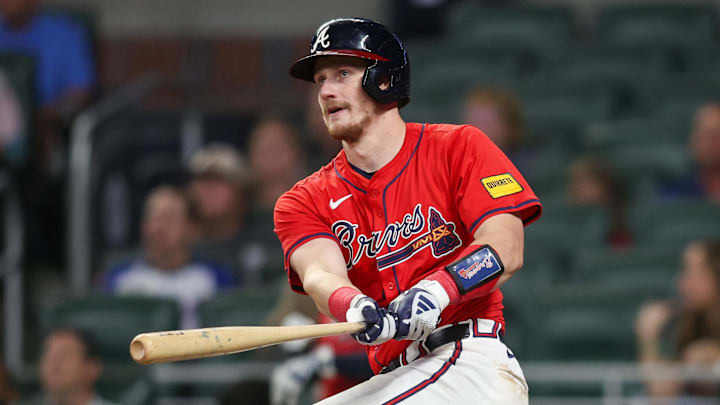
In Heim’s case, the uncertainty did not last long. The Braves moved quickly to resolve his situation, and within just a few hours of designating him for assignment, they reached a deal with another club. Later that same Monday, Atlanta traded Heim to the Oakland Athletics in exchange for cash considerations. The swift turnaround suggests that there was already some level of interest in Heim’s services, which is not surprising given his experience and ability to provide depth at a premium defensive position.
For the Athletics, acquiring Heim represents a low-risk move that could help bolster their catching depth. Teams are always in need of capable backstops, especially ones who can step in and handle pitching staffs without much adjustment time. Heim’s track record as a dependable, if unspectacular, catcher makes him a sensible addition for a team looking to strengthen its roster without making a significant financial commitment.
MORE: Cardinals officially made notable roster move, promote versatile infielder
Meanwhile, for the Braves, the move reflects the ongoing balancing act required to maintain a competitive roster over the course of a long season. Injuries, recoveries, and performance fluctuations all play a role in shaping personnel decisions, and front offices must remain proactive in managing those variables. While parting ways with a useful depth piece like Heim may not be ideal, it is often the cost of welcoming back a more impactful player like Murphy.
In the end, this sequence of events serves as a reminder of how fluid Major League Baseball rosters can be. Players can go from filling an important role one week to being moved the next, all due to circumstances largely beyond their control.
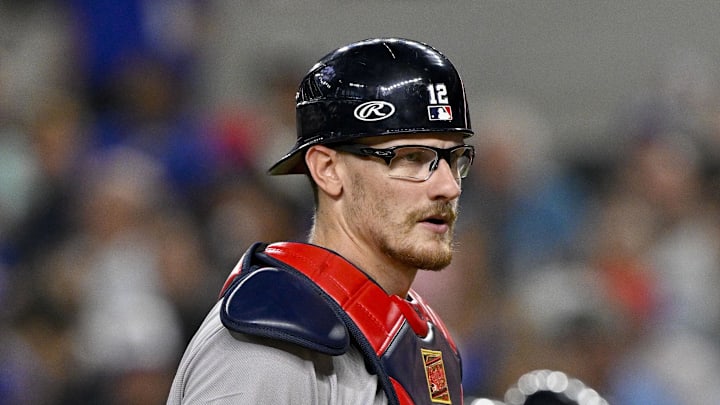
Heim’s brief stint with Atlanta may not have been particularly memorable in terms of standout performances, but it was nonetheless valuable. He did exactly what the team needed from him during a challenging period, and in doing so, helped bridge the gap until Murphy was ready to return.
Now, Heim will have an opportunity to continue his career with a new organization, while the Braves move forward with a healthier roster and a clearer picture of their lineup. It’s a transition that underscores both the unpredictability of the sport and the importance of depth players who are ready to step in whenever they are called upon.
Braves trade Jonah Heim to the A’s in late-night roster housekeeping move
The Atlanta Braves may have entertained the idea of quietly slipping Jonah Heim through waivers and back down to Triple-A, essentially keeping him in reserve for a situation where depth would once again become a pressing need. However, that scenario always felt more like wishful thinking than a realistic outcome. From the outset, it was clear that such a move would face significant obstacles.
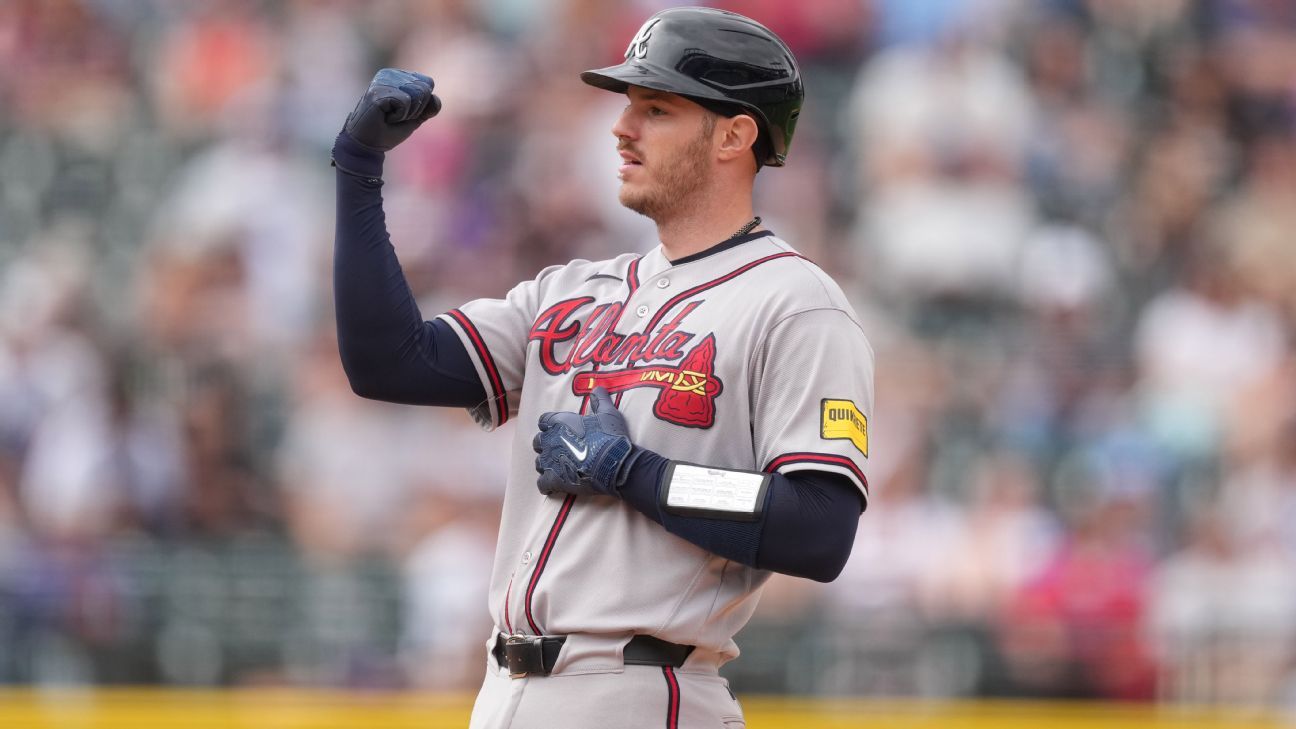
For one, Heim himself would likely have little interest in remaining buried in the minor leagues when a legitimate major league opportunity could present itself elsewhere. Players at his stage of their careers, particularly those who have already proven they can contribute at the highest level, are rarely content to sit in Triple-A waiting for an uncertain call-up.
Beyond Heim’s personal preferences, there is also the broader reality of the league to consider. Catchers, especially those capable of serving as reliable backups, are in consistently high demand across Major League Baseball. Teams value stability and experience behind the plate, even if that doesn’t always translate into offensive production.
MORE: Braves officially make multiple roster moves, part ways with 5.35 ERA swingman
In Heim’s case, while his bat may not be viewed as a significant asset at this stage, that shortcoming is not necessarily disqualifying for a backup role. The offensive expectations for reserve catchers tend to be relatively modest, with teams often prioritizing defensive reliability, game-calling ability, and familiarity with pitching staffs over raw hitting output. Heim has built a reputation as a capable and dependable defender, someone pitchers can trust and managers feel comfortable deploying in key situations when needed.
Given these factors, it was almost inevitable that Heim would not remain available for long. The moment he became accessible, it was widely assumed that another organization would step in quickly to secure his services.
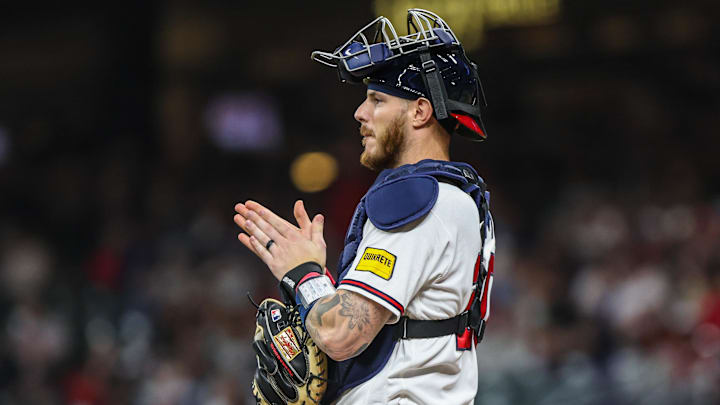
That assumption proved correct when the Oakland Athletics acquired him, bringing his career full circle in an interesting twist. Heim originally broke into the major leagues with Oakland during the 2020 season, and now he finds himself returning to the same organization several years later, albeit in a different role and under different circumstances.
As for the specifics of the transaction, there has been little clarity regarding the financial component involved. The amount of cash considerations sent from Oakland to Atlanta has not been disclosed, though it is widely believed to be a relatively minor sum.
MORE:
Deals involving depth players, particularly those moving between organizations in need of short-term solutions, rarely involve significant financial exchange. Instead, they are typically driven by roster flexibility and immediate needs rather than long-term investment.
In Oakland, Heim is expected to slot into a backup role behind Shea Langeliers, who has emerged as one of the more impressive catchers in the league this season. Langeliers’ performance has solidified his position as the team’s primary option behind the plate, leaving Heim to provide support, mentorship, and occasional starts to help manage workload.
Interestingly, Langeliers also has ties to the Braves organization, having been selected by Atlanta in the first round of the MLB Draft before eventually being traded. This connection adds another layer of intrigue to Heim’s arrival in Oakland, as he now joins a catching group that indirectly reflects Atlanta’s player development pipeline.
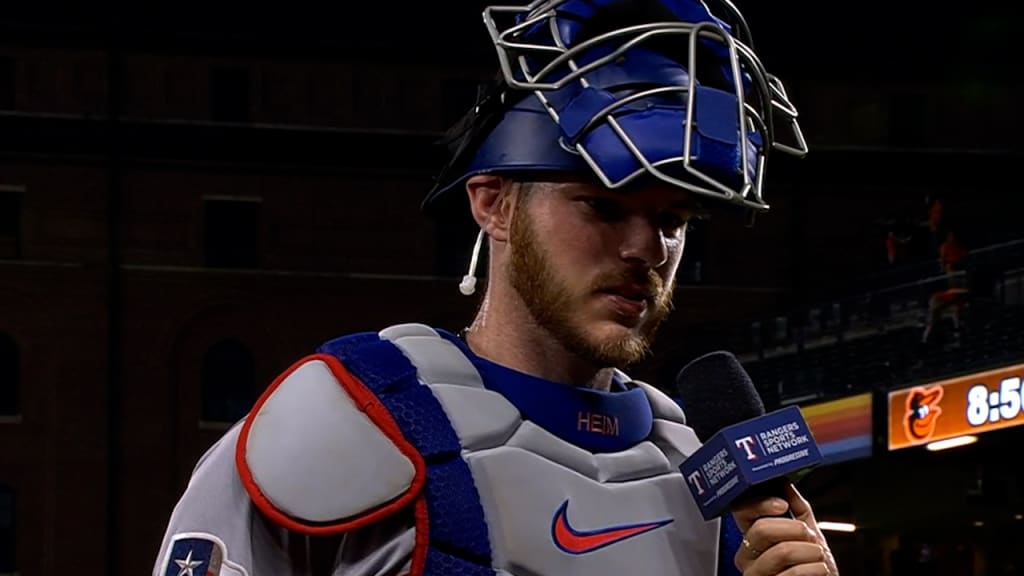
Despite resolving Heim’s situation, the Braves’ roster challenges are far from over. In fact, this move represents just one piece of a much larger puzzle that the organization must navigate in the coming weeks. Atlanta has already welcomed back key contributors such as Spencer Strider and Sean Murphy, both of whom play critical roles in the team’s success. Their returns alone required adjustments to the roster, forcing the Braves to make difficult decisions about who stays and who goes.
However, the situation is poised to become even more complicated as additional players approach their returns from injury or absence. Ha-Seong Kim is expected to rejoin the team, bringing defensive versatility and offensive capability. Michael Harris II, though perhaps not yet fully back to peak form, is also working his way into the mix. Meanwhile, Raisel Iglesias is set to reinforce the bullpen, and Ronald Acuña Jr., one of the franchise’s cornerstone players, looms as a major returning presence.
MORE: Trevor Story’s struggles force Red Sox to crucial roster move
Each of these players occupies a significant role on the roster, and their reinsertions will inevitably come at a cost. For every established player who returns, another must be removed, whether through demotion, designation for assignment, or outright release. These are not merely procedural moves; they often involve players who have contributed meaningfully during periods of injury-related adversity.
The Braves have managed to remain competitive despite missing several key pieces, thanks in part to the efforts of these depth players. As a result, the front office and coaching staff face the unenviable task of deciding which contributors are expendable and which deserve to remain.
This process of roster churn, often referred to as “roster machinations,” is a delicate balancing act. It requires evaluating not only current performance but also future potential, positional needs, and overall team chemistry. A misstep in this process can have ripple effects, potentially weakening depth or disrupting clubhouse dynamics. Conversely, making the right decisions can strengthen the team for the stretch run and improve its chances of postseason success.

For Atlanta, the stakes are particularly high. The team has positioned itself as a contender, and maintaining that status depends on effectively managing these transitions. While the return of star players is undeniably positive, it also introduces a layer of complexity that must be handled with precision. The organization cannot afford to lose valuable depth unnecessarily, nor can it risk holding onto players who no longer fit within the evolving roster structure.
Ultimately, the situation underscores the challenging nature of roster management in Major League Baseball. Success is not determined solely by star power but also by the ability to navigate the constant ebb and flow of player availability. Injuries, recoveries, and performance fluctuations all contribute to an ever-changing landscape that teams must adapt to in real time.
MORE: Blue Jays, Angels on Verge of Explosive Deadline Blockbuster
As the Braves continue to work through these decisions, there is a sense of cautious optimism mixed with concern. On one hand, the return of key players signals improved health and a stronger lineup. On the other, the impending roster cuts serve as a reminder of the difficult choices that accompany that progress. The hope, from both fans and within the organization, is that Atlanta can manage this transition smoothly, preserving as much depth and cohesion as possible while integrating its returning stars.
In the end, Heim’s departure is just one chapter in a broader narrative that is still unfolding. It highlights the realities of professional baseball, where opportunity, timing, and organizational needs often intersect in unpredictable ways. For Heim, the move represents a fresh start and a chance to contribute in a familiar setting. For the Braves, it is another step in a complex process that will ultimately shape the trajectory of their season.

Be the first to comment