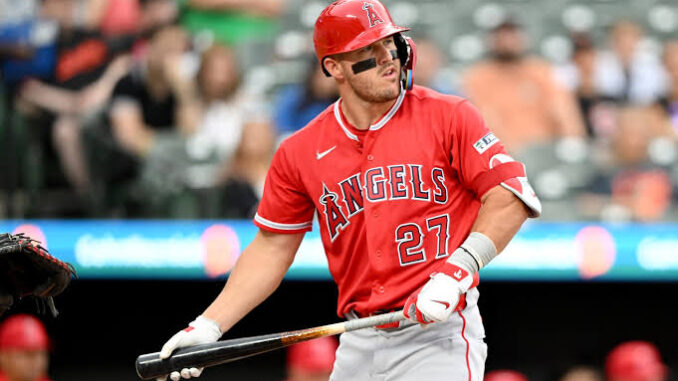
A New Era Is Coming for the Los Angeles Angels — But What Does It Mean for Mike Trout?
The Los Angeles Angels are preparing to enter one of the most significant new chapters in franchise history. After more than two decades under the ownership of Arte Moreno, the organization is set for a major change at the top, bringing with it the possibility of a dramatically different direction for the club.
Moreno has owned the Angels since 2003, when he purchased the franchise from the Walt Disney Company. For 23 years, his name has been closely connected with the organization. His ownership has included some of the most memorable moments in recent Angels history, but it has also coincided with an extended period in which the team struggled to consistently compete for postseason success.
That era is now coming to an end.
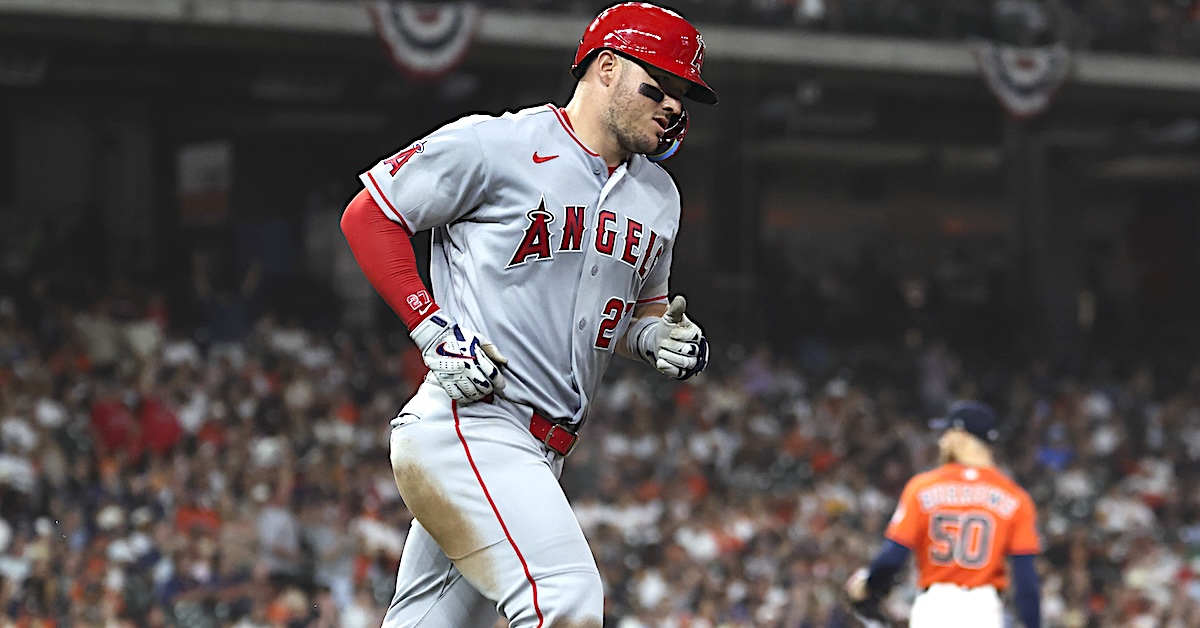
Starting in 2027, the Angels will operate under new ownership, with Stan Kroenke taking control of the franchise. Kroenke is already a major figure in the professional sports world, owning or controlling several prominent teams, including the Los Angeles Rams, Denver Nuggets and Colorado Avalanche. His arrival immediately creates questions about what the future could look like for the Angels, from the front office and roster construction to the team’s overall ambitions.
Naturally, one of the biggest questions surrounding the transition involves the most recognizable player in franchise history.
What happens to Mike Trout?
At first glance, a change in ownership could potentially create uncertainty for a player who has spent his entire professional career with the organization. However, based on Trout’s own comments and his history with the Angels, there does not appear to be an immediate reason to believe that the superstar wants to leave.
In fact, the opposite may be true.
According to The Athletic’s Sam Blum, Trout has indicated that he is pleased with the upcoming ownership change and that it has not altered his desire to remain an Angel. That is particularly important considering how closely Trout’s career has been tied to the franchise.
Trout was selected by the Angels in the first round of the 2009 MLB Draft and eventually became the centerpiece of the organization. From his emergence as one of baseball’s brightest young stars to his rise into one of the game’s greatest players, Trout has remained an Angel throughout his entire major league career.
Despite the team’s struggles, he has repeatedly demonstrated a remarkable level of loyalty to the organization.
Over the years, there have been countless moments when fans and analysts wondered whether the Angels would eventually trade Trout. The club has struggled to build a consistent winner around him, while other stars have come and gone. Yet Trout has continued to express a preference for staying in Anaheim rather than forcing his way to another contender.
That loyalty is significant because Trout has contractual protection that gives him substantial control over his future.
His contract includes a full no-trade clause, meaning the Angels cannot simply decide to trade him to another team without his approval. If a potential trade were ever discussed, Trout would have the ability to reject it.
BREAKING: Braves officially confirm another roster shake up
That puts an enormous amount of power in his hands.
As Blum pointed out, Trout effectively controls his own destiny when it comes to whether he remains with the Angels or moves elsewhere. If he wants to stay in Anaheim, he has the contractual authority to make that decision.
And at this point, there is a compelling reason for him to remain optimistic.
For years, the Angels have been one of the most frustrating teams in Major League Baseball. The organization has had elite individual talent, but that talent has rarely translated into sustained team success. Trout has spent much of his career watching the postseason from home, despite establishing himself as one of the best players of his generation.
That has been one of the great frustrations surrounding his career.
Trout’s individual accomplishments are extraordinary. He quickly established himself as an elite player after reaching the major leagues, earning numerous All-Star selections and major awards while consistently ranking among the best players in baseball. Yet his individual success has not been accompanied by the level of team achievement that many expected when he first became a superstar.
The Angels have struggled to surround him with enough depth and quality to compete consistently.
That has made the possibility of a new ownership group particularly intriguing.
Kroenke’s arrival does not automatically guarantee that the Angels will become a championship contender. New ownership alone cannot fix every problem within an organization. Building a successful baseball team requires strong leadership, intelligent player development, effective scouting, smart free-agent decisions and a sustainable roster-building strategy.

Still, a new owner represents an opportunity to reset the organization.
The Angels could potentially enter this new era with a different philosophy and a renewed commitment to winning. That could be especially meaningful for Trout, who has spent so many seasons waiting for the organization to reach that point.
The most important question may not be whether Trout wants to stay.
It appears that he does.
The bigger question is whether the Angels can give him enough reason to believe that staying will eventually lead to postseason baseball.
That distinction matters.
Trout’s loyalty to the organization has never been enough by itself to turn the Angels into a contender. Even the presence of one of baseball’s greatest players cannot compensate for weaknesses throughout an entire roster. The Angels have learned that lesson repeatedly.
If the new ownership group wants to maximize the final stages of Trout’s career, it will need to demonstrate that the franchise is serious about building a winner.
There is also a significant element of timing involved.
Trout is no longer the young player who first arrived in the majors more than a decade ago. He is now entering the later stages of his career, which makes every remaining season increasingly important. A new ownership era beginning in 2027 could therefore represent a critical opportunity for the Angels to finally surround their longtime superstar with a roster capable of making a legitimate playoff run.
For Trout, the appeal is obvious.
Imagine spending more than a decade as the face of a franchise, delivering elite performances year after year, only to repeatedly miss the postseason. Then, just as your career moves toward its final chapters, the organization receives a new owner with significant experience operating major professional sports franchises.
That could provide a reason for renewed optimism.
Of course, there are no guarantees.
Kroenke’s success in other sports does not necessarily mean that his baseball operation will immediately succeed. Baseball is fundamentally different from the NFL, NBA and NHL, and the Angels have numerous organizational challenges that will need to be addressed.
The new ownership group will have to determine how aggressively it wants to spend, how it wants to structure the front office, which executives it trusts to build the roster and what type of long-term plan it wants to follow.
Those decisions could ultimately determine Trout’s future more than the ownership change itself.
If the Angels demonstrate a clear commitment to winning, there may be little reason for Trout to consider leaving. If the organization continues to struggle despite the change at the ownership level, however, the conversation could become more complicated.
For now, though, Trout appears willing to give the Angels another chance.
That should matter enormously to the franchise.
A player of Trout’s stature could easily have chosen a different path during his career. He has had opportunities to express frustration, and there have been plenty of occasions when a trade might have made sense from a purely baseball perspective.
Instead, he has remained committed to the Angels.
His connection to the organization and the Southern California area has been well established, and he has consistently communicated his preference to remain with the team. That makes the upcoming ownership transition especially interesting because it gives the Angels an opportunity to reward that loyalty.
The franchise now has a chance to prove that Trout’s faith in the organization was justified.
There is also an important distinction between wanting to stay and believing the team can win.
Trout can remain loyal to the Angels while still expecting the organization to make meaningful improvements. A new owner will likely face pressure to demonstrate that the club has a realistic path toward contention.
That could mean improving player development, adding proven talent, making better roster decisions and creating a stronger organizational foundation.
The Angels cannot simply rely on Trout to carry them.
They will need to build around him.
That is perhaps the biggest lesson from the Moreno era.
Even when the Angels had multiple elite players, the roster often lacked the depth necessary to compete over a full season. Injuries, inconsistent pitching, questionable roster construction and other issues repeatedly prevented the club from turning star power into sustained success.
The new ownership group will have the opportunity to change that narrative.
For Trout, this could be one of the final chances to experience meaningful postseason success in an Angels uniform.
That possibility is difficult to ignore.
The idea of Trout finally playing October baseball with the Angels has been one of the most enduring storylines in the franchise’s recent history. He has accomplished almost everything imaginable on an individual level, but the team success has remained elusive.
A playoff appearance would therefore mean something different for him than it would for a younger player.
It would represent the culmination of years of loyalty to the organization.
And if the Angels can become competitive under Kroenke, Trout would have the opportunity to experience that success without having to leave the only major league team he has ever known.
That is likely why the ownership transition is being viewed with cautious optimism rather than immediate concern.
Blum’s assessment captures the situation well: Trout has made his preference clear, and the change in ownership does not appear to have changed his desire to remain with the Angels. Because of his no-trade protection, the final decision is largely his to make.
The Angels should therefore view Trout’s continued commitment as an advantage.
They have something many rebuilding teams would love to possess: a generational player who still wants to be part of the organization.
The challenge is convincing him that the organization can finally deliver the winning environment he has been waiting for.
That will take time.
Even with a new owner, the Angels cannot transform overnight. Roster problems do not disappear simply because the ownership changes hands. The organization will need to make a series of smart decisions over multiple seasons.
That raises another important question: how quickly can the Angels realistically become competitive?
If the answer is several years, the situation becomes more complicated. Trout’s career clock is moving faster than the organization’s rebuilding timeline might be. A long-term rebuild could potentially reduce the value of his remaining years in Anaheim.
If, however, the Angels can accelerate their turnaround, the situation could look completely different.
A competitive roster would make staying much more attractive.
That is where Kroenke’s involvement becomes particularly interesting. His history in professional sports means he understands the importance of building organizations capable of competing at the highest level. While baseball presents its own unique challenges, the Angels will hope that his experience can help bring a more ambitious mindset to the franchise.
The goal should not simply be to make the Angels respectable.
It should be to make them contenders.
That is the standard required if the organization wants Trout to finish his career in Anaheim with no regrets.
There is no reason at this point to assume that Trout is preparing to leave. His comments suggest that he is comfortable with the change and remains interested in being part of the next chapter.
The Angels should take that as an encouraging sign.
For the first time in a long time, the organization has a genuine opportunity to reshape its future while retaining its greatest star.
The upcoming years will determine whether that opportunity becomes a success story or another chapter of disappointment.
Moreno’s 23-year tenure is coming to a close, and with it comes the possibility of a fundamental transformation for the Angels. Kroenke will inherit a franchise with plenty of work to do, but also with a superstar who still wants to wear the team’s uniform.
That combination gives the Angels a valuable starting point.
Now the responsibility falls on the new leadership.
If the organization can build a competitive roster, strengthen its infrastructure and establish a consistent winning culture, Trout may finally get the opportunity he has been waiting for throughout his career.
And if that happens, the new era of Angels baseball could become something much bigger than an ownership change.
It could become the beginning of the chapter in which Mike Trout finally gets to chase the postseason in an Angels uniform.
For now, the signs are encouraging.
Trout appears happy about the transition. He has no-trade protection. He has repeatedly expressed a desire to remain with the organization. And, most importantly, the arrival of new ownership creates at least the possibility that the Angels can finally build the kind of team capable of matching his ambitions.
The uncertainty is not whether Trout wants to stay.
The uncertainty is whether the Angels can give him a compelling reason to stay through the remainder of his career.
That answer will take time to discover.
But after years of frustration, there is finally a reason to believe that change could be coming to Anaheim.
And for Mike Trout, that may be the most important development of all.

Be the first to comment