
The New York Mets made one of the more unexpected roster decisions of the late 2026 season when they placed outfielder Luis Robert Jr. on outright waivers. Considering Robert’s reputation, athletic ability and previous production at the major league level, the move immediately attracted attention throughout baseball.
At first glance, the decision made sense from the Mets’ perspective. New York has been moving toward the future, and the organization appears increasingly interested in giving younger players opportunities while trimming salary from a disappointing season. Robert had also struggled to stay healthy and productive during his first season with the Mets.
Still, letting a player with Robert’s power and defensive ability become available to the entire league was a surprising decision.

The Mets ultimately got what they wanted from the move financially, but they also opened the door for another team to benefit from Robert’s considerable upside. That is exactly what happened when the Baltimore Orioles claimed him off waivers.
BREAKING: Braves officially make stunning $5M pitching announcement
The Orioles were not the only club interested. The San Diego Padres reportedly placed a claim on Robert as well, hoping to add another dangerous bat to a lineup preparing for a postseason push. However, Baltimore had higher waiver priority because of its inferior record, meaning the Orioles won the race for Robert. (MLB.com)
For San Diego, the outcome was particularly frustrating. The Padres were dealing with injuries and remained firmly focused on securing a playoff position. Robert represented the type of high-upside offensive addition that could have strengthened their lineup for the final weeks of the regular season.
Instead, the Orioles got the opportunity.
Mets Decide to Move On
The Mets’ decision to place Robert on waivers came after a disappointing season in New York.

Robert entered the year with plenty of expectations. The Mets acquired him from the Chicago White Sox during the offseason, hoping a change of scenery could help him rediscover the form that once made him one of baseball’s most exciting young players.
What $4 billion Angels sale means for Mike Trout after unwavering loyalty towards the organization
Unfortunately, injuries became a major factor.
Robert appeared in only 58 games for New York. He hit .223 with 10 home runs, 23 RBIs and a .702 OPS. He also spent almost three months on the injured list because of a lumbar spine disc herniation. (MLB.com)
Those numbers were a significant drop from the player the Mets hoped they were acquiring.
But there was another important part of the story.
Robert had begun showing signs of life before the Mets decided to waive him.
After returning from the injured list, he initially struggled to regain his timing. As August progressed, however, his production began to improve. In 21 games beginning August 6, Robert hit .288 with six home runs and a .922 OPS, demonstrating that the offensive ability that made him such an intriguing player was still present. (MLB.com)
That recent improvement made the Mets’ decision even more interesting.
Rather than holding onto Robert and seeing whether he could continue his resurgence, New York chose to make him available to other organizations.
The financial side of the decision was an obvious consideration.
Robert was owed roughly $3 million for the remainder of the 2026 season, while his contract included a $20 million team option for 2027 with a $2 million buyout. By placing him on waivers, the Mets created an opportunity to eliminate that future financial commitment and save money during a season in which their attention had increasingly shifted toward younger players. (MLB.com)
In other words, the Mets were not simply giving up on Robert because they believed he had no remaining value.
They were making a business decision.
Robert’s Reputation Made the Move Surprising
The most surprising aspect of the situation was not necessarily that the Mets wanted to move on.

It was that a player with Robert’s résumé was available to the entire league at this stage of the season.
Robert is a former All-Star and Silver Slugger Award winner. In 2023, during his time with the White Sox, he hit 38 home runs, stole 20 bases and established himself as one of the most dangerous all-around offensive players in the American League.
BREAKING: Braves officially confirm another roster shake up
He also won a Gold Glove earlier in his career.
That version of Robert has not consistently appeared in recent seasons, largely because injuries have repeatedly interrupted his development and production. Nevertheless, the underlying talent remains obvious.
Even during his disappointing 2026 campaign, Robert demonstrated the ability to change a game with one swing.
For teams fighting for playoff positions, that type of potential can be extremely valuable.
A contender does not necessarily need a player to reproduce an entire MVP-caliber season over the final month. It may simply need a hitter capable of providing power against difficult pitching, especially in October.
Robert potentially offered exactly that.
Why the Padres Wanted Him
The San Diego Padres were among the teams that reportedly tried to acquire Robert after he reached waivers.

Their interest was understandable.
San Diego was battling for one of the final playoff positions in the National League, and injuries had created additional pressure on the roster. The Padres had recently dealt with injuries involving Gavin Sheets and Luis Rengifo, increasing the need for another versatile offensive option.
Robert would have addressed multiple needs.
First, he could provide power.
Second, he could play center field.
Third, he offered the possibility of significant upside if he could remain healthy.
The Padres did not necessarily need Robert to become the player who hit 38 home runs and stole 20 bases in 2023. Even a productive version of Robert could have made a difference for a team attempting to squeeze into the postseason.
That is what makes the outcome so frustrating for San Diego.
The organization reportedly made the claim.
It simply did not have a high enough position in the waiver order.
Waiver Priority Decided Everything

Once multiple teams claimed Robert, the final decision was determined by waiver priority.
Baltimore had the worse record and therefore held the higher priority.
That meant the Orioles were awarded Robert despite San Diego’s interest.
There was nothing the Padres could do about it.
Waiver priority is based on league rules, not which organization needs the player more or which team has the better chance of reaching the postseason.
For San Diego, that created a particularly painful situation.
The Padres were trying to compete for October baseball, while Baltimore entered the final stretch of the season trying to close the gap in the American League Wild Card race. Both teams had reasons to want Robert, but Baltimore’s position in the waiver order ultimately settled the matter. (MLB.com)
The Orioles entered the day at 68-69 and only one game behind Cleveland for the final AL Wild Card position.
That made Robert an intriguing gamble.
Baltimore Takes the Risk
The Orioles clearly viewed Robert differently than the Mets did.
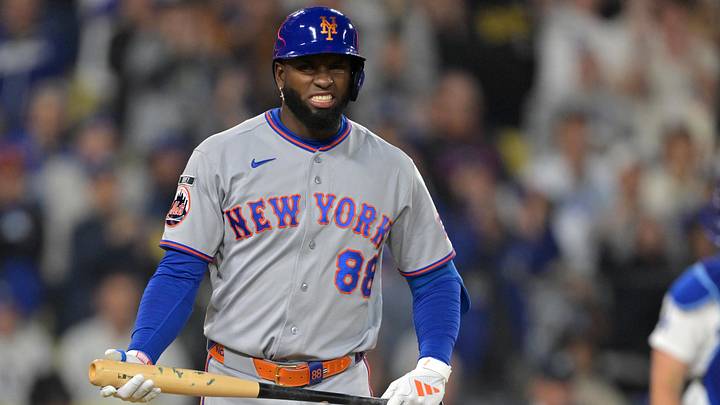
Rather than focusing primarily on his disappointing 2026 numbers, Baltimore appears to have placed greater emphasis on what he could potentially provide over the final month.
The Orioles assumed roughly $3 million in remaining salary for 2026, along with the $2 million buyout associated with his 2027 option. (MLB.com)
That is not an insignificant amount of money, but it is also a relatively manageable investment for a team searching for offensive help.
Baltimore desperately needed more production from the outfield.
Robert gives the Orioles another right-handed option capable of playing center field. The club had primarily relied on left-handed hitter Colton Cowser and switch-hitter Leody Taveras at the position, making Robert’s skill set particularly useful. (MLB.com)
The timing also worked in Baltimore’s favor.
Because Robert joined the organization before September 1, he remained eligible for the postseason should the Orioles qualify. That effectively gave Baltimore an opportunity to add a player with significant major league experience without surrendering prospects or trade assets. (MLB.com)
That is the type of gamble a team on the edge of the playoff race can reasonably take.
Robert Already Showing Why Baltimore Took the Chance
The Orioles did not have to wait long to see what Robert could potentially provide.
He made his Baltimore debut against the Colorado Rockies and immediately delivered a major offensive moment.
Batting cleanup, Robert produced a two-run double in the third inning, driving in Jackson Holliday and former Met Pete Alonso. The hit helped give Baltimore an early 3-0 advantage. Robert finished the game 1-for-5 with two RBIs and later scored the go-ahead run in the 11th inning. (New York Post)
Baltimore ultimately lost the game 6-5 in extra innings, but Robert’s performance offered an immediate reminder of why teams were interested in him.
One game obviously cannot erase months of inconsistent production.
It can, however, demonstrate why a contender might be willing to gamble on a talented player.
The Orioles are not expecting Robert to suddenly become the centerpiece of their lineup.
They simply need him to contribute.
A Frustrating Miss for San Diego
For the Padres, Robert’s arrival in Baltimore represents a missed opportunity.
San Diego was reportedly interested because the club believed his power could make an already dangerous lineup even better.
The Padres are in a completely different position from the Mets.
New York could afford to think about the future.
San Diego could not.
Every remaining game mattered.
The Padres were trying to navigate injuries while competing for a playoff spot, and adding a player with Robert’s combination of power and defensive versatility could have been extremely useful.
Instead, they watched him go to a team with higher waiver priority.
That is especially difficult because the Padres actually tried to get him.
Had San Diego simply decided not to pursue Robert, the situation would have been easier to explain. But reportedly submitting a claim and then losing him because another team had a worse record makes the outcome much more frustrating.
It is one of those situations where the rules determine the result regardless of how much sense the acquisition might make from a competitive standpoint.
The Mets May Eventually Regret It
The Mets’ decision can be defended.
They were unlikely to receive much value from Robert if they did not intend to exercise his $20 million option for 2027. His injury history made the financial commitment even more complicated.
At the same time, baseball decisions are rarely judged solely on their immediate financial logic.
If Robert gets healthy and rediscovers his old form in Baltimore, the Mets could eventually look back on the move differently.
That is the risk New York accepted.
Robert has already demonstrated that he can be a difference-maker when healthy. His 2023 season with Chicago remains proof that the ceiling is extremely high.
The problem has always been consistency and availability.
The Mets essentially decided they were no longer willing to wait for that upside to materialize.
A New Opportunity for Robert
From Robert’s perspective, the waiver claim gives him a fresh opportunity.
His time in New York did not unfold as expected.
The Mets acquired him with hopes that he could become an important offensive piece, but injuries and inconsistent production prevented that from happening.
Now he has a chance to reset.
Baltimore can give him a defined role while also providing meaningful games in September.
Most importantly, the Orioles are competing for something.
That environment could potentially benefit Robert.
Instead of playing for a team primarily evaluating its future, Robert is now joining an organization that needs immediate contributions.
If he can stay healthy, he could become an important part of Baltimore’s playoff push.
And if the Orioles qualify for October, Robert could potentially enter the postseason as one of the team’s more intriguing offensive wild cards.
The Bigger Picture for the Orioles
Baltimore’s decision is also notable because the organization had previously been active in reshaping its roster.
Claiming Robert signals that the Orioles are willing to take a calculated risk despite their record.
They did not acquire a proven superstar at the trade deadline.
Instead, they found an opportunity after another club decided it no longer wanted to carry the financial and roster burden associated with Robert.
That is a potentially clever way to improve a roster.
The Orioles are not risking prospects.
They are not surrendering young players.
They are simply taking on Robert’s remaining contract and hoping that his talent translates into production.
For a team only a game out of a Wild Card position at the time of the claim, that gamble was understandable. (MLB.com)
The Padres Will Wonder What Could Have Been
The Padres, meanwhile, will have to move forward without Robert.
There is no guarantee that he would have transformed their season had they won the claim.
Robert’s injury history and inconsistent production remain legitimate concerns.
But that is not really the point.
San Diego was searching for offensive reinforcements, and Robert represented one of the few available players with legitimate high-end upside.
He was inexpensive compared with the cost of acquiring a comparable player through a trade.
The Padres wanted him.
Baltimore simply had the better waiver position.
That is why the situation will likely remain frustrating for San Diego throughout September, particularly if Robert begins producing consistently for the Orioles.
A Move That Could Define September
The Mets’ decision to waive Luis Robert Jr. may ultimately be remembered as one of the more intriguing roster moves of the late 2026 season.
For New York, it was primarily about financial flexibility, roster construction and looking toward the future.
For Baltimore, it was a calculated gamble on a former All-Star trying to rediscover his best form.
For San Diego, it was a missed opportunity.
The irony is that all three teams had very different motivations.
The Mets were moving on.
The Orioles were buying low.
The Padres were trying to win now.
And because of the way MLB’s waiver system works, Baltimore ended up with the player.
Robert’s arrival in Baltimore has already produced an encouraging moment, with his two-run double helping the Orioles jump out to an early lead in his debut. (New York Post)
Whether that performance becomes the beginning of a sustained turnaround remains to be seen.
But the potential is obvious.
Robert is only 29 years old. He has already been an All-Star, a Silver Slugger winner and a Gold Glove winner. He has demonstrated legitimate power, speed and defensive ability at the highest level.
The question has never really been whether he possesses talent.
It has been whether he can stay healthy long enough to consistently use it.
The Orioles are betting that he can.
The Mets decided they were no longer interested in making that bet.
And the Padres will be left wondering how much different their playoff push might have looked if their waiver position had been just a little bit better.
For now, Baltimore has won the Luis Robert Jr. sweepstakes.
The rest of September will determine whether that gamble was worth it.




Be the first to comment