The Seattle Mariners made a decisive move to strengthen their lineup ahead of the MLB trade deadline, acquiring veteran outfielder Taylor Ward from the Baltimore Orioles in exchange for three right-handed pitchers: Alex Hoppe, Brock Moore, and Harrison Kreiling. The deal, finalized just before the cutoff, reflects Seattle’s urgency to address offensive shortcomings as they push toward postseason contention. (MLB.com)
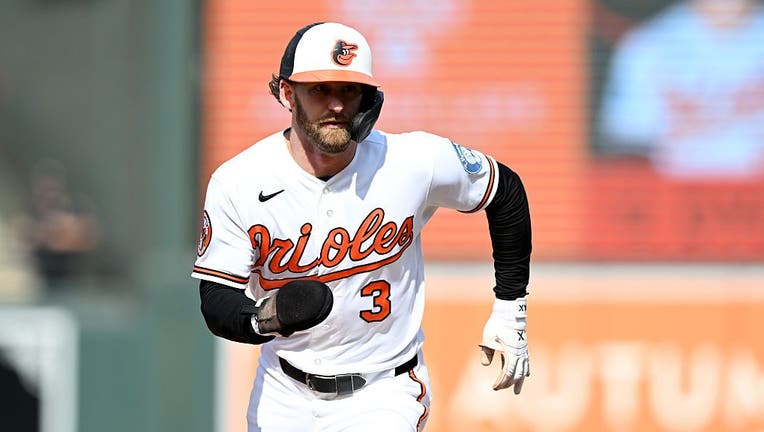
Ward, now 32 years old, arrives in Seattle as one of the most disciplined hitters in the American League this season. His ability to consistently reach base has been a defining trait of his game, and in 2026, that skill has reached an elite level.
He leads the American League in walks with 87, a statistic that underscores both his patience at the plate and his understanding of strike-zone control. (Reuters) His on-base percentage has climbed to a career-best .383, making him one of the toughest outs in baseball and a perfect fit for a Mariners offense that has struggled to generate consistent traffic on the bases.
Seattle’s lineup has lacked players who can reliably get on base, and that deficiency has been a major factor limiting the team’s offensive ceiling.
Prior to this trade, Randy Arozarena stood as the only Mariners hitter with an on-base percentage above .330, highlighting the scarcity of high-OBP contributors in the lineup. By bringing in Ward, the Mariners are not only adding experience but also filling a glaring statistical gap that has hindered their ability to sustain rallies and produce runs.
BREAKING: Braves officially swing veteran reliever from Angels in 2-player blockbuster trade
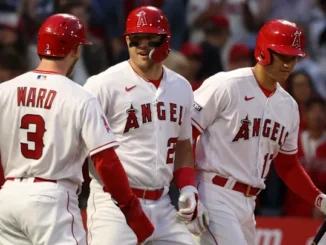
Ward’s track record suggests that his current performance is no fluke. During his time with the Los Angeles Angels, he developed into a steady and productive hitter, particularly over the last several seasons.
In 2025, he posted the best offensive numbers of his career, setting highs in multiple categories, including 36 home runs, 31 doubles, 103 runs batted in, and a .475 slugging percentage. That season established him as a legitimate middle-of-the-order threat and demonstrated his capacity to deliver power alongside his on-base skills.
Although his power numbers have dipped slightly in 2026, Ward’s overall offensive value remains significant due to his plate discipline and consistency. His approach at the plate makes him especially valuable in high-pressure situations, where drawing walks and extending at-bats can be just as impactful as hitting for power. For a Mariners team that has often struggled to manufacture offense, those qualities are particularly important.

General manager Justin Hollander expressed strong enthusiasm about the acquisition, emphasizing Ward’s reputation as one of the league’s most reliable offensive performers. In a team statement, Hollander highlighted Ward’s ability to get on base and his consistent production as key reasons behind the move. The Mariners view him as a player who can immediately upgrade their lineup and help balance their offensive profile.
BREAKING NEWS: Red Sox officially swing another blockbuster trade
One of the most pressing issues for Seattle this season has been its struggles against left-handed pitching. The team has posted one of the lowest OPS marks in the league when facing southpaws, ranking near the bottom of the American League in that category. This weakness has been a recurring problem, often leaving the Mariners at a disadvantage in matchups against teams with strong left-handed starters or relievers.
Ward’s addition directly addresses that issue. As a right-handed hitter with a strong track record against left-handed pitching, he provides the Mariners with a much-needed option in those situations. His presence should help lengthen the lineup and create more favorable matchups throughout the batting order.
The Mariners had attempted to solve this problem during the offseason by signing Rob Refsnyder, a player known for his success against left-handed pitching. However, that move has not paid off as expected. Refsnyder has struggled significantly, batting just .140 with a .465 OPS over 53 games. His lack of production forced the Mariners to look elsewhere for solutions, ultimately leading to the acquisition of Ward.
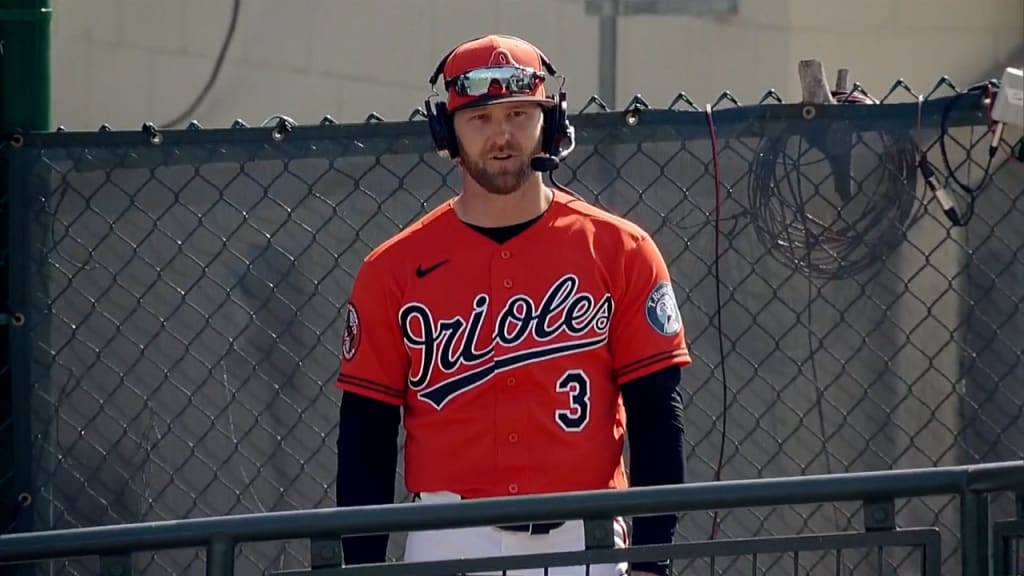
From a strategic standpoint, this trade represents a classic “win-now” move for Seattle. Ward is set to become a free agent at the end of the season, meaning the Mariners are acquiring him as a rental player rather than a long-term piece. This indicates that the organization is prioritizing immediate competitiveness over future control, a decision that aligns with their position in a tightly contested playoff race. (Lookout Landing)
Ward’s journey to Seattle has been an interesting one. After spending eight seasons with the Angels, he was traded to the Orioles prior to the 2026 campaign. His time in Baltimore was relatively short, but he remained a productive contributor, continuing to demonstrate the consistency that has defined his career. Over the past five years, he has established himself as a dependable offensive presence, capable of contributing in multiple facets of the game.
BREAKING: St. Louis Cardinals trade 1.5 WAR this deadline
Despite his overall success, Ward has historically struggled at T-Mobile Park, Seattle’s home stadium. In 30 career games played there during his time with the Angels and Orioles, he has posted a batting average of just .195, along with limited extra-base production. He has recorded only one extra-base hit—a double—while striking out 35 times in 127 plate appearances. These numbers suggest that the ballpark has not been particularly favorable for him.
However, that context may not be as significant moving forward. Now that Ward is joining the Mariners, he will no longer have to face Seattle’s pitching staff, which could help explain some of his previous struggles at the venue. Additionally, players often experience changes in performance after joining a new team, particularly when placed in a different lineup context or given a defined role.
Another layer of familiarity exists between Ward and the Mariners organization. He was originally selected in the first round of the 2015 MLB Draft by the Angels during the tenure of Jerry Dipoto, who now serves as Seattle’s president of baseball operations. That connection suggests that the Mariners’ front office has long been aware of Ward’s potential and skill set, making this acquisition a natural fit from an evaluation standpoint.
On the other side of the deal, the Orioles receive three pitchers, each at different stages of development. Alex Hoppe, the most experienced of the group, has already made his major league debut with Seattle.
The 27-year-old reliever has appeared in 24 games this season, posting a 5.79 ERA while recording 34 strikeouts and issuing 11 walks. Although his results at the major league level have been mixed, he has shown flashes of potential and could benefit from a change of scenery.
BREAKING: Mets-White Sox Confirmed Another Blockbuster Deal
Brock Moore, a 26-year-old prospect, was selected in the seventh round of the 2024 MLB Draft. He has spent the 2026 season splitting time between Single-A Everett and Double-A Arkansas. Moore began the year on a strong note, posting a 1.13 ERA in 13 appearances at Everett, where he struck out 32 batters in just 16 innings while limiting walks.
His performance earned him a promotion to Arkansas, where he has faced more challenges, recording a 5.56 ERA over 18 appearances. Despite the inconsistency, Moore’s strikeout ability suggests he has the tools to develop into a useful pitcher at higher levels.
Harrison Kreiling, the third player in the trade, is a 24-year-old right-hander selected in the 17th round of the 2024 draft. He has pitched in the Arizona Complex League as well as at the Single-A level, where he continues to develop his skills. While he may be further away from contributing at the major league level, Kreiling represents a long-term project for the Orioles, who are focused on building depth within their farm system.
For Baltimore, the decision to trade Ward reflects a broader organizational strategy. With Ward set to reach free agency after the season, the Orioles opted to capitalize on his value by acquiring multiple pitchers who could contribute in the future. This approach aligns with a long-term outlook, prioritizing player development and roster flexibility over short-term gains. (The Economic Times)
Meanwhile, the Mariners’ perspective is centered on immediate improvement. By adding Ward, they are attempting to address key weaknesses and position themselves for a playoff push. The trade signals confidence in their ability to compete, even in a highly competitive American League landscape.
The timing of the move is also significant. With the trade deadline serving as a critical juncture in the season, teams must decide whether to buy, sell, or stand pat. Seattle’s decision to acquire Ward clearly places them in the “buyer” category, indicating that they believe their current roster, with the addition of Ward, is capable of making a deep postseason run.
From a lineup standpoint, Ward’s presence could have multiple effects. He may slot into a top-of-the-order role, where his on-base skills can set the table for the Mariners’ power hitters. Alternatively, he could be used in a middle-of-the-order position, providing balance and extending the lineup. His versatility gives the coaching staff flexibility in how they deploy him.
There is also the possibility that Ward’s arrival could lead to changes elsewhere on the roster. Players who have struggled, particularly in platoon roles, may see reduced playing time or be reassigned to different roles. This could create a more competitive environment within the team, potentially leading to improved performance across the board.
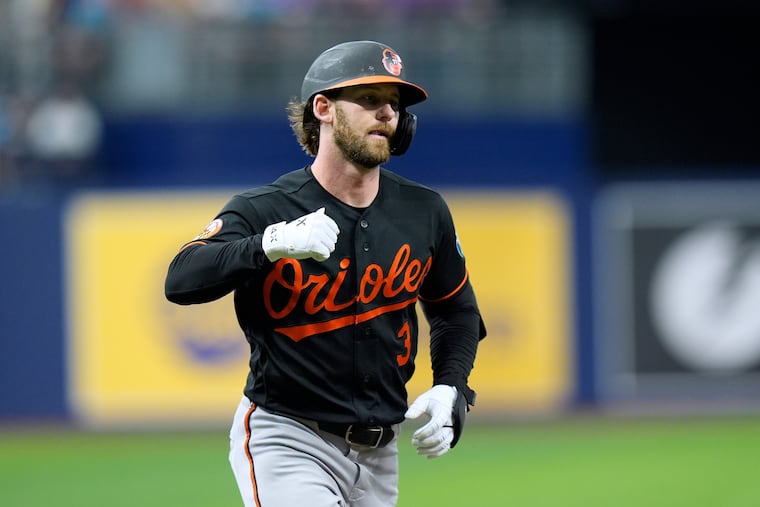
Ultimately, this trade represents a calculated risk for the Mariners. By giving up multiple pitchers, including a major league arm and two prospects, they are investing in a player who may only be with the team for a short period. However, if Ward’s contributions help propel the Mariners into the postseason—or even beyond—the move will likely be viewed as a success.
For the Orioles, the trade offers an opportunity to strengthen their pitching depth and continue building for the future. While they lose a productive hitter in Ward, they gain three pitchers who could play roles in their organization moving forward.
As the dust settles on the trade deadline, this deal stands out as one of the more intriguing moves, highlighting the contrasting strategies of two teams with different priorities. The Mariners are focused on winning now, while the Orioles are looking ahead to the future.
In the end, the success of the trade will depend on how both sides capitalize on their respective returns. For Seattle, the key question is whether Ward can provide the offensive spark they need to make a serious playoff push. For Baltimore, it will be about developing the acquired pitchers and maximizing their potential in the years to come.
Either way, the acquisition of Taylor Ward adds another compelling storyline to the 2026 MLB season, as the Mariners attempt to turn their playoff aspirations into reality with a proven hitter now in their lineup.

Be the first to comment