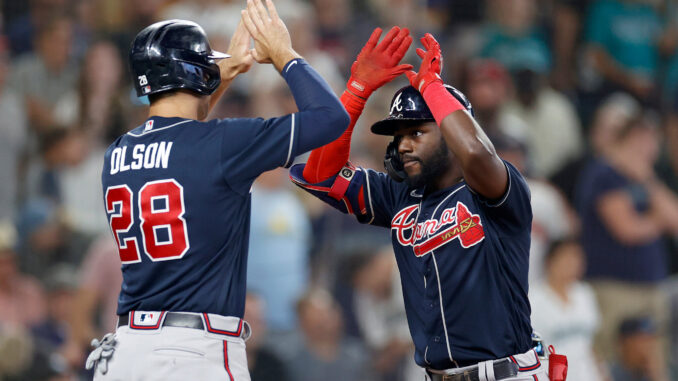
The Atlanta Braves made a series of roster adjustments on Tuesday as they continue to fine-tune their pitching staff ahead of the All-Star break and manage the constant demands of a long MLB season.
The most notable move was the promotion of left-handed pitcher Connor Thomas, whose contract was selected from Triple-A Gwinnett. The move had been reported shortly before the official announcement, but it quickly became clear that Atlanta was reshaping multiple layers of its pitching depth in one coordinated set of transactions. (MLB Trade Rumors)
To create room on the active roster for Thomas, the Braves optioned right-handed pitcher Owen Murphy back to Triple-A Gwinnett. Murphy, a young arm with upside, had only recently been called up but was sent down as part of the club’s ongoing effort to balance performance, workload, and bullpen freshness.

At the same time, the Braves needed to make space on the 40-man roster, which led to a more permanent move: right-hander Daysbel Hernández was released. In addition, the team recalled right-hander James Karinchak from Gwinnett and placed fellow reliever Tyler Kinley on the paternity list, where he can remain for up to three days while attending to family matters. (Yahoo Sports)
Taken together, these moves reflect a common midseason strategy for contending teams—cycling pitchers between the majors and Triple-A to maintain a fresh bullpen while also evaluating depth options. For Atlanta, a team with postseason aspirations, maintaining flexibility on the pitching staff is essential, especially during stretches of heavy scheduling or before key milestones like the All-Star break.
St. Louis Cardinals officially cut 6-year MLB veteran
Connor Thomas’ promotion is particularly noteworthy because it represents both an opportunity and a homecoming. The 28-year-old left-hander signed a minor league contract with Atlanta back in November, joining the organization after spending his entire professional career in the National League Central. Originally selected in the fifth round of the 2019 MLB Draft by the St. Louis Cardinals, Thomas developed within that system before later spending time in the Milwaukee Brewers organization. (Baseball Reference)
A native of Tifton, Georgia, Thomas is returning to familiar territory. He pitched collegiately at Georgia Tech, where he built a strong reputation as a durable and effective starter with excellent control. His journey back to his home state adds an extra layer of significance to this promotion, as he now gets the chance to contribute at the major league level for a team he likely followed growing up.
Despite being 28 years old, Thomas is still relatively inexperienced in the majors. Prior to this call-up, he had logged just 5 1/3 innings at the big league level, meaning his résumé at baseball’s highest level remains limited. However, that lack of experience is balanced by strong recent performance in Triple-A, which ultimately earned him this opportunity.
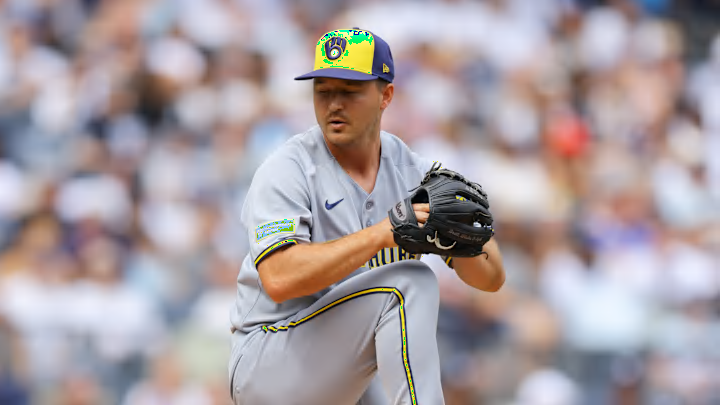
With Gwinnett this season, Thomas has been nothing short of impressive on the surface. Over 15 appearances—13 coming out of the bullpen and two as a starter—he has compiled 23 2/3 innings with a sparkling 1.14 ERA. Those numbers stand out in any context, particularly in Triple-A, where offensive environments can often inflate ERAs. His ability to consistently limit runs made him a logical candidate for a promotion when Atlanta needed another left-handed option.
However, a deeper look at Thomas’ performance reveals a more nuanced picture. His success has been aided in part by a .213 batting average on balls in play (BABIP), which is considered somewhat fortunate and may not be entirely sustainable over a larger sample. Additionally, his strikeout rate sits at 18.4%, which is below average for a pitcher in today’s game, especially one expected to succeed in a relief role.
NEWS: Braves officially reward JR Ritchie’s strong outing with demotion in exchange for familiar face
That said, Thomas has offset his relatively modest strikeout numbers with other strengths. His command has been solid, evidenced by an 8.3% walk rate that suggests he can consistently throw strikes and avoid free passes. Perhaps even more importantly, he has generated ground balls at an elite rate—59% of balls put in play against him have been on the ground. This ability to induce weak contact is a valuable skill, particularly for a pitcher who doesn’t rely heavily on strikeouts.
Advanced metrics such as Fielding Independent Pitching (FIP) and expected FIP (xFIP) provide additional context. Thomas’ FIP of 3.89 and xFIP of 4.27 indicate that his ERA may be somewhat inflated by favorable circumstances and could regress over time. Still, even those metrics suggest he has been a competent and potentially useful arm, especially when combined with his command and ground-ball tendencies.
For the Braves, the decision to promote Thomas is not solely about his current performance—it’s also about roster flexibility. Now that he has been added to the 40-man roster, Atlanta can freely option him between the majors and Triple-A without exposing him to waivers. Importantly, Thomas still has all three of his minor league option years remaining, giving the Braves significant control over how they deploy him moving forward.

This flexibility is crucial in modern roster management. Teams frequently shuttle pitchers back and forth to ensure a steady supply of fresh arms, particularly in the bullpen. If Thomas performs well, he could carve out a role for himself. If not, the Braves can send him back to Gwinnett without risking losing him to another organization.
While Thomas’ arrival represents a new opportunity, the departure of Daysbel Hernández marks a turning point in a different direction. Hernández, now 29, had been part of the Braves organization for several years and had seen time in the majors across three different seasons. In that span, he posted a respectable 3.38 ERA over 58 2/3 innings, suggesting he was capable of being an effective reliever at times.
NEWS: Angels officially make special roster move to solidify bullpen
However, Hernández’s performance has long been accompanied by significant concerns about his command. His career walk rate of 16.7% is extremely high, and that lack of control has consistently raised questions about his long-term viability. While he has shown the ability to limit runs in smaller samples, sustaining that level of performance with such a high walk rate is difficult.
Those concerns became even more pronounced during the 2026 season. Hernández began the year on the injured list due to a shoulder issue, missing the first couple of weeks of the campaign. Upon returning, he struggled to regain form, posting a 5.06 ERA in Triple-A Gwinnett. While that number alone is not catastrophic, it doesn’t fully capture the extent of his struggles.
Over 22 appearances, Hernández faced 104 batters and walked 19 of them, resulting in an 18.3% walk rate—an even higher figure than his already concerning career average. He also hit three batters (2.9%) and threw multiple wild pitches, further highlighting his control issues. These problems made it difficult for him to consistently execute pitches and maintain effectiveness.
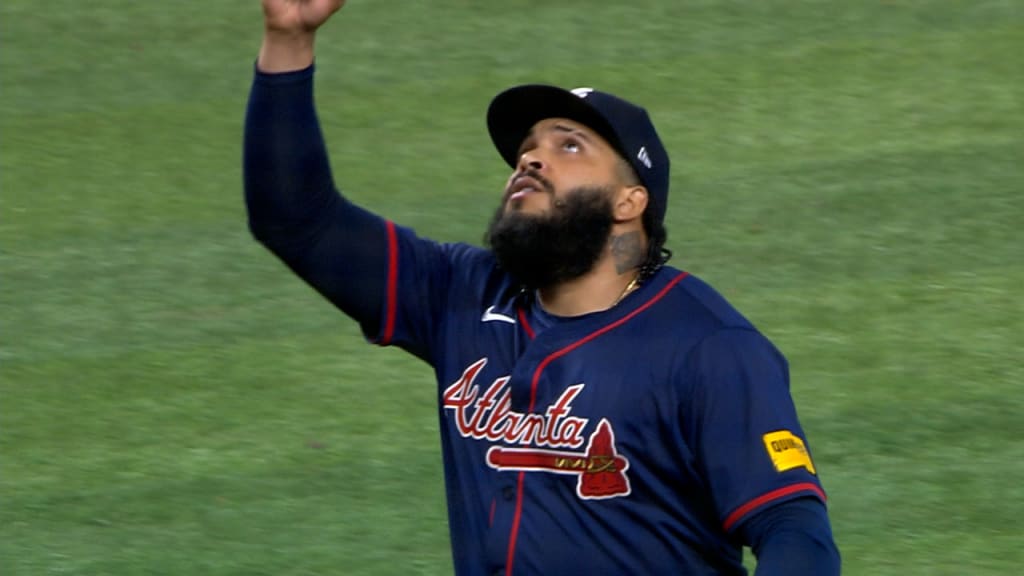
Compounding matters, Hernández’s velocity showed signs of decline. His average fastball velocity dropped to 96.3 mph, down significantly from the 97.7 mph he averaged the previous season. For a pitcher whose success is heavily tied to power and the ability to miss bats, even a modest drop in velocity can have a noticeable impact.
Given these factors, the Braves ultimately decided to part ways with Hernández in order to clear a spot on the 40-man roster. While the move may seem abrupt, it reflects the reality of roster management in professional baseball. Teams must constantly evaluate not only performance but also projection, health, and overall roster fit.
BREAKING: Braves Officially Make Special Roster Move “Earlier-Than-Normal”
Despite his release, Hernández is unlikely to be out of opportunities. Pitchers with his profile—high velocity and a track record of missing bats—often attract interest from other organizations. If he can address his command issues or regain his previous velocity, he could find another role, either within MLB or potentially in international leagues such as those in Asia.
Meanwhile, the Braves’ decision to recall James Karinchak adds another layer to their bullpen reshuffling. Karinchak, a right-hander known for his strikeout ability, provides a different look compared to Thomas and helps balance the pitching staff. His recall comes at a time when the team needs reliable innings, particularly with Kinley temporarily unavailable due to the paternity list.
Kinley’s placement on the paternity list is a routine but important transaction, allowing players to attend to family matters without impacting their long-term roster status. MLB rules permit players to remain on the list for up to three days, after which they must either return to the active roster or be placed on another list if necessary.

The optioning of Owen Murphy, while less permanent than Hernández’s release, is also part of the broader strategy. Young pitchers often move between levels as they adjust to the majors, and Murphy’s return to Triple-A will allow him to continue developing in a lower-pressure environment. (Battery Power)
Overall, these moves highlight the constant churn that defines MLB rosters, particularly for pitching staffs. Teams must balance immediate needs with long-term development, all while navigating injuries, performance fluctuations, and scheduling demands. For the Braves, this latest round of transactions is about maintaining depth, flexibility, and competitiveness.
Connor Thomas now finds himself at the center of that strategy. While he may not be a high-profile prospect or a dominant strikeout pitcher, his combination of command, ground-ball ability, and recent success makes him an intriguing option. Whether he can translate that success to the major league level remains to be seen, but the opportunity is now his.
For Atlanta, the hope is that Thomas can provide quality innings and stabilize the bullpen, even if only in a complementary role. At the same time, the team will continue to evaluate its options, ready to make further adjustments as needed.
In the end, these roster moves are less about any single player and more about the bigger picture. The Braves are positioning themselves for sustained success, ensuring they have the depth and flexibility required to navigate the challenges of a full season. Each transaction—whether it’s a promotion, demotion, recall, or release—plays a role in that larger goal.
And as the season progresses, it’s likely that more changes will follow, continuing the cycle of evaluation and adjustment that defines modern baseball.

Be the first to comment