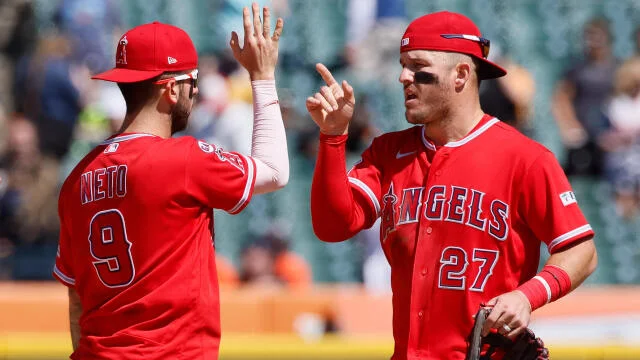
There’s really no sugarcoating it the Los Angeles Angels’ bullpen has been downright awful. By virtually every meaningful statistical measure, this group has performed near the bottom of Major League Baseball. Whether you look at traditional stats or advanced analytics, the story remains the same: this relief corps has been a glaring weakness for the team.
To start with the basics, the Angels’ bullpen ERA sits near the very bottom of the league. An ERA north of five is already concerning, but when it climbs into the 5.30 range, it signals a unit that consistently fails to limit damage. This isn’t just a case of a few bad outings skewing the numbers; it reflects sustained struggles across multiple pitchers and situations. Opposing teams are routinely finding success late in games, turning manageable deficits into blowouts or erasing leads that should have been secure.
But ERA alone doesn’t tell the full story, and unfortunately for the Angels, the deeper metrics paint an equally bleak picture. Fielding Independent Pitching (FIP), which attempts to isolate a pitcher’s performance by removing defensive factors, also ranks near the bottom for this bullpen.
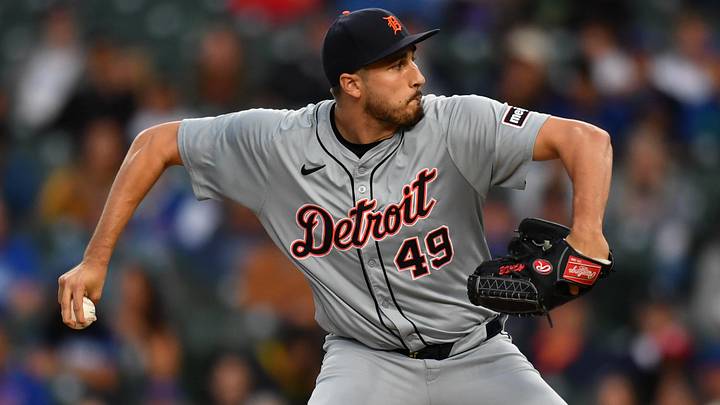
A FIP hovering around five suggests that the issues go beyond bad luck or poor defense. Instead, it indicates that the pitchers themselves are struggling with the fundamentals giving up too many home runs, issuing too many walks, and failing to generate enough strikeouts to escape jams.
Even more alarming is the bullpen’s negative Wins Above Replacement (WAR). In simple terms, WAR measures how much value a player or in this case, a group of players adds compared to a readily available replacement. When a bullpen collectively posts a negative WAR, it means they’ve actually been worse than what a team could expect from minor-league call-ups or freely available talent. That’s not just underperformance; it’s a serious liability.
MORE: Braves reliever sign with NL West team
Recent reports and analyses have echoed these struggles, noting that the Angels’ bullpen ERA has been among the worst in baseball this season. This aligns with the broader narrative that the team’s relief pitching has been a consistent problem area, one that has contributed significantly to their inability to compete effectively on a nightly basis.
When a bullpen is performing this poorly, there isn’t a quick or easy fix. You can’t simply tweak one or two roles or rely on a single player to turn things around. Instead, teams often resort to a more experimental approach cycling through arms, making low-risk signings, and hoping that someone emerges as a reliable option. It becomes a numbers game: bring in as many potential contributors as possible and see who, if anyone, can provide stability.
That’s exactly the approach the Angels appear to be taking. Their recent decision to bring in Alex Faedo on a minor-league deal fits this strategy perfectly. Faedo, a former first-round pick in the 2017 MLB Draft, represents the kind of low-cost, potentially high-upside addition that teams in this situation often pursue. While he hasn’t established himself as a consistent major-league contributor, he does bring a certain level of pedigree and experience that makes him an intriguing option.

Over the course of his major-league career, Faedo has logged more than 175 innings across three seasons with the Detroit Tigers. That kind of experience matters, especially for a bullpen that lacks reliability. He’s seen big-league hitters, navigated high-pressure situations, and at least shown flashes of competence at the highest level. For a team desperate for answers, that’s enough to warrant a look.
The plan is for Faedo to report to Triple-A Salt Lake, where he’ll have an opportunity to prove himself before potentially earning a call-up to the majors. This step is important, as it allows the Angels to evaluate his current form without immediately exposing him to major-league competition. If he performs well with the Bees showing improved command, limiting hard contact, and demonstrating the ability to handle late-inning situations he could quickly find himself back in the big leagues.
And the path to a promotion isn’t exactly crowded. One of the realities of the Angels’ current bullpen situation is that there aren’t many established, high-performing relievers blocking opportunities. In fact, the lack of reliable options means that almost anyone who shows even modest effectiveness could carve out a role. For Faedo, that creates a clear and attainable goal: pitch well enough in Triple-A, and the door to the majors will open.
This revolving-door approach to bullpen construction is far from ideal, but it’s often necessary for teams dealing with this level of underperformance. The Angels aren’t in a position to be selective or patient; they need immediate improvement, even if it comes from unexpected sources. That’s why they’re willing to take chances on players like Faedo, hoping that a change of scenery or a tweak in mechanics might unlock untapped potential.
Of course, there’s no guarantee that this strategy will work. For every success story where a minor-league signing turns into a key contributor there are countless cases where the player fails to make an impact. But when your bullpen is already performing at a level worse than replacement players, the risk is minimal. The potential upside, however, is significant.
MORE: Understand St. Louis Cardinals Receives Stunning News Regarding Hunter Dobbins
It’s also worth noting that bullpen struggles can have a ripple effect on the entire team. When relievers can’t be trusted to hold leads or keep games close, it puts additional pressure on the starting rotation and the offense. Starters may feel compelled to pitch deeper into games, even when they’re fatigued, while hitters may press to build larger leads to compensate for late-inning uncertainty. Over time, this can wear down a team and contribute to a cycle of poor performance.
For the Angels, addressing the bullpen isn’t just about improving one aspect of the roster—it’s about stabilizing the entire team. Until they find a way to get more consistent production from their relievers, it will be difficult to make meaningful progress in the standings.
In the meantime, the organization will continue to search for answers wherever it can find them. Whether it’s through minor-league signings, trades, or internal development, the goal remains the same: identify pitchers who can provide reliability and help turn the bullpen from a weakness into at least a serviceable unit.
Alex Faedo may or may not be part of that solution. But given the current state of the Angels’ bullpen, he represents exactly the kind of gamble the team needs to take. With little to lose and everything to gain, the Angels are casting a wide net, hoping that somewhere within it lies the piece that can finally bring some stability to their struggling relief corps.
Alex Faedo is a low-risk, medium-reward candidate for Angels’ woeful relief corps
Alex Faedo represents just one piece of what has quietly become a small-scale overhaul of the Angels’ pitching depth during the month of May. The organization has begun to reshuffle its inventory of arms, bringing in a mix of experienced but inconsistent pitchers in hopes of stabilizing a staff that has struggled to find reliability.
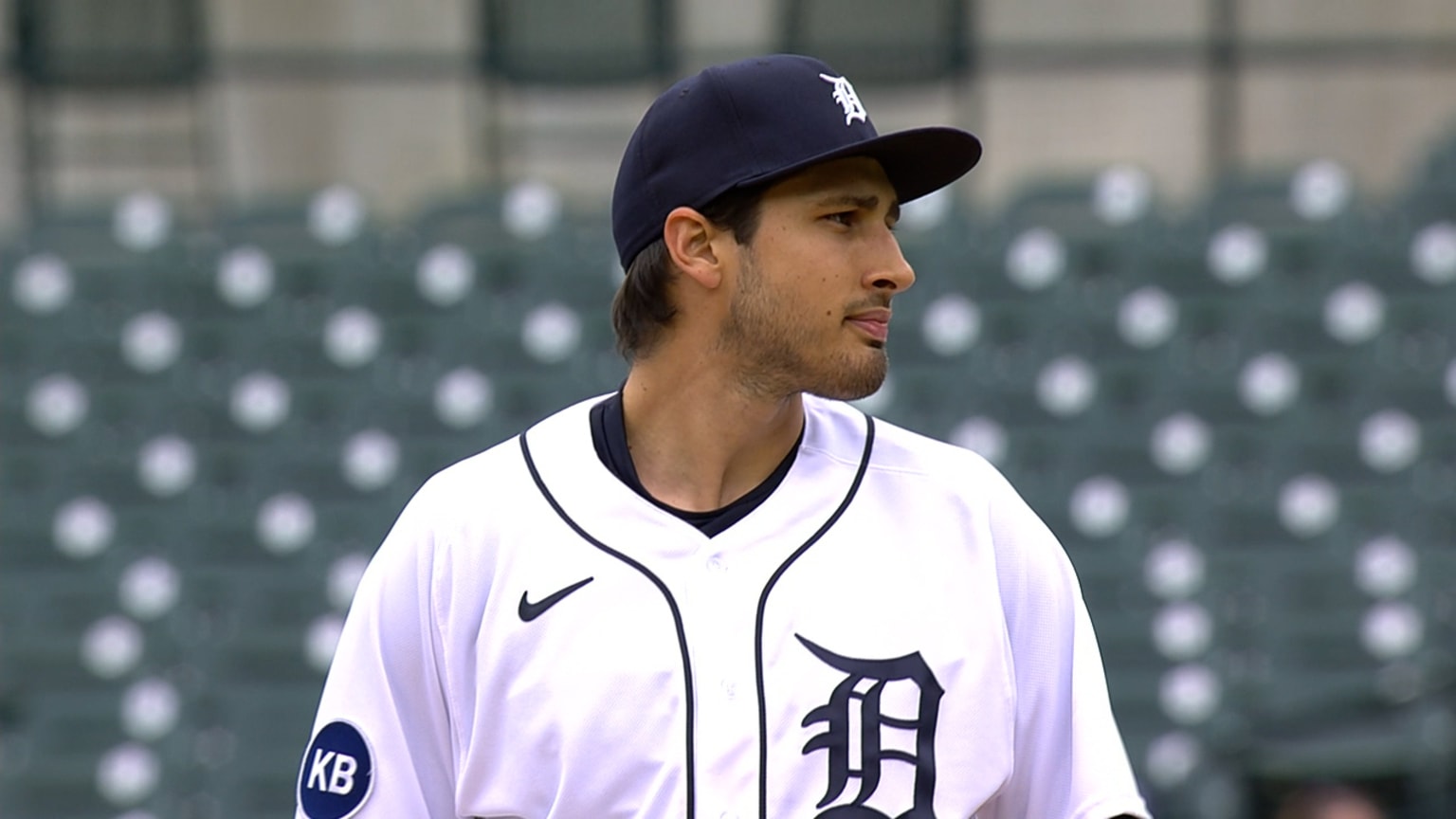
Alongside Faedo, the Angels have added former Philadelphia Phillies starter Taijuan Walker whose tenure there failed to meet expectations and Rob Kaminsky, a pitcher with international experience as a two-time World Baseball Classic participant. Together, these moves signal a clear attempt to inject new life into a pitching group that has been underwhelming for much of the season.
What makes Faedo’s situation particularly interesting compared to the other additions is the lack of a clearly defined role. Walker is firmly established as a starting pitcher, while Kaminsky has transitioned into a relief role after beginning his career as a starter. Faedo, however, exists somewhere in between.
MORE: Cardinals Keep Flamethrower, Trade Lars Nootbaar, In Bold 2026 Season
Over the course of his major league career, he has functioned in both capacities, starting 30 of his 64 appearances at the MLB level while also logging significant time out of the bullpen. This dual background gives him a level of flexibility that neither Walker nor Kaminsky necessarily offers.
During his time with the Detroit Tigers, Faedo’s role began to evolve. Early in his career, he was used more traditionally as a starter, but as the team experimented with its pitching usage, he was increasingly deployed in relief situations. By his final season with Detroit, the balance had shifted noticeably toward bullpen work, reflecting both team needs and his own development. That gradual transition underscores his adaptability, which could prove valuable for an Angels team searching for answers in multiple areas of its pitching staff.
This kind of versatility is particularly appealing given the current state of the Angels’ pitching workload. While the bullpen has not been excessively overused compared to other teams across the league, it has still been asked to shoulder a significant burden.
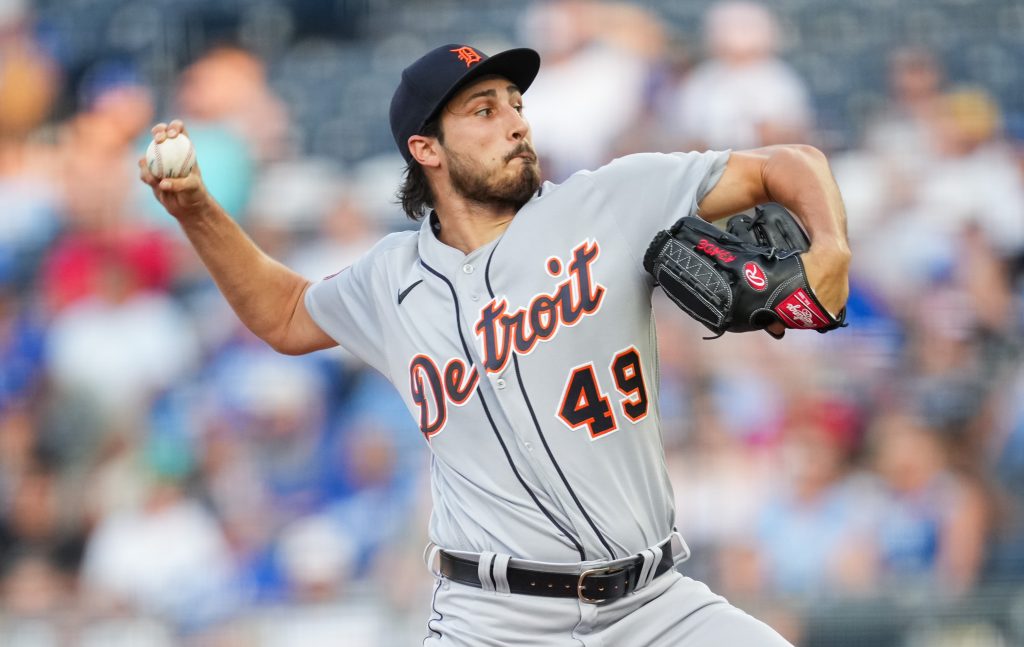
Through the early portion of the season, Angels relievers have collectively thrown over 200 innings, placing them squarely in the middle of the pack league-wide. On the surface, that might not sound alarming, but context matters. Much of that workload has come not from strategic bullpen management, but from necessity.
The Angels’ starting rotation has struggled to provide consistent depth, forcing the bullpen to step in earlier and more often than ideal. Outside of a few dependable arms most notably José Soriano and Reid Detmers the rotation has lacked stability.
This has created a ripple effect, placing additional strain on the relievers, who must frequently cover multiple innings or enter games in high-leverage situations. Even if the total innings pitched don’t rank among the league’s highest, the nature of those innings often high-pressure and unpredictable adds to the challenge.
MORE: Braves Fans Shares Heartbreaking Take Regarding $20M Star Ha-Seong Kim
In that environment, a pitcher like Faedo becomes especially intriguing. His ability to move between roles means he can potentially serve as a bridge between the rotation and bullpen, filling in wherever the need is greatest. Whether that involves spot starts, long relief outings, or middle-inning appearances, his flexibility could help the Angels manage their pitching staff more effectively.
From a performance standpoint, Faedo is unlikely to overwhelm anyone with elite numbers, but he has demonstrated a baseline level of competence over his career. He owns a 4.51 ERA across his major league tenure, which, while not exceptional, is respectable for a pitcher who has frequently been asked to adjust roles and responsibilities. For a team in need of stability, simply being serviceable can carry significant value.
Digging deeper into his skill set reveals some encouraging traits. Faedo has shown an ability to generate swings and misses at an impressive rate. At one point, his whiff rate climbed above 30%, indicating that his pitches can be difficult for hitters to square up. This ability to miss bats is critical, especially for a pitcher who may be used in high-leverage or multi-inning situations where strikeouts can help escape jams.

In addition to his swing-and-miss potential, Faedo has historically done a solid job of limiting hard contact. Keeping hitters from making loud, damaging contact is an underrated but crucial skill, particularly in an era where power hitting dominates the game. By inducing weaker contact, he can reduce the likelihood of extra-base hits and home runs, even if he isn’t consistently overpowering hitters.
One of the standout aspects of Faedo’s arsenal is his slider. During his most effective stretch, that pitch graded out as one of the more effective breaking balls in baseball when measured by run value. The slider serves as his primary weapon, allowing him to keep hitters off balance and generate both swings and misses and weak contact. When it’s working, it can elevate his performance from merely adequate to genuinely impactful.
However, it’s important to temper expectations. There are clear reasons why Faedo was available on a low-cost, low-risk deal. Injuries have been a recurring issue throughout his career, most notably shoulder problems that limited his availability in 2024 and extended into 2025. Shoulder injuries are particularly concerning for pitchers, as they can affect both velocity and command, two critical components of success at the major league level.
Beyond health concerns, Faedo has also struggled with home run prevention. Throughout his career, he has been prone to allowing the long ball, a flaw that can quickly negate his strengths. Even if he limits hard contact overall, mistakes left in the strike zone have often been punished. This tendency makes him somewhat volatile, as a single mislocated pitch can dramatically impact an outing.
Age is another factor to consider. At 30 years old, Faedo is no longer a young prospect with untapped upside. While he’s not necessarily past his prime, the window for significant development is narrower than it once was. What he is now is likely close to what he will be moving forward—a pitcher with some useful skills but also clear limitations.
Still, context matters, and for the Angels, the bar for improvement is not particularly high. The bullpen has been one of the weakest units on the team, with few reliable options emerging over the course of the season. Aside from Sam Bachman, who has shown flashes of breakout potential, the group has struggled to establish any consistency. Late-inning situations, in particular, have been a source of concern, with no clear hierarchy of trustworthy arms.
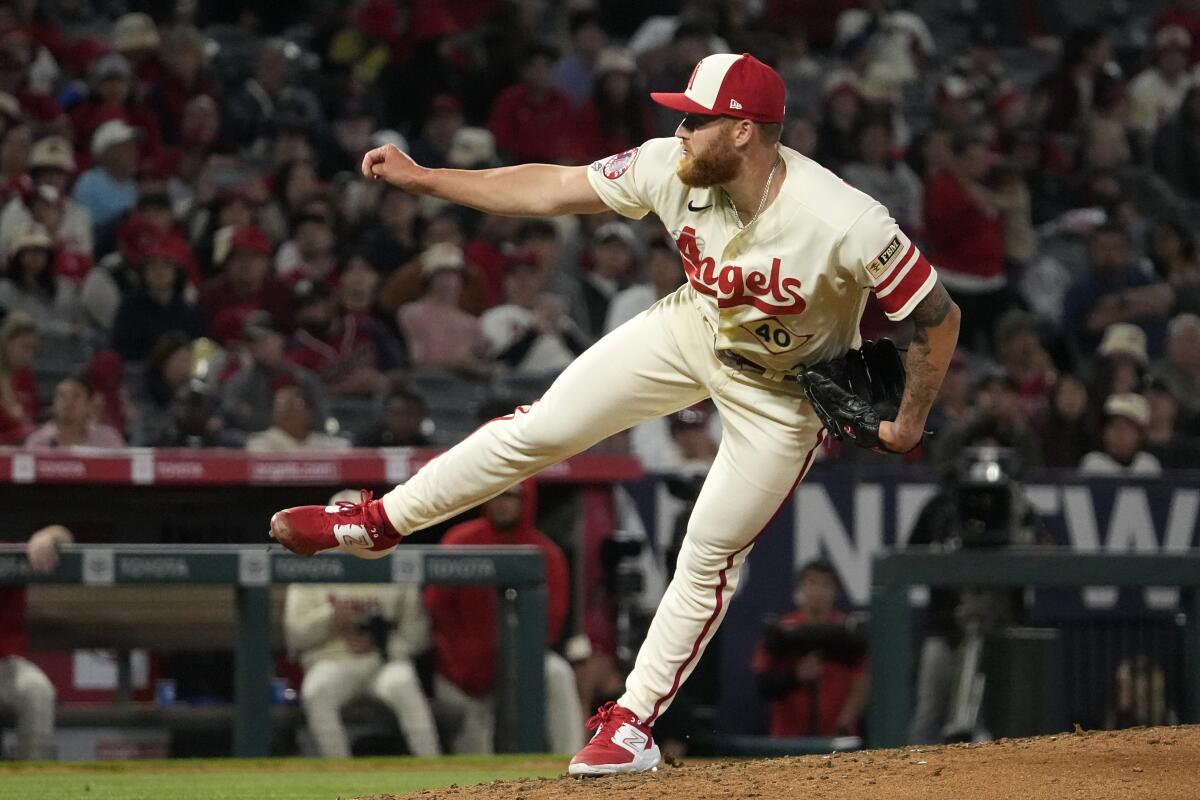
Manager Kurt Suzuki has had limited options when it comes to deploying relievers in critical moments. Without dependable performers, even routine situations can feel precarious. This lack of stability has made it difficult for the team to close out games or maintain leads, further highlighting the need for reinforcements.
In that sense, Faedo represents both a gamble and an opportunity. On one hand, there are legitimate concerns about his durability and susceptibility to home runs. On the other hand, his track record suggests that he is capable of providing competent innings, particularly if used in the right situations. For a team in need of immediate help, even incremental improvement can make a meaningful difference.
It’s also worth noting that Faedo has yet to appear in a major league game during the 2026 season. This means that before he can contribute at the highest level, he will need to demonstrate that he is healthy and effective in the minor leagues. His initial assignment will likely serve as a proving ground, allowing the Angels to evaluate his current form and determine how he might fit into their plans.
MORE: Nolan Schanuel’s Lingering Calf Injury Raises Concern as Angels Weigh Injured List Decision
If he performs well showing improved command, maintaining his velocity, and effectively utilizing his slider he could quickly earn a call-up. Given the current state of the bullpen, the path to the majors is relatively unobstructed. Unlike teams with established relief hierarchies, the Angels have ample room for newcomers to carve out roles.
Ultimately, the decision to bring in Faedo reflects a broader organizational strategy: take calculated risks on pitchers with some track record of success and hope that one or more of them can exceed expectations. It’s not a guaranteed solution, but given the circumstances, it’s a logical approach.
For Faedo, this opportunity represents a chance to reestablish himself and potentially redefine his career. For the Angels, it’s another attempt to address a persistent weakness that has hindered their performance throughout the season. Whether or not this particular move pays off remains to be seen, but one thing is clear: if there’s any team that stands to benefit from finding unexpected value in a reclamation project, it’s this one.
In a season where consistency has been hard to come by, the Angels are essentially searching for a spark something, anything, that can help stabilize their pitching staff. Faedo may not be the most obvious candidate to provide that spark, but in a situation as uncertain as this, even unlikely contributors can make a significant impact.



Be the first to comment