The Baltimore Orioles have rarely been associated with splashy offseason activity in recent years, but this winter has represented a notable departure from that trend. After years of relying heavily on internal development and carefully measured roster additions, the organization has taken a far more aggressive approach as it looks to build on last season’s momentum and push deeper into October.
The front office has already addressed several lingering weaknesses by bringing in a trio of established veterans, including Shane Baz, Pete Alonso, and Ryan Helsley, signaling a clear intent to contend rather than simply compete.
With spring training looming on the horizon, however, the Orioles appear far from finished. Baltimore’s leadership remains active in the market, and their attention has now turned toward one of the most recognizable names in modern baseball: veteran right-hander Justin Verlander.

According to Ken Rosenthal of The Athletic, the Orioles are among several teams that have expressed interest in the future Hall of Fame starter. While no agreement appears imminent and discussions are still preliminary, Baltimore’s involvement alone underscores how serious the organization is about bolstering its rotation ahead of another postseason push.
MORE: Red Sox Officially Land $1.2 Million ‘Potential 5-Tool’ Infielder
At first glance, Verlander might not seem like the most obvious fit for a club built around youth and long-term sustainability. He will pitch his age-43 season in 2026, and durability is always a question when pitchers reach that stage of their careers. Still, there are multiple layers to Baltimore’s interest—some rooted in performance, others in familiarity, leadership, and strategic flexibility.
One of the most compelling factors connecting Verlander to the Orioles is his relationship with Baltimore’s president of baseball operations, Mike Elias. Before taking the reins in Baltimore, Elias spent several years with the Houston Astros, serving as assistant general manager beginning in 2016. During that tenure, he was part of the front office that orchestrated one of the most impactful trades of the decade.
In September 2017, Houston acquired Verlander from the Detroit Tigers, a move that transformed the Astros’ rotation overnight. Verlander went on to become a central figure in Houston’s championship core, winning two World Series titles and reestablishing himself as one of the premier pitchers of his generation. Elias witnessed firsthand the effect Verlander could have—not just on the mound, but throughout an entire clubhouse.
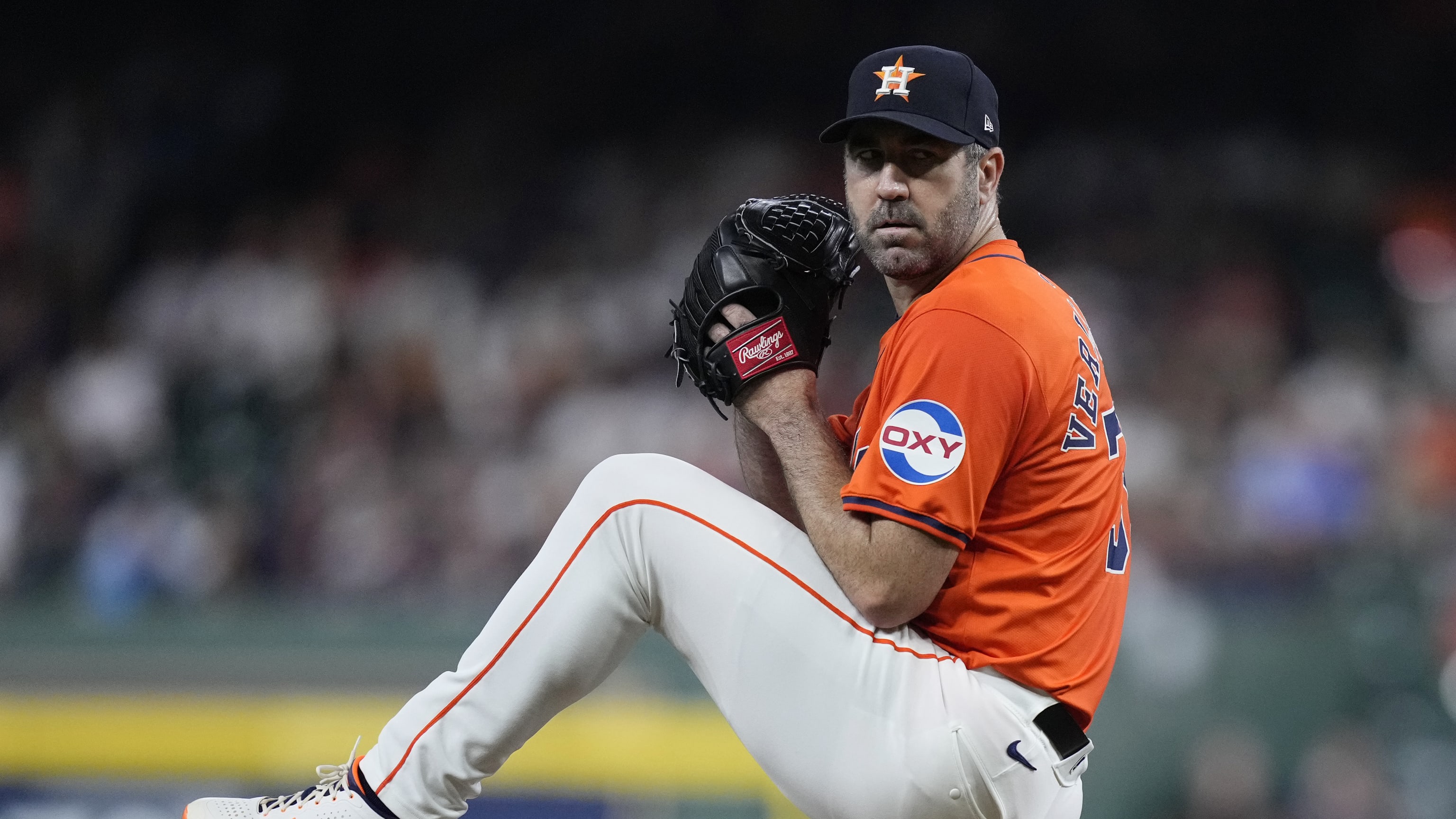
That shared history matters. Front offices often place considerable value on familiarity, particularly when evaluating older players. Elias understands how Verlander prepares, how he handles adversity, and how he contributes beyond box scores. Those intangibles become especially important for a young Orioles team still learning how to navigate the pressure and grind of consistent postseason expectations.
MORE: White Sox lose top infielder to Cubs
Geography adds another subtle layer to the conversation. Verlander is a Virginia native, and while proximity alone rarely drives free-agent decisions, it can factor into comfort and lifestyle considerations—especially at this stage of a long career. Baltimore would offer Verlander a chance to pitch relatively close to home while remaining on a competitive team with legitimate championship aspirations.
That said, it’s important to emphasize that Verlander is not Baltimore’s primary objective this offseason. Rosenthal reports that the Orioles’ top priority remains acquiring a true frontline starter—someone capable of anchoring the rotation for multiple seasons and matching up with the best arms in the American League during October.
Among the names frequently linked to Baltimore are Framber Valdez and Zac Gallen. Both pitchers would represent a significant upgrade at the top of the rotation, offering durability, swing-and-miss stuff, and prime-age production. However, pursuing either option comes with notable costs.

Signing Valdez or Gallen via free agency would require the Orioles to forfeit a draft pick, a price that the organization—known for carefully protecting its pipeline—does not take lightly.
MORE: Braves to Sign $61 Million Red Sox’s Pitcher
Trading for a comparable ace could prove equally expensive, requiring the surrender of high-end prospects from one of baseball’s deepest farm systems. While Baltimore has the assets to make such a deal, doing so would represent a philosophical shift from the approach that fueled their rise.
This is where Verlander reenters the equation. As a short-term option, he offers a potential compromise: a proven arm who can stabilize the rotation without costing the team draft capital or premium prospects. While he may no longer be the overpowering force he once was, his 2025 performance suggests he remains capable of meaningful contributions.
Pitching for the San Francisco Giants last season, Verlander compiled a 3.85 ERA over 152 innings, striking out 137 batters while issuing just 52 walks. His WHIP climbed to 1.36, a figure slightly higher than his career norms, but his ability to limit damaging contact remained intact. Opposing hitters managed only a .413 slugging percentage against him, indicating that even when runners reached base, Verlander often avoided catastrophic innings.
Perhaps most encouraging was how he finished the season. Over his final 11 starts, Verlander appeared sharper and more comfortable, posting a 2.87 ERA while holding hitters to a .229 batting average. Those late-season results suggest that, when healthy, he can still make adjustments and elevate his performance—a critical trait for any pitcher expected to contribute in high-leverage situations.
From Baltimore’s perspective, adding Verlander would not be about asking him to carry the rotation. Instead, he would slot in as a stabilizing presence, someone capable of delivering quality starts, mentoring younger pitchers, and providing postseason experience that cannot be taught. For a club still blending emerging talent with veteran leadership, that role has tangible value.

Still, the Orioles are proceeding cautiously. Their front office continues to explore trade possibilities, including inquiries into pitchers such as Freddy Peralta of the Milwaukee Brewers. Peralta offers a different profile—younger, under team control, and possessing swing-and-miss stuff that plays well in October. The challenge lies in determining whether the acquisition cost aligns with Baltimore’s long-term plans.
MORE: Orioles involes in 4-player blockbuster deal, finish offseason with bang
Ultimately, the Orioles appear committed to patience and flexibility. They are not rushing into a deal simply for the sake of activity, nor are they ruling out any path that could meaningfully improve the roster. Verlander, in that sense, represents an option rather than a necessity—one that becomes increasingly appealing if prices elsewhere escalate beyond comfort.
If the Orioles are unable to land their preferred frontline starter, the idea of Verlander joining the rotation in 2026 becomes far more plausible. In that scenario, Baltimore would be betting on experience, preparation, and competitive fire—traits that have defined Verlander’s career for nearly two decades.
For a team with championship aspirations and a roster on the brink of something special, adding a pitcher of Verlander’s stature could provide the final layer of credibility and confidence. Whether that move ultimately materializes remains to be seen, but the mere fact that Baltimore is seriously considering it speaks volumes about how far the franchise has come—and how determined it is to take the next step.

Be the first to comment