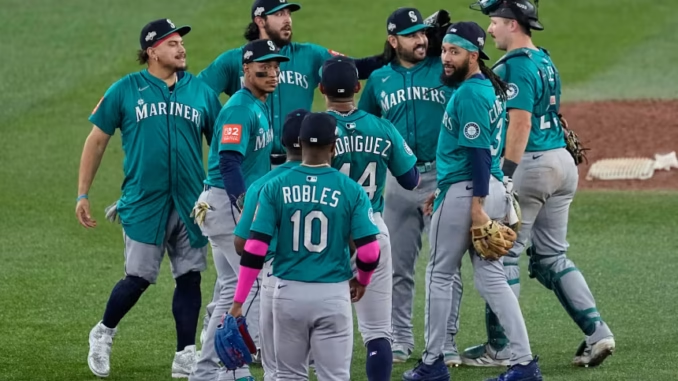
The Seattle Mariners appear poised to finish the 2026 season without one of their key power bats, as Luke Raley’s campaign is now in serious jeopardy due to injury. Reports indicate that the veteran slugger is expected to miss the remainder of the year after suffering a forearm strain that ultimately forced the club to place him on the injured list late last month. (Yardbarker)
This development marks a disappointing turn in what initially looked like a breakout season for the 31-year-old outfielder. Early in the year, Raley emerged as one of Seattle’s most dangerous hitters, delivering impressive production and providing a significant boost to the middle of the lineup. Over the first two months of the season, he posted an eye-catching slash line of .280/.345/.587, combining power and run production in a way that made him a critical offensive piece for the Mariners.
However, even during that hot start, there were underlying indicators suggesting that his performance might not be sustainable over a full season. Raley’s offensive profile has always been somewhat volatile, and several advanced metrics highlighted potential regression.
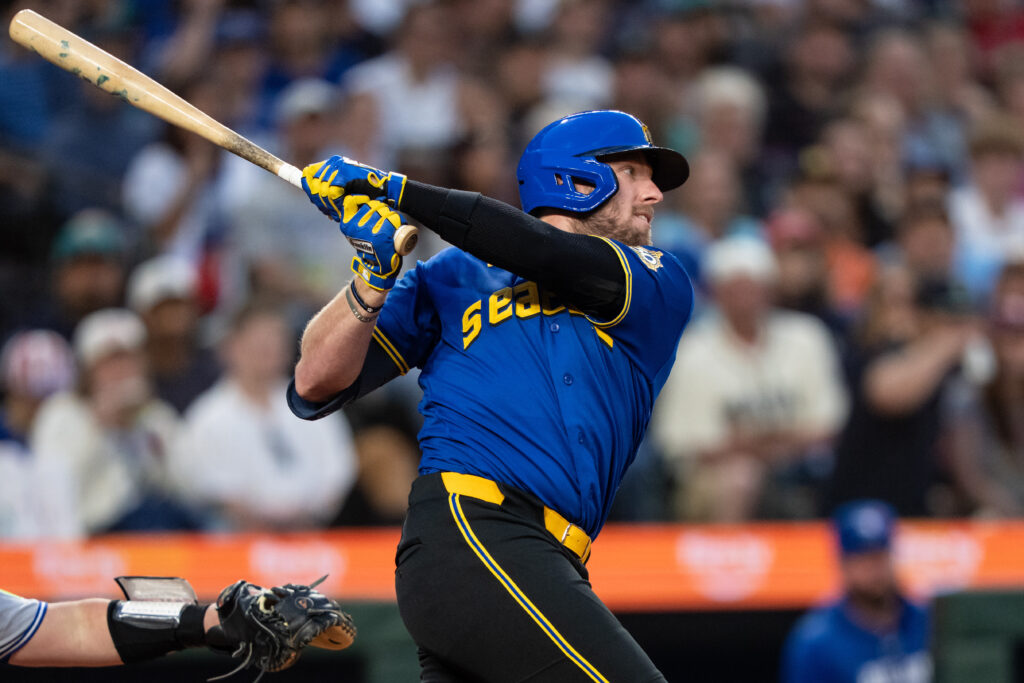
His strikeout rate during that early stretch was alarmingly high, sitting at 31.4%, which is well above league average and typically a red flag for long-term consistency. Additionally, he benefited from a .345 batting average on balls in play (BABIP), a figure that often fluctuates and can indicate a degree of good fortune rather than repeatable skill.
Another concerning metric was his contact rate, which sat at just 59.2%, placing him among the lowest in the league. Hitters with such limited contact ability often struggle to maintain elite production, as they rely heavily on making impactful contact when they do connect. Taken together, these factors suggested that Raley’s torrid start might cool off as the season progressed—and unfortunately for Seattle, that’s exactly what happened.
BREAKING: Braves quietly make sneaky stunning trade add another frontline starter
Regression alone, though, does not fully explain the extent of Raley’s decline. Injuries played a major role in derailing his season. At the time of his placement on the injured list, the Mariners acknowledged that Raley had been dealing with discomfort in his elbow and forearm for an extended period. (Yardbarker) This lingering issue appears to have significantly affected his performance well before he was officially sidelined.
A closer look at his numbers after June 1 paints a stark picture. Over that stretch, Raley came to the plate 121 times and managed a meager .152/.200/.241 batting line. His production dropped off dramatically, transforming him from a feared slugger into a struggling hitter unable to generate consistent offense. Interestingly, his strikeout rate only increased slightly during this period, suggesting that his approach at the plate did not drastically worsen. Instead, the decline appears to have been driven more by poor contact quality and bad luck on balls in play.
His BABIP during this slump plummeted to .211, a sharp drop from his earlier mark and well below league norms. While some of that decline can be attributed to natural regression, it is also consistent with a player dealing with physical limitations. Injuries, particularly those affecting the forearm and elbow, can sap a hitter’s ability to drive the ball, leading to weaker contact and fewer hits falling in.

The results were evident in Raley’s game-by-game production. Since the beginning of June, he recorded only two multi-hit performances and managed just six extra-base hits. For a player whose value is largely tied to power and run production, that kind of output is far from sufficient. The Mariners, recognizing the toll the injury was taking, ultimately decided to place him on the injured list—a move that now appears to have effectively ended his season.
Raley’s situation highlights both the strengths and limitations of his overall skill set. On one hand, he possesses legitimate power and has demonstrated the ability to be highly productive, particularly against right-handed pitching. Over the course of his career, he has compiled a respectable .240/.325/.455 line in those matchups, indicating that he can be a valuable contributor in the right role.
JUST IN: Mariners officially say goodbye to longtime leader
On the other hand, his game comes with notable drawbacks. High strikeout rates and limited contact ability make him prone to prolonged slumps, and he has historically struggled against left-handed pitching. His career numbers against southpaws—just .176/.240/.271—underscore his pronounced platoon splits, which limit his effectiveness as an everyday player.
Given these factors, the Mariners will face an interesting decision regarding Raley’s future once the offseason arrives. He is currently earning $2.05 million, and while he is due for a raise through arbitration, it is unlikely to be substantial.
Even so, the organization must weigh whether his production justifies the cost, especially considering that this would mark his second consecutive season with underwhelming overall results following a strong 2024 campaign.
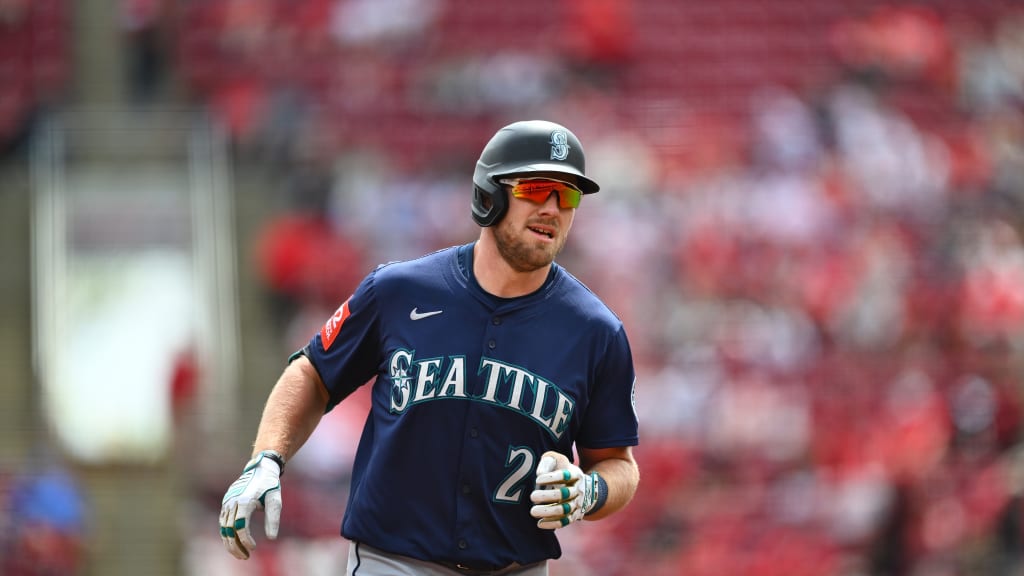
From a roster-building perspective, Raley could find himself on the bubble. Players with his profile—power-hitting corner outfielders with significant platoon limitations—are often replaceable, particularly if they are not delivering consistent production. As a result, he may become a candidate for a non-tender decision or a change-of-scenery trade, depending on how the Mariners evaluate their options.
In the meantime, Seattle will need to adjust its lineup to compensate for his absence. The team has already begun making those adjustments, with trade deadline acquisition Taylor Ward stepping into a larger role. Ward is expected to take over in right field, providing a more stable and versatile option. Although he has spent much of his recent career in left field, he brings considerable experience in right, having logged nearly 1,600 innings at the position.
BREAKING: Cardinals Officially Land Superstar Reliever This Deadline
Ward’s presence should help stabilize the Mariners’ lineup in several ways. Unlike Raley, he does not require heavy platooning, which allows the team to maintain greater consistency in its batting order. Raley’s struggles against left-handed pitching often forced Seattle to shuffle its lineup depending on the opposing starter, but Ward’s more balanced offensive profile reduces that need.
Additionally, Dominic Canzone is expected to assume the role of primary designated hitter for the remainder of the season. This shift further reflects the team’s efforts to reconfigure its offense in the wake of Raley’s injury, spreading responsibilities across multiple players rather than relying on a single power bat.
Looking beyond the current season, the Mariners’ outfield situation presents a number of challenges. Ward is set to become a free agent at the end of the year, meaning his time in Seattle could be short-lived unless the team decides to re-sign him. He is not alone in that regard, as fellow outfielders Randy Arozarena and Victor Robles are also approaching free agency. In Robles’ case, his $9 million club option is expected to be declined, further thinning the team’s outfield depth.

The potential departure of all three players would leave the Mariners with significant holes to fill heading into the offseason. Combined with the uncertainty surrounding Raley’s health and future, it becomes clear that the outfield will be a major area of focus for the front office.
Seattle does have some internal options that could factor into its long-term plans. One of the most intriguing is Lazaro Montes, a highly regarded prospect who is just 21 years old. Montes has the potential to develop into a cornerstone player, and he could be in line for an opportunity to claim a starting role as early as 2027. However, relying solely on a young prospect to fill such an important position carries inherent risks, and the Mariners will likely look to supplement their roster with additional acquisitions.
Ultimately, Raley’s injury serves as both a short-term setback and a longer-term question mark for the organization. In the immediate sense, his absence weakens the lineup and forces the team to rely more heavily on recent additions and role players. Over the long term, it complicates the Mariners’ decision-making process as they evaluate their roster and plan for the future.
Injuries are an unavoidable part of baseball, but their timing and impact can significantly shape a team’s trajectory. For Raley, what began as a promising season has been derailed by physical setbacks and declining performance. For the Mariners, it represents another challenge in an already complex season, one that will require careful planning and strategic adjustments both now and in the months ahead.
As the offseason approaches, all eyes will be on how Seattle navigates these uncertainties. The front office, led by Jerry Dipoto and general manager Justin Hollander, will need to address multiple roster gaps while also deciding the fate of players like Raley. Whether he remains part of the organization or moves on to a new opportunity, his 2026 season will likely be remembered as a tale of early promise undone by injury and inconsistency.
For now, the focus remains on finishing the season as strongly as possible despite the setback. But with several key outfielders potentially departing and Raley’s future uncertain, it is clear that significant changes could be on the horizon for the Mariners as they look to build a more stable and productive roster for the years to come.


Be the first to comment