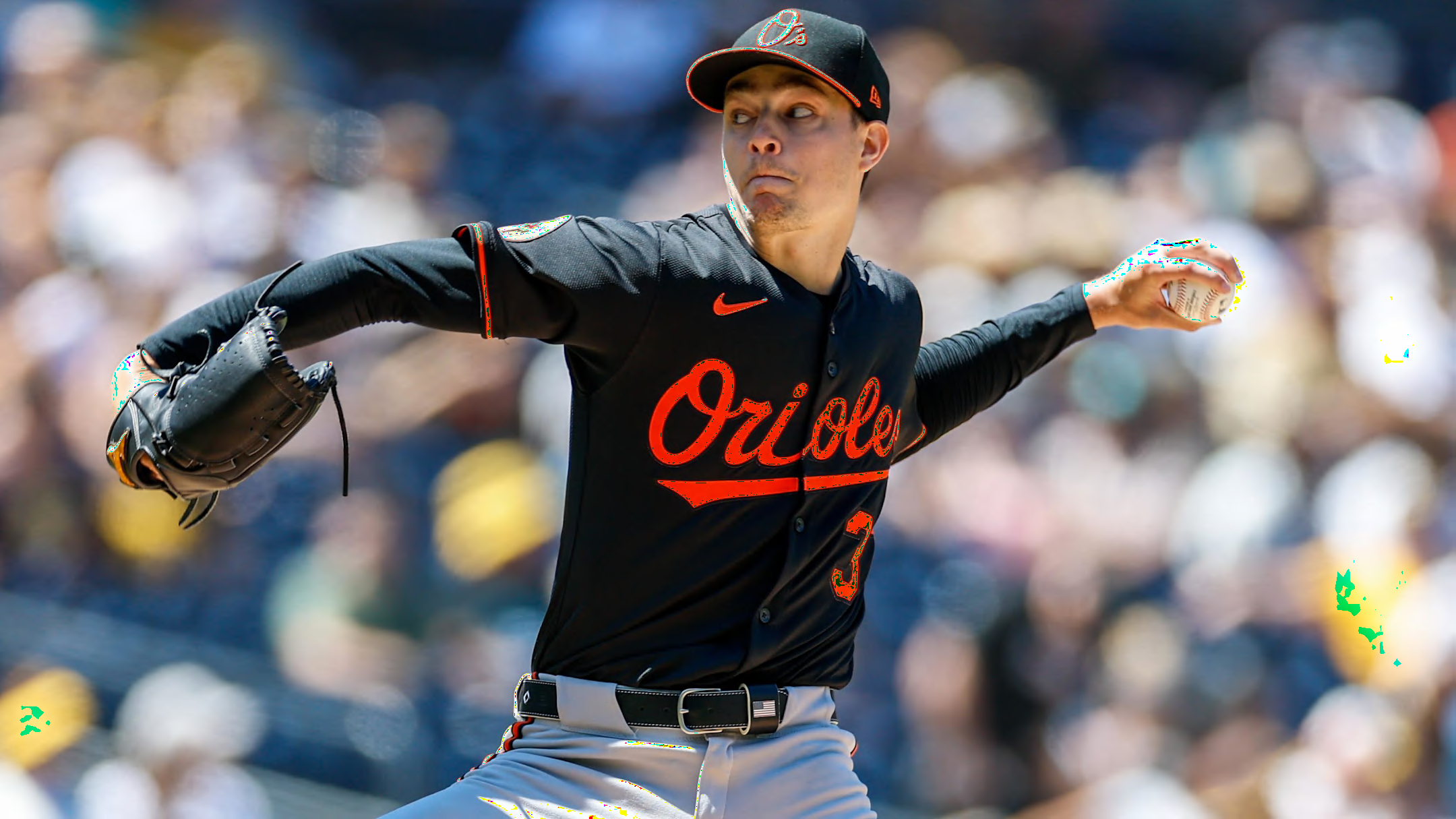
The Baltimore Orioles made an important roster decision during spring training as the organization continues shaping its starting rotation for the 2026 season. With Opening Day approaching and the team evaluating every available option, the front office ultimately determined that left-handed pitcher Cade Povich will not begin the year in the major league rotation. Instead, the club has decided to send the 25-year-old southpaw to Triple-A to open the season.
Reports surfaced on Sunday confirming that Povich has been optioned to the Norfolk Tides, the Orioles’ Triple-A affiliate. The move means he will start the 2026 campaign pitching in the minors rather than competing at the big-league level, a somewhat notable development considering his role with the club over the last two seasons.
Orioles’ Rotation Depth Led to the Decision
Baltimore’s decision was influenced largely by the improved health and depth within its pitching staff. Entering the new season, the Orioles find themselves in a much stronger position than they were in previous years. Several pitchers are returning healthy, and offseason acquisitions have further strengthened the starting rotation.
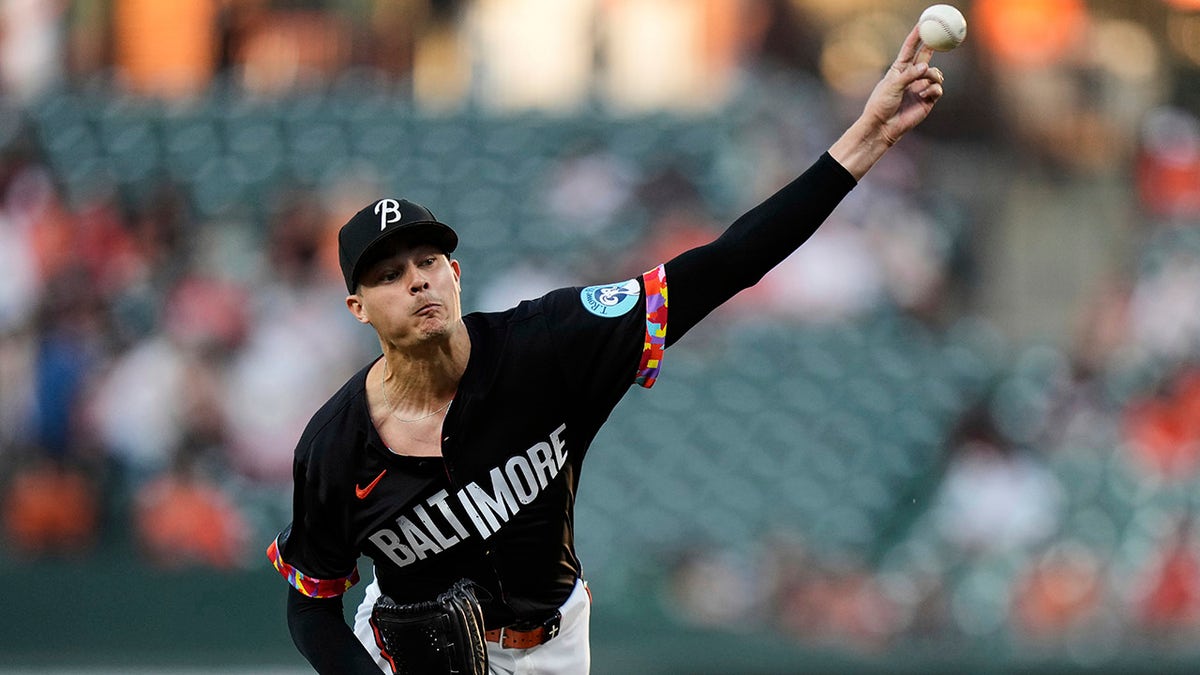
Because of that increased depth, the team was forced to make a difficult call regarding which pitchers would secure the final rotation spots. Ultimately, the Orioles determined that Povich would be the odd man out. Even though he has been a regular member of the rotation in the past, the organization felt that other arms currently offer a better fit for the major league staff.
While the move might initially appear like a setback for Povich, it is also reflective of how competitive the Orioles’ pitching situation has become. The club is no longer searching for innings just to fill out a rotation; instead, it now has the luxury of choosing among several viable options.
Povich’s Path to the Major Leagues
Povich first reached the major leagues in 2024, marking an important milestone in his professional career. The left-hander quickly became part of Baltimore’s pitching plans and spent much of the next two seasons contributing as a starting pitcher.
Since making his debut, Povich has accumulated a respectable amount of experience at the big-league level. Across the 2024 and 2025 seasons, he logged 36 starts for the Orioles while also appearing in two games as a reliever. That workload demonstrated that Baltimore trusted him enough to give him meaningful innings as he continued developing.
MORE: Cardinals Officially Makes Key Roster Cuts Send Down 3-Year MLB Veteran
During the 2025 season in particular, Povich remained a key piece of the rotation for much of the year. Despite dealing with some health issues, he still ranked among the team leaders in starts. Only Tomoyuki Sugano and Dean Kremer took the mound more frequently than the young left-hander.
Sugano led the club with 30 starts, while Kremer followed closely behind with 29. Povich finished third on the team with 20 starts, which illustrates how significant his role was in Baltimore’s rotation during the 2025 campaign.
Injury Interrupted His 2025 Season
Although Povich was heavily relied upon, his season was not without obstacles. One of the biggest challenges he faced in 2025 was a stint on the injured list due to inflammation in his left hip. The issue sidelined him for roughly six weeks, causing him to miss about a month and a half of the season.
Even with that absence, however, he still managed to return and contribute enough innings to remain among the team’s most frequently used starters. That ability to bounce back from injury and continue pitching was an encouraging sign for the organization.
Still, the time missed may have prevented him from establishing more consistency. Pitchers often need regular outings to maintain rhythm, and interruptions like injuries can make it difficult to sustain strong performance over the course of a season.
Flashes of Potential but Inconsistent Results
Throughout his time in Baltimore, Povich has shown moments that suggest he could eventually become a reliable major league pitcher. At times, his stuff has looked capable of missing bats and generating strikeouts, and he has demonstrated the ability to work through difficult innings.
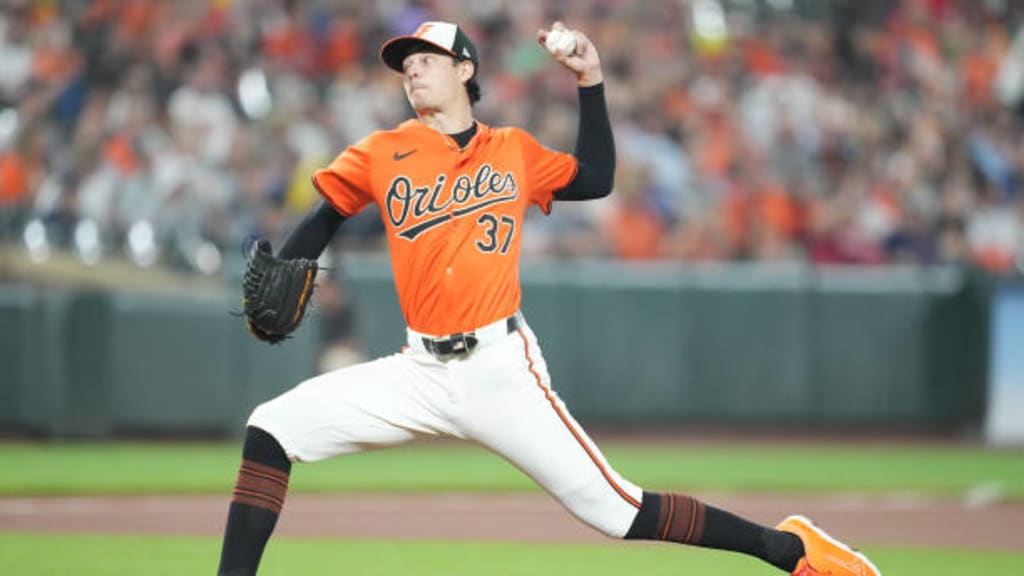
However, when evaluating his overall results, the numbers have been somewhat underwhelming. Over his first two seasons in the majors, Povich posted earned run averages that hovered slightly above five.
In 2024, he finished the year with a 5.20 ERA. The following season in 2025, his ERA was nearly identical at 5.21. Those figures indicate that while he could occasionally put together strong outings, he struggled to consistently limit opposing offenses over the long term.
Because of that performance level, Povich has largely been viewed as a back-of-the-rotation option rather than a frontline starter. In baseball terms, that often places a pitcher in the category of a “fifth starter,” someone who can take the ball regularly but may not dominate opposing lineups.
Strikeout Ability Offers Some Promise
One area where Povich has shown promise is his ability to generate strikeouts. During the 2025 season, he recorded 118 strikeouts across 112.1 innings pitched. That total demonstrates that his arsenal is capable of fooling hitters and producing swings and misses.
MORE: Cardinals Officially Land Superstar Pitching Prospect
Strikeouts are often considered an important indicator of a pitcher’s raw ability because they remove the element of defensive play from the equation. When a pitcher can retire hitters without the ball being put in play, it typically suggests that his pitches have enough movement or deception to keep batters off balance.
For Povich, the strikeout numbers offer a reason for optimism. If he can combine that ability with improved command and better contact management, he could potentially evolve into a more effective major league pitcher.
Hard Contact Has Been a Major Problem
Despite those strikeout totals, Povich’s biggest issue has been the amount of hard contact he allows. Opposing hitters have often been able to square up his pitches and drive the ball with authority, leading to damaging results.

During the 2025 season, he surrendered 17 home runs. Giving up that many long balls can quickly inflate a pitcher’s ERA, especially if those home runs occur with runners already on base.
Additionally, Povich finished the season with a 1.50 WHIP (walks plus hits per inning pitched). That statistic reflects how frequently a pitcher allows baserunners, and a figure that high suggests that opposing teams were regularly putting pressure on him.
Pitch Characteristics Contributed to the Issue
Part of the problem appears to stem from the characteristics of Povich’s pitch repertoire. His fastball tends to have relatively low velocity compared to many modern major league pitchers. While it does feature noticeable movement, the lack of pure speed can sometimes make it easier for hitters to time up.
Another challenge has been the performance of his breaking pitches, particularly his sweeper. The pitch has struggled to generate strong horizontal movement, which limits its effectiveness as a swing-and-miss offering.
MORE: “Upgrade from Brett Baty” Mets trade for $90 million WBC superstar
Because of these factors, hitters have often been able to make solid contact when facing him. Data from advanced tracking systems illustrates just how frequently batters were hitting the ball hard against Povich.
Opponents posted an average exit velocity of 91.2 miles per hour when putting his pitches into play. That number is quite high and indicates that hitters were regularly striking the ball with significant force.
Advanced Metrics Paint a Tough Picture
Further metrics reinforce the challenges Povich faced on the mound. He allowed an 11.3 percent barrel rate, meaning a notable percentage of batted balls came off the bat with the optimal combination of exit velocity and launch angle for extra-base hits.
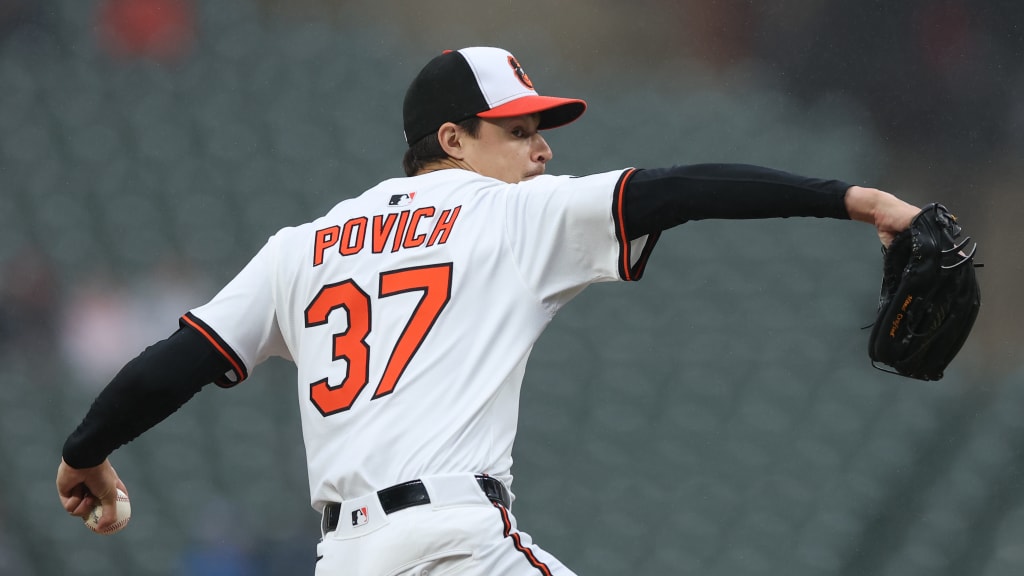
In addition, nearly half of the balls hit against him qualified as “hard-hit,” with a hard-hit rate of 46.9 percent. Statistics like these place him near the bottom of the league compared with other major league pitchers.
According to the tracking data available through Baseball Savant, many of these numbers ranked in the 10th percentile or worse among pitchers across Major League Baseball. That ranking suggests that very few pitchers allowed contact as damaging as Povich did during the season.
Why the Demotion Was Still Somewhat Surprising
Even though his performance has been inconsistent, the Orioles’ decision to send Povich to the minors still caught some observers off guard. One reason for that surprise is that he seemed like a logical candidate to transition into a bullpen role if he did not secure a rotation spot.
Specifically, Povich could have potentially served as a long reliever. That role typically involves pitching multiple innings in relief, often entering games when the starting pitcher exits early or when the team wants to preserve its bullpen.
A long reliever with starting experience can be extremely valuable during the long MLB season. Given Povich’s background as a starter and his ability to strike out hitters, some believed he might remain on the major league roster in that capacity.
Opportunity for Development in Triple-A
Instead, Baltimore opted to send him to the minors, which may actually benefit him in the long run. Pitching in Triple-A will give Povich the opportunity to refine his approach without the immediate pressure of major league competition.
MORE: Amid Rojas’ Suspension, Phillies Officially Add Interesting Name To Roster
In the minor leagues, he can experiment with adjustments to his pitch mix and mechanics. Coaches may encourage him to tweak his breaking balls or develop new strategies to keep hitters from making such strong contact.
Improving the effectiveness of his off-speed pitches could be especially important. If he can create more deception and movement with those offerings, it might help offset the relatively modest velocity of his fastball.
Youth Remains on His Side
Another factor working in Povich’s favor is his age. At just 25 years old, he still has plenty of time to continue developing as a pitcher. Many arms take several seasons to fully adjust to the demands of the major leagues, and early struggles do not necessarily determine a player’s long-term future.

Plenty of pitchers have spent time refining their craft in the minors before returning to the big leagues as more polished performers. For Povich, the current assignment could simply represent another step in that developmental journey.
The Orioles appear to recognize that potential as well. Rather than cutting ties with him or moving him permanently to the bullpen, the organization is keeping him stretched out as a starter in Triple-A. That approach suggests they still view him as someone who could contribute to the rotation again in the future.
A Valuable Depth Option for Baltimore
For now, Povich will function as an important depth piece for the Orioles’ pitching staff. Injuries and performance fluctuations are inevitable over the course of a long baseball season, and teams frequently rely on Triple-A pitchers to step in when needed.
If a spot in the major league rotation opens later in the year, Povich could quickly become one of the first candidates to receive a call-up. His previous experience with the Orioles gives him familiarity with the organization’s system and expectations.
MORE: Cardinals Officially Made Handful of Surprise Roster Cuts
Ultimately, while the decision to option him to Triple-A might feel like a setback in the short term, it does not close the door on his future with the club. Instead, it represents a strategic move by Baltimore as it prepares for the 2026 season while continuing to develop a young pitcher who still possesses upside.
Should Povich manage to refine his repertoire and reduce the amount of hard contact he allows, he could very well find himself back in the majors before long. Until then, he will continue working with the Norfolk Tides, aiming to sharpen his skills and prove he deserves another opportunity in Baltimore’s rotation.
The Orioles’ Rotation Moving Forward
With Cade Povich beginning the season in Triple-A Norfolk, the Baltimore Orioles appear set to move forward with a traditional five-man starting rotation when the 2026 campaign opens. The organization has spent much of the offseason building depth on the pitching staff, and with several starters entering the year healthy, the team now has the flexibility to keep Povich developing in the minors while relying on a group of experienced arms at the major league level.

The Orioles’ projected rotation to start the year is expected to include Trevor Rogers, Kyle Bradish, Dean Kremer, Shane Baz, and Chris Bassitt. Each pitcher brings a different skill set to the group, giving Baltimore a well-rounded mix of power arms, veteran leadership, and steady innings eaters. The team believes this combination provides both stability and upside as it aims to remain competitive early in the season.
Although Tyler Wells has significant experience as a starting pitcher, the club has chosen a different role for him to begin the year. Instead of placing him back in the rotation immediately, Baltimore plans to use Wells out of the bullpen. This strategy is designed primarily to manage his workload and protect his arm after previous elbow issues. By gradually increasing his innings in relief appearances, the Orioles hope to help Wells regain full strength without putting too much strain on him too quickly. If all goes well, the team could eventually stretch him out again later in the season should the need arise.
Among the pitchers in the rotation, Trevor Rogers has clearly emerged as the centerpiece of the staff. Baltimore has decided that the left-hander will take on the role of ace heading into the season. His impressive performance last year made him the obvious choice to lead the group. Rogers delivered outstanding results throughout the campaign, posting a remarkable 1.81 earned run average while demonstrating exceptional command and consistency on the mound. Advanced metrics supported his dominance as well, including a 2.82 fielding independent pitching mark and an outstanding 0.90 WHIP, indicating that he limited both runs and baserunners effectively.
Rogers’ overall value to the team was also reflected in his WAR total, which reached 5.5 by Baseball-Reference’s calculation. That level of production placed him among the most effective pitchers in the league and solidified his reputation as a frontline starter. Because of his success and reliability, the Orioles have entrusted him with the honor of starting on Opening Day. He is scheduled to take the mound on March 26 when Baltimore begins the season against the Minnesota Twins. Being selected as the Opening Day starter not only highlights Rogers’ performance but also underscores the organization’s confidence in his ability to lead the pitching staff.
Behind Rogers in the rotation, Kyle Bradish is expected to slot in as the team’s second starter. Bradish’s situation is somewhat unique, however, due to the challenges he has faced in recent seasons. The right-hander underwent Tommy John surgery and consequently missed a significant amount of time over the past two years while recovering and rebuilding his arm strength. Despite that lengthy absence, the Orioles remain extremely optimistic about his potential and view him as a key part of the rotation moving forward.
Bradish’s upside is one of the primary reasons the team is comfortable placing him near the top of the staff. When healthy, he has demonstrated the ability to dominate opposing lineups with his arsenal of pitches and competitive approach on the mound. His talent and previous performance suggest that he could once again become a major contributor if he returns to form.
At the same time, Baltimore intends to proceed cautiously with Bradish’s workload. Because he is still working his way back from a major elbow procedure, the coaching staff will likely keep a close eye on his innings and pitch counts throughout the season. Monitoring his usage will be crucial to ensuring that he stays healthy while gradually building back to a full workload. The team understands that protecting his long-term health is just as important as maximizing his short-term impact.
The remainder of the rotation—Dean Kremer, Shane Baz, and Chris Bassitt—adds further depth and balance to the staff. Kremer has shown flashes of reliability in the past and can provide valuable innings in the middle of the rotation. Baz offers significant upside with his power pitching ability, while Bassitt brings veteran experience and stability after years of success in the majors.
Together, this group gives the Orioles a starting rotation that blends experience with emerging talent. While the season is long and adjustments will inevitably be required, the team appears confident that this five-man unit can provide the consistency needed during the early months of the year. Meanwhile, keeping Povich in Norfolk allows the organization to maintain additional depth, ensuring that another capable arm is ready if injuries or performance issues arise.
As Opening Day approaches, Baltimore’s pitching plans are becoming clearer. Rogers will lead the way as the staff ace, Bradish will look to reestablish himself following surgery, and the rest of the rotation will aim to provide steady support. With several capable arms in place and others waiting in the wings, the Orioles enter the season believing their pitching staff can be one of the strengths of the team.



Be the first to comment