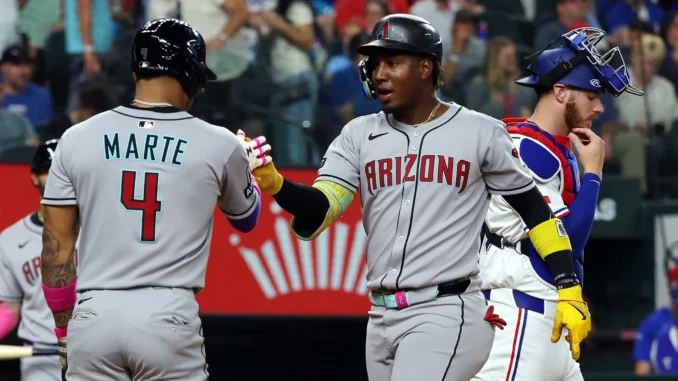
The Arizona Diamondbacks have quietly executed an unexpected roster adjustment within their minor league ranks, as reflected in recent transaction reports. While the move did not generate major headlines at the big-league level, it still represents a notable shift involving a pair of first basemen with very different career trajectories and expectations.
One of the more surprising elements of this decision is the departure of Ivan Melendez, a player who had previously captured the attention and enthusiasm of fans due to his prodigious power and offensive upside. Melendez, originally selected by Arizona with the 43rd overall pick in the second round of the 2022 MLB Draft, entered professional baseball carrying considerable hype. Known primarily for his slugging ability, he quickly developed a reputation as a potential middle-of-the-order bat who could eventually make an impact at the major league level.
Despite those expectations, Melendez’s time within the organization has now come to an abrupt end. The Diamondbacks opted to release him from their Triple-A affiliate, the Reno Aces, marking a significant turning point in his young career.
While the specific reasons behind the decision were not publicly detailed, such moves are often influenced by a combination of performance inconsistencies, organizational depth, and the need to open roster spots for other players. For a former high draft pick with clear raw power, being let go at this stage underscores how challenging the transition from amateur stardom to sustained professional success can be.
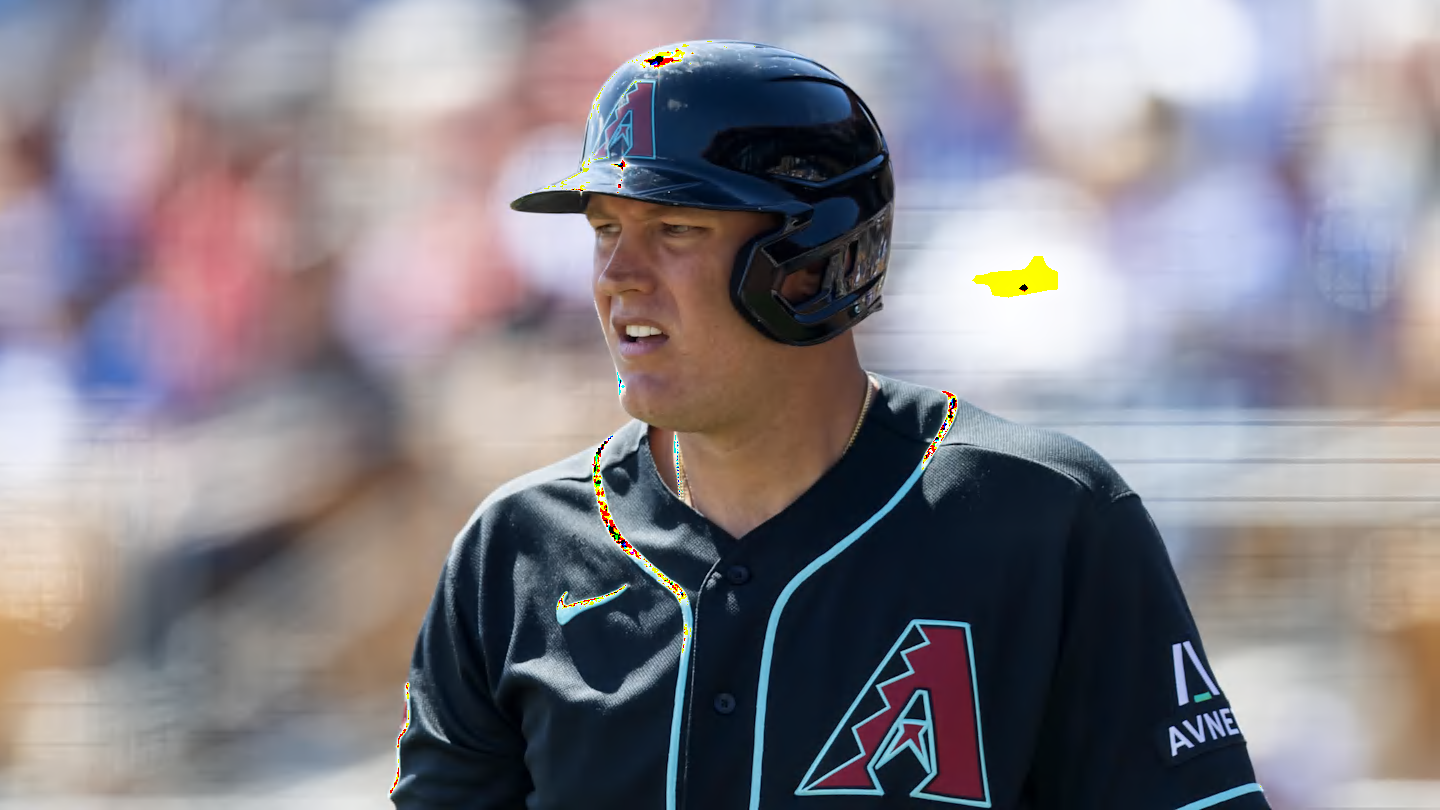
Melendez had been viewed as a fan favorite, in part because of his impressive home run potential and the excitement he generated during his collegiate career. However, professional baseball often demands more than just power, and players must demonstrate consistency, plate discipline, and adaptability against increasingly advanced pitching. Whether due to struggles in these areas or simply the organization’s shifting priorities, the Diamondbacks ultimately decided to move in a different direction.
In a corresponding move, Arizona has brought back a more experienced option at first base. Luken Baker, a veteran player who recently found himself navigating the uncertainties of roster transactions, has rejoined the organization on a minor league deal. Baker had previously been removed from a 40-man roster through an outright assignment, after which he chose to explore free agency rather than remain with his prior club under those terms. His decision to test the open market has now led him back into the Diamondbacks’ system.
MORE: Braves Retain Veteran Arm for Bullpen Stability
Unlike Melendez, Baker brings a greater level of professional experience and a track record that may offer immediate depth and reliability at the Triple-A level. While he may not carry the same prospect pedigree or long-term projection, players like Baker often play an important role in providing stability within a minor league roster. They can serve as insurance options for the major league club, step in during injuries, or contribute as consistent offensive producers at the upper levels of the farm system.
This swap of a younger, high-upside player for a more seasoned veteran highlights the balancing act organizations must perform when managing their minor league affiliates. Teams are constantly evaluating not only long-term potential but also present-day needs, clubhouse dynamics, and positional depth. In some cases, this leads to difficult decisions involving former top picks who have yet to fully translate their tools into on-field success.
For the Diamondbacks, the move suggests a possible shift in focus at the Triple-A level, perhaps prioritizing stability and experience over continued development for a player who may no longer fit into their future plans. At the same time, it provides Baker with another opportunity to showcase his abilities and potentially work his way back into consideration for a major league role.
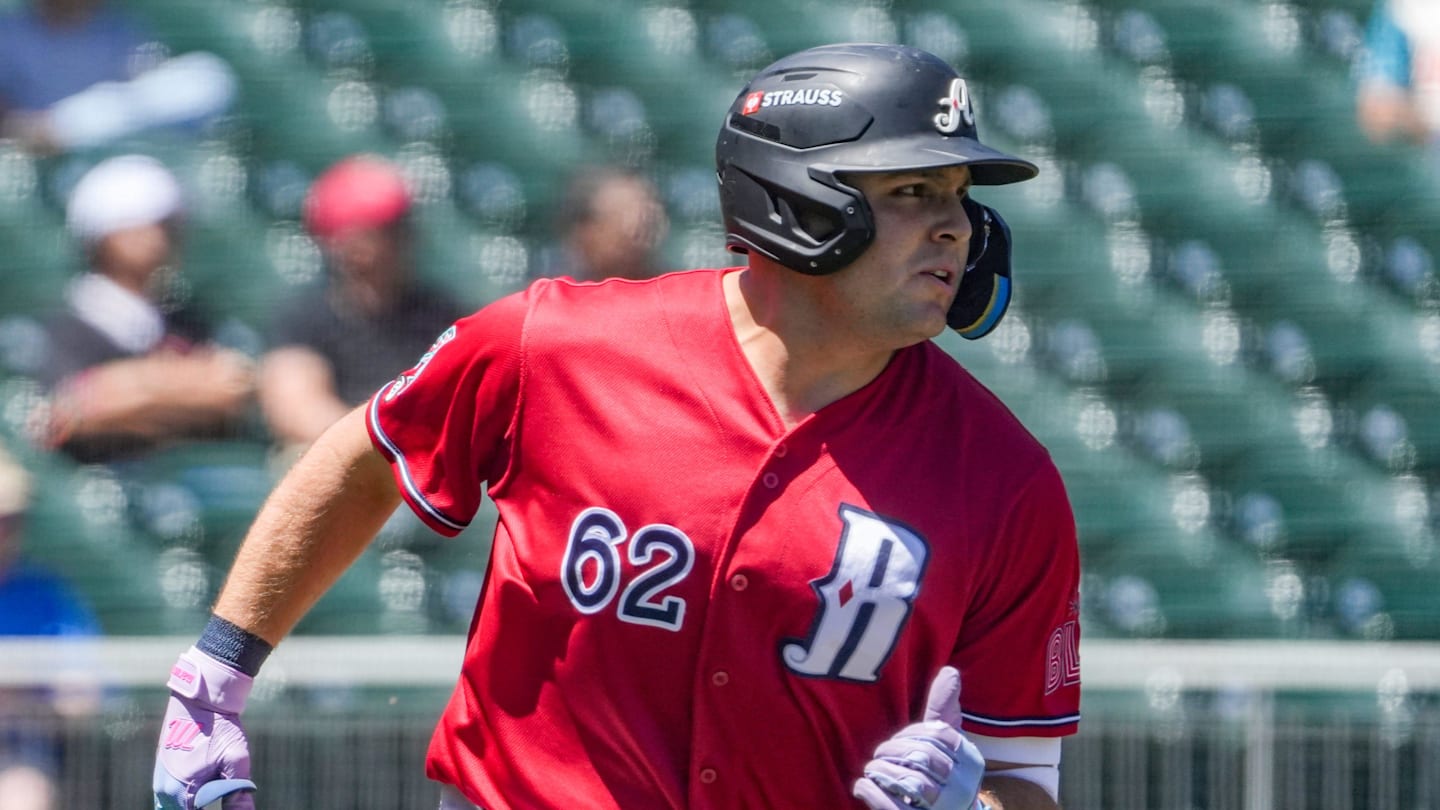
Meanwhile, Melendez will now enter free agency, where he will look to catch on with another organization willing to invest in his power potential. Given his pedigree and past production, it would not be surprising to see another team offer him a chance to continue developing, albeit likely with adjustments needed to refine his overall offensive approach.
In the ever-evolving landscape of professional baseball, roster moves like these are a reminder of how fluid and competitive the sport can be. Prospects rise and fall, veterans find new opportunities, and organizations continually reshape their systems in pursuit of both immediate success and long-term sustainability.
Diamondbacks Release 1B Ivan Melendez
Ivan Melendez, now 26 years old, built his reputation in professional baseball as a powerful offensive prospect, widely recognized for his ability to drive the ball with authority. Standing at 6-foot-1 and weighing approximately 245 pounds, he possesses a physically imposing frame that naturally lends itself to generating significant power at the plate. From the moment he entered the Arizona Diamondbacks’ farm system, Melendez drew attention for his raw strength and home run potential, characteristics that quickly made him one of the more intriguing bats in the organization.

His breakout moment came during the 2023 minor league season, when he firmly established himself as a legitimate power threat. Splitting time between High-A and Double-A, Melendez delivered an eye-catching performance by launching a total of 30 home runs.
That impressive output not only showcased his ability to consistently make hard contact but also signaled that his offensive tools could translate effectively against more advanced pitching. His power surge made him a notable name among Arizona’s prospects and helped elevate expectations surrounding his long-term potential.
Rather than regressing after that standout campaign, Melendez followed it up with another productive season in 2024. Spending the full year with the Double-A Amarillo Sod Poodles, he once again demonstrated his home run capabilities by blasting 22 long balls.
While the total was slightly lower than his previous season, it still reinforced the notion that his power was not a fluke but rather a defining trait of his offensive profile. Throughout that season, he continued to show an ability to impact games with one swing, maintaining his reputation as a middle-of-the-order type hitter within the minor league system.
MORE: Orioles Hit With Key Injury News “Absolutely Heartbreaking”
By the end of the 2025 season, Melendez had progressed to the Triple-A level, marking an important milestone in his professional development. In a relatively small sample size of 25 games, he performed quite well against more experienced competition. He posted a strong slash line of .292/.347/.483, complementing it with three home runs during that stretch.
These numbers suggested that he was capable of holding his own against pitchers who were either on the cusp of the major leagues or had already spent time there. His ability to adapt quickly to the higher level offered encouragement that he might be nearing readiness for a potential big-league opportunity.
However, the early portion of the 2026 season presented more of a challenge. While playing with the Reno Aces at the Triple-A level, Melendez struggled to find consistency at the plate over his first 12 games. During that span, he recorded a .222 batting average, along with a .280 on-base percentage and a .378 slugging percentage. Although he did manage to hit two home runs, his overall offensive production dipped compared to his previous stint at the same level.
Additionally, he struck out 16 times in those 12 games, highlighting ongoing concerns about his contact ability and plate discipline. These struggles underscored some of the risks that come with a power-focused approach, particularly when facing more advanced pitching that can exploit swing-and-miss tendencies.
Beyond his offensive contributions, Melendez’s defensive profile has long been considered a limitation. While he primarily played first base, his work in the field never stood out as a significant strength. Evaluators generally viewed his defense as serviceable at best, rather than a tool that would add substantial value to his overall game.
MORE: Early results hinting that the Angels’ bigger offseason trades is brutal mistake
Because of this, there has been a prevailing belief that his most realistic path to contributing at the major league level would be as a designated hitter. In that role, the emphasis would be almost entirely on his ability to produce offensively, placing even greater pressure on his bat to carry his value.
Despite these concerns, Melendez remained a popular figure within the Diamondbacks’ organization and among its fan base. His power potential and larger-than-life presence made him an easy player to root for, and his home run exploits often generated excitement. Fans appreciated his ability to change the course of a game with a single swing, and his personality, combined with his on-field production, helped him build a strong following during his time in the minor leagues.
At the same time, his progression through the system could be described as somewhat gradual. Considering that he was selected out of a major Division I program at the University of Texas one of the premier college baseball programs in the country there may have been expectations for a quicker ascent. Players coming from that level of collegiate competition are often viewed as more polished and closer to being major-league ready. However, Melendez’s journey suggested that while his power was undeniable, other aspects of his game required further refinement, which may have contributed to his slower climb.

Ultimately, Melendez’s career trajectory highlights both the promise and the uncertainty that come with power-hitting prospects. His ability to produce home runs at multiple levels demonstrates a skill set that is always in demand, particularly in today’s game where power is highly valued. Yet, questions surrounding his contact rate, consistency, and defensive limitations create challenges that can be difficult to overcome.
As he continues to navigate his professional career, Melendez represents a classic case of a player whose success hinges on maximizing a singular elite tool while working to address the weaknesses that accompany it. Whether he can make the necessary adjustments to translate his minor league power into sustained success at the highest level remains an open question, but his journey thus far offers a compelling look at the complexities of player development in modern baseball.
D-backs choose Luken Baker over Ivan Melendez
Luken Baker’s path within the Arizona Diamondbacks organization has taken yet another unexpected twist, continuing what has been a winding professional journey for the power-hitting first baseman. Once known primarily for his time as a slugger in the St. Louis Cardinals system, Baker entered the offseason looking for a fresh opportunity and Arizona provided exactly that, bringing him aboard on a minor league contract with the hope that his bat could offer depth and potential upside.

From the outset, Baker made a strong impression during spring training. Competing in the highly competitive Cactus League, he demonstrated the kind of offensive production that has long defined his game. Over the course of the exhibition schedule, Baker posted an impressive slash line of .273/.385/.576, showcasing not only his ability to make consistent contact but also his patience at the plate and his considerable power.
MORE: Cardinals have painful roster dilemma with Kyle Leahy’s experiment
His three home runs during that stretch further underscored his reputation as a legitimate power threat, capable of changing the course of a game with a single swing. For a player fighting to carve out a role, it was a promising display that kept him firmly in the conversation for organizational depth.
Despite his strong showing in camp, Baker ultimately did not break camp with the major league roster. Instead, the Diamondbacks assigned him to Triple-A Reno, a move that reflected both the team’s existing roster construction and the competitive nature of their first base situation. While being sent down is never ideal for a player aiming to secure a permanent spot in the big leagues, it did not take long for Baker to receive an opportunity at the highest level.
Injuries soon began to take a toll on Arizona’s first base corps, creating an opening that the organization needed to fill. Baker was among those called upon to provide reinforcements, earning a brief promotion to the major league roster.
During his short stint, he appeared in three games, a limited sample that nonetheless represented another chance to prove he could contribute at the big league level. Across five plate appearances, Baker managed to record one base hit. While the opportunity was brief and the results modest, it still marked another step in his ongoing pursuit of establishing himself in the majors.

However, Baker’s return to the big leagues was short-lived. As the Diamondbacks began to regain health within their roster, roster decisions became necessary. In order to make room for Lourdes Gurriel Jr., who was returning from the Injured List, the team designated Baker for assignment.
The move highlighted the often harsh realities of roster management in Major League Baseball, where even productive or promising players can find themselves squeezed out due to timing, depth, and circumstance rather than performance alone.
MORE: Bryce Miller’s Rehab Progress Faces Another Test For Mariners
Looking at Baker’s broader body of work, particularly in the minor leagues, it becomes clear why he continues to draw interest from organizations. Over the course of his minor league career, he has compiled a strong .829 OPS, a figure that reflects both his power and his ability to contribute offensively on a consistent basis.
His track record includes multiple standout seasons, particularly in 2023 and 2024, when he surpassed the 30-home-run mark in each year. That level of production is not easily overlooked, and it reinforces the idea that Baker possesses a skill set that can translate into meaningful contributions, especially for teams in need of right-handed power.
In total, Baker has launched 145 home runs throughout his time in the minors, an impressive tally that places him among the more prolific power hitters at that level. His offensive profile centered around strength, bat speed, and an ability to drive the ball has drawn comparisons to other notable sluggers, including Ivan Melendez, another player known for his home run prowess. While each player’s development path is unique, the similarities in their power output highlight the kind of offensive impact Baker is capable of providing when given consistent opportunities.

Even so, the immediate outlook for Baker within the Diamondbacks organization appears uncertain. With the team currently receiving solid production from players like Ildemaro Vargas and rookie Jose Fernandez, there is little urgency to make changes at the major league level. Both Vargas and Fernandez have stepped up in meaningful ways, helping to stabilize the position and reduce the need for additional reinforcements.
MORE: Disastrous Season Sparks Blockbuster Buzz: Mets Emerge as Top Destination for Astros Superstar
As a result, Baker may find himself waiting for another opportunity, which could depend largely on circumstances beyond his control most notably, the health of the players ahead of him on the depth chart. Injuries, as always, remain an unpredictable but influential factor in shaping roster decisions, and they could once again open the door for Baker to return to the majors.
For now, his journey continues as one defined by perseverance and adaptability. While his time with Arizona has included both encouraging moments and frustrating setbacks, his track record suggests that he remains a player worth watching. Whether his next opportunity comes with the Diamondbacks or another organization, Baker’s power and experience ensure that he will remain a viable option for teams seeking offensive firepower.
In the ever-changing landscape of professional baseball, careers rarely follow a straight line. For Baker, each twist and turn represents both a challenge and a chance a reminder that staying ready is just as important as seizing the moment when it finally arrives.


Be the first to comment