As spring training continues to unfold, the Arizona Diamondbacks are steadily working through the process of trimming their major league roster. Like every team during this stage of the preseason, the Diamondbacks are evaluating players, determining who is ready for Opening Day, and deciding which prospects would benefit from additional development time in the minors. On Thursday, the organization made another round of roster decisions as part of that ongoing process.
The club announced that two right-handed pitchers, Yilber Diaz and Dylan Ray, have been optioned to Triple-A Reno. In addition, catcher Gavin Logan was reassigned to the team’s minor league camp. These moves reduce the number of players remaining in major league camp and allow the team to focus more closely on those who are still competing for roster spots as the regular season approaches.
For Diaz and Ray, being optioned to Triple-A means they will continue their development at the highest level of the minor leagues while remaining on the organization’s 40-man roster. Both pitchers had opportunities to show their abilities during Cactus League play this spring, but neither produced the kind of results that would strengthen their case for an immediate role on the major league roster.

Spring training statistics can sometimes be misleading due to the small sample sizes involved, but teams still use the exhibition schedule as a way to evaluate readiness and performance. In the case of Diaz and Ray, their outings this spring did not stand out in a positive way. Each pitcher struggled in the limited action they received, which likely contributed to the team’s decision to send them down to Reno for additional work.
Despite the disappointing spring results, both pitchers remain intriguing arms within the Diamondbacks’ system. Young pitchers often require more time to refine their command, develop secondary pitches, and gain consistency. By assigning Diaz and Ray to Triple-A, the organization ensures that they will have regular opportunities to pitch in competitive games while continuing to develop their skills.
MORE: Red Sox reportedly taking flier on four-year major league veteran
Triple-A Reno is often viewed as the final step before reaching the major leagues, so strong performances there could quickly put either pitcher back into the conversation for a call-up later in the season. Injuries, performance fluctuations, and the long grind of a 162-game schedule often create opportunities for players in the upper levels of the minor leagues. If Diaz or Ray can find their rhythm and pitch effectively in Reno, they could still factor into Arizona’s pitching plans at some point during the 2026 campaign.
The third player affected by Thursday’s roster decisions was catcher Gavin Logan, who was reassigned to minor league camp. Unlike Diaz and Ray, Logan was not optioned because he is not currently on the 40-man roster. Instead, he will continue participating in minor league spring training while preparing for the upcoming season in the farm system.
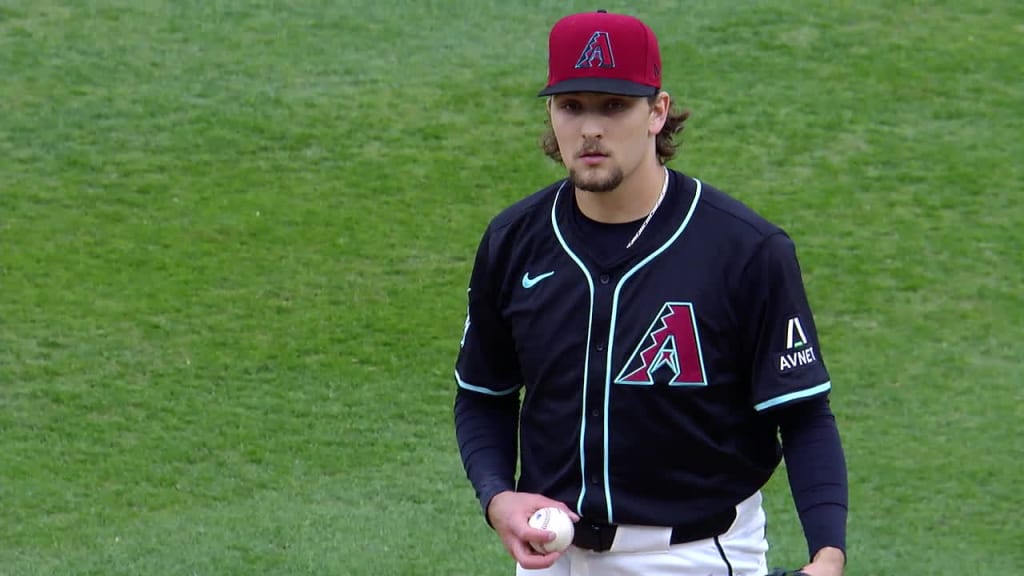
Interestingly, Logan actually performed well in his brief stint in major league camp. Over the course of just nine plate appearances, he showed some promise at the plate and produced solid offensive results. While that sample size is extremely small and difficult to draw firm conclusions from, it still provided a glimpse of his potential.
However, roster decisions during spring training are not based solely on short-term results. Teams also consider factors such as experience, depth at specific positions, long-term development plans, and the overall makeup of the major league roster. In Logan’s case, the Diamondbacks likely determined that he would benefit more from regular playing time in the minors rather than remaining in big league camp as a depth option.
MORE: Orioles fans receives high significantly big disappointmenting news
Catchers, in particular, often require significant development time due to the complexity of the position. Beyond hitting, they must master pitch framing, game-calling, defensive positioning, and building rapport with pitchers. For younger catchers like Logan, consistent reps behind the plate are essential for growth, something that is more easily achieved in the minor leagues than in a crowded major league spring camp.
Although these players have been reassigned or optioned, their spring training experience with the big league club is not necessarily over. The Diamondbacks noted that Diaz, Ray, and Logan are still eligible to participate in Cactus League games moving forward. This is a common practice during spring training, as teams often need extra players to fill out lineups and provide pitching depth during exhibition contests.
As a result, fans may still see these players appear in games even though they are technically no longer part of the major league roster competition. This arrangement allows the organization to continue evaluating them while also ensuring that the remaining major league players receive adequate rest and playing time.
For the Diamondbacks, moves like these are simply part of the natural progression of spring training. Each week brings additional roster cuts as teams narrow down their player pools and finalize their Opening Day lineups. While it may be disappointing for players to be sent down, the process helps clarify the team’s direction and ensures that everyone is placed in a situation that best supports their development.

Ultimately, Diaz, Ray, and Logan will continue working toward their long-term goal of reaching or returning to the major leagues. Their assignments to the minors do not close the door on that possibility. Instead, they represent another step in the developmental journey that many players experience before establishing themselves at the highest level of professional baseball.
As the Diamondbacks continue their spring training schedule, more roster decisions are likely on the horizon. With Opening Day drawing closer, the team will soon finalize its roster, while players throughout the organization prepare for the long season ahead.
Arizona Diamondbacks Make 3-Player Roster Move
As the calendar moves deeper into March and Opening Day edges closer, the Arizona Diamondbacks are continuing the process of narrowing down their roster during spring training. With only a few weeks remaining before the regular season begins, the organization has started making a series of moves designed to shape the final version of the club that will head north for the 2026 campaign. Like many teams across Major League Baseball at this stage of spring camp, the Diamondbacks are evaluating players, trimming the roster, and determining which prospects still need additional development time in the minor leagues.

Recently, Arizona made several such decisions, sending a pair of right-handed pitchers—Yilber Diaz and Dylan Ray—to Triple-A Reno while also reassigning catcher Gavin Logan to minor league camp. These moves represent another step in the club’s gradual effort to reduce its spring roster to the 26 players who will ultimately break camp with the team. Although these transactions might not grab national headlines, they highlight the ongoing competition within the organization and offer insight into the developmental paths of several young players hoping to establish themselves at the major league level.
Diaz’s Challenging Path Since His Debut
Among the players affected by the roster cuts, right-handed pitcher Yilber Diaz perhaps has the most complicated recent history. The 25-year-old flamethrower initially appeared to be on the rise when he made his major league debut during the 2024 season. At that time, Diaz showed flashes of promise, displaying the kind of power arm that had made him an intriguing prospect in Arizona’s system. His fastball velocity and ability to generate swings and misses suggested he could develop into a valuable bullpen weapon or possibly even a starting option if his command improved.
MORE: Braves Top Prospect Lose 2026 Roster Spot
However, the progress that seemed within reach following his debut did not carry over into the next year. Instead of building on the momentum he gained in 2024, Diaz endured a difficult 2025 campaign that raised significant concerns about his consistency and control. The most pressing issue was his inability to locate pitches in the strike zone. Walks began to pile up, and the lack of command made it difficult for him to work efficiently against opposing hitters.
As the season unfolded, the Diamondbacks opted to move Diaz through several minor league levels in hopes of helping him regain his footing. He spent time pitching in the Arizona Complex League as well as Double-A Amarillo, where the organization attempted to rebuild his confidence and refine his mechanics. Unfortunately, the results were far from encouraging.
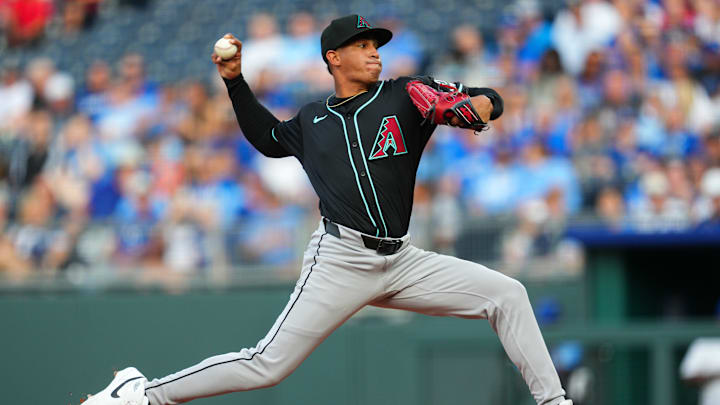
Across his minor league appearances during the 2025 season, Diaz recorded an alarming 10.26 earned run average. Such a number reflects just how much he struggled to prevent runs and regain the effectiveness he once displayed. Whether it was command issues, mechanical inconsistencies, or a combination of several factors, Diaz was unable to replicate the form that had previously made him a potential big-league contributor.
Spring Training Struggles Continue
Spring training in 2026 offered Diaz an opportunity to reset and potentially reinsert himself into the major league picture. These exhibition games serve as a fresh start for many players who are attempting to prove they deserve a spot on the roster or at least remain part of the team’s short-term plans.
Unfortunately for Diaz, the early returns during Cactus League play have not provided much reason for optimism. In his limited appearances this spring, the right-hander has struggled to keep runs off the board. Over just 1.2 innings across two outings, Diaz has surrendered four earned runs, highlighting that his command and effectiveness are still works in progress.
While spring training statistics should always be viewed with caution due to the small sample sizes involved, the Diamondbacks clearly determined that Diaz would benefit from additional time in the minors rather than continuing to compete for a big-league role this March. By optioning him to Triple-A Reno, the organization is giving him an opportunity to rebuild confidence and focus on improving his control away from the pressure of a major league roster battle.

For Diaz, the assignment to Reno is not necessarily the end of his chances with the Diamondbacks. Instead, it represents a critical stage in his development. If he can regain the command that once made him a promising pitcher, he could still work his way back into the major league conversation later in the season.
Ray’s Roller-Coaster Season
Another pitcher included in Arizona’s recent roster decisions is right-hander Dylan Ray. Unlike Diaz, Ray’s 2025 season contained both encouraging moments and difficult stretches, reflecting the challenges many young pitchers face as they climb the professional ladder.
MORE: Diamondbacks Roster Need Makes Perfect Reunion
Ray spent the majority of last season pitching for Double-A Amarillo, where he produced a respectable performance overall. His results there were strong enough to earn him a promotion to Triple-A Reno, placing him just one step away from the major leagues. Such a move typically represents a significant milestone for any prospect, as Triple-A competition often includes players with big-league experience.
However, the transition to Reno can be particularly challenging for pitchers. The environment at that level is widely known to favor hitters, making it one of the more difficult places in the minors for pitchers to maintain strong statistical results. The altitude, ballpark conditions, and overall offensive environment frequently lead to inflated run totals.

Ray experienced those challenges firsthand after arriving in Reno. Over the course of 18 starts with the Triple-A club, he finished with a 6.30 ERA. While that figure suggests he struggled to keep opponents in check, it is important to note that statistics in Reno can sometimes exaggerate a pitcher’s struggles due to the hitter-friendly conditions.
Despite the overall numbers, Ray did show signs of progress late in the season. In fact, he finished the year with a strong stretch of outings that offered a glimpse of his potential. During a five-start run in August, Ray delivered much more encouraging results, posting a 3.81 ERA during that period. That performance suggested that he was beginning to adjust to the challenges of Triple-A competition and finding ways to be more effective.
Mixed Results in the Cactus League
Ray entered the 2026 spring hoping to build upon the positive momentum he established during that late-season stretch. Like Diaz, he had an opportunity to make an impression during Cactus League games as the Diamondbacks evaluated their pitching depth.
So far, his spring appearances have been brief but somewhat uneven. In 1.1 innings of work, Ray has allowed four runs, though only two of them have been earned. During those outings, he has surrendered two hits while also issuing two walks. The combination of baserunners and limited innings has contributed to a rocky start in exhibition play.
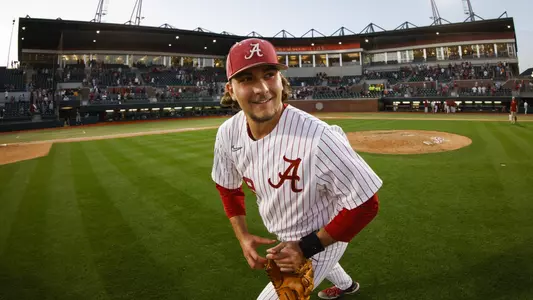
While the numbers themselves might look concerning, spring training results often come with a large number of caveats. Pitchers frequently experiment with new pitches, focus on mechanical adjustments, or simply work on building arm strength rather than prioritizing results. Nonetheless, the Diamondbacks ultimately decided that Ray would continue his development at Triple-A Reno rather than remain with the major league camp.
For Ray, returning to Reno provides an opportunity to continue refining his approach and potentially position himself as a call-up option later in the year. If he can replicate the success he showed toward the end of the 2025 season, he could find himself back in the conversation for a big-league opportunity.
Logan’s Progress Through the Farm System
The third player involved in Arizona’s latest round of roster moves is catcher Gavin Logan. Unlike Diaz and Ray, Logan was not optioned to Triple-A but instead reassigned to minor league camp, indicating that he will continue preparing for the season within the organization’s developmental ranks.
Logan’s path through the Diamondbacks system began when the team selected him in the ninth round of the 2022 MLB Draft. Since then, he has steadily worked his way through the minor leagues, gradually climbing each level as he continues to develop both offensively and defensively.

By the 2025 season, Logan had progressed far enough to reach Triple-A Reno, marking an important step in his professional career. However, his time at that level was relatively brief. He appeared in only 12 games for the Triple-A club, which limited the sample size of his performance.
MORE: Phillies bring back firepower tank as spring training draws near
Even so, Logan made the most of his opportunities at the plate during those appearances. Over 41 plate appearances, he produced an impressive offensive line, hitting .366 while also posting a .417 on-base percentage and a .659 slugging percentage. Those numbers demonstrate that he was able to generate both consistent contact and significant power during his short stint at Reno.
At the same time, Logan’s performance also included some areas that still require improvement. He struck out 16 times in those 41 plate appearances, indicating that swing-and-miss remains a concern as he continues to develop against higher-level pitching.
A Strong Start This Spring
Logan carried his offensive momentum into the early portion of spring training. Although his opportunities have been limited, he made a strong impression in his brief time during Cactus League games.
Across just nine plate appearances, Logan compiled a remarkable slash line of .625/.667/.750. While the sample size is extremely small, those numbers illustrate that he was seeing the ball well and producing solid contact during his limited chances.
Nevertheless, spring training roster decisions often involve factors beyond immediate performance. Teams must consider roster flexibility, defensive roles, experience levels, and long-term development plans. In Logan’s case, the Diamondbacks ultimately decided that continuing his growth in the minors would be the most beneficial path.
Being reassigned to minor league camp does not necessarily diminish Logan’s progress. Instead, it allows him to receive more consistent playing time and further refine his skills before potentially earning a larger opportunity in the future.
The Bigger Picture for Arizona
These roster adjustments represent a normal part of the spring training process for teams across Major League Baseball. As Opening Day approaches, organizations must gradually reduce their roster sizes while ensuring that players who need additional development receive the appropriate opportunities in the minors.
For the Diamondbacks, the decisions involving Diaz, Ray, and Logan reflect the club’s broader strategy of balancing competitiveness with player development. Each of these players still remains part of the organization’s long-term plans to some degree, even if they will begin the 2026 season outside of the major league roster.
The team still has several weeks remaining before finalizing its Opening Day lineup and pitching staff. During that time, additional cuts and roster adjustments are likely to occur as the competition intensifies among players hoping to secure a spot.
Looking Ahead
With roughly three weeks remaining before the regular season begins, the Diamondbacks will continue evaluating their roster during the final stretch of spring training. Players still in camp will be fighting to make their case for inclusion on the Opening Day roster, while those who have been reassigned will focus on preparing for the upcoming minor league season.
MORE: Orioles Get Promising Update on Pursuit of Astros’ 3.66 ERA Star
For Yilber Diaz, the assignment to Triple-A Reno represents an opportunity to rediscover the command that once made him a promising young arm. Dylan Ray will aim to build on the positive flashes he showed late last season and prove he can succeed consistently at the Triple-A level. Meanwhile, Gavin Logan will continue developing as a catcher while attempting to carry his strong offensive production forward.
Although none of the three players will break camp with the big-league club, their stories remain part of the larger narrative surrounding the Diamondbacks’ organizational depth. Over the course of a long baseball season, teams frequently rely on players from the minor leagues to fill roles and provide reinforcements.
For that reason, the journey for Diaz, Ray, and Logan is far from over. Their performances in the minors throughout the coming months could determine whether they eventually receive another opportunity to contribute at the major league level as the Diamondbacks pursue their goals for the 2026 season.

Be the first to comment