
Braves pitching roster update. Marcell Ozuna joined the Atlanta Braves on a one-year contract before the 2020 season and immediately made a strong impact. That year, he delivered an impressive .338/.431/.636 slash line, launched 18 home runs, and drove in 56 runs, establishing himself as one of the team’s most productive hitters.
His performance earned him a longer commitment the following offseason, when he and the Braves agreed to a four-year, $64 million contract. Over the life of that deal, Ozuna became a central piece of Atlanta’s lineup, providing consistent power and run production that helped fuel the club’s offense.
Now, however, his future with the organization appears uncertain. With his contract completed, Ozuna has entered free agency and is currently available on the open market.

Although he has been a part of the Braves’ roster since 2020, there is growing speculation that Atlanta may look in a different direction as it shapes its roster for the seasons ahead. The Braves could prioritize other options—whether younger players, external additions, or different skill sets—over bringing Ozuna back. As a result, his tenure with the team could be at its end, leaving his next destination one of the more intriguing storylines of the offseason.
Braves’ Marcell Ozuna gets $30 million contract projection from ESPN insider
Marcell Ozuna’s entry into free agency this offseason comes with a complicated mix of potential value and significant risk, and according to ESPN insider Kiley McDaniel, teams across the league may have valid reasons to hesitate before making a multiyear commitment.
Although Ozuna has long been known as a dangerous right-handed power bat, there are growing concerns that his age, workload, and recent injury history may limit his upside moving forward. At this stage of his career, the margin for error is much thinner, and front offices are becoming increasingly wary of investing heavily in designated hitters on the wrong side of their mid-30s.
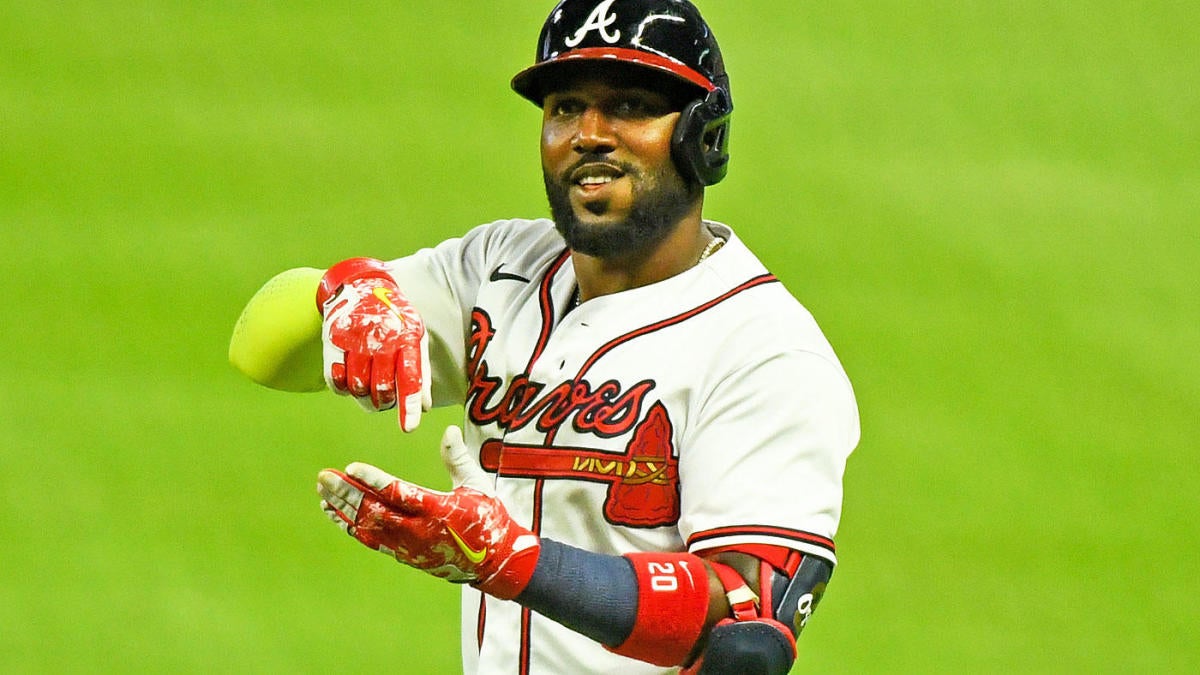
McDaniel outlines the issue by pointing directly to Ozuna’s age, noting that he has just turned 35—a threshold where many hitters begin to show clear signs of decline. Players who are primarily DH-only options often provide most of their value solely through their production at the plate, so any dip in performance naturally magnifies the risk that comes with signing them. Without defensive versatility or baserunning value to fall back on, a slump or a lingering injury can dramatically reduce their overall worth.
This concern is supported by the sharp contrast in Ozuna’s performance last season, which McDaniel breaks down using a midyear split. He points out that Ozuna dealt with a nagging hip issue that began affecting him around May.
Before the discomfort set in, Ozuna looked like one of the most dangerous hitters in the National League. Through June 1, he produced an impressive slash line of .284/.427/.474 across 241 plate appearances, good for a 155 wRC+. That level of production placed him firmly among baseball’s offensive elite.
However, after the hip problem began to take hold, his numbers declined significantly. In the 351 plate appearances that followed, Ozuna slashed .199/.306/.354 with an 86 wRC+, a drastic drop-off that undercut the strong first half of the season.
While slumps are a normal part of baseball, Braves pitching roster update, such a dramatic downturn coinciding with a physical ailment raises real questions about whether the injury will linger or whether it signals the beginning of a long-term decline. For a player whose primary value lies entirely in his bat, such inconsistency makes it difficult for teams to evaluate how he might perform over the life of a new contract.
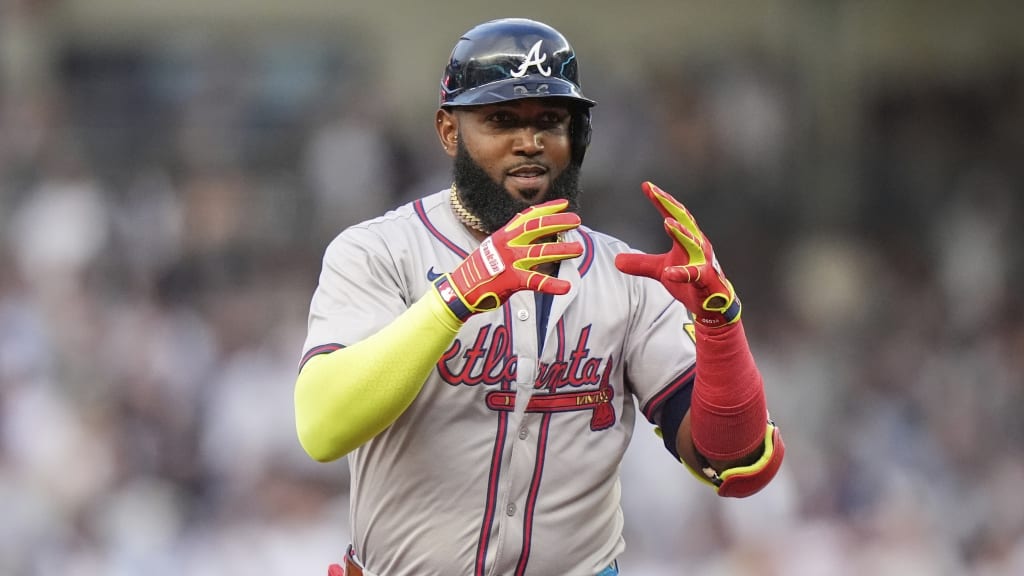
These uncertainties explain why many organizations may be reluctant to pursue Ozuna as a multiyear signing. Teams placing a premium on age, durability, and steady production might view him as a short-term, high-variance piece rather than a stable everyday contributor. It’s hard to imagine a large market for a lengthy deal when the risk of regression is so visible and when other DH or corner bat options could be available at lower cost or with better long-term upside.
Nonetheless, despite the inherent risk, Ozuna still brings enough offensive ability—especially when healthy—to intrigue clubs searching for an immediate run-production upgrade. McDaniel predicts that Ozuna will ultimately land a two-year contract worth around $30 million.
This projected deal is shorter but financially comparable on an annual basis to the four-year agreement he previously signed with the Atlanta Braves. Such a contract structure would give a team the benefit of Ozuna’s power and experience without requiring a long-term commitment that could become burdensome if his performance continues to fluctuate.
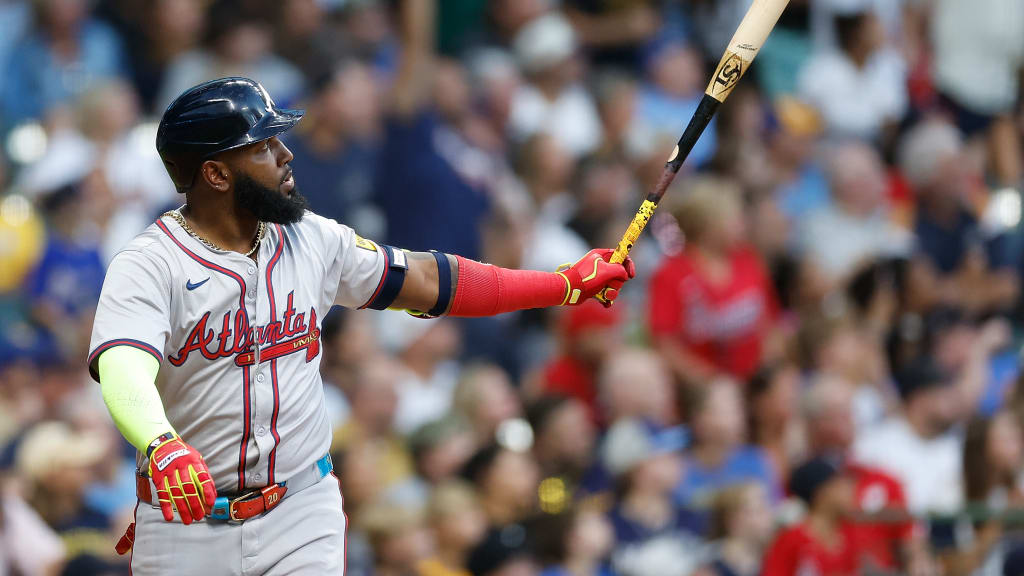
Which organization might be willing to take that gamble remains an open question, but several clubs could see Ozuna as a worthwhile short-term addition. Among potential suitors, the Texas Rangers stand out as a particularly logical fit.
After winning the World Series in 2023 and contending again in the seasons that followed, Texas continues to seek ways to bolster its lineup. The designated hitter spot has been an area where they could benefit from more consistent production, making Ozuna an appealing option if the price aligns with their offseason strategy.
Texas has shown a willingness in recent years to invest aggressively in proven hitters, especially those who can lengthen the lineup behind stars like Corey Seager, Marcus Semien, and Adolis García. Ozuna, at his best, brings middle-of-the-order power and the kind of veteran presence that can help stabilize an offense through a long season. If the Rangers believe his late-season decline was primarily the result of injury rather than permanent regression, they could view him as a meaningful upgrade for the short term.

Still, any team that signs Ozuna will need to prepare for the possibility that his production could vary widely depending on his health. Clubs will likely conduct extensive medical evaluations and use performance analytics to determine whether his swing mechanics or contact trends point toward recovery or long-term decline. If the hip issue proves manageable and Ozuna regains even a portion of his early-season form, he could emerge as one of the more impactful value signings of the winter.
In the end, Ozuna’s free agency represents a classic risk-reward scenario. His track record, power, and experience make him an appealing bat for teams looking to contend immediately, yet his age and recent injury history inject a level of unpredictability that cannot be ignored.
McDaniel’s projected contract length reflects the balance between those two realities: Ozuna is still capable of helping a lineup, but not without raising legitimate questions about durability and consistency. As the offseason unfolds, it will become clearer which front office is willing to embrace those risks in hopes of capturing the upside Ozuna can still provide.
MORE MLB NEWS:
-
BREAKING: Dodgers officially pluck another fan favorite from the Cardinals
-
Cardinals Cut Ties With $260M Veteran In Trade With AL Club LA Angels
-
BREAKING: Red Sox Officially Say Goodbye To Top Star Reliever
-
BREAKING: Braves to re-sign superstar infielder in blockbuster deal
-
BREAKING: Red Sox On Another Blockbuster Addition After $75 Million Deal
-
Breaking News: Mariners follow through on sudden connection to Padres’ $80M All-Star infielder


Be the first to comment