As the Washington Nationals approach the Aug. 3 trade deadline, their front office could soon be faced with a pivotal crossroads that may shape both their immediate future and long-term trajectory. If the team manages to remain competitive in the playoff race over the coming weeks, president of baseball operations Paul Toboni will be tasked with making one of the most delicate decisions of his early tenure: whether to aggressively strengthen the current roster for a postseason push or stay committed to a longer-term rebuilding vision.
This situation is far from straightforward. On one hand, a team that is within striking distance of a playoff spot naturally invites the temptation to buy at the deadline. Adding key contributors—particularly impact players who can address current weaknesses—could elevate the Nationals from fringe contenders to legitimate postseason participants.
On the other hand, Washington is still in a phase where organizational growth and sustainability matter just as much, if not more, than short-term success. Selling off certain assets or avoiding risky acquisitions might better position the franchise for sustained competitiveness in the coming years.
Ideally, Toboni would be able to strike a balance between these two competing priorities. The most effective strategy, in theory, would involve a hybrid approach—one in which the Nationals both acquire talent that can help immediately while also trading away expendable pieces for future assets. However, executing that kind of dual-track plan is incredibly challenging.
It requires precise evaluation of the roster, accurate forecasting of player development, and a keen understanding of the trade market. Even then, the margin for error is slim, and one misstep could compromise either the present or the future.
MORE: “Absolutely Stunning” Angels finally move more quickly
Complicating matters further is the fact that this is Toboni’s first season leading baseball operations for Washington. The organization underwent a significant front-office overhaul prior to the 2026 campaign, bringing in a younger leadership group tasked with guiding the next phase of the franchise’s evolution. (Wikipedia) For a first-year executive, the pressure to make the “right” decision is magnified, particularly when the team’s direction is still being defined. Whether he chooses to buy, sell, or attempt a combination of both will likely set the tone for how the Nationals approach roster building under his leadership moving forward.
One aspect of the situation, however, appears to be increasingly clear: if Washington wants to secure a playoff berth, it must improve its pitching staff. While the team has made strides in other areas, the need for more reliable arms—especially in the starting rotation—has become evident. In a competitive National League landscape, where pitching depth often separates contenders from pretenders, the Nationals cannot afford to stand pat if they intend to keep pace.
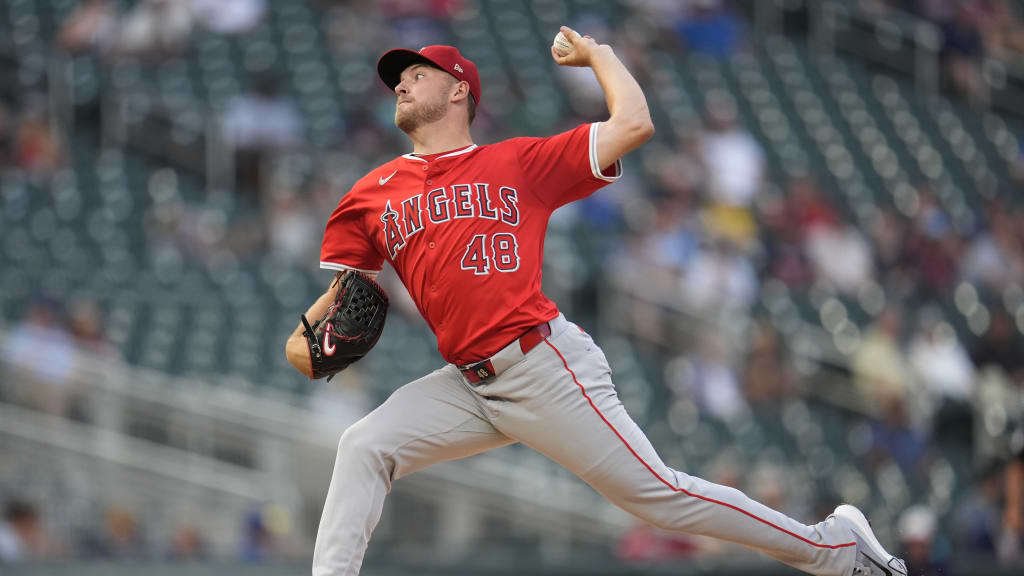
That urgency is precisely why ESPN analyst David Schoenfield identified Washington as one of several teams that should pursue Los Angeles Angels left-hander Reid Detmers. (SI) Detmers has emerged as a notable name in trade discussions as the deadline approaches, and for good reason. At just 26 years old, he combines youth with proven major league ability, making him an attractive option for teams seeking both immediate help and longer-term value.

Statistically, Detmers has been solid in 2026, posting a 3.88 ERA with an impressive strikeout total and a strong WHIP that ranks among the better marks in the league. (ESPN) His ability to miss bats and limit baserunners makes him the type of pitcher who could slot comfortably into the middle or even upper portion of a rotation. For a Nationals team in need of stability on the mound, he represents a potentially transformative addition.
Of course, acquiring a pitcher of Detmers’ caliber would not come cheaply. Starting pitchers with his combination of age, performance, and team control are among the most valuable commodities on the trade market. Even though the Angels have publicly indicated they are not eager to move him, the reality of the trade deadline often creates opportunities for deals that once seemed unlikely. If Los Angeles decides that the return package could significantly bolster its own future, it might reconsider its stance. (SI)
For Washington, the key question would be whether the cost aligns with its broader organizational goals. Trading away top prospects or young major league contributors for a single pitcher—even one as talented as Detmers—could be risky, especially if the team’s playoff chances remain uncertain. However, if the Nationals are firmly in contention and believe that an upgrade like this could push them over the edge, the calculus changes considerably.
MORE: Braves to cut ties with $20M Gold Glove winner
There is also the matter of timing. The closer the Nationals stay to a playoff position leading up to the deadline, the more pressure there will be to act. Conversely, if they begin to fall out of the race, the argument for selling or standing pat becomes stronger. In that sense, the team’s performance over the next several weeks may ultimately dictate the direction Toboni chooses.
Another layer to consider is how a move for Detmers—or any high-profile pitcher—would signal the organization’s intentions. Making a bold acquisition would send a clear message to both the clubhouse and the fan base that the Nationals are ready to compete now. It could energize players and generate momentum heading into the final stretch of the season. On the flip side, a more conservative approach might emphasize patience and long-term planning, reinforcing the idea that the franchise is still building toward a larger goal.
Ultimately, the Nationals find themselves in a position that many rebuilding teams hope to reach: competitive enough to consider buying, yet young enough to justify caution. Navigating that middle ground is one of the most difficult challenges in baseball operations. It requires balancing optimism with realism, ambition with discipline.

As the deadline draws closer, all eyes will be on Washington’s front office and the decisions it makes. Whether Toboni opts to pursue a pitcher like Reid Detmers, explore smaller upgrades, or take a more measured approach, his choices will have lasting implications. Not only will they impact the Nationals’ chances of making the playoffs in 2026, but they will also help define the direction of the franchise for years to come.
In the end, there is no easy answer. The path forward is filled with uncertainty, and success will depend on how effectively the Nationals can navigate the complex dynamics of the trade market. But one thing is certain: if they are serious about contending, addressing their pitching needs will be at the center of whatever strategy they choose to pursue.
Nationals, Cardinals, Diamondbacks, Athletics Viewed as Reid Detmers Suitors
Reid Detmers has consistently surfaced as one of the more intriguing names in conversations surrounding high-end starting pitchers who could potentially be available ahead of the trade deadline. As teams across Major League Baseball evaluate their needs and explore ways to upgrade their rotations, the Los Angeles Angels left-hander has emerged as a particularly attractive option due to his performance, age, and long-term value.

At least publicly, the Angels have maintained that they are not interested in moving Detmers or fellow standout starter José Soriano. That stance is not surprising given that both pitchers are young, productive, and under team control—exactly the type of players organizations typically try to build around rather than trade away.
However, the realities of the trade market can sometimes shift even the most firm positions. When a team is presented with the possibility of receiving an overwhelming return—often referred to as a “monster haul”—it can force a reconsideration of priorities. In that sense, even if Los Angeles is reluctant to part with either pitcher, the potential for a blockbuster deal cannot be completely ruled out.
MORE: Cardinals’ Fans Reportedly Get Heartbreaking News Regarding Left-Hander Matthew Liberatore
This dynamic is precisely why Detmers continues to generate so much attention across the league. Teams in need of pitching are closely monitoring the situation, and the Washington Nationals are among those frequently linked as a possible destination.
Washington’s interest is easy to understand. The team has struggled to assemble a consistent and reliable pitching staff, and that deficiency has been a major factor in its uneven performance. Adding a pitcher of Detmers’ caliber would address a glaring weakness and could significantly improve the team’s chances of staying competitive in the playoff race.
From a performance standpoint, Detmers has been highly effective during the 2026 season. He owns a 3.88 ERA across his starts, along with 112 strikeouts, placing him among the more productive arms in the league. (ESPN) His ability to generate swings and misses is particularly notable, as reflected in a strikeout rate that approaches 28 percent.

That level of dominance suggests he is more than just a mid-rotation option—he has the potential to be a difference-maker, especially for a team looking to solidify its rotation for both the present and the future.
Beyond the surface-level statistics, there are additional reasons why Detmers is so appealing. Advanced metrics indicate that he has performed at an even higher level than his ERA might suggest, with strong underlying numbers that point to sustainability and continued success.
MORE: Angels-Dodgers Trade Land Electricfying Pitcher In 2-Player Blockbuster Deal
Analysts have even noted that he has ranked among the better starting pitchers in baseball this season based on metrics such as WAR, FIP, and expected ERA. (FanGraphs Baseball) Taken together, these indicators reinforce the idea that Detmers is not just having a solid season, but is developing into one of the more valuable young starters in the game.
Of course, acquiring a pitcher with that kind of profile would come at a significant cost. Detmers is not a rental player nearing free agency; instead, he remains under team control for multiple seasons, which greatly increases his trade value. (MLB.com) For a team like the Nationals, this means that any deal would almost certainly require parting with several highly regarded prospects, likely including players from within their top 30 organizational rankings. Such a package could represent a substantial portion of the franchise’s future talent base.
Despite that steep price, there is a compelling argument that the investment could be worthwhile for Washington. One of the primary reasons the Nationals find themselves lacking pitching depth is their limited activity in free agency. Rather than spending heavily on established arms, the organization has largely relied on internal development and smaller acquisitions.

While that approach can be effective over time, it has left the team short on proven starting pitchers in the short term. Trading for someone like Detmers would offer a different path—one that allows the Nationals to acquire a high-quality pitcher who is already performing at a high level and can remain with the team through his prime years.
In that sense, Detmers represents more than just a short-term fix; he would be a foundational piece. His combination of youth, production, and cost control aligns well with what rebuilding or retooling teams typically seek. Instead of gambling on expensive free agents or hoping for unproven prospects to develop quickly, Washington could secure a pitcher who has already demonstrated his ability to succeed at the major league level.
However, the Nationals are unlikely to be the only team thinking along those lines. Several other clubs, including the Athletics, Arizona Diamondbacks, and St. Louis Cardinals, are also expected to have interest in acquiring Detmers.
Each of these teams has its own reasons for pursuing pitching upgrades, and all would likely view Detmers as a valuable addition. If multiple teams become serious bidders, the situation could escalate into a competitive bidding war, driving up the asking price even further.
That possibility adds another layer of complexity for Washington. Not only would they need to decide whether Detmers is worth a significant prospect investment, but they would also have to consider how far they are willing to go in comparison to other interested teams. Overpaying in a bidding war could jeopardize the organization’s long-term outlook, while being too cautious could result in missing out on a player who could meaningfully improve the roster.
Timing will also play a crucial role in shaping the outcome. As the trade deadline approaches, teams typically gain a clearer understanding of their position in the standings and their realistic chances of making the playoffs.
For the Nationals, their performance in the weeks leading up to the deadline will likely dictate their approach. If they remain firmly in contention, the incentive to make a bold move will increase. Conversely, if they begin to fall out of the race, the argument for preserving prospects and avoiding major trades will become stronger.
At the same time, the Angels’ situation will influence the market as well. While they have indicated a desire to hold onto their top pitchers, factors such as their place in the standings, internal organizational direction, and the quality of trade offers they receive could all impact their decision-making. Recent reporting suggests that Detmers could become one of the most sought-after pitchers available if circumstances align, highlighting just how valuable he is viewed around the league. (New York Post)
Ultimately, the decision facing the Nationals is not a simple one. Trading for Detmers would require a significant commitment of resources, but it could also provide a substantial boost to a team that is striving to return to postseason relevance. It is a classic risk-versus-reward scenario—one that will test the judgment of the front office and its willingness to act decisively.
There is still time before any final decisions need to be made, and much can change between now and the deadline. Injuries, performance fluctuations, and shifts in the standings could all alter the landscape. But if Washington continues to hover in the playoff picture, the pressure to make a move will only intensify.
In that situation, the Nationals will have to carefully weigh the benefits of acquiring a pitcher like Detmers against the cost of what they would need to give up. A blockbuster trade could accelerate their progress and signal a commitment to competing now, but it would also carry inherent risks. On the other hand, standing pat might preserve the future but could limit their chances of making a meaningful run this season.
Whichever path they choose, it is clear that Reid Detmers has become a central figure in the trade deadline conversation. His value, both immediate and long-term, makes him one of the most compelling targets on the market—and one whose potential availability could have a significant impact on multiple teams, including the Nationals.



Be the first to comment