The Atlanta Braves have emerged as a widely discussed potential destination for a once-dominant All-Star power hitter who is currently enduring a difficult stretch. Even though Atlanta has been one of the most complete and dominant teams in Major League Baseball throughout the early portion of the 2026 season, there is still speculation that the organization could look to strengthen an already loaded roster.
The Braves have built a reputation as a club that consistently seeks improvement, even when operating from a position of strength, and that mindset could lead them to pursue an underperforming but highly talented slugger in need of a fresh start.
To begin with, Atlanta’s performance so far this season has been nothing short of outstanding. The team has surged out of the gate with a league-best 29-13 record, setting the tone as one of baseball’s elite contenders.
Their success has not been based on luck or narrow wins either; instead, it has been fueled by consistent excellence on both sides of the ball. One of the clearest indicators of their dominance is their run differential, which sits at an impressive +90 also the best mark in the league. This statistic highlights not only their ability to win games, but to do so convincingly, often outpacing opponents by significant margins.
What makes the Braves particularly dangerous is their balance. Offensively, they have been firing on all cylinders, averaging 5.55 runs per game, which places them at the top of Major League Baseball in scoring. Their lineup has proven to be deep, versatile, and capable of producing in a variety of ways, from power hitting to situational offense.
At the same time, their pitching staff has been equally effective. With a combined team ERA of 3.11, Atlanta’s pitchers have managed to suppress opposing offenses at an elite level. This combination of explosive hitting and reliable pitching has made the Braves one of the most well-rounded teams in the sport.
MORE: Cardinals Officially Release Top Pitcher
Given these strengths, it might seem unnecessary for Atlanta to consider making a major addition. However, elite teams often look for opportunities to improve, especially when a high-upside player becomes available. That is where the situation involving San Francisco Giants star Rafael Devers comes into play.
According to Bleacher Report analyst Zachary Rymer, the Braves stand out as the most logical landing spot for the struggling slugger. The idea is not necessarily that Atlanta has a glaring need, but rather that they are in a position to take a calculated risk on a player who has previously demonstrated MVP-level talent.
Devers’ current situation with the Giants is somewhat surprising given the expectations surrounding him when he was acquired. San Francisco traded for the former Boston Red Sox standout less than a year ago, giving up a package of four players in the process.
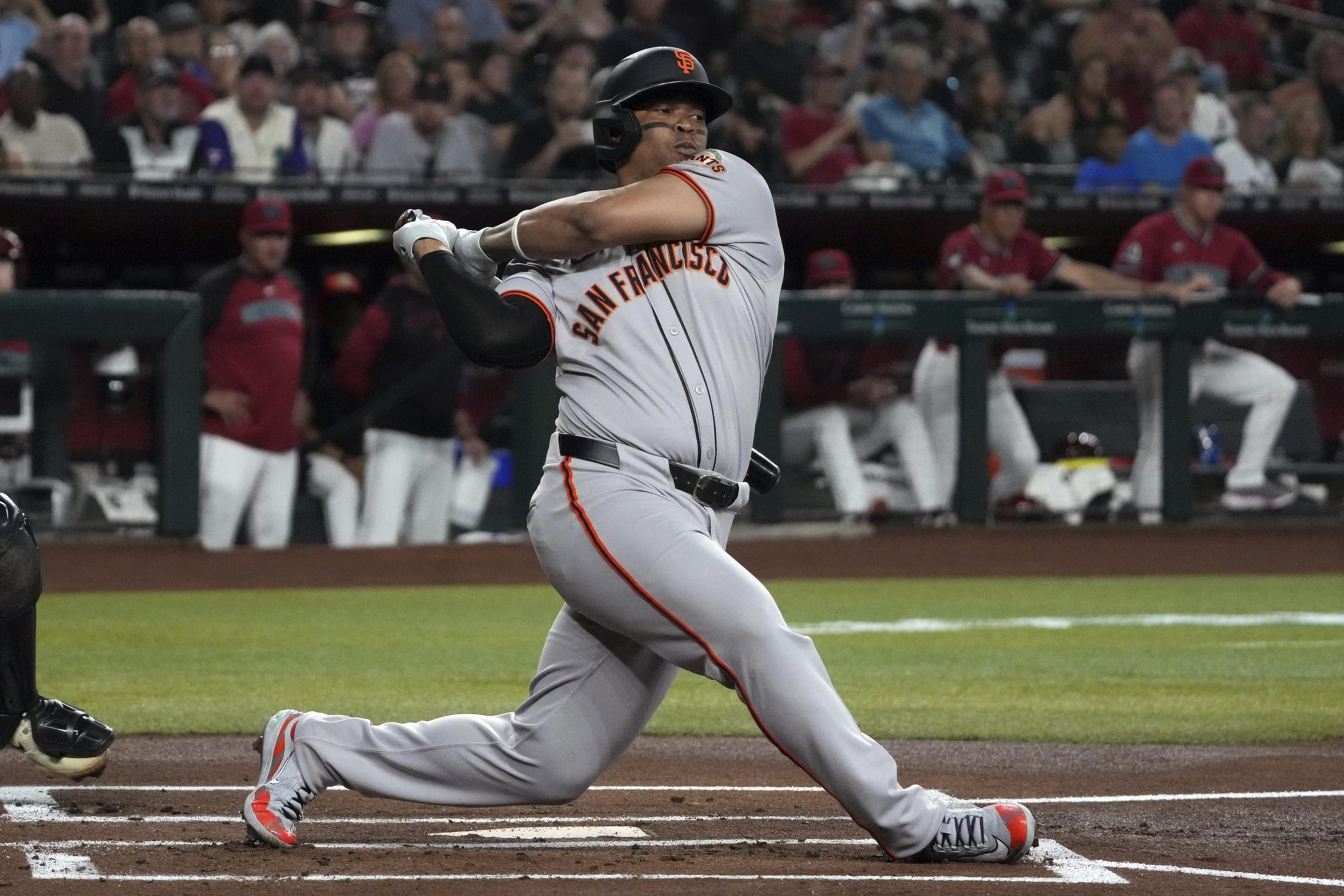
At the time, the move was seen as a bold attempt to add a middle-of-the-order force capable of transforming the lineup. Devers had built a reputation in Boston as one of the league’s premier hitters, consistently producing high batting averages, strong on-base percentages, and significant power numbers.
However, things have not gone according to plan since his arrival in the Bay Area. While Devers has still managed to hit 25 home runs across 132 games with the Giants a respectable total his overall offensive production has taken a noticeable step backward.
Key metrics such as batting average, on-base percentage, and slugging percentage have all declined compared to his previous performance in Boston. This drop-off has raised concerns about his fit within the Giants’ system and whether he can regain his former level of play.
As a result, there has been growing speculation that San Francisco may be open to moving on from Devers sooner rather than later. In fact, USA Today’s Bob Nightengale recently reported that the Giants would “love” to find a way to trade him, suggesting that the organization may already be experiencing some level of buyer’s remorse.
This is particularly notable given the significant investment they made to acquire him in the first place. Moving Devers would likely require the Giants to accept less than what they originally paid, but it could also provide them with an opportunity to reset and address other needs.
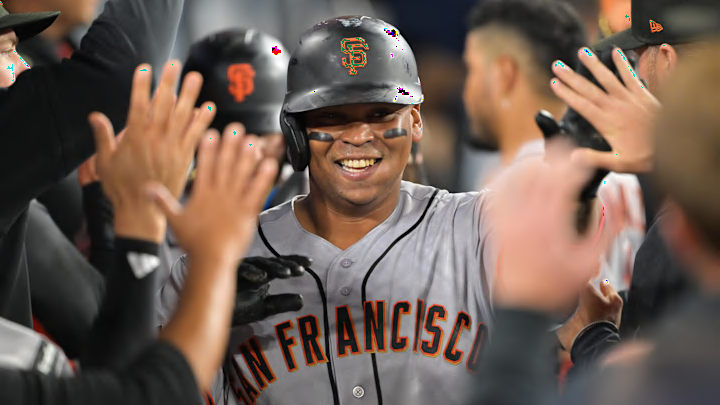
For Devers himself, a change of scenery could be exactly what he needs to get back on track. Players often experience fluctuations in performance when transitioning to a new team, whether due to differences in ballparks, coaching philosophies, or simply the pressure of adjusting to a new environment.
In some cases, a fresh start can reignite a player’s confidence and allow them to rediscover their previous form. Atlanta, with its strong clubhouse culture and winning atmosphere, could provide an ideal setting for such a turnaround.
From the Braves’ perspective, the potential addition of Devers would represent a classic low-risk, high-reward scenario. Even though he is currently struggling, his track record suggests that he still possesses the ability to be a game-changing hitter.
MORE: Angels finally to part ways with veteran outfielder to help both parties involved
If Atlanta were able to acquire him at a reduced cost, they could add another dangerous bat to an already potent lineup without sacrificing too much in return. Furthermore, being surrounded by a deep and productive offense could alleviate some of the pressure on Devers, allowing him to focus on regaining his rhythm rather than carrying the team.
Ultimately, while the Braves do not have an obvious weakness that needs to be addressed, their status as a championship contender makes them a logical candidate to explore opportunities like this.

Adding a player of Devers’ caliber even in a down period could further elevate their ceiling and provide additional insurance for the long season ahead. Meanwhile, for the Giants, moving on from Devers could represent a chance to recalibrate after a trade that has not delivered the expected results.
In summary, the idea of Rafael Devers landing in Atlanta reflects both the Braves’ aggressive approach to roster building and the Giants’ apparent willingness to reconsider a recent high-profile acquisition. It is a situation that underscores the unpredictable nature of baseball, where even the most promising moves can fail to pan out, and struggling stars can find new life in the right environment.
Rafael Devers Could be a Long-Term DH solution for the Atlanta Braves
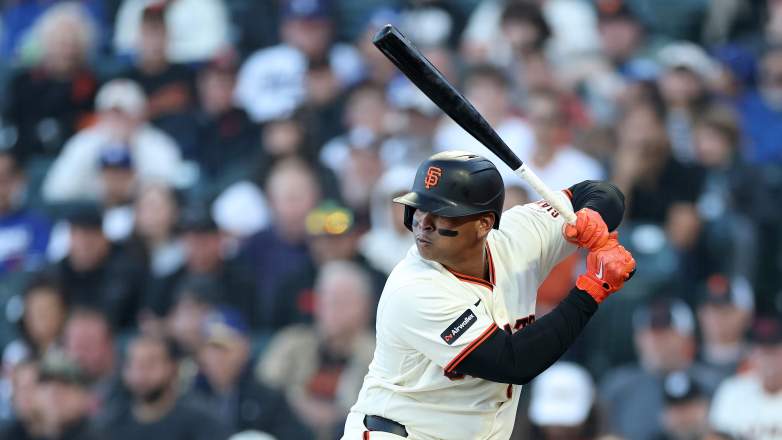
If the Atlanta Braves were to seriously pursue a deal for Rafael Devers, his role on the roster would almost certainly be as the team’s designated hitter rather than a regular position player in the field. Earlier in his career, Devers was known primarily for his work at third base, where he spent several seasons developing into one of the league’s more dangerous offensive threats.
However, over time, defensive concerns and roster decisions have led to a shift in how he is utilized. During his stint in San Francisco, he was moved away from third base responsibilities, signaling a transition toward a more offense-focused role.
MORE: Braves Officially Make Crucial Roster Move, Land Veteran Catcher To Provide Depth
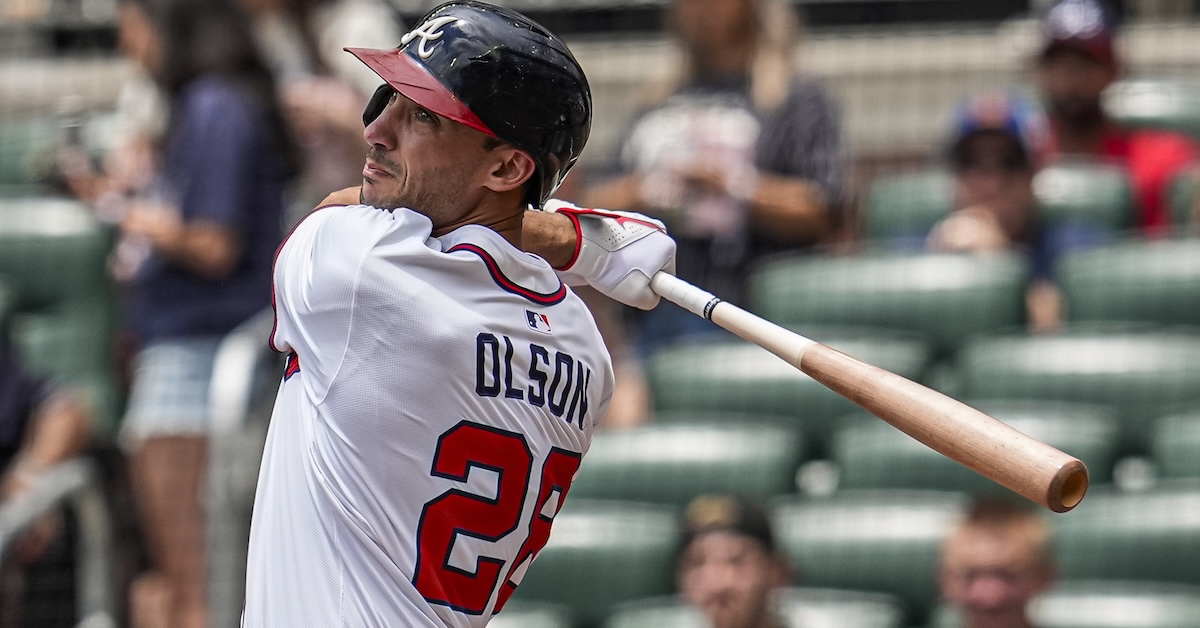
While Devers has also logged some experience at first base, that path appears blocked in Atlanta due to the presence of Matt Olson, who is widely regarded as one of the premier first basemen in Major League Baseball. Olson’s combination of power hitting and elite defense makes him an everyday fixture, leaving little room for another player to take over duties at that position.
Given these circumstances, the most logical fit for Devers in Atlanta would be at designated hitter, where his bat could remain in the lineup consistently without the added pressure of defensive expectations. The Braves have already been utilizing a designated hitter throughout the 2026 season, with veteran Dominic Smith taking on the majority of those at-bats.
Smith, a well-traveled player who has spent time with multiple organizations, has emerged as a surprising bright spot for Atlanta this year. In what can only be described as a breakout campaign relative to his previous production, Smith has posted an impressive slash line of .363/.391/.550, showcasing both his ability to get on base and to drive the ball with authority.
Despite Smith’s outstanding performance thus far, there is a sense of skepticism about whether he can maintain such a high level of production over the course of a full season, let alone into future years. Baseball history is filled with examples of players who put together remarkable stretches, only to regress back toward their career norms as the season progresses.
Smith’s track record prior to this season suggests that sustaining these numbers would be a significant challenge. Analysts like Rymer have pointed out that while Smith has been invaluable in the short term, relying on him to continue at this pace may not be a prudent long-term strategy for a team with championship aspirations.
This is where the appeal of Devers becomes particularly compelling. Unlike Smith, Devers has an established history of elite offensive production at the major league level. His ability to hit for both average and power, combined with his relatively young age compared to many veterans, makes him an attractive option for a team looking to solidify its lineup for years to come.
Adding a player of Devers’ caliber could provide the Braves with a more reliable and consistent presence in the middle of their batting order, especially as they aim to sustain their status as one of the top teams in the league.
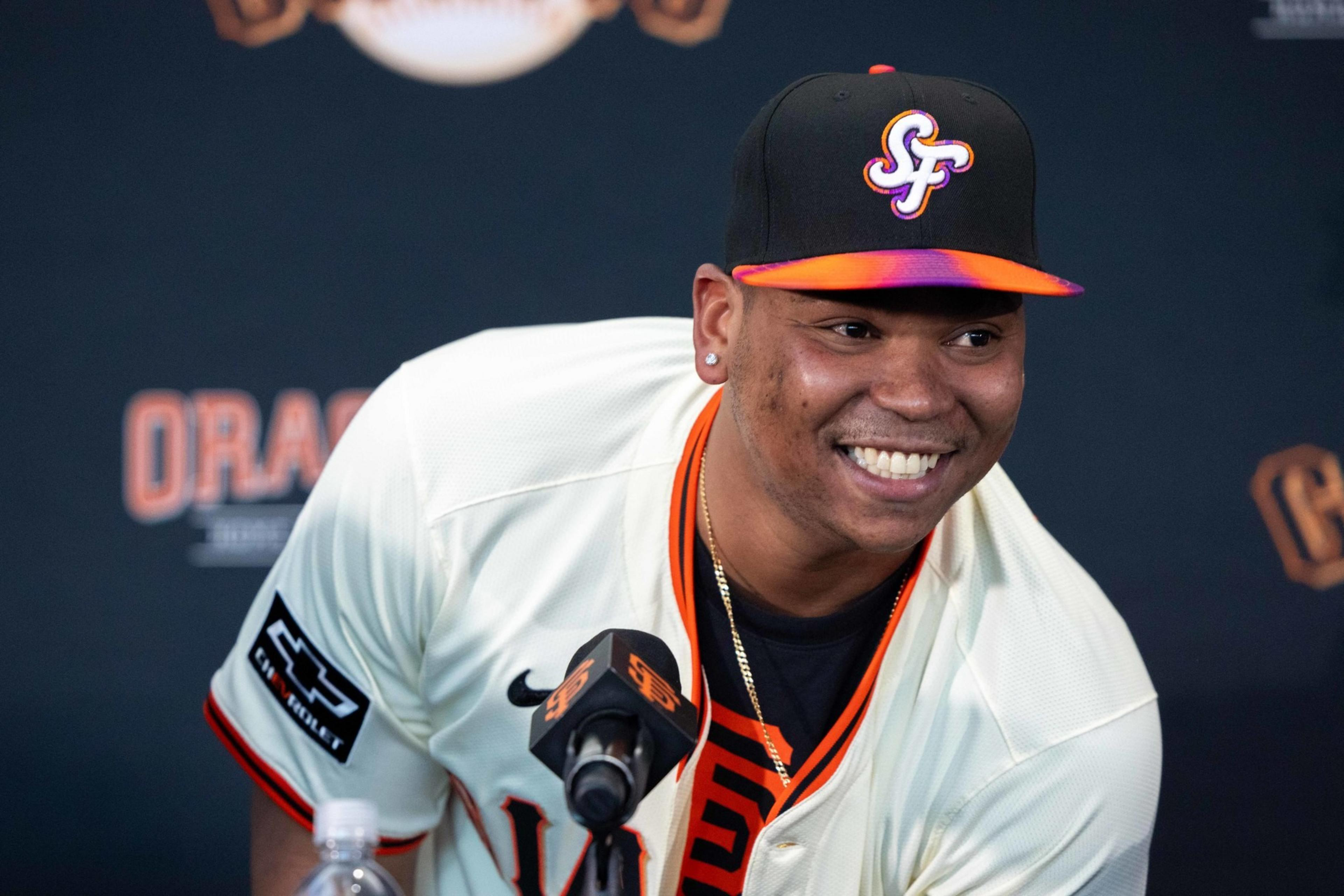
However, the potential acquisition of Devers is far from straightforward, and the most significant hurdle facing any interested team is his enormous contract. Devers is currently in the midst of a 10-year, $313 million deal, a financial commitment that places him among the highest-paid players in the sport.
Such a contract carries considerable long-term implications, particularly for a team like the Braves that must balance its payroll with other roster needs and future extensions for key players.
As it stands, Devers is still owed a substantial $226.5 million through the 2033 season. This remaining salary represents a major financial burden that could deter potential suitors or at least complicate trade negotiations.
MORE: Mariners Officially Lose Outfielder To AL West Rival
For Atlanta or any other team to realistically consider taking on Devers, there would likely need to be some level of financial cooperation from the San Francisco Giants. Specifically, the Giants might be asked to absorb a portion of the remaining salary in order to make the deal more palatable for the acquiring team.
This type of arrangement is not uncommon in Major League Baseball, particularly when dealing with large contracts. Teams looking to move high-salary players often agree to retain part of the financial obligation in exchange for better trade returns or to facilitate a deal that might not otherwise happen. In Devers’ case, the size of his contract makes such a scenario almost a necessity rather than a luxury.
For the Braves, the decision to pursue Devers would ultimately come down to a careful evaluation of both his on-field value and the financial commitment required to acquire him. On one hand, his offensive capabilities could significantly enhance an already potent lineup, providing another formidable bat to complement the team’s existing core. On the other hand, the long-term nature of his contract could limit the organization’s flexibility in addressing other needs, both now and in the future.

In summary, while Devers presents an intriguing option for Atlanta, particularly as a designated hitter, the complexities surrounding his contract cannot be overlooked. Dominic Smith’s current success offers a temporary solution, but questions about sustainability leave the door open for a potential upgrade.
Whether the Braves ultimately decide to pursue Devers will depend on their willingness to take on a significant financial commitment and their confidence in his ability to deliver elite production over the remainder of his contract.
Atlanta Has Young Arms to Help Make a Move
Even though pursuing him would carry some level of risk, the Atlanta Braves might view Rafael Devers as an appealing buy-low opportunity. While his performance with the San Francisco Giants has fallen short of his usual elite standards, his overall production remains impressive.
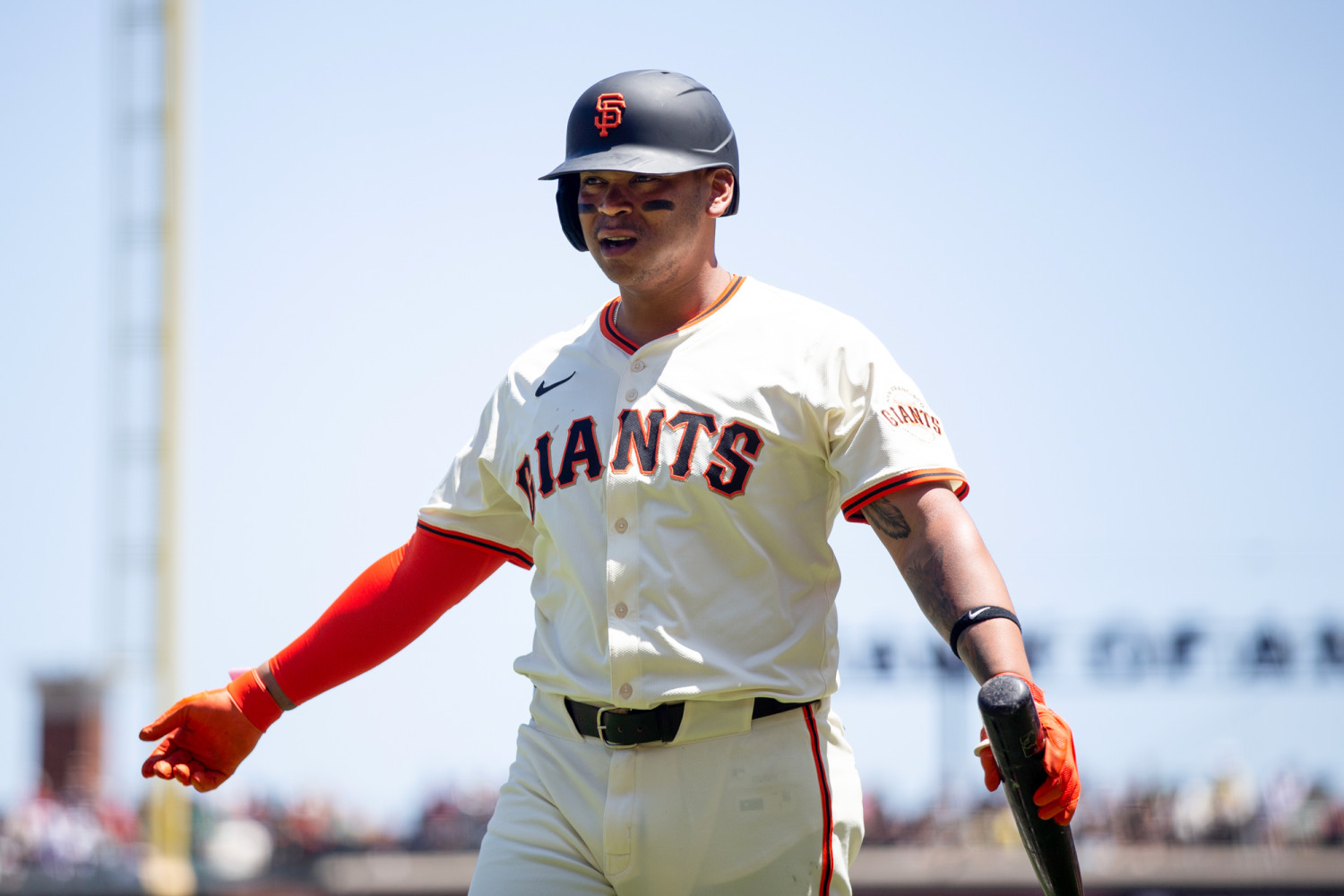
Across his time with both Boston and San Francisco during the 2025 season, Devers still managed to launch 35 home runs and drive in 109 runs, showing that his power and run-producing ability have not disappeared.
More encouragingly, he appears to be regaining his form at the plate. Over his last 12 games, Devers has been on a tear, batting .350 (14-for-40) while collecting seven extra-base hits, a sign that he may be turning a corner offensively.
MORE: Braves Officially Receive Another Injury Scare For Sean Murphy After Recently Returned From The IL
Given the Giants’ apparent interest in moving on from Devers’ sizable contract, Atlanta could attempt to capitalize on the situation. If San Francisco is motivated to reduce payroll, it could create an opening for the Braves to acquire a proven middle-of-the-order bat at a potentially reduced cost.
According to Rymer’s speculation, Atlanta might be willing to part with some of its young pitching depth to make such a deal happen. Specifically, injured prospects like Spencer Schwellenbach or Hurston Waldrep could be included as trade pieces to help balance the financial and talent considerations involved in a potential agreement.

Be the first to comment