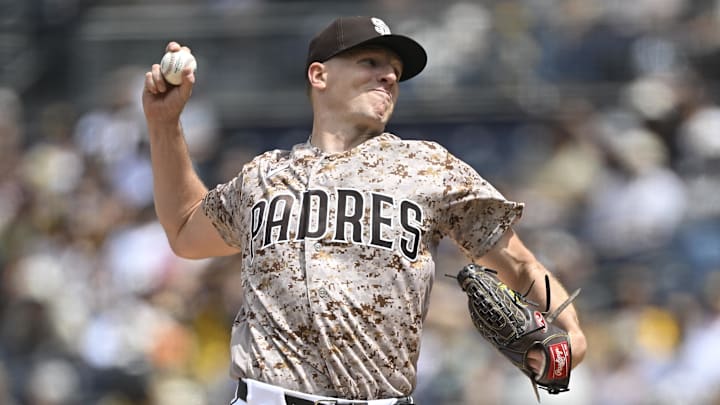
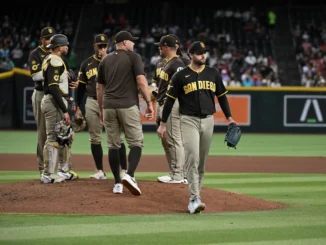
The San Diego Padres have suddenly found themselves facing a pressing issue within their starting rotation, largely due to an untimely injury to veteran right-hander Nick Pivetta. Pivetta, who had been expected to play a meaningful role in stabilizing the pitching staff, was recently placed on the injured list after being diagnosed with a flexor strain in his right elbow a condition that often raises concern for pitchers because of its potential to linger or even worsen if not handled carefully.
This development has created a notable void in the Padres’ rotation, forcing the organization to explore ways to reinforce its pitching depth as the season continues.
Manager Craig Stammen did not shy away from addressing the situation publicly. In fact, he suggested that the injury could serve as a catalyst for the team’s front office to take decisive action. Speaking candidly earlier in the week, Stammen emphasized the aggressive nature of the club’s leadership, particularly highlighting the tendencies of president of baseball operations A.J. Preller. According to Stammen, Preller’s approach to roster construction and improvement is relentless and proactive.
“A.J. and aggressive are basically interchangeable,” Stammen remarked, underscoring the executive’s reputation across Major League Baseball. He went on to praise Preller’s continuous efforts to enhance the roster, noting that the executive never becomes complacent.
Instead, he is constantly evaluating talent, exploring opportunities, and seeking upgrades whether through trades, free agency, or internal development. Stammen added that this mindset is part of what makes the Padres organization an exciting environment, as there is always a sense that improvements are on the horizon and that management is fully committed to competing at the highest level.
MORE: Braves part ways with $1.25M electricfying catcher after sudden return
True to that reputation, the Padres have already begun exploring external options to address their pitching needs. One name that has surfaced prominently in recent reports is Lucas Giolito, a free-agent right-hander who has been on the radar of several teams.
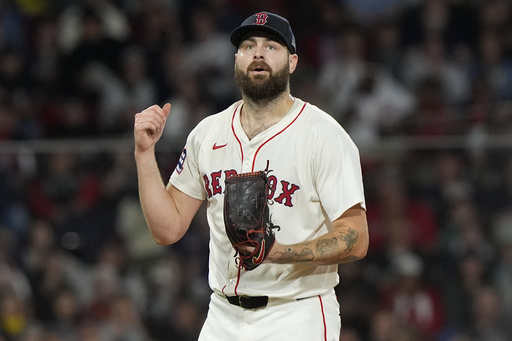
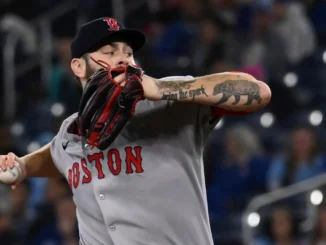
Giolito delivered a solid performance during his most recent campaign with the Boston Red Sox, posting a 3.41 earned run average while striking out 121 batters over the course of 145 innings. Those numbers reflect a dependable mid-to-front-end rotation arm precisely the type of pitcher the Padres could use to fill the gap left by Pivetta’s absence.
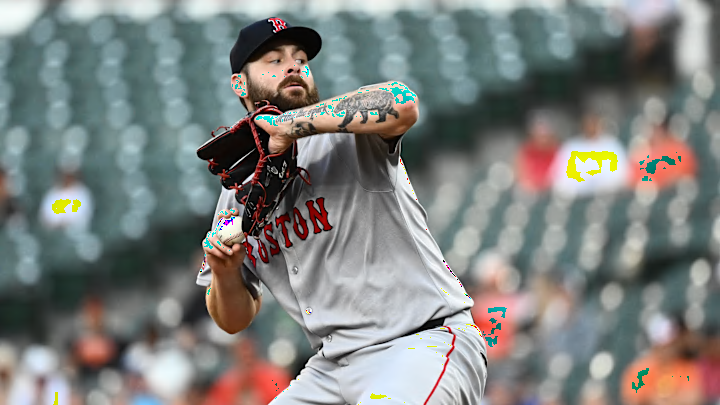
Interestingly, Giolito’s connection to San Diego is not entirely new. Over the past few months, there have been recurring reports linking him to the Padres, suggesting that the organization has maintained a level of interest in his services for some time. Given the current circumstances, that interest appears to be intensifying, positioning Giolito as a logical and attainable candidate to step into the rotation.
While pursuing a free agent like Giolito represents a relatively straightforward path, there have also been more speculative and significantly more dramatic ideas floated in baseball circles. One such proposal comes from analyst Joel Reuter of Bleacher Report, who suggested a blockbuster trade scenario involving the New York Mets. In this hypothetical deal, the Mets would part ways with ace pitcher Freddy Peralta, sending him to San Diego in exchange for a package of promising young talent.
MORE: Giants gets more frustrating news pitcher to miss 5-6 months
Under this proposal, the Padres would relinquish highly regarded catching prospect Ethan Salas, along with outfielder Ryan Wideman and right-handed pitching prospect Tucker Musgrove. Such a trade would represent a significant investment by San Diego in its immediate championship aspirations, as it would involve sacrificing key pieces of its future in exchange for a proven frontline starter.
Reuter himself acknowledged that the idea might initially seem surprising, particularly because the Mets only recently acquired Peralta from the Milwaukee Brewers in a high-profile deal.

However, he argued that the realities of modern baseball especially when it comes to players nearing free agency can lead teams to make unexpected decisions. Peralta, who is approaching the end of his current contract, holds substantial trade value due to his combination of performance, affordability, and upside.
Drawing a parallel to recent history, Reuter pointed out that the Mets have previously demonstrated a willingness to pivot quickly, even after making significant acquisitions. He referenced their decision to trade veteran ace Justin Verlander back to the Houston Astros before the pitcher had completed a full season in New York. That move illustrated the organization’s readiness to cut losses or recalibrate its strategy when circumstances demand it.
MORE: Red Sox Pressured to Promote No. 7 Prospect as Bullpen Reinforcement
In Peralta’s case, his relatively modest salary reportedly around $8 million combined with his high-level production makes him an especially attractive asset on the trade market. If the Mets were to make him available, it is widely believed that numerous teams would express strong interest, potentially sparking a competitive bidding process.
Despite these arguments, the feasibility of such a trade remains questionable. From the Mets’ perspective, parting with Peralta would create a significant void in their own rotation, potentially undermining their ability to remain competitive. The situation becomes even more complex when considering the team’s broader ambitions and current struggles.
Ownership, led by Steve Cohen, has been outspoken about its commitment to building a contender capable of making a deep postseason run in 2026. However, the season has not unfolded as planned for the Mets.
The team has stumbled out of the gate with a disappointing 7–14 record, compounded by the absence of star outfielder Juan Soto, who is currently sidelined due to injury. To make matters worse, the Mets have endured a prolonged losing streak, dropping 10 consecutive games and intensifying the pressure on both players and management.
These struggles come on the heels of a turbulent offseason that saw the organization part ways with several beloved figures, including Pete Alonso and Edwin Díaz. In response, president of baseball operations David Stearns took steps to reshape the roster, bringing in new talent to offset those departures. His moves included signing infielder Jorge Polanco and acquiring outfielder Luis Robert Jr., as well as securing Peralta to bolster the pitching staff.
MORE: Cardinals’ Top Prospect Shut Down for Season After Devastating Surgery Blow
While these additions were intended to keep the Mets competitive, the early results have been underwhelming. This raises an important question: would trading Peralta truly serve the team’s best interests, or would it further hinder their chances of contending in 2026? For the Padres, the proposed deal is undeniably appealing, as it would provide them with a top-tier arm capable of anchoring their rotation. For the Mets, however, the calculus is far more complicated.
As the season progresses, much will depend on how the Mets perform in the coming weeks. If their struggles continue, they may find themselves shifting from buyers to sellers as the trade deadline approaches. In that scenario, moving a valuable asset like Peralta could become a more realistic option, particularly if it allows the team to replenish its farm system and build for the future.

On the other side of the equation, the Padres appear poised to take the opposite approach. With postseason aspirations firmly in mind, they are likely to be active buyers, seeking to strengthen their roster for a potential playoff push. Whether through a measured signing like Giolito or a bold trade for a pitcher of Peralta’s caliber, San Diego’s front office seems determined to address its current needs and position the team for success.
Ultimately, the situation underscores the dynamic nature of roster management in Major League Baseball. Injuries, performance fluctuations, and shifting competitive landscapes all play a role in shaping team strategies. For the Padres, the loss of Pivetta has created an urgent need but also an opportunity to reinforce their rotation. For the Mets, early-season adversity may force difficult decisions about the direction of the franchise.
As both teams navigate these challenges, their choices in the coming weeks could have lasting implications, not only for the remainder of the 2026 season but for their long-term trajectories as well.

Be the first to comment