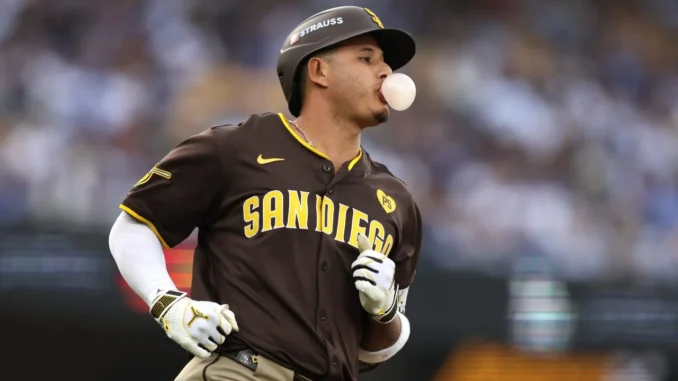
The San Diego Padres quietly added a pair of depth pieces to their organization by signing infielder/outfielder Nick Solak and left-handed pitcher Omar Cruz to minor league contracts, a move first reported by Baseball America writer Matt Eddy.
While these signings may not grab headlines or reshape the Padres’ projected Opening Day roster, they reflect a familiar organizational strategy: adding experienced, flexible players on non-roster deals who can provide insurance, competition, and depth as the long season unfolds. Both Solak and Cruz are expected to receive invitations to major league camp during spring training, where they’ll have the opportunity to make impressions on the coaching staff and front office.
Nick Solak: A Former Prospect Seeking Another Opportunity
At 31 years old, Nick Solak is well removed from the days when he was considered a notable prospect. Early in his professional career, Solak generated real excitement while coming up through the system of the Texas Rangers, thanks to his bat-to-ball skills, plate discipline, and positional versatility.

Those tools helped him reach the majors and accumulate a meaningful sample of big-league at-bats between 2019 and 2022. Over that span, Solak stepped to the plate 974 times in a Rangers uniform, a stretch that offered a fairly complete look at what he could provide against major league pitching.
MORE: Mets to land Cardinals’ .747 OPS outfielder
The results, however, were underwhelming. Solak produced a .252 batting average with a .327 on-base percentage and a .372 slugging percentage. When translated into advanced metrics, that line equated to a 93 weighted runs created plus (wRC+), meaning his offensive production sat about seven percent below league average. While that’s not disastrous for a utility player, it falls short of what teams typically hope to see from someone whose value is largely tied to offense.
Compounding the issue was Solak’s limited defensive impact. Though he has logged time at first base, second base, third base, and in the outfield, evaluators and defensive metrics have generally been unkind in their assessments of his glove.

He has not demonstrated the kind of plus defense at any one position that might offset middling offensive production, nor has his versatility been paired with above-average reliability in the field. As a result, Solak has often found himself squeezed off rosters when teams needed defensive specialists, speed, or pitching depth.
Minor League Success That Keeps the Door Open
Despite his struggles to establish a long-term role in the majors, Solak has continued to excel at the Triple-A level, a pattern that has defined much of his recent career. Most recently, he spent time in the system of the Pittsburgh Pirates, where his offensive output once again stood out.
MORE: Mariners-Rays proposed trade reunite Randy Arozarena with former teammate
In 2024, Solak came to the plate 482 times at Triple-A and delivered a standout performance: a .332 batting average, .411 on-base percentage, and .492 slugging percentage. He paired that production with a strong approach, walking in 10 percent of his plate appearances while striking out just 13 percent of the time.

Those numbers translated to a 143 wRC+, marking him as one of the more productive hitters at that level. While a .364 batting average on balls in play (BABIP) undoubtedly played a role in boosting his overall line, even a modest regression would still leave him as an above-average Triple-A contributor. The consistent theme in Solak’s career is that he has little left to prove in the minors offensively, yet has struggled to translate that success into sustained major league value.
Solak did receive a brief call-up with Pittsburgh, but the opportunity was fleeting. He appeared in only four big-league games, never truly getting a chance to establish rhythm or make adjustments. Because he was out of minor league options, the Pirates ultimately removed him from their 40-man roster, exposing him to free agency and opening the door for another organization to take a chance on him without committing a roster spot.
Potential Fit with the Padres’ Roster Construction
For the Padres, Solak represents a low-risk addition who can serve as depth across multiple positions. As a right-handed hitter, he brings a skill set that could be particularly useful in a platoon or bench role.
Over the course of his major league career, Solak has posted noticeably stronger numbers against left-handed pitching, compiling a .279/.358/.420 slash line and a 115 wRC+ in those matchups. That ability to hit southpaws better than average could allow him to fill a niche role if circumstances align.
MORE: Orioles involes in 4-player blockbuster deal, finish offseason with bang
In theory, Solak could help the Padres protect some of their left-handed bats from unfavorable matchups. Players like Gavin Sheets, Ha-Seong Kim, and Jake Cronenworth are all left-handed or left-side hitters who might benefit from selective rest against tough lefties. In such scenarios, a right-handed bat like Solak’s could slide into the lineup, providing matchup-based flexibility without forcing the team into a more permanent roster commitment.
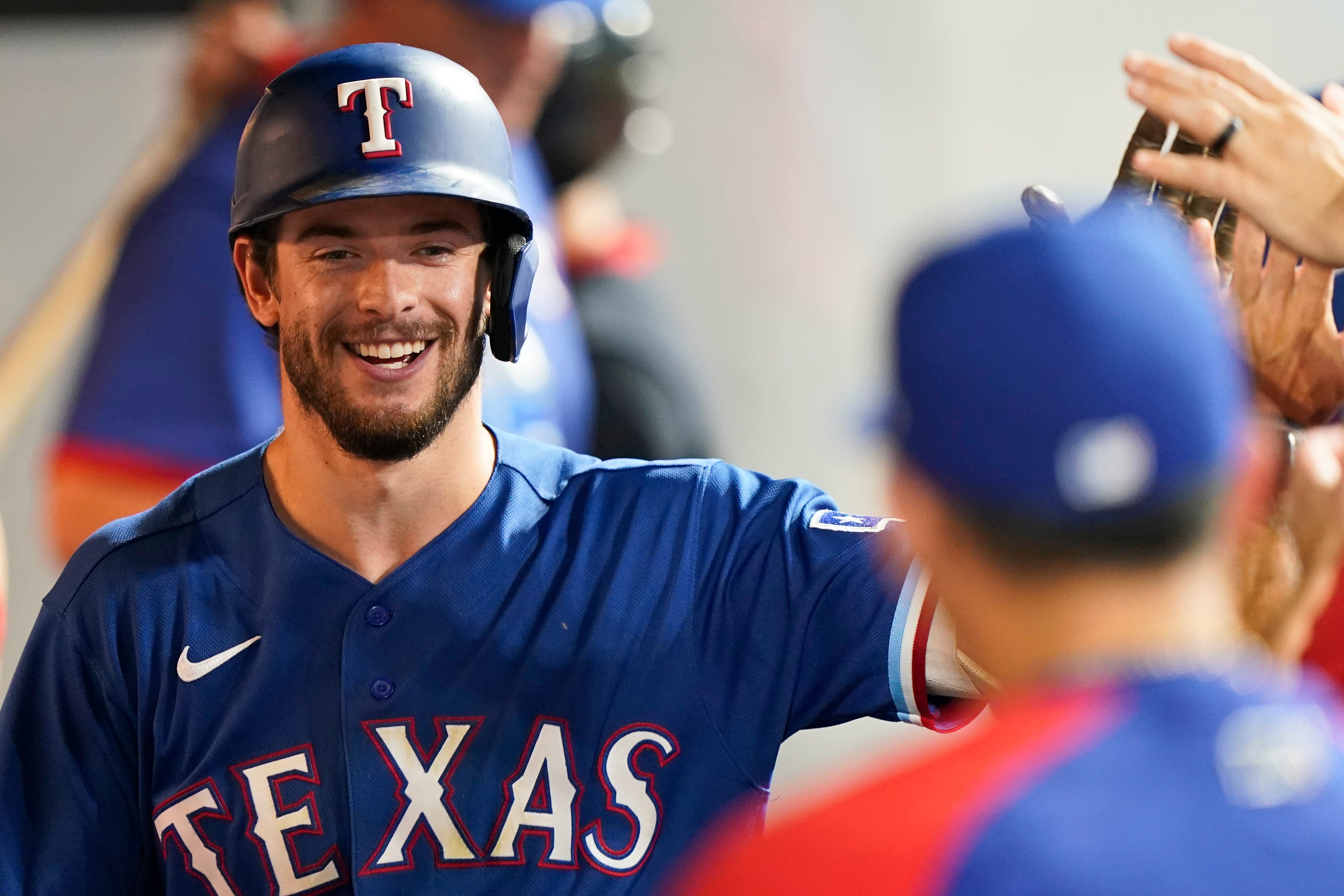
At this stage, though, Solak’s primary value lies in organizational depth. He does not occupy a 40-man roster spot, and his presence gives the Padres another experienced option at Triple-A who can step in if injuries, underperformance, or scheduling congestion create a need. For a club with postseason aspirations, that kind of depth can quietly prove important over the course of a 162-game season.
Omar Cruz: A Familiar Left Arm Returns
While Solak’s signing adds position-player depth, the reunion with Omar Cruz bolsters the Padres’ pitching inventory. Cruz, who will turn 27 later this month, is not a stranger to the organization. In fact, he made his major league debut with San Diego just last season, briefly appearing on the big-league mound before being cut loose and then brought back into the fold.
Cruz’s time in the majors was limited but eventful. He logged 3 2/3 innings for the Padres, allowing two earned runs on four hits while issuing three walks and striking out five batters. The small sample size makes it difficult to draw firm conclusions, but it did offer a glimpse of his raw stuff and competitiveness at the highest level.
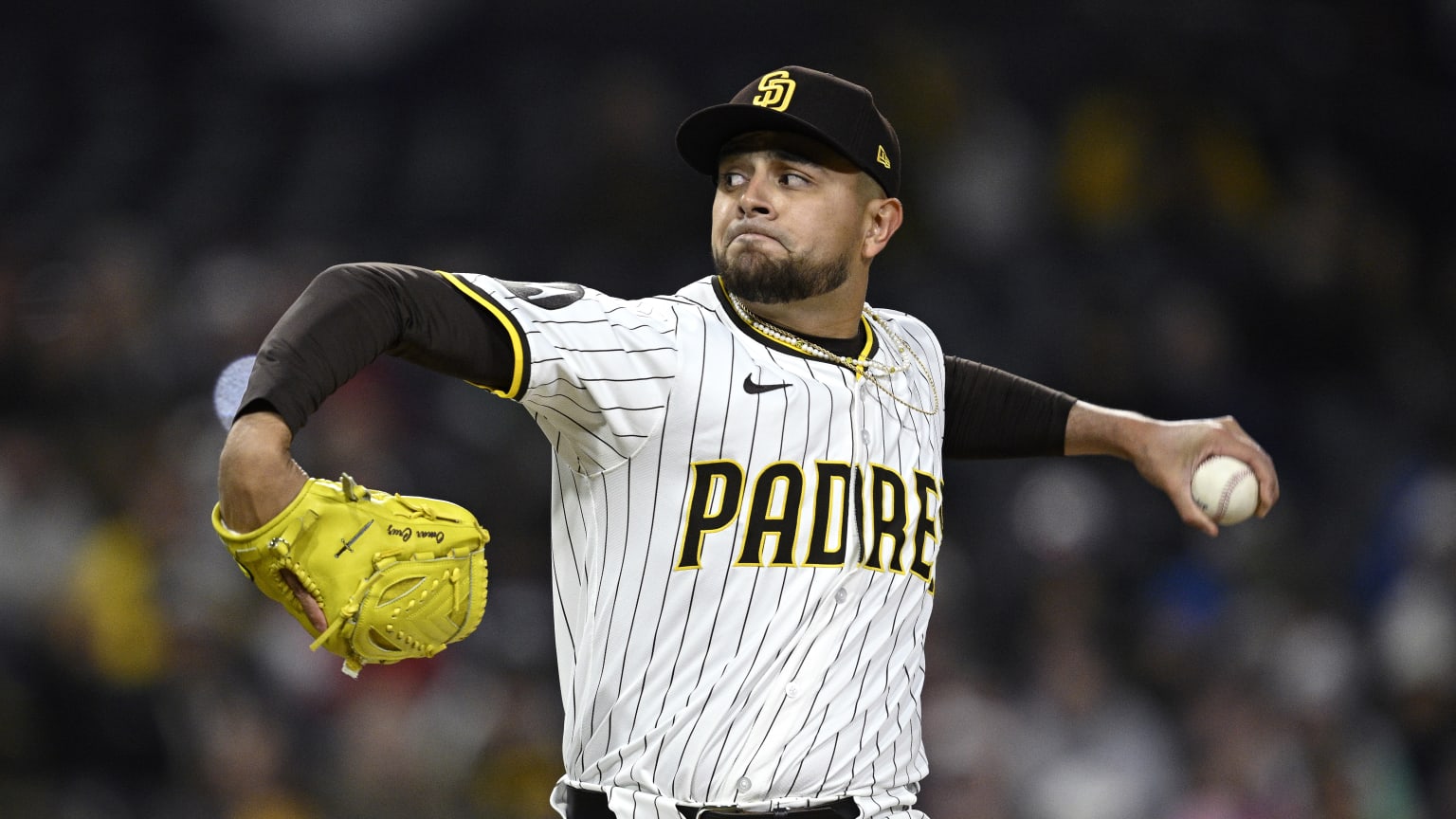
His path back to the organization is tied to the peculiarities of MLB’s roster rules. There is only one day each year when teams can remove a player from their roster and send him directly to free agency without first exposing him to waivers: the non-tender deadline.
The Padres elected to non-tender Cruz on that day, effectively releasing him, only to re-sign him shortly thereafter to a minor league deal. This maneuver allowed San Diego to retain him without using a 40-man roster spot, a common tactic for managing roster flexibility during the offseason.
Starter, Reliever, and Ongoing Development
Cruz’s professional career has been defined by experimentation with his role. For much of his time in the minors, he worked primarily as a starting pitcher, developing a pitch mix and workload suited to longer outings.
MORE: Orioles finish off explosive offseason with blockbuster trade for $300 million Tigers’ star
However, in 2024, the organization shifted him mostly into relief, a move that appeared to unlock some of his potential. That season, Cruz posted a 3.96 ERA across the minor leagues while striking out an impressive 32.3 percent of the batters he faced. His walk rate, at 9.9 percent, was manageable given the high strikeout totals, and the overall performance suggested a potential breakout.
Encouraged by that success, the Padres experimented with stretching Cruz back out into a starting role the following year. The results were mixed. Eventually, the organization decided to abandon the experiment and returned him to the bullpen, where his performance stabilized but did not reach the same heights as before.

Over 83 1/3 Triple-A innings, Cruz recorded a 4.75 ERA, striking out 23.2 percent of hitters while walking 14.5 percent. Those numbers point to both promise and inconsistency: the ability to miss bats is still there, but command remains a challenge.
Role Uncertainty but Useful Depth
As Cruz returns on a non-roster deal, questions remain about how the Padres envision using him going forward. It’s unclear whether they still harbor hopes of developing him into a starter or if they see his future squarely in relief. Each path comes with its own considerations.
As a starter, Cruz would need to refine his command and maintain effectiveness over multiple innings. As a reliever, he could focus on maximizing his stuff in shorter bursts, potentially carving out a role as a situational left-hander or middle reliever.
MORE: Diamondbacks roster flexibility move, confirmed minor league deal
Regardless of how that decision shakes out, Cruz provides San Diego with left-handed pitching depth, an asset every organization values. Injuries, fatigue, and performance fluctuations inevitably test a pitching staff over the course of a season, and having experienced arms ready at Triple-A can make a meaningful difference. Should Cruz earn his way back onto the 40-man roster, he still has a couple of option years remaining, giving the Padres additional flexibility to move him between the majors and minors as needed.
A Low-Risk, Depth-Oriented Approach
Taken together, the signings of Solak and Cruz reflect a pragmatic approach by the Padres’ front office. Neither player is guaranteed a roster spot, nor are they likely to play a major role unless circumstances open the door. But both bring experience, familiarity with professional routines, and skill sets that could prove useful in the right context.
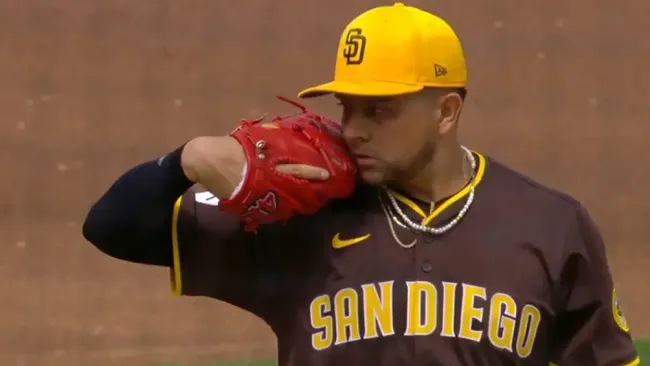
For Solak, the path forward likely involves continuing to produce in the minors while staying ready for a call-up if the Padres need a right-handed bat or a temporary fill-in at multiple positions. For Cruz, it means refining his command and proving that his strikeout ability can consistently outweigh his control issues, whether as a reliever or in a hybrid role.
These types of signings rarely dominate offseason narratives, yet they form the backbone of organizational depth. Over the course of a long season, it’s often players like Solak and Cruz—waiting quietly in Triple-A, refining their craft, and staying prepared—who end up making unexpected contributions when opportunity arises.




Be the first to comment