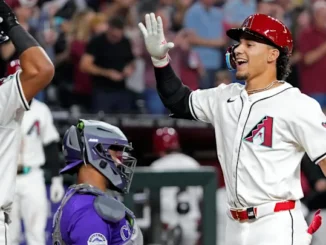
The Arizona Diamondbacks appear committed to keeping All-Star second baseman Ketel Marte in the desert, despite months of persistent trade chatter that placed him at the center of Major League Baseball’s offseason rumor cycle. According to reporting from The Athletic, the organization has no plans to move Marte and instead intends to continue building its roster with him as a foundational piece.
For much of the winter, Marte’s name dominated speculation across the league. Rival front offices consistently checked in on his availability, and analysts debated whether Arizona would eventually pull the trigger on a blockbuster deal. However, as spring training approaches, it has become increasingly clear that the Diamondbacks are preparing for the 2026 season with Marte firmly in their plans.
A Trade Saga That Never Gained Real Momentum
General manager Mike Hazen made it known toward the end of December that his expectation all along was that Marte would remain with the team. Speaking with MLB.com on December 30, Hazen expressed a desire to quiet the noise surrounding his star infielder and suggested that the likelihood of an actual trade was slim.
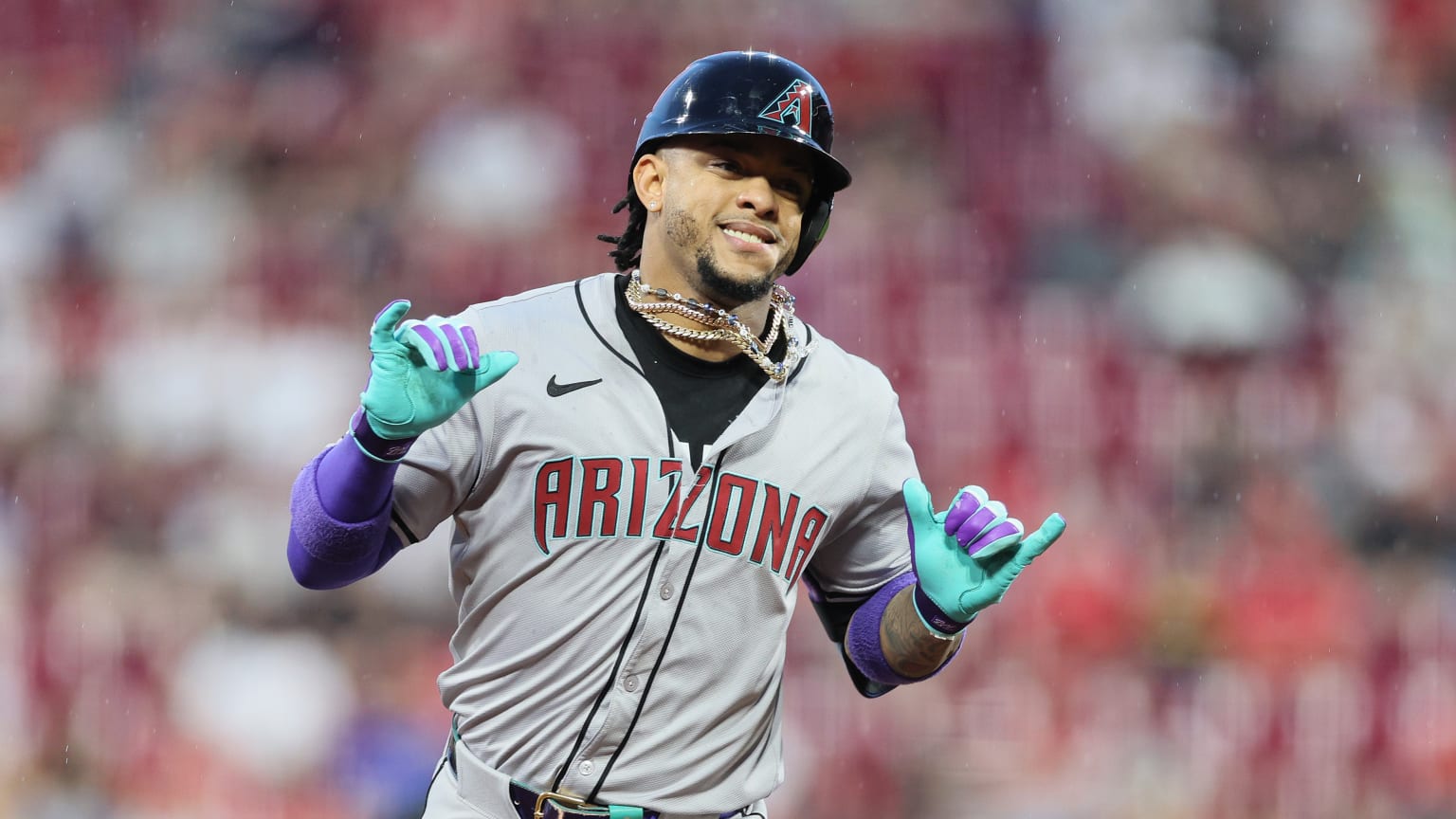
From Hazen’s perspective, the trade speculation was more about due diligence than genuine intent. While the front office listened to inquiries—as any responsible baseball operations department would—it never reached the point where Arizona felt compelled to act. Marte’s importance to the franchise, both on the field and in the clubhouse, made any realistic trade scenario extraordinarily difficult to justify.
MORE: SF Giants officially lose speedy outfielder to the Angels
Though the Diamondbacks did not shut the door entirely on conversations, the bar for moving Marte was set extraordinarily high. Anything short of an overwhelming offer simply wasn’t going to be enough.
Why Marte’s Name Entered the Rumor Mill
The uncertainty surrounding Marte’s future can be traced back to the middle of last season. Internally, there were occasional frustrations related to his availability, particularly his tendency to sit out games when dealing with minor ailments. While Marte has never been accused of a lack of effort, those absences reportedly rubbed some decision-makers the wrong way during a stretch where Arizona was pushing for consistency.
Beyond those concerns, roster construction also played a role. The Diamondbacks have been searching for ways to deepen their pitching staff, and moving a high-value position player like Marte represented one of the few avenues to potentially acquire multiple arms in return.

Another complicating factor was Marte’s contractual status. In April, he is set to earn full no-trade protection under MLB’s 10-and-5 rule, which applies to players with 10 years of major league service and five consecutive seasons with the same team. Once that clause activates, Marte would have the power to veto any trade, eliminating Arizona’s leverage entirely.
Given that timeline, the offseason represented the final window—at least theoretically—where the Diamondbacks could explore trade options without Marte having full control over the outcome.
The Reality: Elite Players Are Hard to Replace
Despite those considerations, the reality of Marte’s value made a trade exceedingly improbable. He is not merely a good player; he is one of the premier talents in the sport and the clear face of the Diamondbacks franchise.
MORE: NY Mets quietly removed second baseman from the 40-man roster
At 32 years old, Marte is coming off another elite campaign. He finished the 2025 season with an .893 OPS while launching 28 home runs, providing both power and consistency at the top of Arizona’s lineup. Over the past three seasons, his offensive production places him among the very best hitters in baseball, ranking eighth in slugging percentage (.519) and ninth in OPS (.887) across the majors.
His accolades reflect that dominance. Marte earned All-Star selections in both 2024 and 2025, captured the Silver Slugger Award in each season, and secured a spot on the All-MLB First Team twice. Few players in the league can match that combination of sustained excellence and positional versatility.
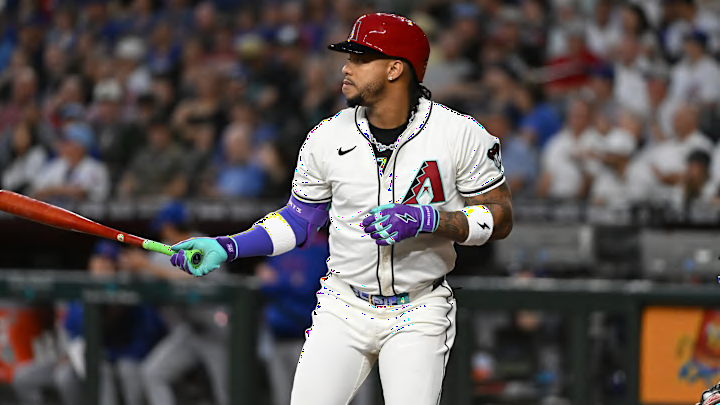
Simply put, players of Marte’s caliber do not come along often—and when they do, teams rarely give them away.
A Contract That Enhances His Appeal
Adding to Marte’s immense value is the structure of his contract. Last spring, he signed a six-year extension worth $116.5 million, a deal widely viewed around the league as team-friendly given his production. The contract includes a player option for the 2031 season, offering Marte long-term security while preserving flexibility for the club.
Perhaps most appealing is the near-term financial picture. Marte is scheduled to earn just $28 million total over the next two seasons—a modest figure for a player producing at an MVP-adjacent level. In an era where elite middle infielders often command far higher annual salaries, Marte’s deal stands out as a bargain.
MORE: “Absolutely Sad” Padres received $240 million contract nightmare
That affordability only increased interest from rival teams, but it also reinforced Arizona’s reluctance to move him. Trading away a player who dramatically outperforms his contract would create a massive hole both competitively and financially.
Hazen’s Balancing Act
Throughout the offseason, Hazen struck a careful balance in his public comments. He acknowledged that he listened to offers while consistently emphasizing Marte’s importance to the organization. In an interview with Arizona Sports’ Burns & Gambo early in the winter, Hazen was candid about the challenge.
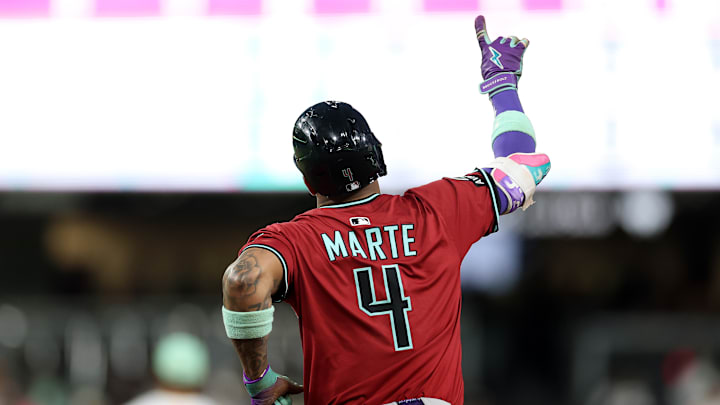
“He is one of our best players,” Hazen said. “We have some of the top position players in all of baseball on our roster, and we need those players to be good next year. I still have to do my job. I have to listen.”
That statement encapsulated Arizona’s approach. Listening did not mean selling. It meant maintaining awareness of the market while protecting the team’s core.
A Crowded List of Suitors
Interest in Marte was widespread. Several clubs with postseason aspirations reached out, intrigued by the idea of adding an elite switch-hitting second baseman to their lineup. Teams linked to Marte in reports included the Boston Red Sox, Tampa Bay Rays, Detroit Tigers, Toronto Blue Jays, Philadelphia Phillies, and the Seattle Mariners.
Each of those clubs could justify interest, whether due to positional need, payroll flexibility, or championship ambitions. Yet none was able—or willing—to present an offer that met Arizona’s lofty expectations.
A Quiet Offseason Elsewhere
Ironically, despite dominating headlines due to Marte rumors, the Diamondbacks have had a relatively subdued offseason in terms of actual transactions. Arizona signed right-handed starter Michael Soroka early during the Winter Meetings and later brought back veteran starter Merrill Kelly on a new deal. Beyond those moves, the roster has largely remained intact.
The club has not added a notable major league bat, nor has it completed a trade involving an established big leaguer. That inactivity stands in contrast to the noise surrounding Marte and underscores how cautious Arizona has been in reshaping its roster.
The Alex Bregman Speculation
One of the more intriguing threads this winter involved All-Star third baseman Alex Bregman, who entered free agency and was briefly connected to the Diamondbacks. Reports suggested Arizona explored the possibility of a blockbuster signing, but those discussions were widely believed to hinge on a Marte trade.
MORE: Red Sox latest move sign elite reliever so solidify bullpen
The logic was straightforward: if Arizona moved Marte, the financial savings and roster flexibility could be redirected toward signing Bregman to anchor third base. However, pairing both stars on the same roster was widely viewed as unrealistic given payroll constraints.
While the Diamondbacks have exceeded their budget in recent offseasons, their projected payroll now sits around $167 million after settling arbitration cases. Adding Bregman without subtracting Marte would likely have pushed spending beyond a comfortable threshold.
Ultimately, with Marte staying put, the Bregman pursuit appears to have fizzled.
Roster Holes Still Remain
Even with Marte returning, Arizona faces several unanswered questions heading into spring training. The bullpen remains a concern, lacking proven late-inning depth. First base, third base, and parts of the outfield are also areas where the club could still seek upgrades.

Compounding those issues is an alarming list of injuries. Starter Corbin Burnes, relievers A.J. Puk and Justin Martinez, first baseman Tyler Locklear, and left fielder Lourdes Gurriel Jr. are all dealing with long-term injuries. As a result, nearly one-third of the Diamondbacks’ payroll is expected to begin the season on the injured list.
That reality has placed the front office in a difficult position: build a competitive roster while operating with limited flexibility and significant health-related uncertainty.
Time Is Running Short
Spring training is rapidly approaching, with the first Cactus League game scheduled for February 20. With camp opening next month, Arizona’s remaining opportunities to improve the roster are dwindling.
MORE: Braves-Royals Blockbuster Trade Idea Lands Southpaw Starter for $73 Million All-Star
For now, however, the organization appears comfortable entering the season with Marte as the centerpiece. After months of speculation, the Diamondbacks have chosen continuity over upheaval, betting that their star second baseman can once again anchor the lineup and help guide the club through a challenging, injury-plagued start to the year.
In the end, the Marte trade saga may serve as a reminder of how rumors can dominate an offseason—even when a deal was never particularly close to becoming reality.


Be the first to comment