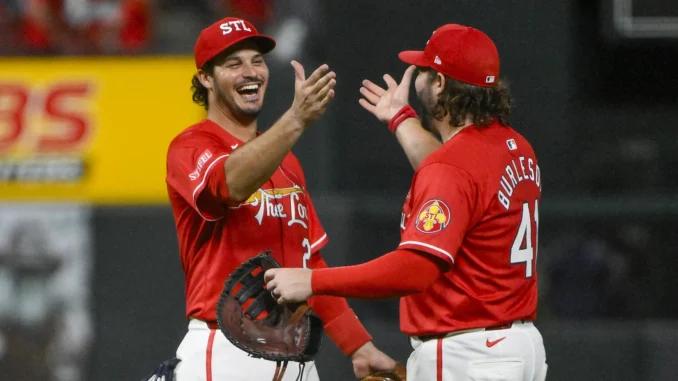
St. Louis Cardinals Latest News. It has felt apparent since the earliest days of the offseason that the St. Louis Cardinals entered the winter with a clear willingness—if not an outright intention—to explore the trade market for Brendan Donovan.
Reports and speculation have consistently suggested that nearly every club across Major League Baseball has at least some degree of interest in him, which speaks volumes about the type of player Donovan has become. For much of the offseason, I’ve shared the belief that the Cardinals should remain open to maximizing the value of their most attractive assets, Donovan included.
Yet as the months have passed and the organization’s broader rebuild has taken shape, a different question has begun to surface: what if St. Louis ultimately decides not to move Donovan at all? What if, instead of dealing him away, the Cardinals opt to make him a foundational piece of their next competitive core?
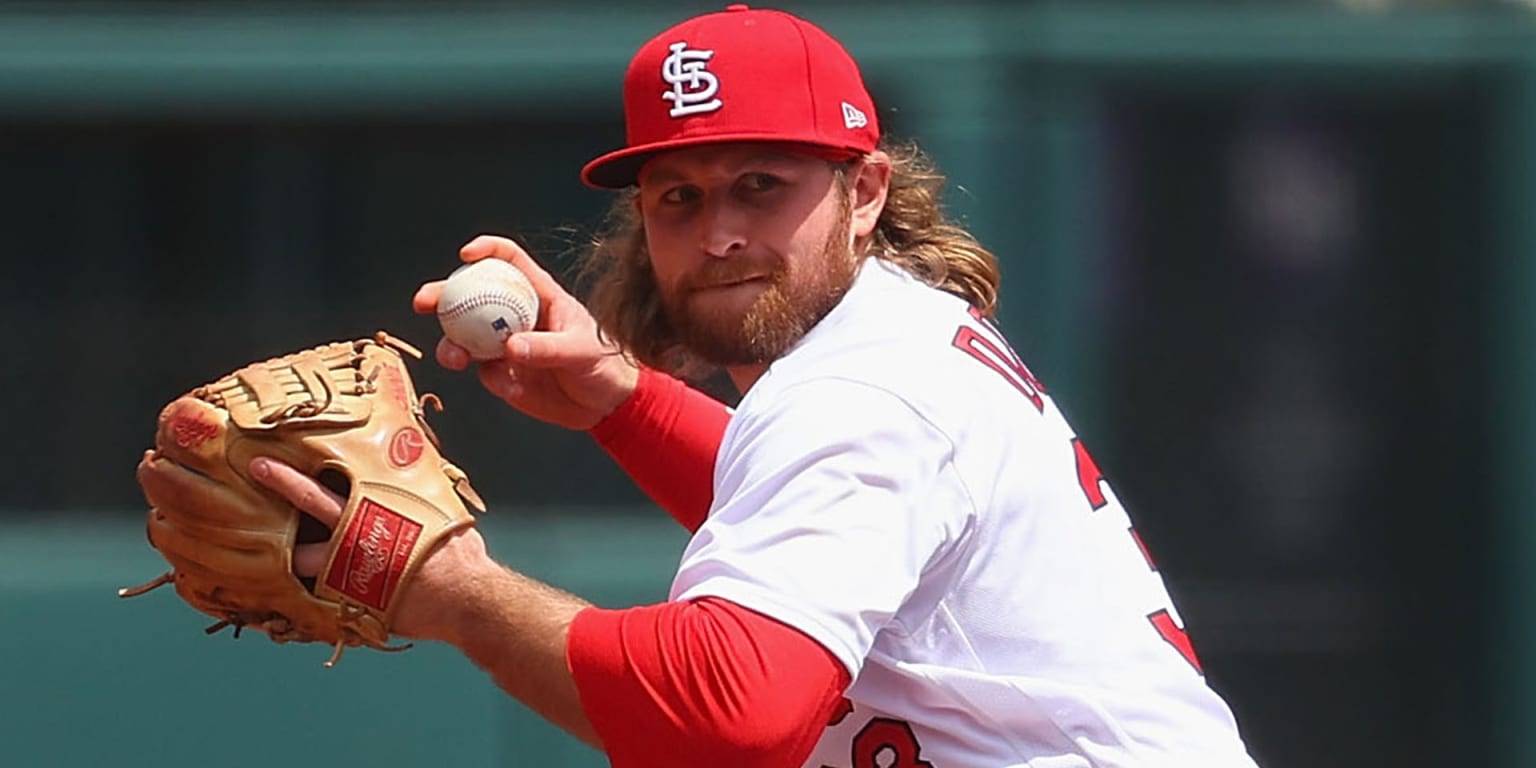
To be clear, there is still plenty to admire about the direction the front office has taken so far under Chaim Bloom. The early stages of this roster reset have been defined by a willingness to move established veterans and significant salary commitments in exchange for an influx of younger talent and long-term flexibility.
MORE: Baseball rookies news premier rookies in 2025? MLB Network ranked them
That philosophy is sound, especially for an organization seeking to recalibrate after several disappointing seasons. Trading proven names for prospects can be painful in the short term, but it is often a necessary step toward building sustainable success. In that sense, Bloom’s approach has been both logical and encouraging.
There is also little doubt that this process is not finished. The potential next domino, Nolan Arenado, remains a prime candidate to be moved if the right opportunity presents itself. Clearing his salary and opening additional avenues for young players would further align with the stated goals of the rebuild.
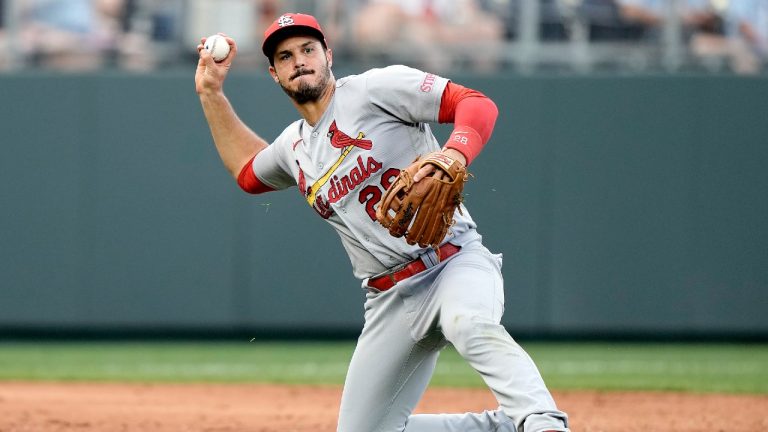
However, as I’ve watched these moves unfold, I’ve started to question whether Brendan Donovan truly belongs in the same category as other trade candidates. While shopping him makes sense on paper, keeping him might make even more sense in practice.
Two primary factors drive this line of thinking: Donovan’s versatility and his affordability. Ironically, these are the exact traits that make him so appealing to other teams and such a valuable trade chip. But when viewed through the lens of a rebuilding roster filled with uncertainty and constant change, those same traits take on even greater importance for St. Louis.
The Cardinals have been clear about what they want to accomplish this offseason. Bloom has openly discussed his desire to acquire young, controllable pitching, reduce payroll obligations, and create meaningful opportunities for top prospects to establish themselves at the major league level. Thus far, those objectives have been advanced through the departures of high-salary veterans, and there is reason to believe more moves are still coming. Importantly, choosing to retain Brendan Donovan does not undermine any of these priorities.
MORE: Red Sox Latest Trade Made Official Aggressive Offer To Superster Baseman “Ultimate Return”
Donovan’s positional flexibility is arguably one of his greatest assets to a team in transition. He is capable of playing virtually anywhere in the infield and has also proven he can handle outfield duties when needed. This adaptability means he is unlikely to block the development of younger players.
If a top prospect claims a starting role at second base, shortstop, or another position, Donovan can simply slide elsewhere. Few players offer that kind of roster elasticity, and even fewer do so while remaining productive on both sides of the ball.

In a rebuild, uncertainty is unavoidable. Prospects arrive at different times, some exceed expectations while others struggle to adjust, and injuries can force constant reshuffling. A player like Donovan acts as connective tissue, holding the roster together amid all that movement. He can fill gaps, stabilize lineups, and provide competent defense wherever he’s asked to play. That is exactly the sort of presence a rebuilding team benefits from, especially one that expects to cycle through a variety of young contributors over the next several seasons.
Then there is the matter of Donovan’s contract. In an era when even average players can command eight-figure salaries, his deal stands out as remarkably team-friendly. He is scheduled to earn $5.75 million in 2026 and will go through arbitration once more in 2027 before becoming eligible for free agency in 2028. For a player of his caliber—one who offers consistent on-base skills, defensive versatility, and leadership—that price tag is almost laughably modest.
Age is another consideration that works in Donovan’s favor. He will turn 29 in mid-January of 2026, which suggests that several of his most productive seasons are still ahead of him. This is not a case of an aging veteran whose best days are clearly behind him. Instead, Donovan appears to be entering the heart of his prime at precisely the moment the Cardinals are reshaping their roster. That alignment alone makes him a compelling candidate to keep.
MORE: Los Angeles Angels trade news, face risky last-minute reunion
Beyond numbers and contracts, there is an intangible element that is difficult to quantify but impossible to ignore. Donovan’s leadership has been recognized repeatedly, most notably through his three consecutive Heart and Hustle Awards. That kind of acknowledgment reflects more than just effort on the field; it speaks to the example he sets in the clubhouse and the standard he brings to his daily work. For a team that expects to rely heavily on young players in the coming years, having a veteran who embodies professionalism and competitiveness is invaluable.
This raises an intriguing possibility: what if the Cardinals explored an extension that would keep Donovan in St. Louis through his mid-30s? Locking him up through his age-34 season would provide the organization with a steady, All-Star-caliber presence at the core of the roster. He would serve as both a contributor and a mentor, bridging the gap between the current transition phase and the next era of contention.
Of course, it must be acknowledged that all of these arguments for keeping Brendan Donovan are precisely why his trade value is so high. He is the kind of player every team wants—versatile, affordable, productive, and respected. If Bloom were to receive an offer that includes elite prospects or significantly accelerates the rebuild, passing on such a deal would be difficult to justify. In that scenario, moving Donovan could be the correct decision.

The front office has made it clear that they are not eager to trade him unless the return is overwhelming. Bloom himself has suggested that any deal involving Donovan would need to “blow them away.” That stance reflects an understanding of just how rare and useful a player like him can be. If no team is willing to meet that asking price, there is little reason for St. Louis to rush into a move.
There is also the option of patience. Even if the Cardinals decide not to trade Donovan this offseason, he could remain a valuable asset at the trade deadline. Contending teams often become more aggressive midseason, especially when injuries or underperformance expose roster weaknesses. Holding onto Donovan could allow St. Louis to reassess the market later, potentially extracting even greater value if circumstances align.
MORE: Seattle Mariners news today, “An exciting 2026 MLB forecast that’s guaranteed to put a smile on Mariners fans’ faces.”
Yet the more this scenario is considered, the more reasonable it feels that the Cardinals might simply choose to keep him and move forward with Donovan as a central figure in the rebuild. Not every rebuild requires stripping the roster down to bare bones. Sometimes, maintaining a few high-quality, cost-controlled veterans can actually accelerate progress by providing stability and leadership.
If the offseason ultimately ends without a trade that meets the Cardinals’ lofty expectations, and Brendan Donovan remains in St. Louis for the foreseeable future, that outcome would hardly be disappointing. In fact, it might prove to be one of the smartest decisions the organization makes during this transitional period. Donovan represents the kind of player you can build around—not because he is flashy or dominant, but because he reliably does so many things well.
In the end, whether the Cardinals trade Donovan or commit to him long-term will depend on how the market unfolds. But if no blockbuster deal materializes, choosing to keep him would be a defensible, even commendable, path forward. For fans and analysts alike, the idea of Donovan continuing to wear the Cardinals uniform for years to come is not just acceptable—it may be quietly ideal.



Be the first to comment