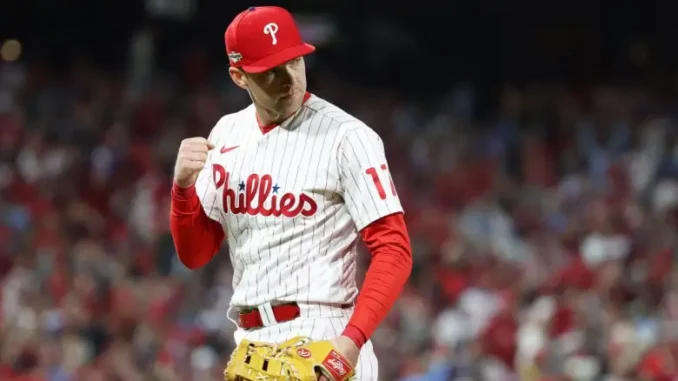
Philadelphia Phillies baseball news trade. The Nationals continue to occupy an uncomfortable middle ground as an organization. From a distance, the roster does show signs of promise. There are young players with upside, a farm system that has begun to restock after years of selling, and a sense that the franchise is no longer completely barren.
Yet, when the pieces are examined closely, it becomes obvious that the club still lacks the depth and established production needed to seriously push forward. They are not bad enough to be written off entirely, but they also are not strong enough to confidently say the rebuild is over.
Ideally, Washington would prefer to be nearing the end of its rebuilding phase rather than staring down another transitional season. Ownership and the front office would love to take meaningful steps toward competitiveness, both to energize the fan base and to justify continued investment in the roster.
However, the reality suggests that patience will still be required. Another year—or perhaps even two—of gradual progress seems more realistic than an immediate leap into contention. That does not mean the Nationals must stand completely still, though. There are veteran players on the market who could provide short-term stability and value, and one of the more intriguing names in that category is Rhys Hoskins.
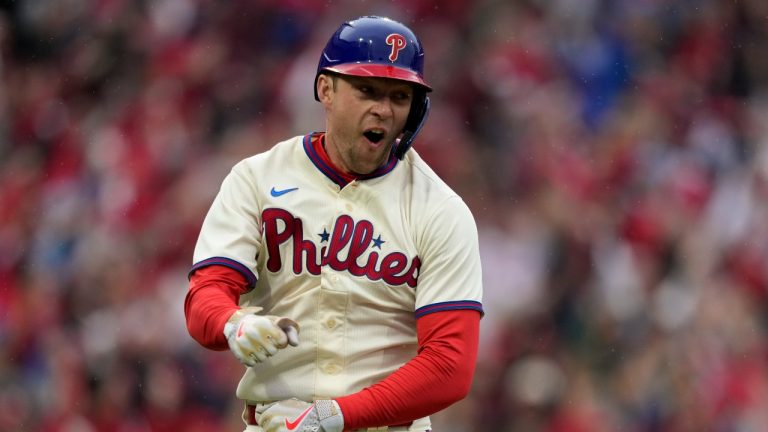
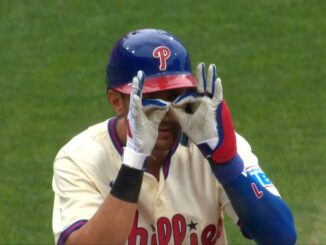
Hoskins, long associated with the Philadelphia Phillies, remains unsigned deep into free agency. For years, he was a cornerstone power bat and a fan favorite in Philadelphia, known for his plate discipline and ability to change a game with one swing.
MORE: Arizona Diamondbacks News And Rumors, Officially Re-Sign Top Reliever
Injuries and changing team needs have cooled his market, but he still represents a potentially useful asset for a team that can offer him playing time and a chance to rebuild his reputation. Washington, with its need for reliable offense and veteran presence, fits that description quite well.
The idea of pairing Hoskins with the Nationals gained traction recently when Bleacher Report examined Washington’s most pressing offseason needs. In that analysis, writer Joel Reuter highlighted Hoskins as a logical option for a roster that lacks proven production at first base.
Reuter also explored alternative solutions, including internal shifts and positional flexibility, but Hoskins stood out as the most straightforward answer if the Nationals were willing to add a veteran bat.
One internal name that often comes up in these discussions is Brady House, one of the organization’s more intriguing young talents. House has primarily been viewed as a long-term infielder, and there has been speculation about moving him around the diamond to address roster gaps.
While that strategy could work in theory, it also carries risks. Asking a developing player to learn a new position while also adjusting to major league pitching can slow progress and potentially stunt growth. For a team that is counting on its prospects to form the next competitive core, caution is warranted.
MORE: Angels roster flexibility move land Japanese slugger
Reuter acknowledged that possibility in his evaluation, noting that Washington does have multiple paths it could explore. He wrote that the Nationals appear to be a sensible destination for one of the veteran first basemen still searching for a contract, while also pointing out that the club has experimented with other alignments.
For example, Luis García Jr. briefly logged time at first base late in the season, hinting that the team is at least open to unconventional solutions. Another alternative mentioned was shifting House to first and instead acquiring a third baseman. Each option has merit, but none are as clean or as low-risk as simply bringing in a proven major leaguer like Hoskins.
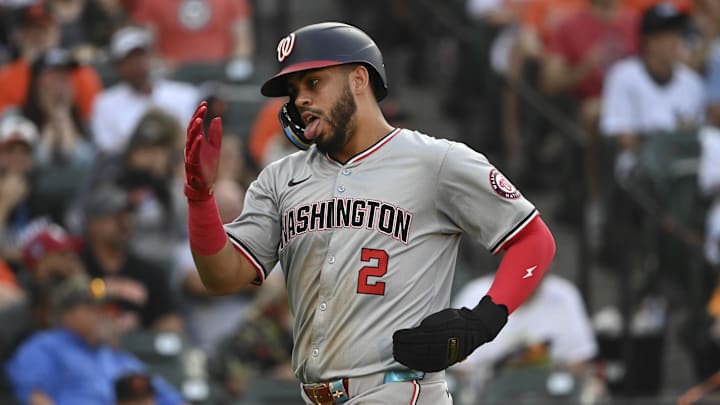
From Washington’s perspective, signing Hoskins would not necessarily be about making a dramatic push up the standings. This is not a move that suddenly transforms the Nationals into contenders. Instead, it would be a pragmatic decision aimed at stabilizing the lineup, protecting younger hitters, and injecting some professional at-bats into a roster that can often look overmatched. Hoskins’ experience, even if he is no longer at his peak, could provide tangible benefits both on and off the field.
At the same time, this potential partnership could be just as appealing to Hoskins as it is to Washington. For a veteran coming off injuries and inconsistency, landing with a rebuilding club can be advantageous. The expectations are lower, the pressure is reduced, and everyday playing time is more readily available.
That environment could allow Hoskins to focus on rediscovering his timing and power without the constant scrutiny that comes with playing for a contender. If he performs well, he could quickly reestablish his value around the league.
MORE: Atlanta Braves news trade rumors, cut ties with veteran baseman
That scenario opens the door to another important consideration: flexibility. If Hoskins signs a short-term deal with the Nationals and starts producing, Washington would not be obligated to keep him for the long haul.
Instead, he could become a valuable trade chip near the deadline. Teams in contention are always searching for right-handed power bats, especially those with postseason experience. A productive Hoskins could draw interest, enabling the Nationals to convert a modest free-agent investment into future assets.
In that sense, Hoskins would function less as a foundational piece and more as a bridge. He could help Washington navigate another developmental season while also keeping options open for the future. This approach aligns neatly with where the organization currently stands. The Nationals are not desperate enough to overpay for stars, nor are they so far along that they should block their prospects indefinitely. A short-term veteran addition fits the timeline.
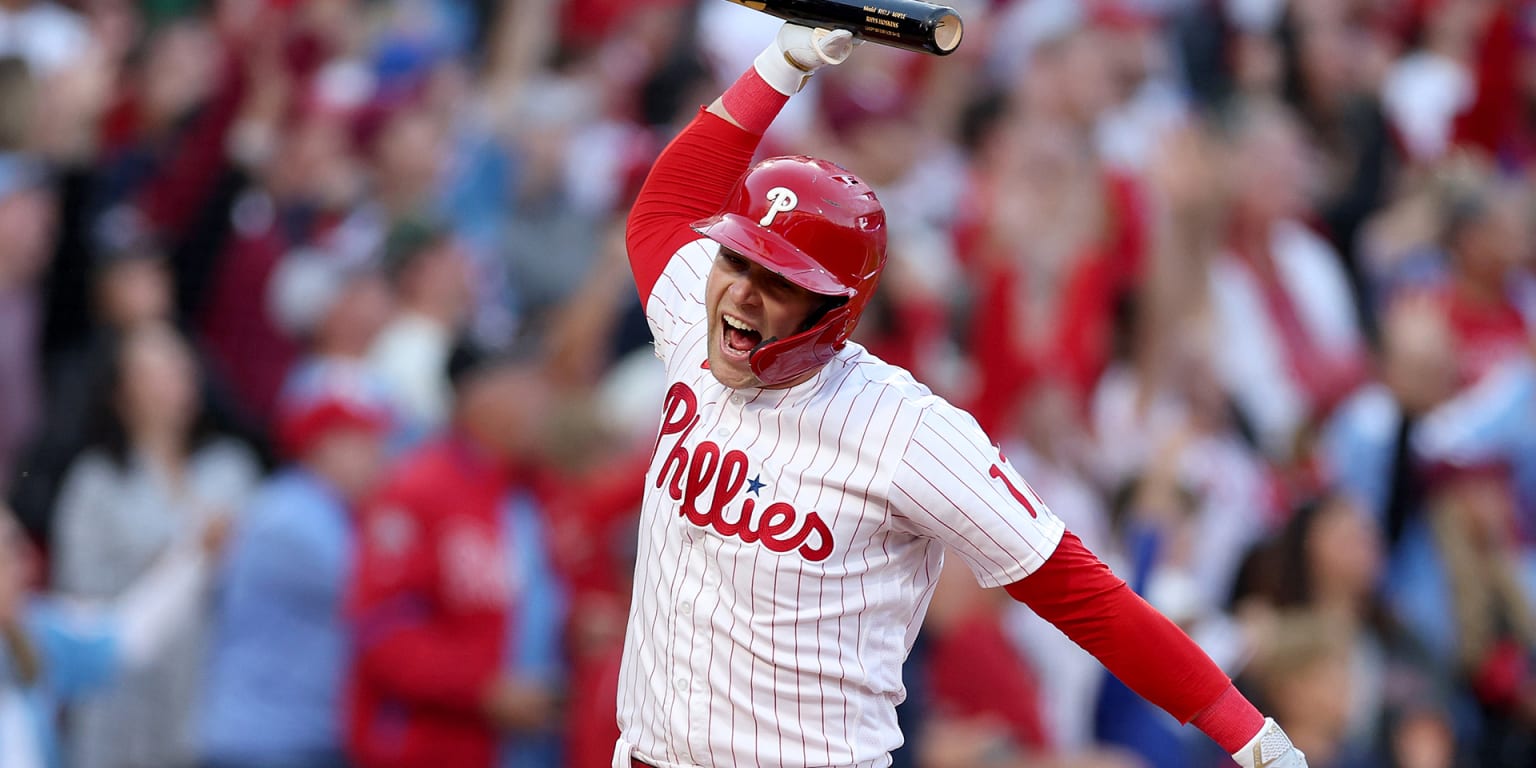
Of course, there are still questions. Hoskins’ health, defensive limitations, and overall consistency will factor heavily into how much interest he generates and what kind of contract he ultimately commands. Washington must also weigh whether allocating resources to a veteran bat is preferable to giving more opportunities to younger players. Developmental at-bats are valuable, and there is always a risk that a veteran signing could reduce those chances.
MORE: Detroit Tigers bullpen trade news today sends Tarik Skubal to Dodgers
Still, among the various options available, Hoskins represents a relatively sensible gamble. He addresses a clear positional need without forcing uncomfortable roster shuffling. He brings name recognition and experience to a team that lacks both. And he does so without demanding a long-term commitment that could interfere with Washington’s long-range plans.
In the bigger picture, the Nationals remain a franchise in transition. They are no longer tearing everything down, but they are not yet ready to build aggressively toward contention. Moves like potentially signing Hoskins reflect that in-between status. They are about progress, not perfection; about setting the stage for the next competitive window rather than rushing toward it prematurely.
Whether or not Washington ultimately lands Hoskins, the conversation itself highlights where the team stands entering the season. They are searching for balance—between youth and experience, patience and progress, rebuilding and relevance. Hoskins, if he does end up in a Nationals uniform, would symbolize that balancing act: a veteran looking to revive his career, and a team looking to inch forward without losing sight of the future.

Be the first to comment