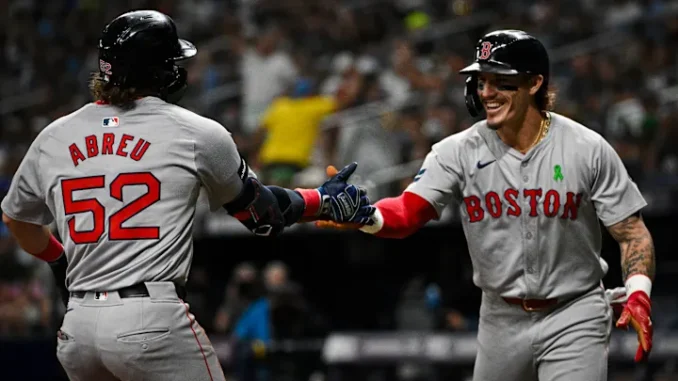
Boston Red Sox chief baseball officer Craig Breslow has quickly developed a reputation for one defining trait: an unwavering commitment to accumulating pitching depth. It’s a philosophy that has shaped Boston’s entire offseason and explains why the organization has been so active on the trade market. Rather than hoarding prospects out of fear, Breslow has leaned into a calculated surplus strategy—stockpiling arms well beyond immediate needs and then converting that excess into upgrades elsewhere on the roster.
That approach was on full display in Boston’s recent dealings with the St. Louis Cardinals. To land veteran starter Sonny Gray, Breslow was willing to part with two promising young pitchers, Richard Fitts and Brandon Clarke.
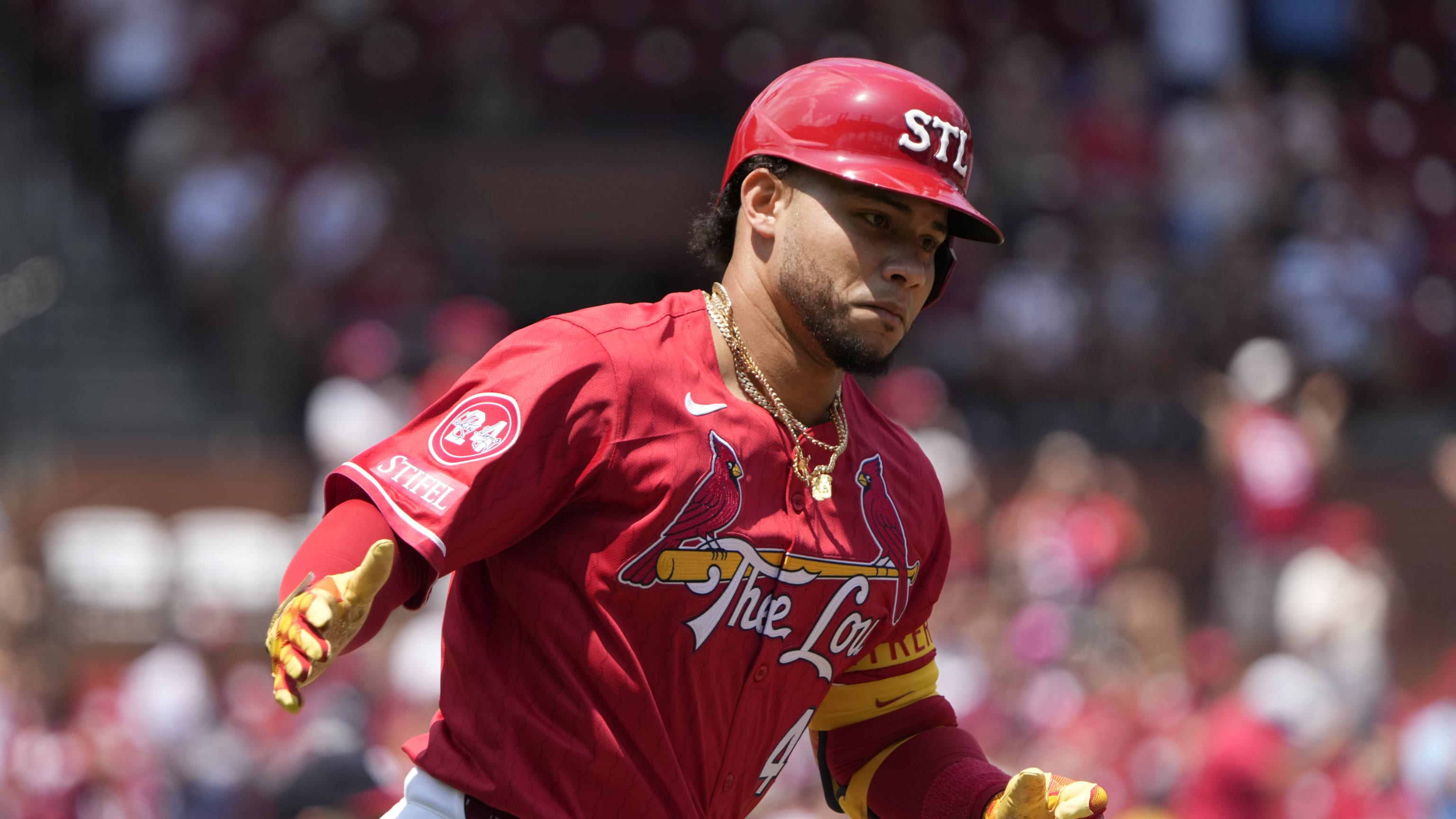
While both arms had intrigued evaluators within the organization, the Red Sox felt comfortable moving them because of the depth they had already built—and the depth they continue to prioritize. In a separate move, Breslow addressed another roster need by acquiring catcher Willson Contreras, sending St. Louis an even larger bundle of pitching prospects: Hunter Dobbins, Yhoiker Fajardo, and Blake Aita.
For many franchises, surrendering that many arms in a single offseason would raise alarm bells. Pitching is notoriously volatile, and depth can evaporate quickly due to injuries or regression. But the Boston Red Sox are operating from a different mindset.
Under Breslow’s direction, the organization is intentionally creating a cushion—one large enough that trading multiple pitchers at once doesn’t jeopardize long-term stability. Instead of reacting defensively to potential shortages, Boston is proactively ensuring that it always has more arms than roster spots.
MORE: Braves-Royals Blockbuster Trade Idea Lands Southpaw Starter for $73 Million All-Star
This strategy reveals a broader team-building blueprint. The Red Sox are not simply collecting pitchers for the sake of volume; they are building a renewable resource. By continuously drafting, developing, and acquiring arms at various levels, Breslow has positioned the organization to treat pitching depth as a form of currency.
When another area of the roster needs attention—whether it’s a proven starter, a middle-of-the-order bat, or a defensive upgrade—Boston can enter trade talks from a position of strength, knowing it has assets other teams covet.
It also reframes how fans should interpret Boston’s transactions. When a young pitcher is moved, it doesn’t necessarily signal a lack of belief in that player’s future. More often, it reflects confidence in the system as a whole.
Breslow appears comfortable betting that the next wave of arms—already in the minors or soon to be acquired—can replace what’s being dealt away. That confidence stems from an organizational emphasis on pitching development that mirrors Breslow’s own background and understanding of how essential depth is across a 162-game season.
This context is especially important when considering Boston’s quieter, less-heralded acquisitions. A move for an unproven arm like Devin Sweet might not grab headlines, but within this framework, it carries real significance. Every pitcher added to the system is another layer of insulation, another potential trade chip, and another option if injuries strike. Even pitchers who never become major contributors at Fenway Park can still play a role by helping the Red Sox acquire talent elsewhere.

Ultimately, Breslow’s offseason maneuvers send a clear message: pitching depth is not just a necessity, it’s the foundation of Boston’s roster construction. The Red Sox are deliberately overflowing with arms so they never have to operate from desperation.
MORE: Reds-Guardians Trade Idea Sees Brady Singer, Hector Rodriguez, and Rece Hinds in 4-Player Haul
For fans, that means future pitching additions—no matter how obscure they may seem—are rarely accidental. They are part of a larger, calculated plan that prioritizes flexibility, sustainability, and the ability to strike decisively when opportunities arise.
Craig Breslow’s latest trades give new meaning to acquisition of right-hander Devin Sweet
The Boston Red Sox quietly added another arm to their ever-growing pitching inventory on January 5, signing right-hander Sweet to a minor-league contract. While the move didn’t generate headlines, it fits neatly into the broader roster-building philosophy the organization has embraced under chief baseball officer Craig Breslow.
At 29 years old, Sweet brings a substantial minor-league résumé, having piled up 554 strikeouts across 455 2/3 innings. That level of swing-and-miss ability alone makes him an intriguing depth option, even if his name doesn’t yet resonate with most fans.
MORE: Phillies officially sign flash-in-the-pan Braves starter
Upon finalizing the deal, the Red Sox assigned Sweet to the Worcester Red Sox, where he will serve as experienced bullpen depth at the Triple-A level. While the contract itself doesn’t guarantee anything beyond organizational placement, there’s a realistic chance Sweet could earn an invitation to major-league spring training. For a pitcher in his late twenties still chasing consistency and opportunity, that invitation could represent a meaningful foothold within a system known for churning arms through competition.
Sweet’s time in the majors has been brief and, admittedly, rough. He reached the big leagues in 2023, logging just 8 2/3 innings split between the Seattle Mariners and the Oakland Athletics. Those appearances didn’t go as planned, as he was tagged with a 10.38 ERA, struggled to command his pitches, and ultimately failed to secure a lasting role. In a small sample size, results can be misleading, but first impressions matter, and Sweet didn’t do enough at that stage to stick.
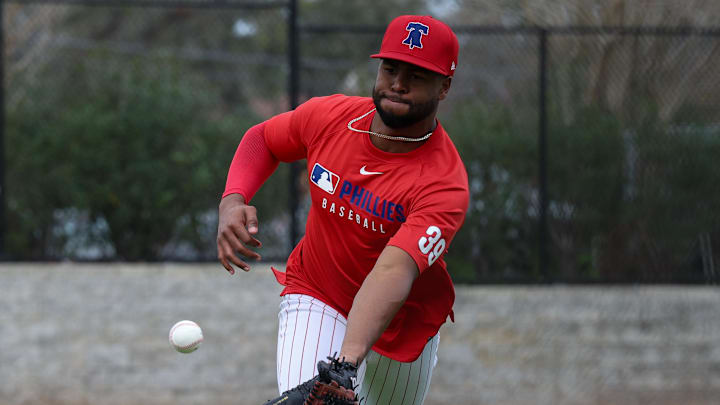
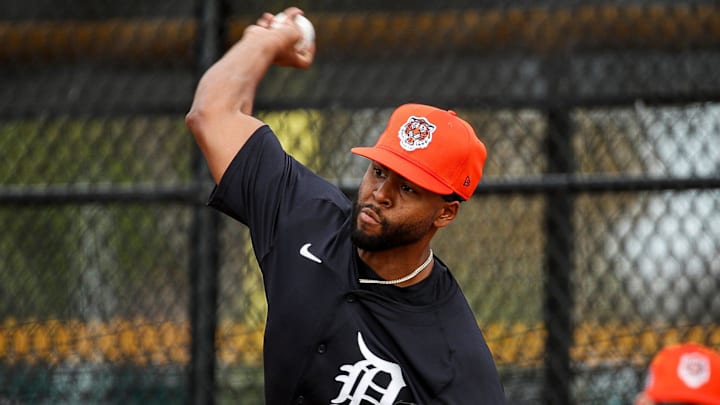
Since that short MLB stint, Sweet’s career has taken on a journeyman feel. He’s moved through multiple organizations, including the San Francisco Giants, Detroit Tigers, and Philadelphia Phillies, without finding his way back to the majors. On the surface, that kind of movement might suggest a fringe player constantly on the bubble. However, the fact that several teams have continued to cycle him through their systems points to something more compelling beneath the surface.
MORE: Angels swipe career .315 minor league hitter from Giants in waiver claim
Organizations rarely invest roster spots—especially in Triple-A—in pitchers they believe have nothing left to offer. Sweet’s repeated chances hint that evaluators still see traits worth betting on, most notably his ability to miss bats.
From 2021 through 2024 in the minors, he struck out roughly 30 percent of the hitters he faced. That’s an eye-catching figure, particularly in an era when front offices increasingly prioritize strikeout potential over traditional stat lines. Even if command or consistency wavers, raw bat-missing ability remains one of the most valuable tools a pitcher can possess.

That specific trait almost certainly caught Breslow’s attention. Since taking the reins of baseball operations in Boston, Breslow has made it clear that the Red Sox want arms capable of generating swings and misses.
Pitchers who can neutralize hitters without relying on defense are prized commodities, whether they’re destined for the major-league roster or serve as developmental pieces within the system. Sweet checks that box, and at virtually no financial cost, the organization gains another lottery ticket.
MORE: Cubs-Marlins officially comfirmed another blockbuster deal, per report
From a roster-construction standpoint, Sweet’s signing is low risk and quietly strategic. Minor-league deals like this don’t burden the payroll or limit flexibility, but they do expand the organization’s pitching pool. Over the course of a long season, that depth can become invaluable. Injuries, fatigue, and underperformance inevitably thin out bullpens, and having experienced arms ready in Triple-A can save a front office from scrambling.
On his own, Sweet’s arrival might seem insignificant, even forgettable. But viewed through the lens of how Boston has approached this offseason, it feels more intentional.
The Red Sox have consistently added arms—some with pedigree, others with raw tools—creating layers of depth that can be leveraged in multiple ways. Not every pitcher is signed with the expectation of contributing directly at Fenway Park. Some are insurance policies. Others are development projects. And a few, perhaps, are future trade chips.
That last possibility is where Sweet becomes especially interesting. As the season progresses and the trade deadline approaches, teams often look to sweeten deals by including controllable or intriguing pitching depth.
MORE: Reds latest reunion facilitate trading Brady Singer
If Sweet performs well in Worcester—posting strong strikeout numbers and showing improved command—he could easily be bundled with another arm or two in a July trade. In that context, his value wouldn’t be about anchoring a bullpen, but about enhancing Boston’s leverage in negotiations.
Ultimately, Sweet represents the type of marginal move that helps define a front office’s identity. Breslow and the Red Sox appear committed to casting a wide net for pitching talent, understanding that volume often leads to value. Not every signing will pay off, and many will fade quietly into the background. But occasionally, one sticks—or helps facilitate a bigger move down the line.
So while Sweet’s signing may not move the needle today, it reinforces a growing pattern. In Boston’s current approach, no arm is truly inconsequential. Each addition, no matter how minor it appears, serves a purpose in the larger plan.


Be the first to comment