With roughly six weeks remaining before MLB Spring Training begins, the New York Mets find themselves in a familiar but increasingly urgent position: the outfield remains unsettled. If the Mets ultimately come up empty in pursuits of marquee options like Kyle Tucker or Cody Bellinger, the organization could be forced into a late scramble to secure a capable everyday outfielder. At the moment, the roster offers very little in terms of proven depth. Beyond Juan Soto and Tyrone Taylor, there are few players with meaningful major-league experience who can be relied upon to handle regular outfield duties.
This roster imbalance did not arise by accident. The Mets have spent the offseason aggressively reshaping the organization, committing fully to a dramatic reset. That process included significant trades that sent both Jeff McNeil and Brandon Nimmo elsewhere, effectively stripping the roster of two established contributors who previously factored into the outfield picture. Those moves signaled that the front office was more focused on long-term flexibility and financial maneuverability than short-term continuity.
However, while the teardown phase appears well underway, the rebuild has left a clear void in the lineup. Subtracting two veteran outfield options without bringing in replacements creates pressure to act decisively. At some point, the narrative needs to shift from subtraction to acquisition, particularly in an area as visible and vital as the outfield. The Mets cannot realistically enter spring training with so many unanswered questions at a position group that directly impacts both run production and defensive stability.
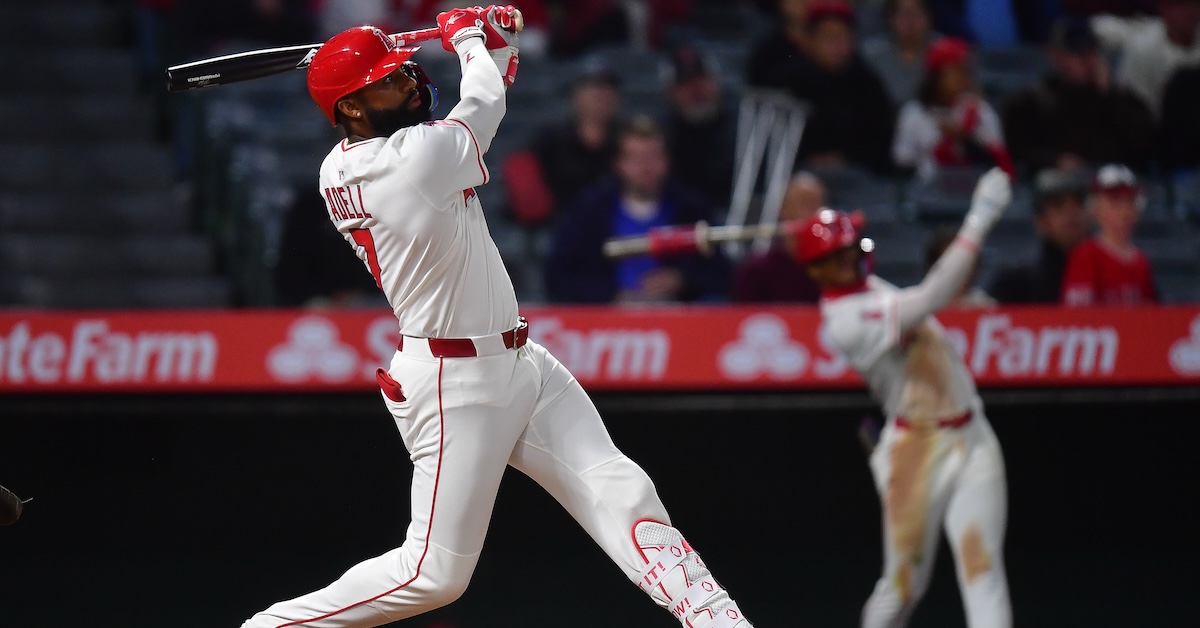
One potential solution surfaced earlier in the offseason, though it has since faded from headlines. In late November, respected MLB insider Ken Rosenthal reported that the Los Angeles Angels were open to discussing trades involving young outfielders Jo Adell and Taylor Ward. That report hinted at opportunity, particularly for teams seeking controllable talent rather than short-term rentals.
Shortly thereafter, Ward was dealt to the Baltimore Orioles, narrowing the Angels’ list of movable outfielders and leaving Jo Adell as the most intriguing remaining option. Although that initial report has not gained fresh momentum, the underlying logic remains compelling for the Mets. Adell represents the type of high-upside acquisition that could align with the organization’s broader reset while also addressing an immediate need.
From the Mets’ perspective, pursuing Adell would signal a shift from clearing payroll to selectively betting on talent. While Adell’s career has been marked by inconsistency, his raw tools—power, athleticism, and age—continue to intrigue evaluators. In a new environment with reduced pressure and a clearer development plan, there is reason to believe he could still take a meaningful step forward. For a Mets team that is no longer positioned to simply outspend mistakes, calculated upside plays carry real appeal.
MORE: Cardinals confirmed another elite prospect addition
Moreover, a deal for Adell would not preclude future moves. Instead, it could stabilize the outfield enough to avoid desperation while preserving flexibility. Soto would remain the centerpiece, Taylor could slide into a more suitable complementary role, and Adell would have the opportunity to earn everyday reps without the burden of being the sole solution. That balance matters, especially for a club trying to reestablish direction after a turbulent stretch.

Ultimately, the Mets’ offseason has been defined by bold decisions and a willingness to accept short-term discomfort in pursuit of long-term clarity. But rebuilding does not mean ignoring obvious roster holes. With spring training approaching and alternatives dwindling, the front office may need to revisit trade conversations that once seemed dormant. If New York truly wants to turn the page, making a proactive move for a player like Jo Adell could be the first step in flipping the narrative—from tearing down to building something new.
Mets Trade Pitch Lands Angels’ Jo Adell
Recent reporting has hinted that the New York Mets may be shifting their attention away from free agency and toward the trade market as the offseason enters a more decisive phase. If that is indeed the case, now is the ideal moment to examine which players around the league could realistically be available and which names make the most sense for a club still searching for clarity in its outfield picture.
MORE: Diamondbacks officially solidify bullpen with the signing of superstar righty
One of the more intriguing possibilities is Jo Adell, who finally delivered on his long-promised upside during the 2025 season. Adell put together a true breakout year, launching 37 home runs in 526 at-bats while setting personal bests across nearly every meaningful offensive category. His totals in home runs, doubles, RBIs, runs scored, and OPS+ all reached new career highs, signaling a player who had taken a real step forward rather than simply riding a hot streak.

That performance was especially notable given the winding path Adell has traveled since entering the majors. Once viewed as one of baseball’s premier prospects in the Angels’ system, his first several seasons were marked by inconsistency, swing-and-miss issues, and long stretches where the results failed to match the raw tools.
By 2025, however, his approach at the plate looked fundamentally different. Adell leaned fully into a power-first mindset, adopting a clear “swing for the fences” philosophy that allowed his elite bat speed and strength to shine. While the approach came with some trade-offs, the production spoke loudly enough to justify the shift.
MORE: Mets make move to acquire Nationals ace
From the Angels’ perspective, the timing could be right to listen on Adell. The Los Angeles Angels are now operating under a restructured front office, and organizational direction often changes when new decision-makers take over. With the club still struggling to define a sustainable long-term core, entering a broader rebuild may be the most logical path forward. In that scenario, the focus would naturally turn to younger, cost-controlled players, particularly someone like shortstop Zach Neto, who profiles as a potential foundational piece.
That context makes Adell, now coming off a career year, a sensible trade chip. His value may never be higher, and dealing him could allow the Angels to address multiple organizational needs at once. For the Mets, who remain in search of an impact outfield bat, Adell represents the type of upside play that could materially change the lineup without requiring a long-term free-agent commitment.
One proposed framework for such a deal would see the Mets acquire Adell in exchange for a package of Jonah Tong, A.J. Ewing, and infielder Ronny Mauricio. Tong and Ewing both project as near-MLB-ready pieces, while Mauricio has already tasted big-league action and still carries considerable upside despite recent setbacks. From the Angels’ side, that return would offer a blend of immediate depth and future flexibility, particularly valuable for a team potentially pivoting toward a youth-driven reset.
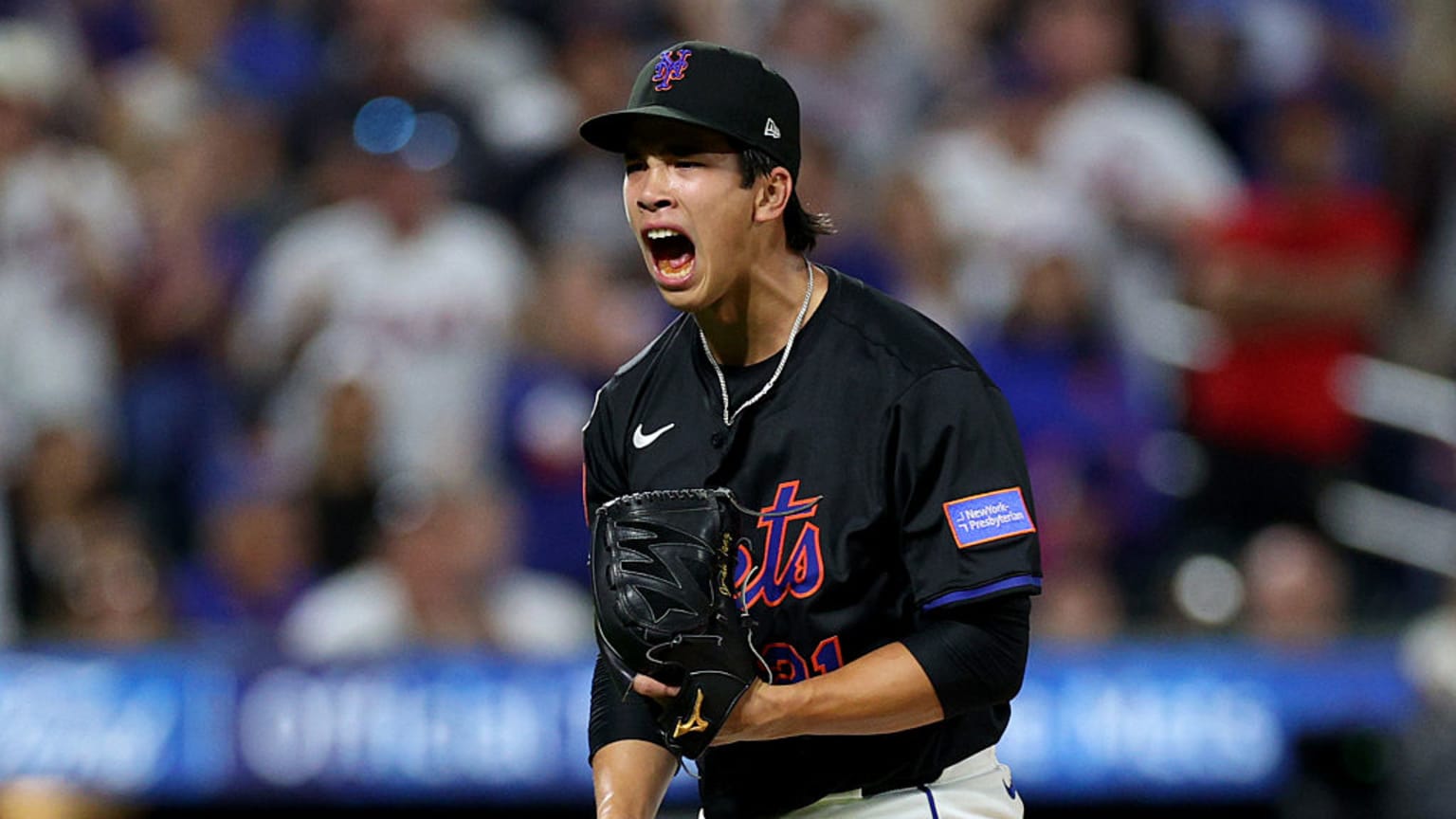
For New York, the appeal is obvious. Giving up three young players—none of whom are guaranteed stars—for a proven major league power bat could be a risk worth taking, especially given the Mets’ current roster construction. The outfield has lacked both stability and impact, and Adell’s 2025 production suggests he could provide both, at least in the short to medium term. Even if some regression follows, the power alone would add a dimension the lineup sorely needs.
What makes the situation even more curious is the apparent lack of widespread interest around the league. Despite Adell’s breakout season and the Angels’ uncertain competitive timeline, there has been surprisingly little public reporting tying other clubs to him. While earlier speculation from insiders like Ken Rosenthal hinted at broader market activity, those threads have yet to develop into concrete rumors.
MORE: Red Sox fills Alex Bregman void with the addition of Mariners’ star slugger Eugenio Suarez
That silence could work in the Mets’ favor. If rival teams remain hesitant—either skeptical of Adell’s sustainability or unwilling to meet the Angels’ asking price—New York may find an opportunity to strike before the market heats up. Should the Mets truly be prioritizing trades as their next major move, Adell stands out as one of the more compelling, and potentially attainable, targets available.
The Mets’ Need for an Outfielder/Offseason Outlook
Even after parting ways with key figures like Pete Alonso and Edwin Díaz, the New York Mets can still point to a productive and purposeful offseason. The front office has been active in reshaping the roster, adding proven major-league talent and addressing several weaknesses that plagued the club a year ago. Still, one glaring issue remains unresolved: the outfield. As elite free-agent options continue to sign elsewhere, the urgency to find a reliable everyday outfielder only intensifies.
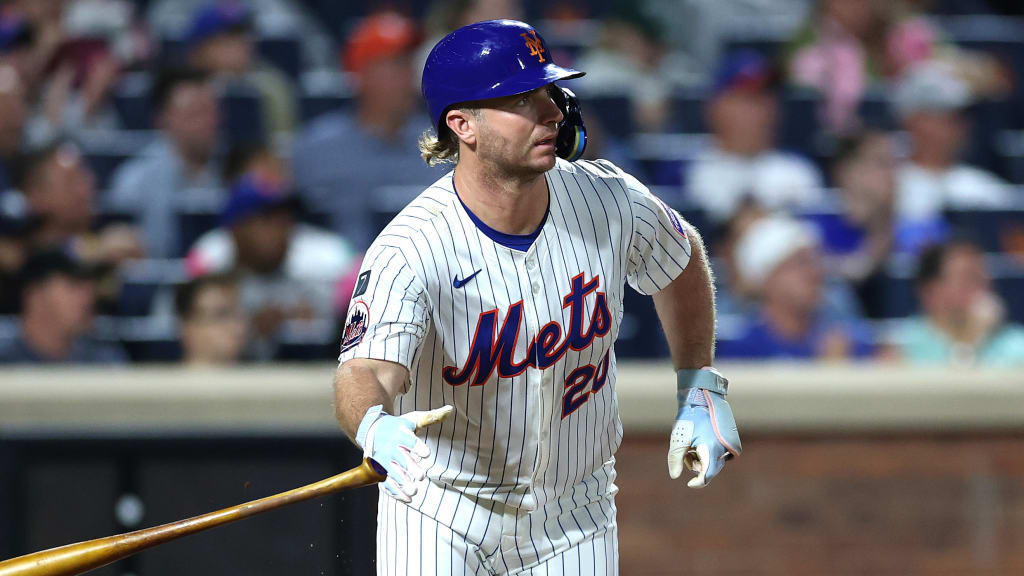
To their credit, the Mets have not been idle. They made notable free-agent signings by bringing in Jorge Polanco, Devin Williams, and Luke Weaver, while also swinging a significant trade to acquire Marcus Semien. Each of these moves reflects a broader organizational shift toward balance, versatility, and run prevention. The Mets are clearly trying to correct course after a season in which defensive inefficiency quietly undermined their pitching staff.
Advanced defensive metrics painted a troubling picture of last year’s Mets. Missed plays, poor range, and inconsistent positioning led to extra outs and extended innings, which in turn inflated run totals. Many of those runs were not the result of overpowering opposing offenses, but rather of avoidable defensive lapses. This winter’s acquisitions suggest the front office took those numbers seriously. Polanco and Semien, in particular, bring steadiness and instincts that can tighten up the infield, while Williams and Weaver help stabilize the pitching side by limiting damage once the ball is put in play.
Even with those improvements, the outfield remains thin. The lack of a dependable option capable of contributing both offensively and defensively continues to loom large. That reality is why a player like Jo Adell is so appealing in trade discussions. Adell fits the Mets’ timeline and philosophy in several important ways. From a contract standpoint, he is still arbitration-eligible and won’t reach free agency until 2028, giving the Mets multiple seasons of control at a manageable cost. At just 26 years old, he also aligns with the club’s desire to get younger and more athletic without sacrificing upside.
MORE: Braves trade top prospect Hurston Waldrep for Brewers’ $15M Young arm to fill major void
Adell’s profile suggests a player who could benefit from a change of scenery and a refined development plan. His raw power and physical tools are undeniable, and with improved defensive positioning and consistent playing time, he could help address multiple needs at once. For a Mets team emphasizing defense, the idea of molding Adell into a more complete outfielder is especially intriguing.
Of course, acquiring that kind of talent would not come cheap. Any trade conversation inevitably turns to the Mets’ farm system, particularly its pitching depth. Losing prospects like Jonah Tong or Ewing would sting, especially given how highly the organization values internal development. However, the Mets are in a position of relative strength on that front. Their system boasts a deep collection of arms, giving them flexibility to deal from surplus if the return meaningfully improves the major-league roster.
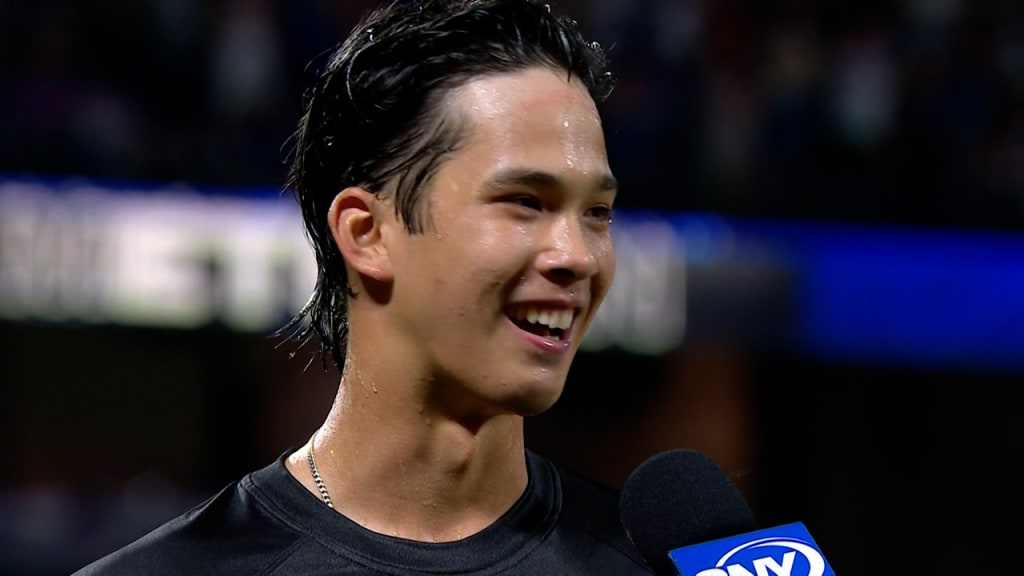
At the top of that prospect hierarchy sits Nolan McLean, who is widely viewed as a potential cornerstone and may be effectively untouchable in trade talks. If McLean is indeed off-limits or not yet eligible to be moved, attention naturally shifts to the next tier. That group includes Tong and Brandon Sproat, both of whom represent valuable, but potentially expendable, assets in the right deal.
Balancing present needs with future stability is the central challenge facing the Mets’ front office. Trading a promising arm always carries risk, particularly in an era where pitching depth is more valuable than ever. Yet the Mets also recognize that prospects, no matter how talented, do not help a roster spot that is currently vacant. If the team believes an outfielder like Adell can provide immediate and sustained impact, that calculus becomes more complicated—and more tempting.
Until the roster fully takes shape, the Mets are likely to remain a fixture in offseason rumors and speculation. As long as the projected 2026 lineup features obvious gaps, especially in the outfield, the expectation will be that New York continues to explore bold moves. Whether that means swinging a trade, uncovering a late-market free agent, or betting on internal options remains to be seen. What is clear, however, is that the Mets are not finished. Their offseason has been active and intentional so far, but the job will not feel complete until that final, critical piece falls into place.



Be the first to comment