As spring training draws near, the Philadelphia Phillies head into February and March with several players facing pivotal moments that could shape both their individual trajectories and the club’s early-season outlook.
Following an offseason that many fans viewed as underwhelming, the organization will reconvene in Clearwater when pitchers and catchers officially report on February 11. While the Phillies didn’t overhaul the roster, the weeks ahead will carry real importance, as competition, opportunity, and expectation all converge in camp.
At first glance, the Phillies’ roster looks familiar. The heart of the lineup remains largely intact, signaling that the front office is still banking on continuity and internal improvement rather than dramatic external additions.
That stability brings a sense of confidence, but it also places pressure on returning veterans to perform at or above last season’s level. With minimal roster shakeups, spring training will be less about learning new faces and more about refining roles, sharpening execution, and ensuring that the established core is ready to contend once again.

The most notable change comes on the pitching side, where the departure of Ranger Suárez in free agency leaves a meaningful void. Suárez had been a reliable and often underrated piece of the rotation, and his absence opens the door for competition while simultaneously raising concerns about depth and durability.
MORE: Phillies bring back firepower tank as spring training draws near
How the Phillies choose to compensate for that loss—whether through internal options or creative role adjustments—will be one of the defining storylines of camp. Several pitchers will enter spring training knowing that strong performances could earn them a larger role than initially expected.
Beyond the major league roster, much of the intrigue this spring centers on the organization’s top prospects. Andrew Painter arrives in camp carrying significant expectations, as he continues to be viewed as a potential cornerstone of the Phillies’ future rotation. While the team is likely to be cautious with his workload, every bullpen session and spring appearance will be closely monitored. Painter’s performance may not dictate an immediate promotion, but it will offer valuable insight into how close he is to making a long-term impact at the highest level.
Justin Crawford is another young talent under the spotlight. His athleticism and upside make him one of the most exciting position-player prospects in the system, and spring training represents a chance for him to showcase his growth against major league competition. Even if he doesn’t break camp with the big-league club, a strong showing could accelerate his timeline and keep him firmly on the radar as the season unfolds.
Aidan Miller will also be part of the spring training mix, though expectations surrounding his immediate role are more tempered. While it would be a surprise to see Miller crack the Opening Day 26-man roster, his inclusion in camp reflects the organization’s belief in his long-term potential. The Phillies appear content to let his development progress naturally, but that doesn’t mean his spring will be inconsequential. Valuable reps against top-level pitching could set the stage for a midseason call-up, especially if injuries or performance issues arise.
Spring training will also feature several roster spots that remain genuinely up for grabs. The back end of the bullpen, the final bench roles, and possibly the lower tier of the rotation will all be shaped by what unfolds in Clearwater. For fringe players and depth pieces, February and March represent an opportunity to force the Phillies’ hand. Strong performances could turn non-roster invitations into roster spots, while struggles may quickly push players down the depth chart.
In the end, this spring may not be defined by splashy headlines or blockbuster additions, but it will still be critical for the Phillies. With a familiar core, emerging prospects, and a handful of unanswered questions, the coming weeks will help determine whether the team is positioned to build on recent success—or if further adjustments will be needed once the regular season begins.
Three Phillies Who Have the Most At Stake This Spring
Otto Kemp (INF/OF)
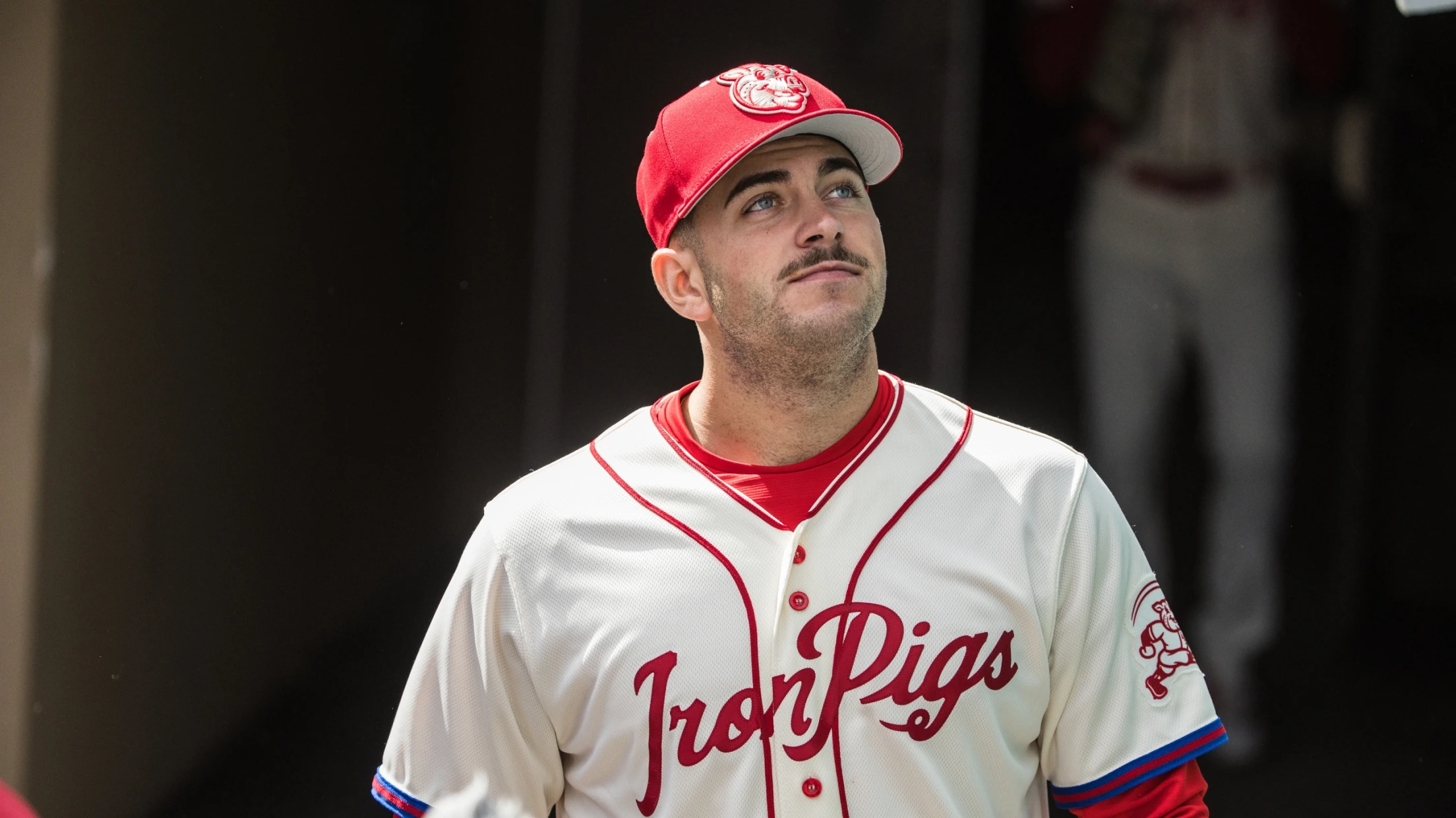
Otto Kemp appears poised to share time in left field with Brandon Marsh as part of a platoon arrangement this season, a plan the Phillies have been signaling for months. Throughout the offseason, both president of baseball operations Dave Dombrowski and manager Rob Thomson have gone out of their way to speak positively about Kemp, suggesting the organization is comfortable with him playing a meaningful role on the roster.
Those endorsements are not coming out of nowhere, either. Kemp already spent stretches of last season rotating with Marsh in left field, and the expectation is that the Phillies will lean on a similar setup again this year.
MORE: Diamondbacks Roster Need Makes Perfect Reunion
At 26 years old, Kemp enters the season at an important juncture in his career. He is no longer a pure developmental project, but he also has not fully established himself as an everyday big leaguer. The platoon role gives him a clear path to playing time, particularly against left-handed pitching, where he has shown he can be productive.
During the 2025 season, Kemp posted a .786 OPS and a 118 wRC+ against lefties in 74 plate appearances, solid numbers that help explain why the Phillies see value in pairing him with Marsh. Marsh has typically been stronger against right-handed pitching, so the combination allows Philadelphia to maximize production from the position without committing to one player full time.
That said, the plan is not without risk. Spring training will be critical for Kemp, as a poor performance could force the Phillies to take a harder look at their left field depth and overall roster construction. While the organization has expressed confidence in him, that trust is not unconditional. If Kemp struggles significantly in camp—whether due to inconsistent at-bats, defensive issues, or an overall lack of sharpness—the front office may have to reconsider whether he is the right fit for the role, at least to start the season.
Complicating matters is the lack of obvious internal alternatives. With Weston Wilson recently designated for assignment, the Phillies’ depth chart in left field has thinned considerably. That move removed one of the more realistic fallback options for a platoon or bench role, leaving Kemp as the most straightforward complement to Marsh. Without Wilson in the mix, the organization would either need to look outside the system or ask someone else to take on a role they may not be ideally suited for if Kemp falters.

From a roster management standpoint, Kemp’s remaining minor league options give the Phillies some flexibility. He still has two option years left, meaning the team could send him back to the minors without exposing him to waivers if they feel he needs more time or if a better short-term solution presents itself.
That flexibility is valuable, but it also underscores the tenuous nature of his position. Having options can be a double-edged sword: it provides organizational depth, but it can also make a player easier to move if performance does not meet expectations.
Ultimately, Kemp enters the season with an opportunity clearly in front of him. The Phillies have talked him up, penciled him into a defined role, and lack a clear internal replacement. His track record against left-handed pitching supports the idea that he can contribute meaningfully in a platoon. Still, nothing is guaranteed. How he performs in spring training will go a long way toward determining whether the Phillies stick with their current left field plan or are forced to rethink it before Opening Day.
Zach McCambley (RHP)
Zach McCambley enters camp with more riding on his performance than just about anyone competing for a bullpen role. The right-hander was taken by the Philadelphia Phillies during the major league phase of the 2025 Rule 5 Draft, a move that immediately puts his roster status under a microscope. Because of Rule 5 regulations, the Phillies are not allowed to simply stash McCambley in the minor leagues if he struggles or needs further development.
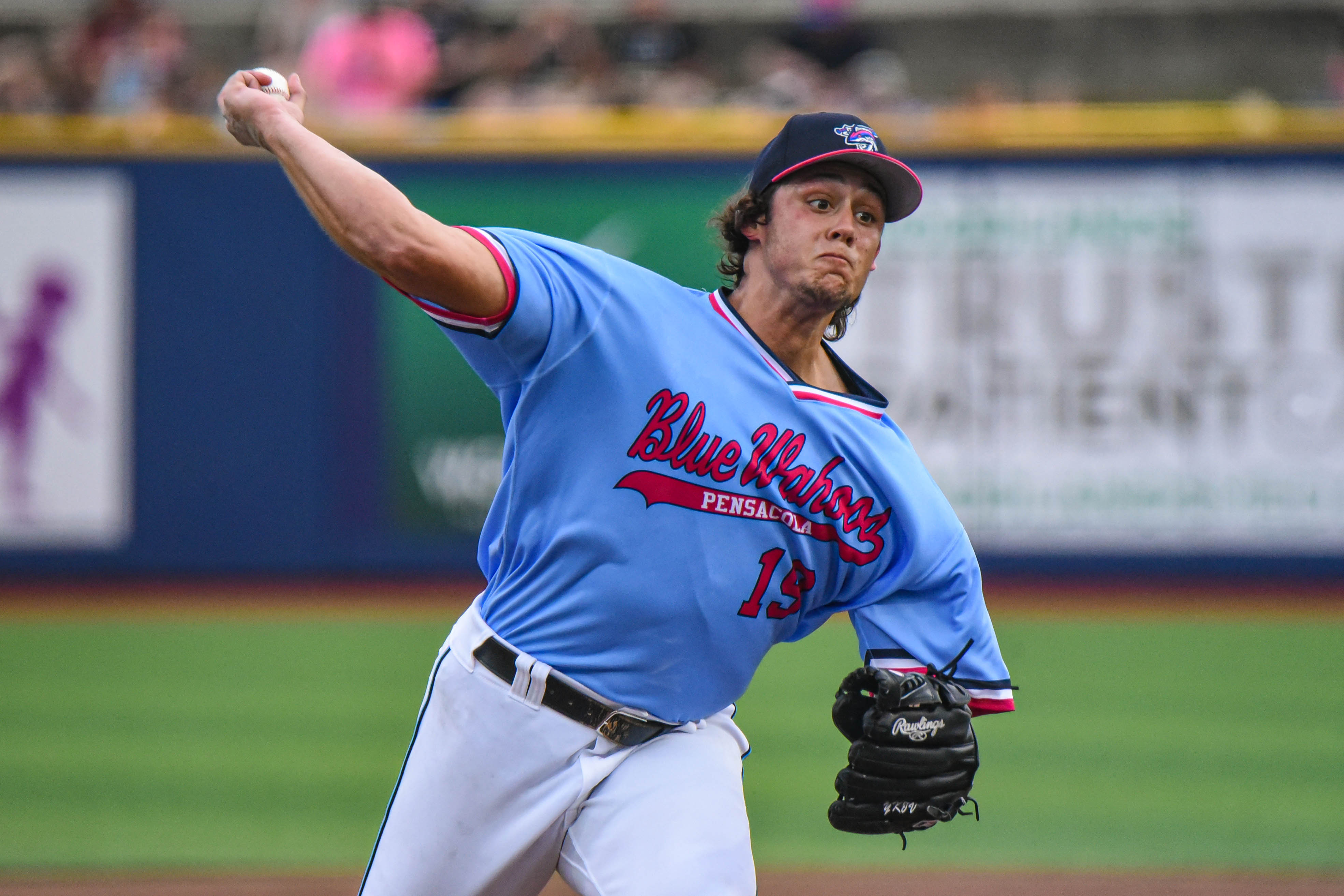
If he does not make the Opening Day roster and remain on it, Philadelphia’s only options would be to work out a trade or return him to the Miami Marlins, the organization he came from. There is no safety net in the form of a minor-league assignment, which dramatically raises the pressure surrounding his spring training performance.
That lack of flexibility makes McCambley’s situation unique compared to many other pitchers in camp. While several non-roster invitees are battling for bullpen consideration, they generally have the luxury of being reassigned to the minors if they fall short.
MORE: Braves Top Prospect Lose 2026 Roster Spot
McCambley does not have that option. Every appearance he makes, every inning he throws, and every evaluation by the coaching staff carries added weight. From a practical standpoint, this means he must prove not only that he can get outs, but that he can do so consistently enough to justify occupying an active roster spot all season.
Performance-wise, McCambley brings a solid track record that explains why the Phillies were willing to take the risk. During the 2024 minor league season with the Marlins organization, he posted a 2–3 record and a strong 2.90 ERA across 47 appearances, primarily working out of the bullpen. He also picked up one save, showing at least some experience in late-inning situations. Those surface numbers are backed up by encouraging underlying metrics. His 2.90 FIP suggests that his run prevention was not the result of luck alone, while his 1.097 WHIP reflects an ability to limit baserunners.
Perhaps even more telling is McCambley’s command profile. He finished the season with a 3.77 strikeout-to-walk ratio, an indicator that he generally stayed in control of at-bats and avoided free passes. For a reliever fighting for a Rule 5 roster spot, that trait is especially important.
Managers are often hesitant to trust young bullpen arms who struggle with control, particularly in close games. McCambley’s numbers suggest he has the poise and precision needed to handle high-leverage moments, even if he has yet to prove it at the major league level.

Still, nothing is guaranteed. Several non-roster invitees are also in the mix for bullpen jobs, and strong spring performances from those pitchers could complicate the Phillies’ decision-making process. While McCambley’s Rule 5 status gives him a certain advantage, it does not assure him a spot if the team believes another arm offers a better chance to win games. Philadelphia must balance the temptation to keep him for his upside against the risk of carrying a pitcher who may not be fully ready for the majors.
Jonathan Bowlan finds himself in a somewhat comparable situation, competing for similar bullpen real estate and needing to stand out in a crowded field. Like McCambley, Bowlan must convince the coaching staff that he can provide immediate value rather than serving as a developmental project.
Ultimately, the bullpen battle will likely come down to reliability, command, and versatility. For McCambley, the stakes are especially high: impress enough to stick, or face the possibility of being moved or returned before his major league career truly begins.
Johan Rojas (OF)
Johan Rojas appears positioned to battle for a bench role that is expected to open once the Phillies ultimately decide to trade or release Nick Castellanos. While that move still feels inevitable, it is somewhat unexpected that the organization has not yet made a definitive decision on Castellanos’ future.
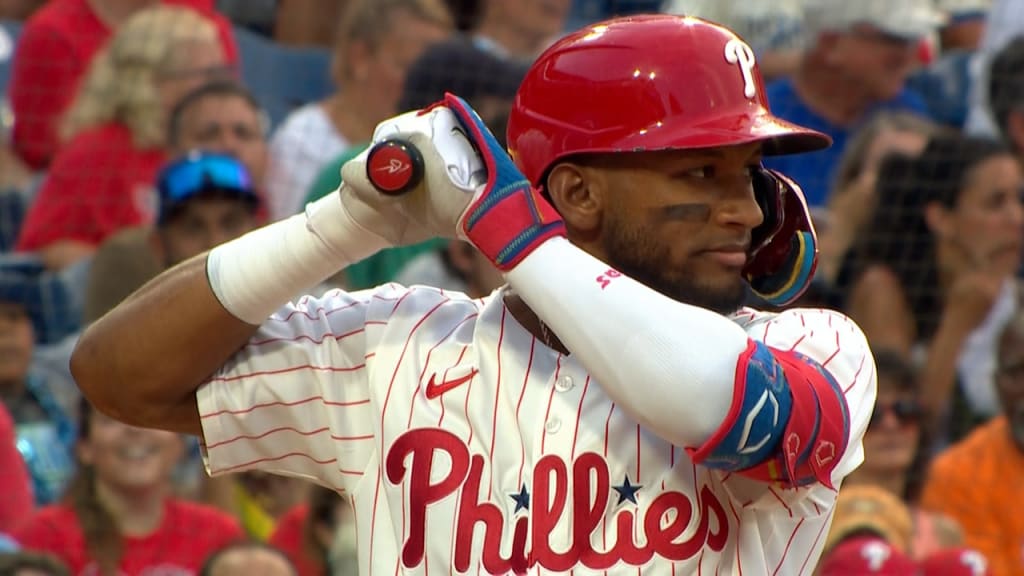
Even so, the uncertainty surrounding that situation has already created a potential opportunity, and Rojas is currently the leading internal candidate to claim the resulting roster spot—assuming the Phillies do not pursue or acquire another outfielder from outside the organization.
Rojas’ standing in this competition is not without complications. Over the course of his three major league seasons, he has struggled to establish himself as a dependable offensive contributor. His lack of consistency at the plate has been a recurring issue, and it has directly contributed to him being optioned to Triple-A in each of the past two seasons.
MORE: Orioles fans receives high significantly big disappointmenting news
Those demotions reflect the organization’s ongoing concerns about whether his bat can play at the big-league level on a regular basis, particularly in a limited bench role where production in sporadic opportunities is critical.
Despite those offensive shortcomings, Rojas still offers traits that keep him in the conversation. One notable advantage he has over fellow outfield candidate Gabriel Rincones Jr. is his right-handed bat. Rincones hits from the left side, and roster balance often plays a significant role in bench construction, especially for a team with postseason aspirations.
A right-handed hitter can provide the manager with more flexibility in late-game matchups, pinch-hitting scenarios, and defensive substitutions. That handedness edge may give Rojas a slight upper hand when the front office evaluates how the final roster fits together.
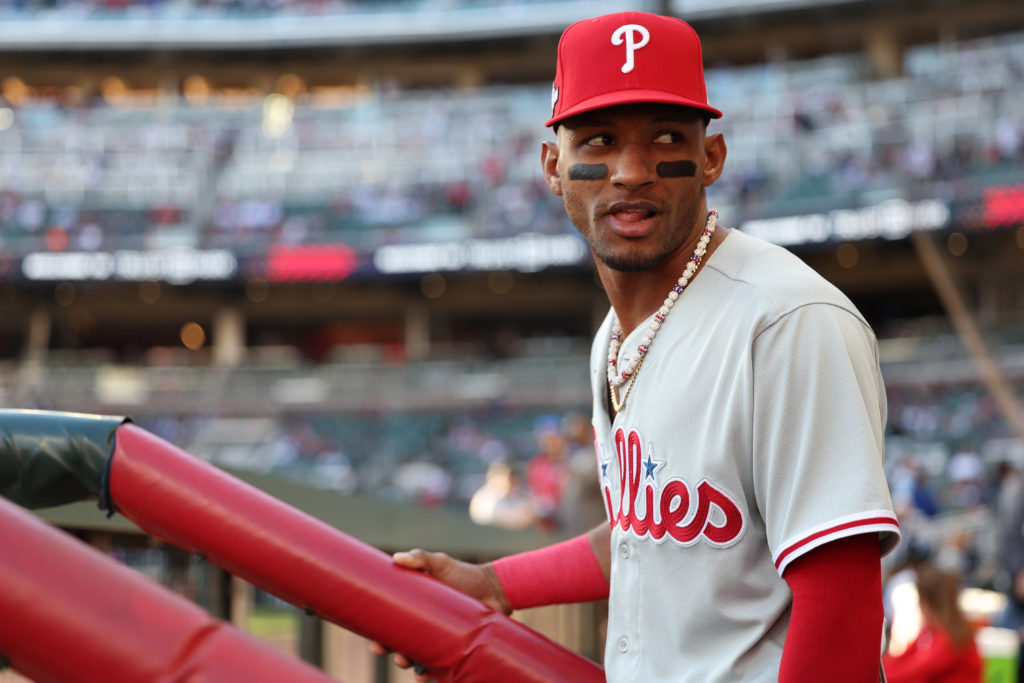
That said, Rojas’ margin for error is slim. If he fails to show improvement offensively or cannot provide consistent value in limited playing time, both he and the organization may benefit from a change of scenery. At this stage of his career, Rojas may need a fresh start with a team that can offer clearer opportunities or a different developmental approach. Likewise, the Phillies are operating in a competitive window and cannot afford to carry players who do not maximize their roster spots.
From a logistical standpoint, Rojas still has one minor league option year remaining. This gives the Phillies some flexibility if they want to keep him in the organization without committing him to the major league roster immediately. They could choose to option him to Triple-A once again if circumstances dictate, allowing him more time to refine his approach at the plate or prove he can produce consistently. However, repeated trips between the majors and minors can only go on for so long before both sides reach a crossroads.
Ultimately, Rojas’ future with the Phillies hinges on whether he can translate his raw tools into reliable performance. The opportunity in front of him is real, particularly if the club does not add another outfielder and Castellanos is eventually moved off the roster.
But opportunity alone will not be enough. Rojas must demonstrate that he can contribute offensively at a level that justifies a bench role on a team with championship ambitions. If he cannot, the Phillies may be forced to explore alternative options—either internally or externally—while Rojas looks elsewhere for a chance to reset his career.


Be the first to comment