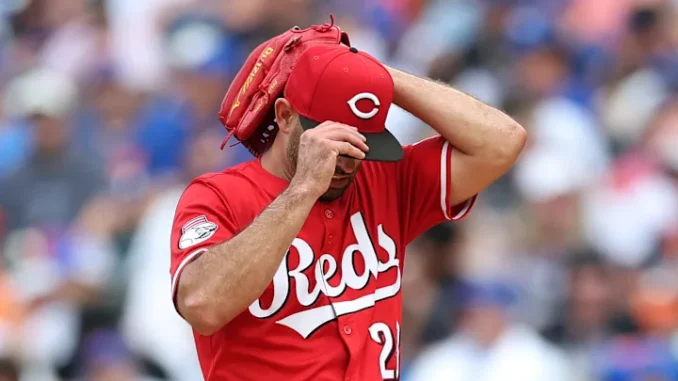
The Cincinnati Reds have spent much of the offseason publicly downplaying the possibility of dealing from their starting rotation, but that stance hasn’t stopped speculation from growing—particularly around Brady Singer.
Even as the organization continues to signal a preference for stability on the mound, Singer’s situation makes him a natural focal point for rival clubs searching for pitching help and for analysts examining how Cincinnati might rebalance its roster.
Singer is approaching the final season of team control, a key inflection point that often forces clubs to make difficult choices. With his salary projected to climb and potentially become the highest on the roster, the Reds must weigh the benefits of keeping a reliable arm against the opportunity cost of holding onto an asset whose value may never be higher.

Complicating matters further is the team’s persistent need for more offense. For a club that has struggled at times to generate consistent run production, converting pitching depth into a meaningful bat can be an attractive—if risky—strategy.
That tension was recently highlighted by Ken Rosenthal and Will Sammon of The Athletic, who noted that any decision to trade Singer—or another starter—would come with significant downstream consequences.
MORE: Philadelphia Phillies trade discussions land Twins catcher
Moving a rotation mainstay isn’t just about the return in a deal; it’s also about maintaining enough pitching depth to survive a long season. For Cincinnati, the challenge would be twofold: replacing the innings lost in a trade while simultaneously improving the major-league lineup in a meaningful way.
This is where roster construction becomes a delicate balancing act. On one hand, dealing from the rotation could unlock offensive upgrades that address a clear weakness. On the other, subtracting a dependable starter without a viable contingency plan risks undermining the very foundation that has kept the Reds competitive. As Rosenthal and Sammon suggested, a trade only makes sense if the front office has a credible plan to backfill the rotation—either internally or via an external addition.
One potential solution sits on the open market in the form of Nick Martinez, a familiar name to Reds fans and decision-makers alike. Martinez remains unsigned in free agency, and his versatility and experience make him an intriguing safety net.
Having previously pitched for Cincinnati, he represents a known commodity—someone who understands the organization, the ballpark, and the expectations of the clubhouse. That familiarity could ease the transition if the Reds chose to part with Singer or another starter.
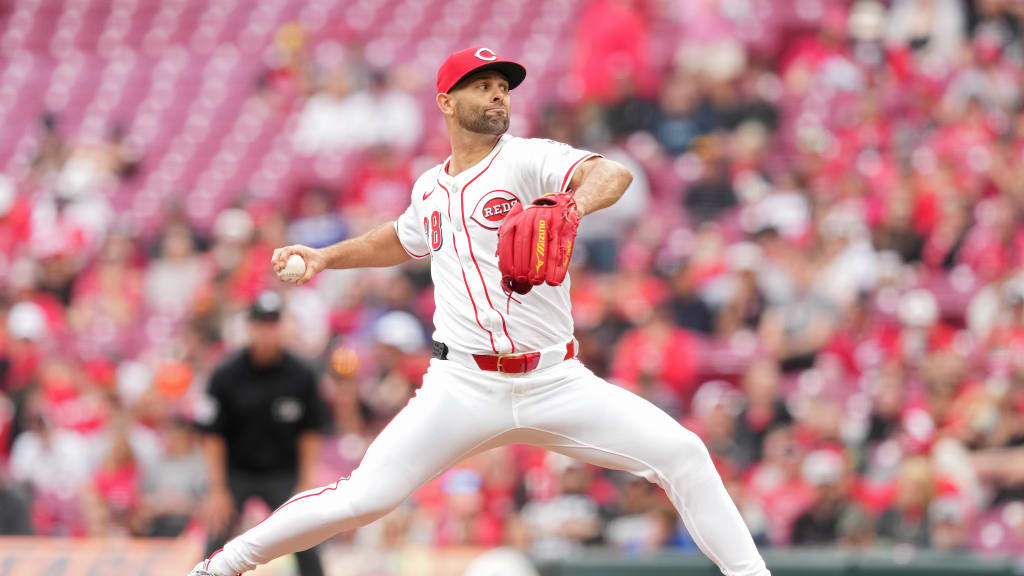
The appeal of Martinez extends beyond simple nostalgia. Throughout his career, he has shown an ability to adapt to different roles, whether as a starter, swingman, or bulk reliever. For a team potentially reshaping its rotation, that flexibility is valuable. Signing Martinez wouldn’t necessarily replace Singer one-for-one in terms of upside, but it could stabilize the staff by ensuring the Reds aren’t scrambling to cover innings after a major trade.
There’s also an important human element at play. Reds manager Terry Francona has long been open about his admiration for Martinez, valuing both his professionalism and his willingness to take on whatever role the team needs. Francona’s comfort level with the veteran right-hander could make a reunion especially appealing, as managers often prefer pitchers they trust when navigating the grind of a 162-game season.
MORE: Red Sox to Trade Pitcher to Orioles After Resurgent Season
Ultimately, the Reds’ dilemma underscores a broader truth about roster building: improvement in one area often requires sacrifice in another. Trading Singer could help address the club’s offensive shortcomings, but only if Cincinnati is proactive about reinforcing the pitching staff at the same time. A move like re-signing Martinez wouldn’t just be about nostalgia or convenience—it would be a strategic hedge against the risks inherent in dealing from the rotation.
As the offseason continues, Cincinnati’s front office faces a narrow path. Standing pat with the rotation preserves stability but may leave the lineup short of impact. Making a bold trade could energize the offense, but only if the club has the foresight to protect its pitching depth. Whether Singer ultimately stays or goes, the discussion around his future highlights the careful calculations required to turn potential into progress.
Reds reunion with Nick Martinez could help facilitate trading Brady Singer
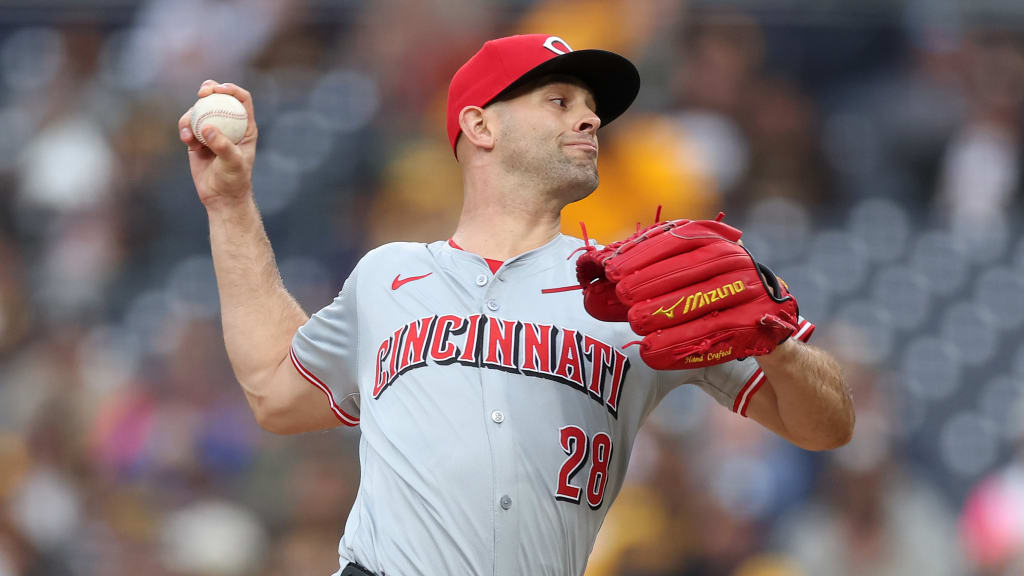
As things currently stand, the Cincinnati Reds appear set to open the season with a rotation headlined by Brady Singer, Hunter Greene, Nick Lodolo, and Andrew Abbott. That group represents the most stable and proven portion of the staff, combining power arms, swing-and-miss stuff, and pitchers who have already demonstrated they can navigate a full major league season. The final rotation spot, however, remains very much up for grabs, setting the stage for a competitive spring training battle.
Several younger arms are expected to contend for that fifth slot, including Chase Burns, Rhett Lowder, Brandon Williamson, and Chase Petty. Each brings a different profile to the table.
MORE: Former Detroit Tigers’ Triple-A hurler officially signs with Red Sox
Burns offers premium velocity and upside, Lowder is viewed as one of the more polished arms in the system, Williamson has already logged major league innings, and Petty is widely considered a long-term building block. Together, they give the Reds enviable depth, but also underscore how thin that depth could become if a key veteran were to be moved.
That concern is exactly why the idea of trading Singer is so complicated. If Cincinnati were to move him, it would immediately create a sizeable void in the middle of the rotation. Singer may not fit the mold of a traditional ace, but his value lies in his reliability. He has established himself as a pitcher who can take the ball every fifth day, work deep into games, and absorb a heavy workload without breaking down. Last season, he made 32 appearances and logged just under 170 innings, continuing a trend that has defined his career.

In fact, Singer has now surpassed the 150-inning mark in four consecutive seasons, a level of consistency that is increasingly rare in today’s game. For a team with postseason aspirations, that kind of durability matters just as much as raw stuff. Managers can plan around it, bullpens benefit from it, and younger pitchers are protected from being overextended. Removing that presence from the rotation would not be a small adjustment—it would fundamentally change how the Reds manage their pitching staff over the course of a long season.
The importance of the rotation was on full display during Cincinnati’s playoff run last year. The starting staff served as the backbone of the team, keeping games competitive and allowing the offense to do just enough to win. Heading into 2026, that same strength remains the club’s clearest advantage. While other areas of the roster have unanswered questions, the rotation stands out as the most complete and dependable unit. That reality makes the idea of trading from it feel inherently risky.
At the same time, there is an equally pressing issue on the other side of the roster. The Reds have not made significant upgrades to their lineup, and the lack of added offensive firepower has become increasingly noticeable.
MORE: Angels’ Mike Trout Announces Off-Field Gesture Amid MLB Offseason
Around the league, there is a growing belief that if Cincinnati wants to meaningfully improve its offense, it may have to do so via trade rather than free agency. In that context, Singer represents one of the team’s most attractive trade assets—valuable enough to bring back an impact bat, yet not untouchable in the way a true ace might be.
This is where the possibility of adding Nick Martinez enters the conversation. Bringing Martinez into the fold would not completely replace Singer’s production, but it could help cushion the blow if a trade were to happen. Martinez offers experience, versatility, and the ability to contribute in multiple roles. He could step into the rotation if needed, or provide stability out of the bullpen, depending on how the rest of the staff shakes out.
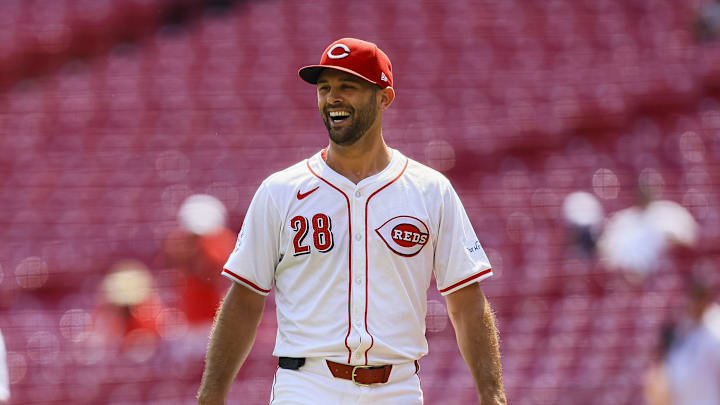
There is also a developmental angle to consider. If one of the Reds’ younger pitchers—whether Burns, Lowder, Petty, or another arm—proves ready to claim a rotation spot and settles in at the back end, Martinez could shift seamlessly into a relief role. That flexibility would give Cincinnati options, something it would desperately need if it decides to part with a pitcher as dependable as Singer.
Timing may ultimately be the deciding factor. The longer Martinez remains available on the free-agent market, the more plausible a reunion with Cincinnati becomes. Industry expectations suggest he could land a two-year contract in the neighborhood of $24 million.
MORE: Angels roster flexibility move land superstar infielder from Mets
From the Reds’ perspective, that price tag becomes far more manageable if Singer is traded for a hitter who can immediately upgrade the lineup. In essence, Singer’s salary could be redirected toward both offense and pitching depth, softening the overall impact of the move.
Of course, none of this matters without a willing trade partner. Finding a team that values Singer’s durability and is prepared to part with a legitimate offensive contributor is easier said than done.
Until that happens, the Reds are left weighing a difficult choice: protect the strength that carried them to the postseason, or take a calculated risk in hopes of creating a more balanced roster. Either way, the decisions made in the coming months will shape not only the rotation, but the entire trajectory of Cincinnati’s 2026 season.




Be the first to comment