Red Sox news today trade. The Boston Red Sox have already taken a significant first step toward fortifying their pitching staff this offseason by acquiring veteran right-hander Sonny Gray through a major trade. That move alone strengthens the front end of their rotation, yet there remains a sense within the organization — and around the league — that Boston is far from finished in its pursuit of additional pitching help.
Given the strength of the American League East and the arms race that seems to occur within the division every winter, an aggressive approach to building pitching depth has essentially become a requirement rather than a luxury.
Gray’s arrival gives the Red Sox a stabilizing presence capable of slotting comfortably behind Garrett Crochet, the emerging ace whom Boston hopes can anchor the staff for years to come. Right now, the expected top three of Crochet, Gray, and Brayan Bello forms a credible, well-rounded trio.

Bello continues to develop into one of the more exciting young arms in the AL, while Gray’s track record and postseason experience provide the level of confidence Boston has lacked in recent seasons.
Even so, the AL East often demands more than merely “solid.” Each team in the division tends to carry at least four strong starters, and most contenders rely on six or seven capable arms to survive the six-month grind. With this in mind, the Red Sox are widely rumored to be exploring further upgrades.
On Thursday, Ryan Finkelstein of Just Baseball sparked discussion by projecting that the Red Sox would ultimately sign right-hander Michael King. His prediction detailed a hypothetical three-year, $66 million contract featuring an opt-out clause following the first season. Such a deal would represent a notable financial commitment, yet it aligns with the type of bold moves the Red Sox must consider if they want to close the gap between themselves and their most dangerous rivals.
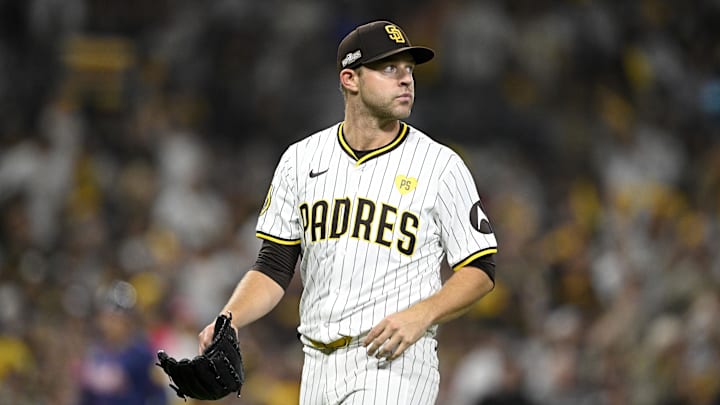
King’s journey to this point has been anything but straightforward. He was shipped from the New York Yankees to the San Diego Padres in the blockbuster trade that sent superstar outfielder Juan Soto to the Bronx. That move proved to be a turning point in King’s career.
While the Yankees had long valued him as a versatile weapon — someone who could pitch multiple innings out of the bullpen or spot-start in emergencies — they never fully committed to him as a member of the starting rotation. The Padres, however, saw untapped potential and decided to give him a true opportunity to start every fifth day.
That decision paid off almost immediately. In his first full year as a starter, King delivered an impressive 2.95 ERA, demonstrating an ability to maintain his elite strikeout stuff deep into games. He tallied 201 strikeouts, flashing command, deception, and a fastball-slider combination that overwhelmed hitters. Many analysts pointed to King as a breakout performer and one of the most intriguing arms in the league because of his rare blend of late-career development, swing-and-miss dominance, and mound maturity.
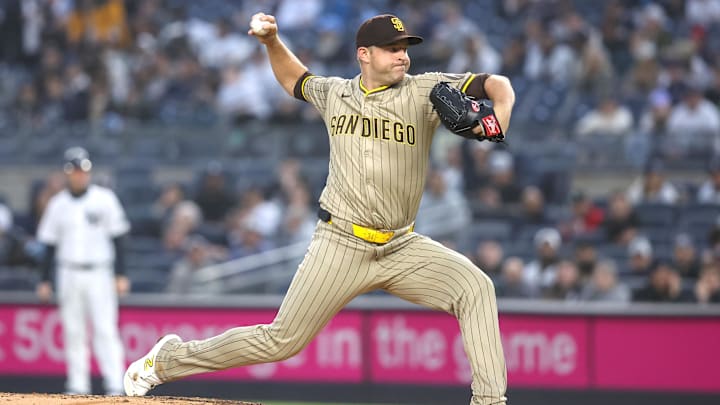
However, baseball is rarely linear. King’s most recent season was far more complicated. He was limited by nagging shoulder and knee injuries, issues that prevented him from maintaining the durability needed to remain a consistent rotation presence. He made only 15 starts, finishing with a respectable 3.44 ERA, numbers that underscore both his potential and his unpredictability. Teams evaluating him this winter must weigh the upside of his 2023 breakout against the limited sample size of his two seasons as a starter.
Complicating matters further is the fact that King is tied to a qualifying offer. Any team signing him would lose draft capital, a cost that certainly impacts Boston’s calculus. For an organization in transition — one attempting both to compete now and to rebuild its pipeline of controllable pitching — forfeiting a draft pick is never ideal.
But this offseason feels like an inflection point for the Red Sox. Chief baseball officer Craig Breslow has signaled he intends to be proactive, and if Boston hopes to reestablish itself as a consistent threat in the division, calculated risks may be necessary.

The urgency is heightened by the activity unfolding around the division. The Toronto Blue Jays wasted no time in making a splash by signing Dylan Cease, adding a potential ace with strikeout power and postseason upside. Meanwhile, the New York Yankees are once again linked to multiple stars, including outfielder Kyle Tucker, as they explore ways to rebuild an offense that faltered at key moments last season. With such steep competition, the Red Sox cannot afford passivity. King, despite his quirks and risks, represents a chance to acquire another high-ceiling arm capable of elevating the team’s pitching staff to a competitive tier.
If Boston were to add King, their rotation could quickly become one of the more compelling groups in the league. A quartet of Crochet, King, Gray, and Bello boasts an appealing mix of styles, ages, and developmental trajectories.

Crochet brings left-handed dominance and swing-and-miss capability; King offers deception and explosive strikeout potential when healthy; Gray is a consistent veteran known for thriving in big moments; and Bello brings youth, athleticism, and room to grow. Such a rotation would not only strengthen Boston’s performance throughout the regular season but also provide a foundation for October success, something the franchise has lacked since its last deep postseason run.
The Red Sox news today trade, have already shown they are capable of reaching the postseason with an imperfect roster. Their recent appearances have often been defined by strong stretches of play followed by inconsistency, particularly on the mound. That inconsistency has repeatedly exposed the need for more dependable starters who can shoulder heavy workloads and win pressure-packed games. Adding another frontline-caliber pitcher like King could help transform the Red Sox from a fringe contender into a legitimate World Series threat.
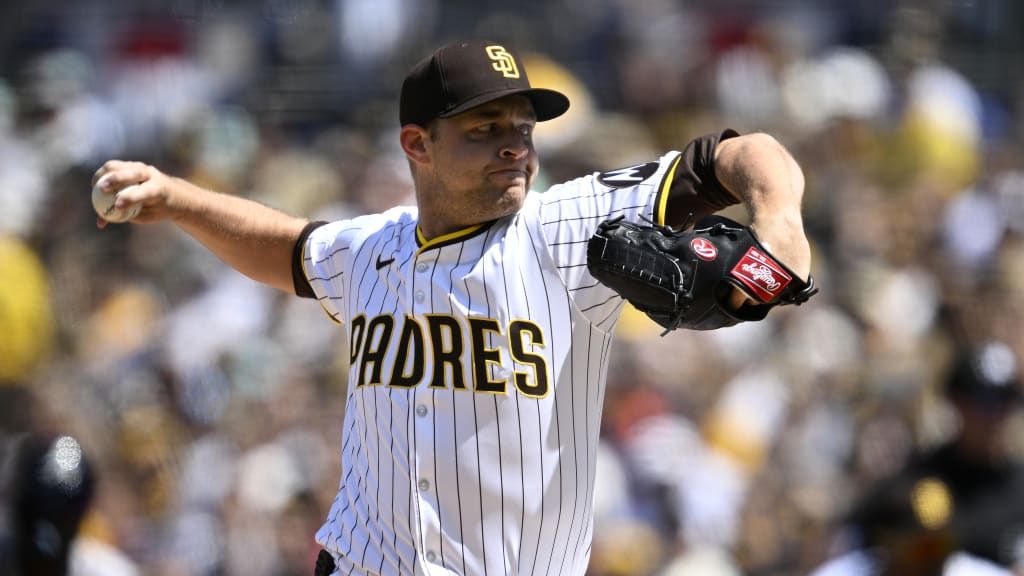
Ultimately, Boston’s goals this offseason extend far beyond mere participation in October. The expectations around Fenway Park — from ownership to the front office to the fanbase — revolve around winning championships. To get back to that level, the Red Sox must build a rotation capable of shutting down elite offenses and outlasting the deep pitching staffs that populate the American League. King may not be the safest investment on the market, but his upside makes him one of the more compelling targets available.
If Craig Breslow and the Red Sox choose to pursue King aggressively, it would signal a clear willingness to push forward and match the ambition displayed by their rivals. In a division overflowing with star talent, Boston cannot sit back and rely solely on incremental improvements. Instead, they must continue searching for impactful upgrades capable of reshaping the roster and elevating the team’s long-term trajectory.
Whether King ultimately signs in Boston or elsewhere, his presence on the free-agent market represents a pivotal opportunity. A rotation fortified by Crochet, King, Gray, and Bello would give the Red Sox both the quality and the depth necessary to withstand injuries, navigate the long season, and position themselves for meaningful baseball deep into October. And as the organization continues to express its commitment to winning another championship, these sorts of bold decisions — the ones that come with risk but also high potential reward — could become the defining moves that determine whether Boston reclaims its place among the league’s elite.
MORE MLB NEWS:
-
BREAKING: Braves land Brewers career high prospect in 3-team blockbuster trade
-
Braves to pair Chris Sale with significant Phillies 2-time All-Star
-
Done Deal: Mariners officially confirmed another deal
-
Done Deal: Angels officially confirmed another deal
-
Done Deal: Giants essential trade shore up bullpen with massive addition
-
Braves essential trade land 3.44 ERA Padres ace


Be the first to comment