Atlanta Braves bullpen trade update. The 2025 campaign is likely to be remembered as a rare stumble for the Atlanta Braves, a season that most fans would prefer to file away and forget. After years of sustained success, including a long streak of postseason appearances dating back to 2018, Atlanta suddenly found itself on the outside looking in.
The team tumbled to a fourth-place finish in the National League East, a division they had frequently dominated throughout the past decade. Missing the playoffs for the first time in eight years was a jarring wake-up call, and the reasons behind the collapse were layered, frustrating, and at times simply unlucky.
A significant part of Atlanta’s struggles stemmed from the avalanche of injuries that derailed the roster. The Braves’ pitching staff, which has routinely been one of their organizational strengths, took a major hit early in the season. Chris Sale, a key veteran presence whose electric left arm had revived Atlanta’s rotation in 2024, spent months sidelined with injuries.

The same fate befell Reynaldo López, who had emerged as one of the most reliable arms in the rotation when healthy. Losing both pitchers for extended stretches forced the Braves to lean heavily on depth pieces and Minor League call-ups—players who were not expected to take center stage in such a demanding role. As the season wore on, the lack of stability in the starting rotation exposed Atlanta’s thin margin for error.
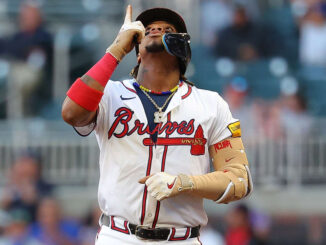
The injuries were not limited to the mound. The position-player group was also hit hard at key moments. Ronald Acuña Jr., the franchise cornerstone and one of baseball’s most electrifying athletes, made multiple trips to the injured list. Anytime Acuña misses time, the Braves’ lineup loses its identity, rhythm, and intimidation factor.
Austin Riley, another integral part of Atlanta’s offensive engine, also dealt with time away from the field. With two of the team’s most dangerous bats sidelined at various points, the Braves had difficulty generating the consistent run production that had defined their previous seasons.
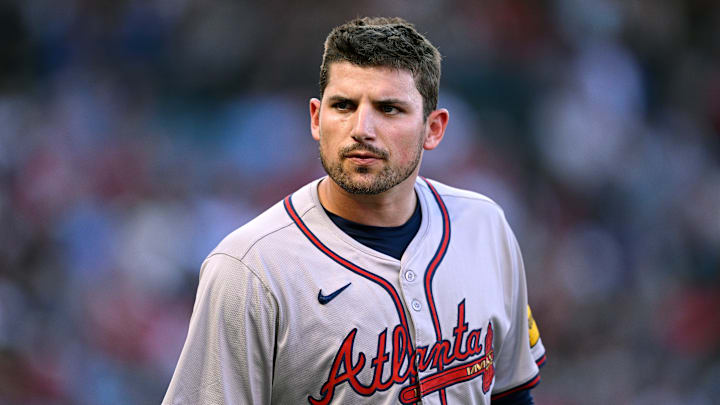
Even when players were healthy, the performance level across the roster was uneven. Michael Harris II, known for his athleticism and upside, had stretches where he struggled to find consistency at the plate. Ozzie Albies, typically one of the most dynamic second basemen in the league, also endured ups and downs throughout the year.
The combination of injuries, underperformance, and constant lineup reshuffling created a sense of instability that the Braves were unable to fully overcome. By the time September rolled around, Atlanta simply lacked the momentum and roster cohesion required to claw back into the playoff picture.
Looking ahead to 2026, it is clear that the Braves must address several areas if they hope to return to their usual place among baseball’s contenders. One of the most pressing needs is at shortstop. The team already took an initial step by acquiring Mauricio Dubón from the Houston Astros in exchange for Nick Allen—an attempt to reinforce their infield depth and give themselves a versatile, steady defender who can also contribute offensively. But while Dubón offers competence and flexibility, he is not viewed as a definitive long-term answer for a franchise accustomed to star-caliber production up the middle.
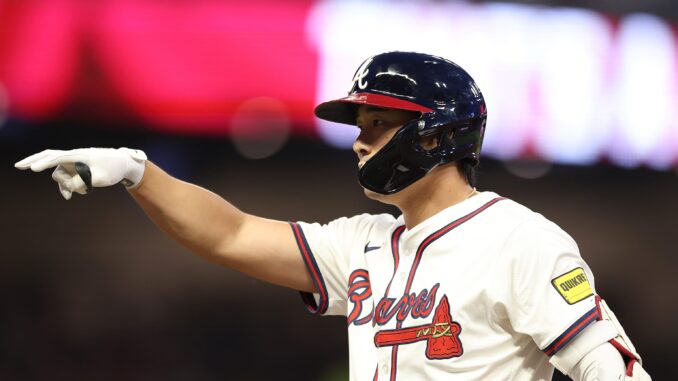
This is where the conversation turns to Ha-Seong Kim, a player whose name continues to surface whenever the Braves’ offseason priorities are discussed. Kim, who Atlanta acquired via waivers from the Tampa Bay Rays during the season, is now a free agent.
His brief stint with the Braves showcased his defensive excellence, versatility, and ability to impact the game in multiple ways. Many within the industry believe he could be a perfect fit for a team looking to shore up its infield defense while also adding a reliable everyday contributor.

According to Jim Bowden of The Athletic, re-signing Kim should be a top priority for Atlanta. Bowden argues that bringing Kim back would benefit both sides. From the Braves’ perspective, Kim provides above-average defense not only at shortstop but also at second and third base—flexibility that is incredibly valuable for an organization that relies heavily on matchup-based lineups and positional versatility.
From Kim’s perspective, Atlanta offers a stable environment, a competitive roster, and a coaching staff known for maximizing individual performance. In Bowden’s words, “I think a return to the Braves would be the best play for him and the team if they can work out a fair contract.”
Kim’s appeal extends far beyond his glove. His offensive game has steadily improved since coming to Major League Baseball, and he has shown the ability to contribute as a contact hitter with a good on-base approach.

His speed on the bases and his instincts in the field make him a player who can quietly influence games in multiple facets. When a roster has suffered through the type of injury-ridden season that the Braves just experienced, players like Kim—dependable, versatile, and durable—become even more valuable.
However, Atlanta is not the only club eyeing Kim this offseason. The Milwaukee Brewers, a team that has often been aggressive in finding undervalued or well-rounded players, are reportedly very interested in making a push for him as well.
Milwaukee, like Atlanta, sees Kim as an ideal fit for a roster that values defense, speed, and positional flexibility. The Atlanta Braves bullpen trade update involvement ensures that the bidding process will not be a formality, and the Braves cannot assume that Kim’s familiarity with the organization will be enough to secure his return.
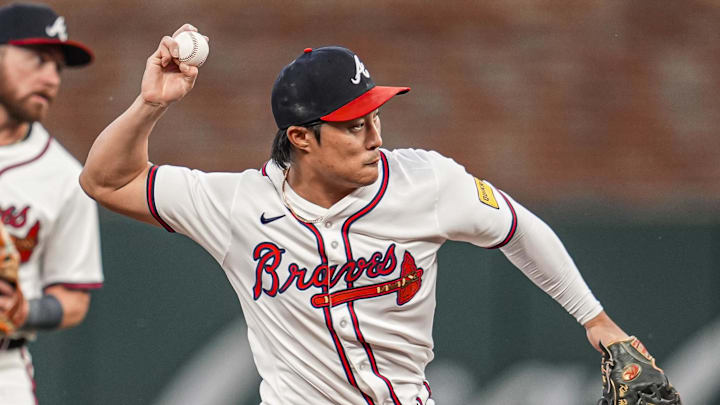
Because of this, Atlanta will need to make a compelling offer—not just in financial terms but in how they communicate Kim’s importance to the club’s future plans. If the Braves genuinely view him as a potential everyday shortstop or a multi-positional cornerstone in their infield, they will need to show him that commitment through both contract structure and long-term vision. After a season as chaotic and frustrating as 2025, there is no room for hesitation or half-measures. Atlanta needs stability, reliability, and depth, and Kim checks all three boxes.
Ultimately, the Braves’ offseason will be defined by how aggressively they address their shortcomings and how effectively they rebuild the foundation that slipped away this past year. Bringing back Ha-Seong Kim would be a meaningful first step toward restoring the defensive stability and lineup flexibility that have been hallmarks of their success. If Atlanta truly wants to rebound and return to the playoff picture, securing Kim’s services may prove to be one of the most important decisions they make.
MORE MLB NEWS:
-
BREAKING: Red Sox On Another Blockbuster Addition After $75 Million Deal
-
Breaking News: Mariners follow through on sudden connection to Padres’ $80M All-Star infielder
-
DONE DEAL: White Sox officially add 5.59 ERA star to solidify bullpen
-
Braves Trade Lands Twins’ $100 Million, 35-Home Run Outfielder
-
Breaking: Padres’ $22.025 million pitcher officially test the waters of free agency
-
Mets blockbuster land White Sox’s $20 million centerfielder

Be the first to comment