
The Atlanta Braves are entering the final stretch of the offseason with a clear and increasingly urgent objective: they want to land a frontline starting pitcher who can anchor their rotation both immediately and in the high-pressure environment of October baseball. As the organization evaluates its options, the focus has narrowed to pitchers with proven postseason credentials, durability across a full season, and the ability to perform at a high level when the stakes are highest.
Braves general manager Alex Anthopoulos has not been subtle about the team’s priorities. Over multiple interviews and offseason discussions, Anthopoulos has emphasized the importance of acquiring a starter who can be trusted down the stretch, particularly in playoff races and postseason series where consistency and composure often matter more than raw upside.
While the Braves possess significant talent across the roster, the front office is acutely aware that championship windows do not stay open forever—and the rotation, in particular, presents both immediate opportunity and long-term uncertainty.
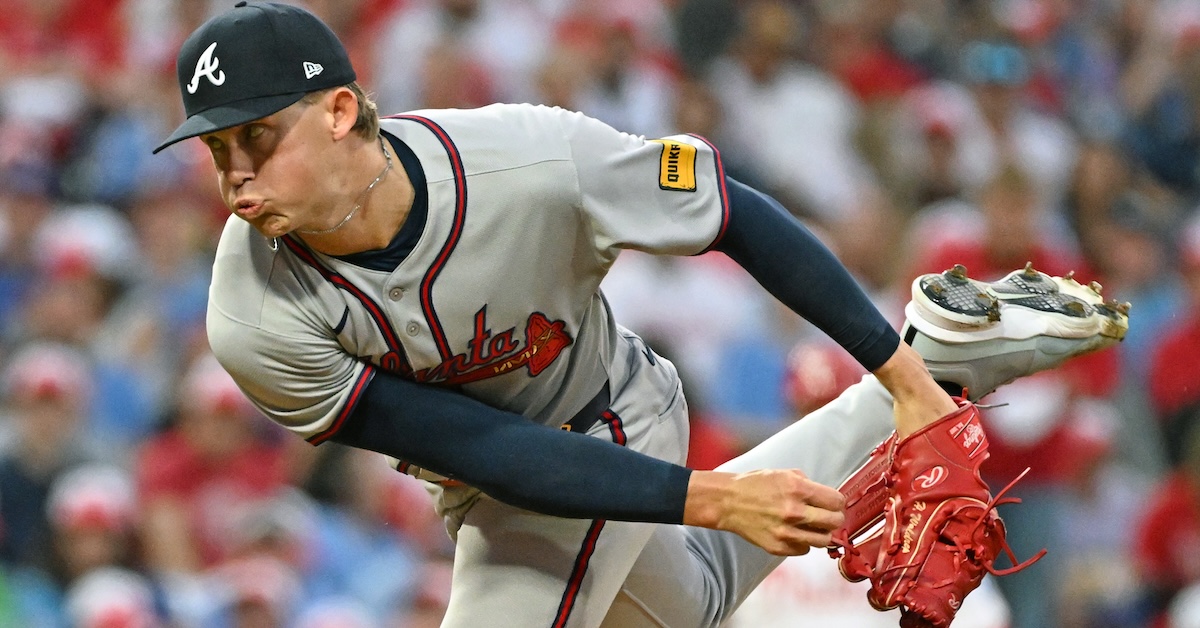
That uncertainty becomes more pronounced when looking beyond the next two seasons. At present, the Braves have only a limited number of starting pitchers under contract past the 2026 campaign, making it critical that any major acquisition fits not only the current roster but also the organization’s longer-term planning.
“Beyond Spencer Strider and Spencer Schwellenbach, there are no clear locks for the Atlanta Braves rotation beyond 2026,” wrote Chase Owens of HTHB, underscoring the precarious nature of Atlanta’s future rotation outlook.
MORE: Angels makes another low-risk, high-reward signing
That reality has shaped the Braves’ offseason strategy. While the club is clearly aiming to compete for a championship right now, it cannot afford to sacrifice all future stability for a short-term upgrade unless the return is truly impactful. This balancing act—win now while safeguarding tomorrow—has placed Atlanta squarely in the middle of nearly every major pitching discussion across the league.
Several high-profile arms remain available, either via trade or as speculative targets should circumstances shift. One such pitcher is Framber Valdez, whose name continues to circulate in trade rumors. However, another increasingly intriguing option has emerged from within the National League Central: Milwaukee Brewers ace Freddy Peralta.
The Milwaukee Brewers have reportedly made Peralta available in trade discussions, signaling a willingness to consider offers that align with their own competitive timeline. For Atlanta, Peralta checks several crucial boxes. He is a proven frontline starter, has postseason experience, and has demonstrated the ability to miss bats at an elite level while carrying a heavy workload over multiple seasons.

Owens believes the Braves could realistically construct a deal centered around one of their most intriguing young pitchers: Hurston Waldrep.
Waldrep, selected by Atlanta in the first round of the 2023 MLB Draft, quickly established himself as one of the organization’s top pitching prospects throughout much of 2024. Armed with a powerful fastball and a devastating splitter, Waldrep rose rapidly through the minor league system and was viewed as a potential long-term fixture in the Braves’ rotation.
However, the trajectory of Waldrep’s prospect status was not entirely linear. Early in the 2025 season, some evaluators began to cool slightly on his immediate ceiling, particularly as command inconsistencies and workload management became topics of discussion. Still, that shift in perception did little to slow Waldrep’s development or dampen internal confidence in his abilities.
MORE: Alex Cora officially makes stunning announcement regarding Red Sox’s hitter
Circumstances soon accelerated his path to the majors. A wave of injuries tore through Atlanta’s rotation last season, forcing the organization to summon Waldrep earlier than originally planned. Rather than being overwhelmed by the jump in competition, Waldrep rose to the challenge.
During his first extended stint in the big leagues, Waldrep delivered a series of impressive performances that exceeded expectations. He showed poise against veteran hitters, flashed swing-and-miss stuff, and demonstrated the mental toughness required to adjust within games. The result was a surge of excitement around the pitcher he could become with continued refinement and experience.
Owens noted that Waldrep’s performance created “significant buzz” throughout the league, and that buzz has not gone unnoticed by potential trade partners.
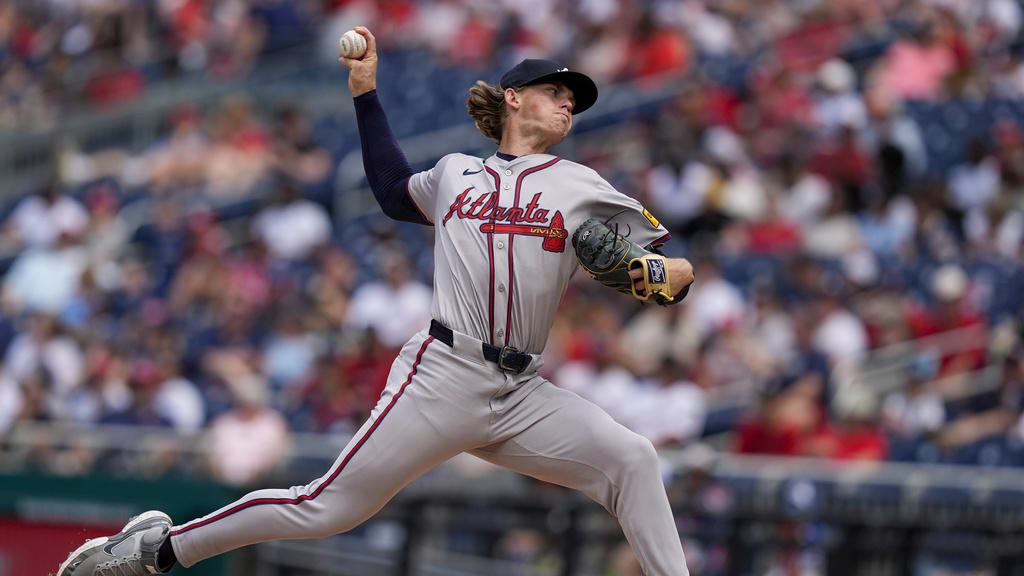
If Waldrep can replicate—or build upon—last season’s production, it is easy to envision why the Brewers would view him as a desirable centerpiece in a deal involving Peralta. Milwaukee, according to multiple reports, is not interested in a full rebuild but rather a retool that keeps them competitive in the near term.
That approach aligns directly with what the Brewers are seeking in return for their ace. As reported by The Athletic and relayed by CBS Sports’ RJ Anderson, Milwaukee wants a starting pitcher who can immediately step into their rotation should they move Peralta.
MORE: Cardinals Officially Sign Superstar Reliever
“If the Brewers trade ace Freddy Peralta, they want in return a replacement starter they can slot into their rotation in his place,” Anderson wrote. “Potential suitors like the New York Mets, Los Angeles Dodgers and Boston Red Sox would seem to have the ability to part with a younger starter of their own in exchange for Peralta.”
Atlanta, then, finds itself in competitive company. Each of those teams has both the prospect depth and financial flexibility to engage seriously in negotiations. However, the Braves may have a distinct advantage if they are willing to include Waldrep, whose combination of upside and readiness fits Milwaukee’s stated preferences.
From Atlanta’s perspective, acquiring Peralta would represent a significant step toward solidifying a championship-caliber rotation. Peralta has consistently ranked among the league leaders in strikeouts, has handled postseason environments, and has shown the ability to dominate lineups multiple times through the order. Slotting him alongside Strider would give the Braves one of the most formidable one-two punches in baseball.
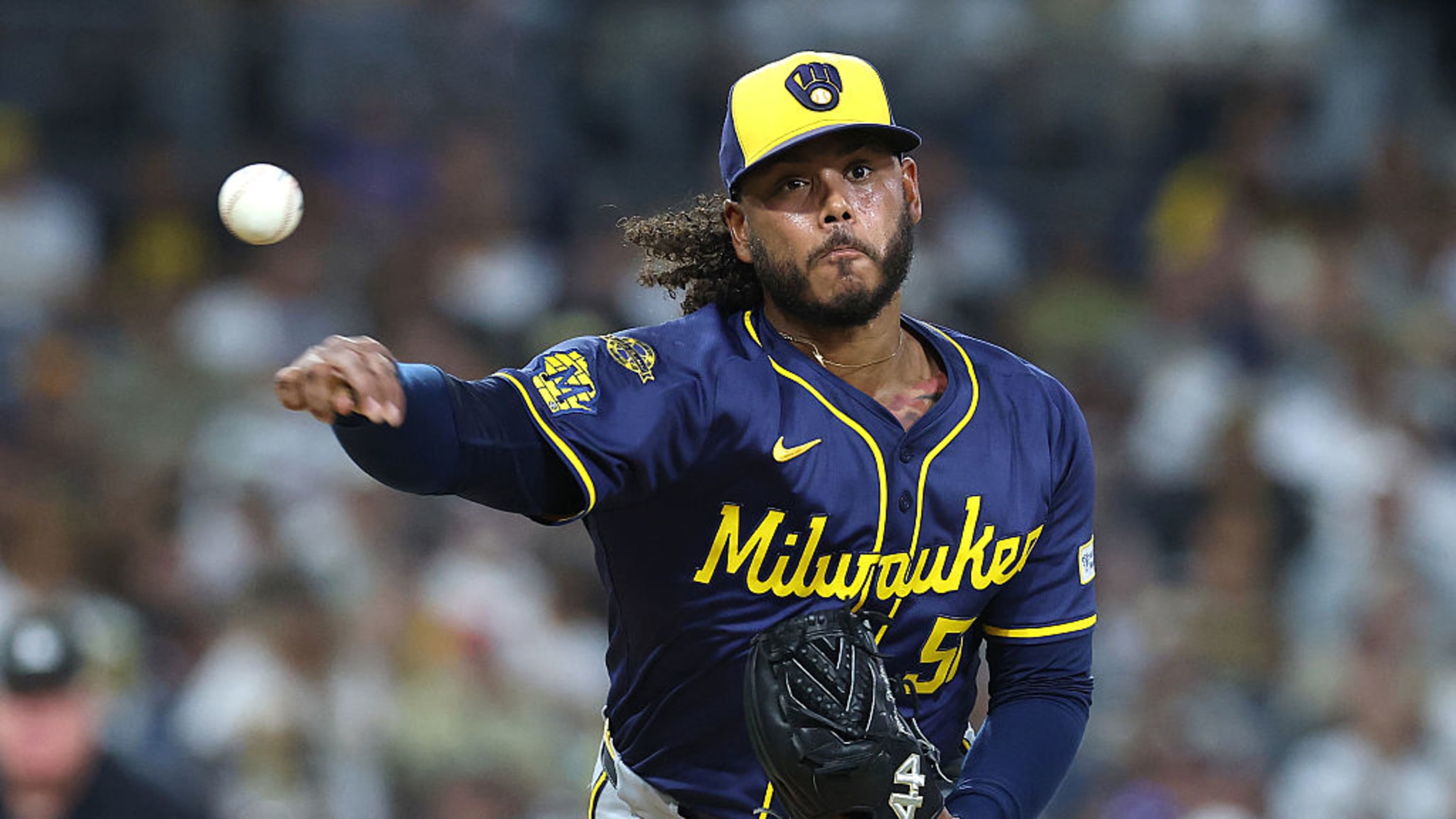
Moreover, there is optimism that any trade for Peralta would not be merely a one-year rental. Atlanta has a track record of aggressively pursuing contract extensions with players they view as foundational pieces. If the Braves can negotiate a long-term extension with Peralta before or early in the season, the move would address both immediate competitive goals and longer-term roster stability.
That possibility is critical, because the primary risk in trading Waldrep—or any top young pitcher—is the chance that Peralta departs after a single season. Losing a cost-controlled arm with years of team control in exchange for a short-term boost is not a move Anthopoulos makes lightly.
Historically, Anthopoulos has demonstrated a strong preference for certainty. Whether through extensions or multi-year contracts, he tends to ensure that major acquisitions align with a clear vision for sustained success. As such, it is unlikely that Atlanta would finalize a deal of this magnitude without confidence that Peralta fits not only the roster but also the organizational culture and long-term plan.
MORE: Braves roster shuffle claim Orioles pitcher in latest roster move
The Braves’ broader objective remains unchanged: return to the postseason and make a deep October run. After falling short of expectations in recent playoff appearances, the front office is keenly aware that incremental upgrades may not be enough. Adding a proven, battle-tested starter could be the difference between another early exit and a legitimate World Series push.
At the same time, Atlanta must navigate the delicate balance between aggression and prudence. Trading Waldrep would mean parting with a pitcher who could anchor the rotation for years to come. But championship windows are fleeting, and the presence of elite talent on the current roster—both offensively and defensively—demands urgency.
Ultimately, the decision will hinge on how the Braves evaluate their internal depth, their confidence in Waldrep’s long-term ceiling, and their belief in Peralta as a cornerstone piece. If Atlanta concludes that Peralta can be extended and integrated seamlessly into the clubhouse, the calculus becomes far more favorable.
As the offseason draws to a close, all signs point to the Braves remaining active and aggressive. Whether the final move involves Peralta, Valdez, or another high-impact arm, Atlanta’s intentions are clear: this is a team pushing hard to maximize its championship potential, and it is willing to make bold decisions to get there.
For now, Peralta stands out as one of the most compelling options on the board—a pitcher who embodies both reliability and upside. If the Braves decide to pull the trigger, the move could reshape not only their rotation but also the trajectory of their postseason aspirations for years to come.

Be the first to comment