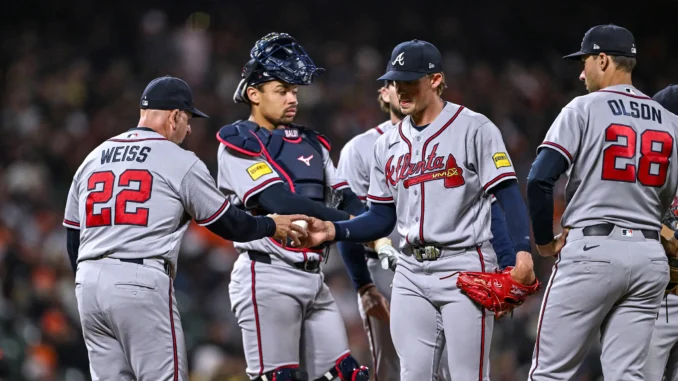
The Atlanta Braves continue to fine-tune their roster as the season progresses, making another series of moves designed to maintain both depth and flexibility. In their latest transaction, the club reinstated outfielder Eli White from the paternity list while simultaneously designating fellow outfielder José Azócar for assignment.
The decision reflects not only the natural roster adjustment that follows a player’s return but also the difficult choices teams must make when balancing short-term performance with long-term roster structure.
White’s return to the active roster comes after a brief absence due to the birth of his child, a momentous personal milestone that temporarily took him away from the team. He rejoined the Braves during their road trip in Pittsburgh, arriving in time for the finale of a three-game set against the Pirates. His reinstatement provides Atlanta with a familiar presence in the outfield, as well as a player who has already contributed in multiple ways throughout the season.

From a statistical standpoint, White’s 2026 campaign has been modest but serviceable. Across 53 games, he has posted a .218 batting average, along with four home runs and 15 runs batted in.
addition to his offensive production, he has chipped in on the basepaths with four stolen bases, highlighting his versatility and ability to impact the game beyond just hitting. While those numbers may not jump off the page, they reflect the role White occupies on this Braves roster—a depth piece who can provide defensive flexibility, occasional pop, and speed when needed.
Atlanta Braves Officially Cut Top Right-Hander In Latest Roster Shake-Up
White’s value to the team extends beyond traditional metrics. Players like him often serve as important glue pieces, capable of stepping into various roles depending on injuries, matchups, or strategic needs.
His ability to handle multiple outfield positions makes him particularly useful for a Braves team with postseason aspirations, as roster flexibility becomes increasingly important over the course of a long season. Even when his offensive numbers are not elite, his presence can stabilize the bench and give the coaching staff more options late in games.
Meanwhile, the corresponding move involving José Azócar underscores the often harsh realities of roster management in Major League Baseball. Despite performing well in his limited opportunities with Atlanta, Azócar found himself on the outside looking in once White was ready to return.

In 11 games with the Braves, Azócar made a strong impression, collecting six hits in 17 at-bats for an impressive .353 batting average. That level of production, albeit in a small sample size, demonstrated his ability to contribute offensively when given the chance.
Azócar’s situation highlights the challenge faced by players who occupy the fringes of a roster. Even strong performances do not always guarantee job security, particularly when a team must make room for returning players or accommodate broader roster considerations.
St. Louis Cardinals officially cut 6-year MLB veteran
The designation for assignment (DFA) process places Azócar in a transitional phase, during which he could be claimed by another team, traded, or outrighted to the minors if he clears waivers. It is a familiar path for many players in his position, especially those who provide depth but are not firmly entrenched in a starting role.
For the Braves, the decision to designate Azócar was likely influenced by a combination of factors beyond just his recent performance. Roster construction involves considerations such as minor league options, positional needs, long-term planning, and the overall balance of the 40-man roster. Even though Azócar delivered at the plate in his brief stint, the organization ultimately determined that White’s return necessitated a corresponding move—and Azócar was the odd man out.
This type of roster churn is common for contending teams, particularly those like Atlanta that sit atop a competitive division. The Braves currently hold first place in the National League East, a position that places added pressure on the front office to make calculated decisions aimed at sustaining their success. Every roster spot becomes valuable, and even seemingly minor moves can have ripple effects on the team’s overall performance.

In many ways, this transaction reflects the depth Atlanta has built within its organization. The ability to call upon players like Azócar, who can step in and produce immediately, speaks to the strength of the Braves’ system.
At the same time, having players like White available to return and reclaim a role illustrates the team’s continuity and internal options. This depth allows the Braves to navigate injuries, absences, and slumps without experiencing significant drop-offs in performance.
White’s return also comes at a time when the Braves are striving to maintain consistency during a demanding stretch of the schedule. With the season well underway, every game carries weight, particularly in a division that features multiple competitive teams. Reinserting a familiar player into the lineup can help maintain stability, especially when that player understands the team’s system and expectations.
NEWS: Cardinals Receives Stunning News Regarding Switch-Pitcher Jurrangelo Cijntje
On a broader level, the move serves as a reminder of how fluid Major League rosters can be. Unlike more static lineups, baseball teams frequently adjust their personnel to respond to changing circumstances. Whether it’s injuries, personal matters, performance fluctuations, or strategic considerations, roster decisions are rarely permanent. Players move in and out of roles, and opportunities can arise or disappear quickly.
For Azócar, the designation for assignment does not necessarily mark the end of his time in professional baseball—or even with the Braves organization. Many players who are DFA’d eventually find their way back to the majors, either with the same team or a different one. His recent performance could make him an attractive option for clubs seeking outfield depth, particularly those in need of a right-handed bat or a player capable of contributing in a limited role.
It’s also worth noting that Azócar’s journey through the majors has been characterized by persistence and adaptability. Having spent time with multiple organizations, he has demonstrated the ability to adjust to new environments and seize opportunities when they arise. His strong showing during this brief stint with Atlanta only reinforces the idea that he can be a useful contributor when given playing time.

For the Braves, the focus now shifts back to on-field performance as they continue their pursuit of a division title and postseason success. Maintaining roster flexibility will remain a key priority, as the team navigates the ups and downs of the season. Moves like this one—while seemingly minor in isolation—play a role in shaping the team’s overall trajectory.
In evaluating this transaction, it becomes clear that both players involved represent different aspects of roster dynamics. White embodies continuity and versatility, a player who has an established role within the team’s structure. Azócar, on the other hand, represents opportunity and uncertainty—a player capable of producing but without a guaranteed place on the roster.
NEWS: Braves officially reward JR Ritchie’s strong outing with demotion in exchange for familiar face
Ultimately, the Braves’ decision reflects a balance between immediate needs and long-term considerations. By activating White, they regain a player who fits their system and provides defensive and baserunning value. By designating Azócar, they open a roster spot while giving him the chance to potentially find a new opportunity elsewhere.
As the season continues, it’s likely that more moves like this will occur. Injuries, performance trends, and scheduling demands will all influence how the Braves—and other teams—manage their rosters. For players on the fringe, each opportunity becomes crucial, as even a short stretch of success can impact future chances.
In the end, this transaction serves as a snapshot of the constant motion that defines Major League Baseball. Behind every game is a series of decisions, evaluations, and adjustments aimed at putting the best possible team on the field. For the Braves, activating Eli White and designating José Azócar for assignment is just the latest example of that ongoing process, one that will continue to evolve as the season unfolds. (batterypower.com)


Be the first to comment