The Philadelphia Phillies are currently facing a decision that’s becoming increasingly urgent, while the New York Mets remain close observers within the division, ready to react. Time is clearly a factor here, and the situation has taken on added importance following a recent development involving veteran utility player Dylan Moore. According to Will Sammon, Moore has exercised the opt-out clause in his contract, a move that now places pressure squarely on Philadelphia’s front office.
Moore originally joined the Phillies on a minor league deal toward the end of January, a relatively low-risk move designed to provide organizational depth and potential flexibility off the bench. At the time, the signing didn’t generate much buzz, as it was seen more as a depth addition than a headline-making acquisition. However, situations like these often evolve quickly in spring training, and Moore’s decision to trigger his opt-out clause has transformed what was once a quiet roster move into a much more consequential decision point.
Now, the Phillies find themselves working against a tight 48-hour window. Within that time frame, they must determine whether Moore fits into their immediate plans strongly enough to justify adding him to the 40-man roster. That kind of move isn’t insignificant. It would require clearing space, which could mean designating another player for assignment or making a similarly difficult roster adjustment. If they decide not to act, Moore will become a free agent by Saturday, free to explore opportunities elsewhere—potentially with a division rival like the Mets.
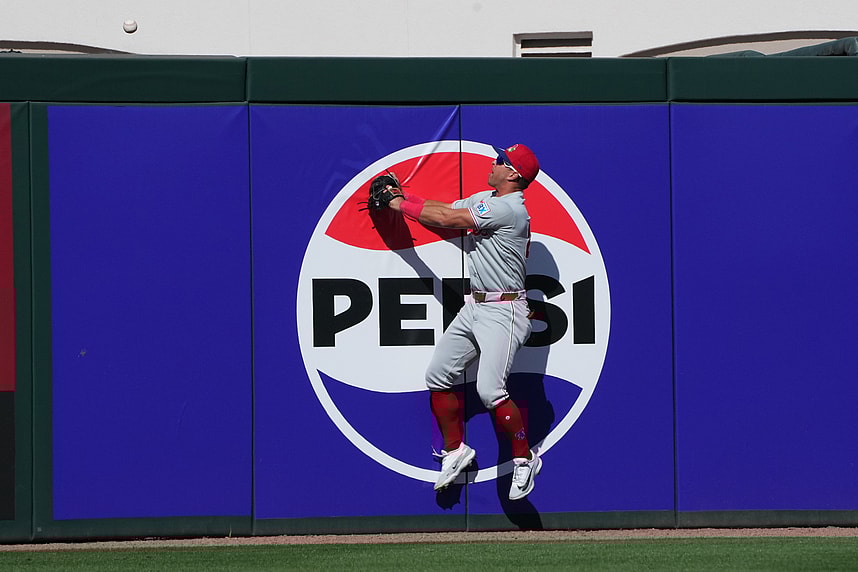
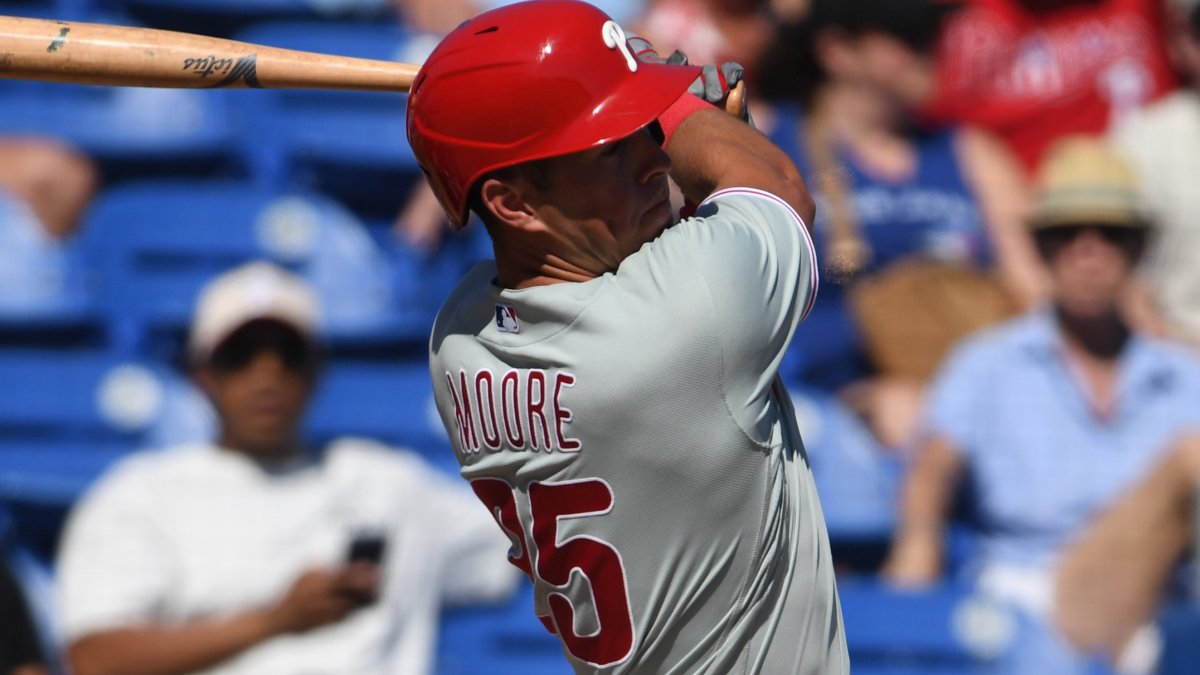
From a purely statistical standpoint, Moore hasn’t exactly forced the Phillies’ hand this spring. Over the course of 37 plate appearances, his production has been underwhelming, reflected in a 60 weighted runs created plus (wRC+), a metric that places him well below league average. His offensive struggles have made it easier, at least on the surface, for Philadelphia to hesitate when considering whether to commit a valuable roster spot to him.
MORE: Phillies Complete Rebuild Mode Land Star Outfielder From St. Louis After Johan Rojas News
But evaluating Moore based solely on a small spring training sample would be shortsighted. His career suggests a player with more to offer than what those limited numbers indicate. Moore has built a reputation as a versatile contributor, capable of filling multiple roles across the field. That kind of flexibility can be incredibly valuable over the course of a long Major League Baseball season, where injuries, slumps, and matchups often force teams to rely heavily on their bench pieces.
It’s this versatility that makes Moore intriguing—not just to the Phillies, but to other teams as well. Players who can move around the diamond, cover multiple positions, and provide competent at-bats off the bench are often described as “Swiss Army knife” types, and Moore fits that mold well. Even if he isn’t producing at a high offensive level at any given moment, his ability to contribute in a variety of ways can justify a roster spot, particularly for teams with postseason aspirations.
For the Mets, this situation could present an opportunity. Rather than focusing on Moore’s recent spring training struggles, they may view him through the lens of his broader skill set and experience. A player like Moore could offer depth and flexibility to their bench, allowing them to better manage matchups and navigate the inevitable wear and tear of the season. Given the competitive nature of the division, even marginal upgrades or depth additions can make a difference over 162 games.
Meanwhile, the Phillies must weigh both the short-term and long-term implications of their decision. On one hand, keeping Moore would provide them with a reliable, experienced utility option who can step into multiple roles as needed. On the other hand, committing a 40-man roster spot to a player who hasn’t impressed this spring could limit their flexibility in other areas, particularly if there are younger players or prospects they want to protect or evaluate.
There’s also the risk factor to consider. If the Phillies choose not to retain Moore, they could see him land with a rival like the Mets, where he might find a better fit or even outperform expectations. That scenario would add another layer of complexity to an already competitive divisional race, as players who change teams within the same division often come back to haunt their former clubs.
Ultimately, this situation underscores the delicate balancing act that teams face during spring training. Decisions about the back end of the roster can sometimes feel minor in the moment, but they often carry ripple effects that extend well into the regular season. For the Phillies, the clock is ticking, and the next 48 hours will determine whether Moore remains part of their plans or becomes an opportunity for someone else.
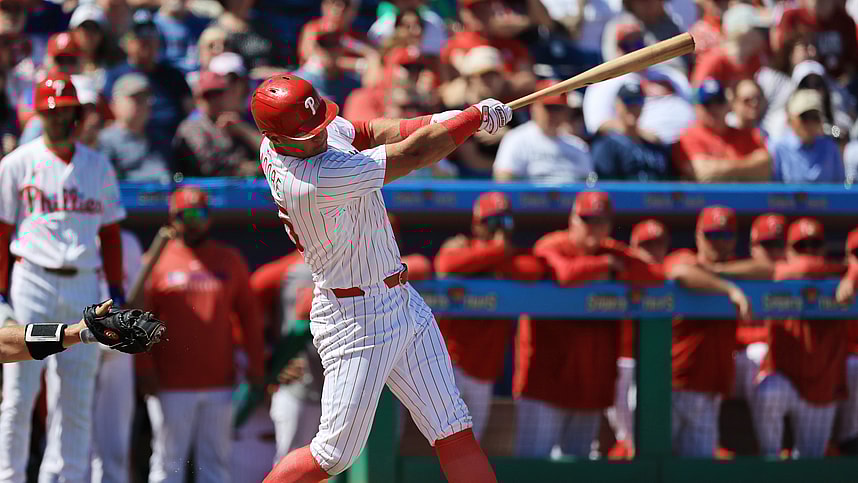
As for the Mets, they don’t have to make any immediate moves—they simply have to wait and watch. If Moore becomes available, they could be among the teams ready to act, adding a versatile piece who, despite a quiet spring, still possesses the tools to contribute in meaningful ways.
The Value of a Moving Piece
Dylan Moore fits the mold of a true utility specialist, the kind of player who seems capable of handling nearly any defensive assignment thrown his way. Short of suiting up behind the plate as a catcher or taking the mound as a pitcher, there are very few positions on the field he hasn’t experienced. That level of defensive adaptability makes him incredibly valuable in today’s game, where roster spots are limited and versatility can often be the difference between flexibility and constraint.
For a manager, having someone like Moore is akin to holding a universal key—he can step into almost any role without the team missing a beat. It provides a layer of security that allows for more creativity in late-game situations, particularly when it comes to substitutions, double switches, or defensive alignments. A player with that kind of range essentially becomes a safety net across the entire field.

For someone like Carlos Mendoza, that flexibility opens up a wide array of strategic possibilities. Instead of being locked into rigid positional structures, he can mix and match based on matchups, injuries, or in-game developments. Moore can be inserted wherever the need is greatest, whether that’s shoring up the infield, covering ground in the outfield, or stepping in as a situational replacement.
This kind of freedom is something most teams simply don’t have the luxury of enjoying, especially over the course of a long season where injuries and fatigue inevitably test roster depth. With Moore available, Mendoza gains the ability to think a few steps ahead, knowing he has a player capable of executing multiple roles at a competent level.
MORE: “Absolutely Stunning” Cardinals’ superstar outfielder opened up about his return
However, Moore’s value doesn’t stop with his defensive skill set. He also brings a pair of offensive and baserunning attributes that make him particularly appealing to a front office looking to maximize efficiency in complementary players. One of his standout strengths is his effectiveness against left-handed pitching.
In a league where platoon advantages are carefully exploited, having a right-handed bat that consistently performs well against southpaws can be a significant asset. Moore has demonstrated throughout his career that he can rise to the occasion in those matchups, turning what might otherwise be a routine substitution into a calculated offensive advantage.
In addition to his platoon success, Moore also contributes on the basepaths with an aggressive and intelligent approach. He has the speed and instincts necessary to take extra bases, disrupt opposing defenses, and apply pressure in situations where a single mistake can change the outcome of an inning. His willingness to run and ability to do so effectively adds another layer to his game, making him more than just a bench option. He becomes a dynamic piece who can influence the game in multiple ways, even without needing a full slate of at-bats.
Looking at his recent production, it’s clear that Moore still has plenty left in the tank. Despite receiving a relatively limited number of opportunities at the plate, he managed to put together a solid statistical showing. In just 243 plate appearances, he recorded 11 home runs and swiped 14 bases, numbers that underscore both his power and speed. That kind of output, when projected over a larger sample size, suggests that he can provide meaningful contributions even in a part-time role. It also reinforces the idea that he’s not merely filling a roster spot, but actively adding value whenever he steps onto the field.
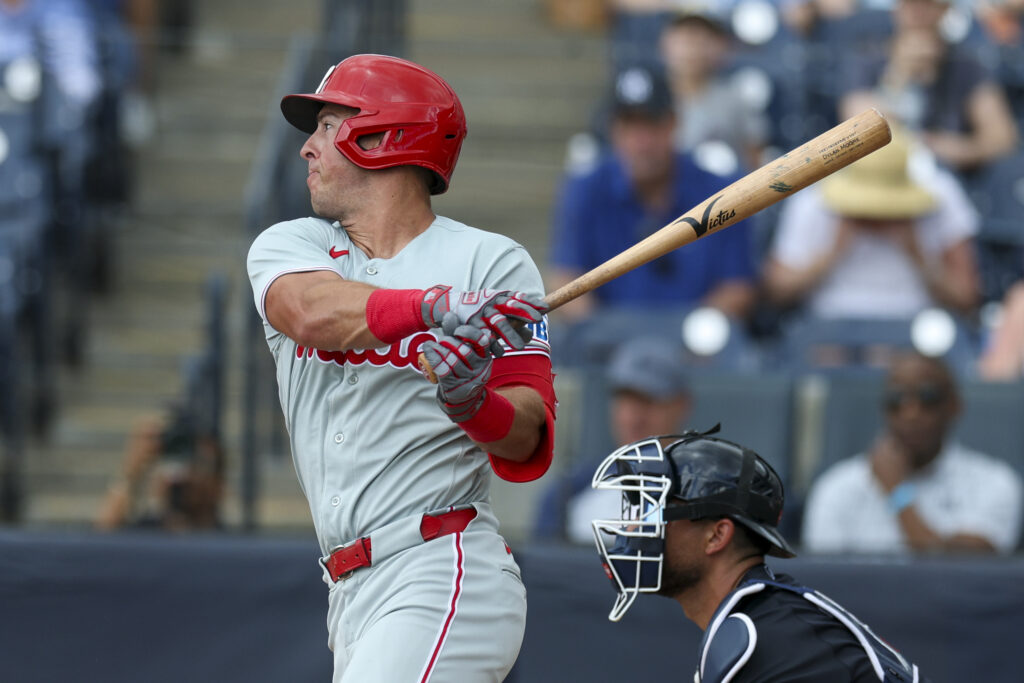
His career performance against left-handed pitchers further highlights his usefulness in specialized roles. With a 110 weighted runs created plus (wRC+), Moore has been about 10 percent more productive than the league average in those situations. That makes him more than just a stopgap option—it positions him as a legitimate weapon that can be deployed strategically. Instead of simply giving a regular player a day off, inserting Moore into the lineup against a lefty can actually improve the team’s offensive outlook in that moment.
Taken together, Moore’s profile is that of a highly adaptable and efficient contributor. He may not be a headline-grabbing star, but his ability to fill multiple roles, exploit specific matchups, and impact the game in subtle yet meaningful ways makes him an invaluable piece of any roster. For a team looking to optimize every spot and gain incremental advantages over the course of a season, players like Moore can make a significant difference.
Weighing the Recent Trends
Evaluating Moore requires a bit of nuance, because his recent performance doesn’t tell a single, straightforward story. Instead, it reads more like two contrasting chapters within the same season. Over the full scope of the 2025 campaign, his offensive production settled at an 83 wRC+, a figure that suggests he was below league average at the plate. That number, however, blends together his time with both Seattle and Texas, and in doing so, it masks a much more encouraging stretch that came later in the year.
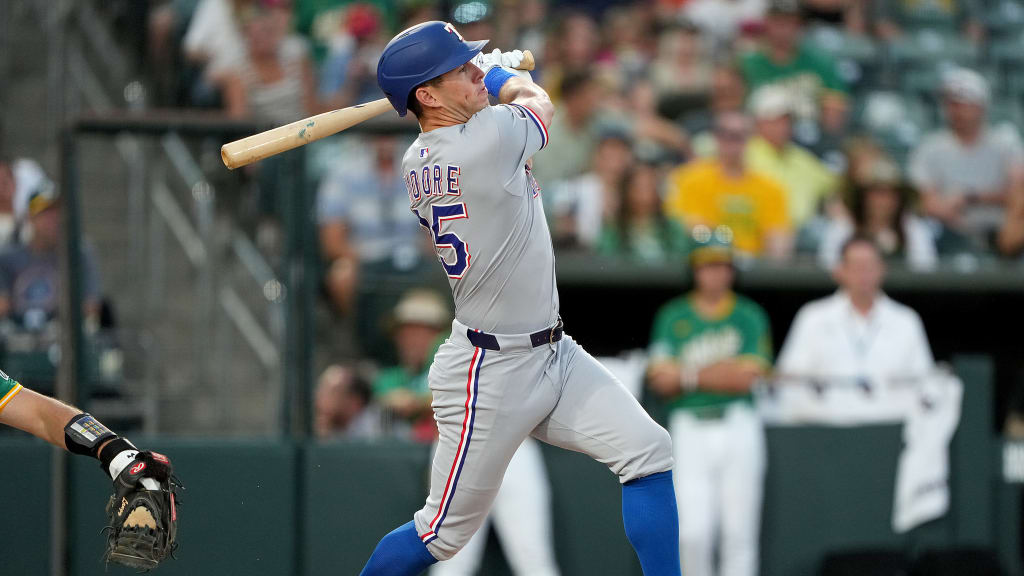
When Moore suited up for Texas, he looked like a different hitter altogether. In that shorter stint, he produced a 113 wRC+, which is comfortably above league average and indicative of a player capable of contributing meaningful offense. While the sample size with the Rangers was smaller and therefore comes with the usual caveats, it was still enough to catch the attention of evaluators across the league.
MORE: Mariners make latest key roster rotation, confirmed another cuts
For teams exploring their options, the key question isn’t which version of Moore exists, but rather which one is more likely to show up moving forward. The answer to that question could significantly influence how aggressively clubs pursue him.
Front offices that are intrigued by Moore are essentially making a projection bet. They are choosing to believe that the improvements he showed in Texas weren’t a fluke, but rather a sign of underlying adjustments or a better fit that unlocked his potential. If that interpretation proves correct, then Moore could provide solid value as a versatile contributor with above-average offensive upside. On the other hand, if his overall season line is a more accurate reflection of his true talent level, then expectations would need to be tempered.
Interest in Moore isn’t limited to just one team, either. Reports from league insider Will Sammon indicate that multiple clubs are quietly monitoring his situation. The New York Mets are one of the most prominently linked teams, but they aren’t alone in keeping a close eye on how things unfold. Both the Houston Astros and the Baltimore Orioles have also been mentioned as organizations tracking his status, suggesting that there could be a competitive market if he becomes available.
For the Mets, the situation is largely a waiting game at the moment. Their level of interest appears genuine, but their ability to act hinges on what the Philadelphia Phillies decide to do. Philadelphia currently holds control over the situation, and their evaluation of Moore’s spring performance will ultimately dictate the next step. If the Phillies determine that his struggles in camp outweigh the potential upside he flashed in Texas, they could opt to move on and open the door for other teams.
Should that happen, the Mets are expected to act quickly. Given their roster construction and the value they place on versatility, Moore would represent an appealing addition. His ability to contribute at multiple positions, combined with a track record of roughly league-average offense over the course of his career, makes him a useful piece to plug into a variety of roles. In a long season where injuries and matchups constantly reshape lineups, that kind of flexibility can be especially valuable.
The Phillies, however, still have the opportunity to bring an end to all of this speculation. They are operating on a timeline, with a looming decision that must be made by Saturday. Within that window, they can choose to retain Moore and add him to their roster, effectively shutting down interest from other clubs. Doing so would signal that they believe in his ability to rebound and contribute, despite any inconsistencies he may have shown recently.
If Philadelphia goes in the other direction, though, the situation could escalate quickly. A player with Moore’s skill set—particularly one who has demonstrated flashes of above-average hitting and offers defensive versatility—tends to attract attention on the open market. The Mets, already positioned as a leading suitor, would likely be among the first to reach out, but they would also have to contend with interest from teams like the Astros and Orioles.
At the heart of it all is a fairly straightforward calculation. Moore owns a career 100 wRC+, which places him right at league average offensively. That baseline, combined with his ability to move around the field, gives him a relatively high floor as a role player. The intrigue comes from the possibility that his time in Texas represents something more—a hint that he could exceed that baseline under the right circumstances.
In the coming days, the Phillies will decide whether they want to be the team that bets on that upside or the one that lets another organization take the gamble. If they decline, the Mets appear ready and willing to seize the opportunity, hoping that the version of Moore they would be getting is the one that thrived in Texas rather than the one reflected in his full-season numbers.



Be the first to comment