Braves Top Prospect Lose 2026 Roster Spot, Right-handed pitcher Hurston Waldrep emerged as one of the most unexpected and encouraging developments for the Atlanta Braves during the 2025 season, especially amid a year when the rotation was repeatedly tested by injuries. Just 23 years old, Waldrep received his call-up in August and quickly proved he belonged at the major league level.
Over 10 starts down the stretch, he posted an impressive 2.88 ERA, showing poise, command, and an ability to navigate lineups with maturity beyond his years. His late-season performance gave Atlanta a much-needed lift and positioned him as a legitimate depth option moving forward.
However, despite Waldrep’s strong showing, the outlook for Atlanta’s 2026 rotation is far more crowded—and far more competitive. Several established starters are set to return to full health, and the organization continues to explore opportunities to add another top-of-the-rotation arm.
According to MLB.com’s Mark Bowman, the Braves remain active in their pursuit of a frontline starter, a factor that could significantly impact Waldrep’s chances of breaking camp with the big-league club. When all variables are considered, Waldrep appears likely to begin the season on the outside looking in when Opening Day roster decisions are made.
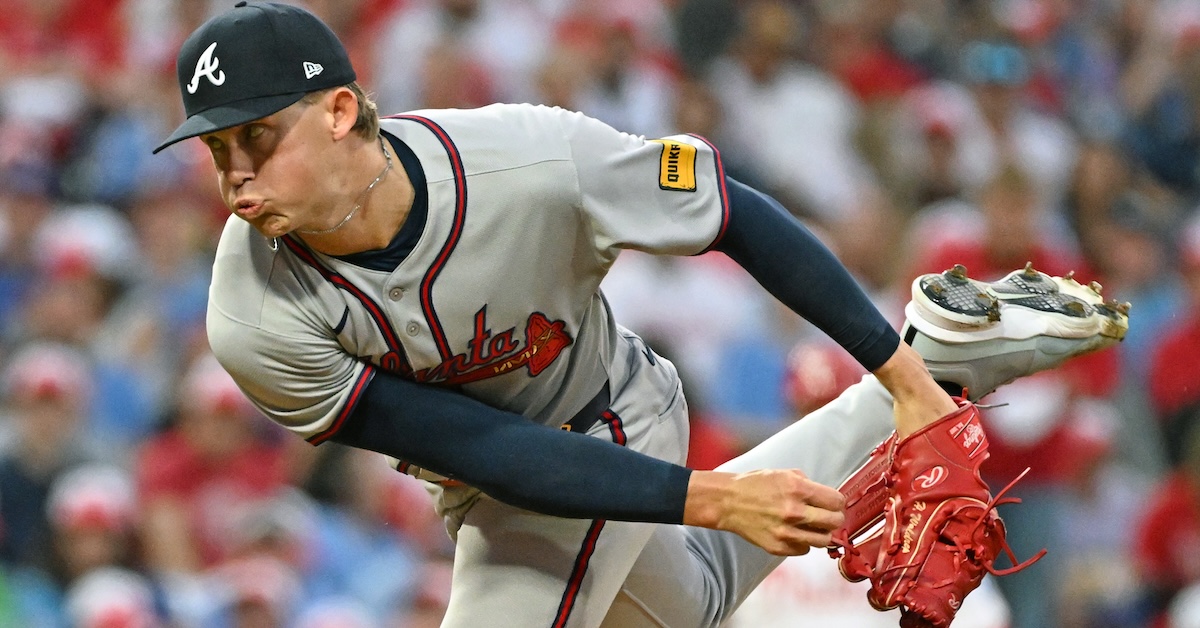
At the top of the rotation, Atlanta expects to lean heavily on a familiar trio. Chris Sale, when healthy, remains one of the most dominant left-handers in the game and is penciled in as a rotation anchor. Spencer Schwellenbach has firmly established himself as a key piece of the pitching staff, while Spencer Strider’s return adds elite velocity and strikeout potential to the mix. Together, those three give the Braves a formidable foundation atop the rotation heading into 2026.
MORE: Diamondbacks Roster Need Makes Perfect Reunion
Beyond that core group, reinforcements are on the way. Reynaldo López is projected to rejoin the rotation conversation after missing nearly the entire 2025 season due to a shoulder injury. Prior to that setback, López had shown signs of becoming a reliable starter, and Atlanta will likely give him every opportunity to reclaim a meaningful role. Similarly, Grant Holmes is expected to be back in contention after an elbow issue sidelined him in August. Holmes’ power arsenal and upside make him another intriguing option if he returns at full strength.
The Braves also value flexibility within their pitching staff, which keeps pitchers like Joey Wentz firmly in the picture. Wentz profiles as a swingman who can either start games or provide multiple innings out of the bullpen, a role Atlanta has leaned on heavily in recent seasons. His versatility makes him a strong candidate to remain with the major league club regardless of how the rotation ultimately shakes out.
Bryce Elder, meanwhile, finds himself on the fringes of the roster picture. Once viewed as a more stable rotation option, Elder now faces increased competition and may need a strong showing to avoid being pushed out by healthier or higher-upside arms. Adding to the mix, Atlanta signed veteran left-hander Martin Pérez to a minor league contract on January 30. While Pérez is not guaranteed a roster spot, his experience gives the Braves another depth option and insurance policy should injuries or underperformance arise.
Even with all of these internal candidates, the Braves’ pitching puzzle may not be complete. Atlanta has not ruled out making a significant move on the open market, and the availability of high-profile starters could further complicate Waldrep’s path to the majors. Framber Valdez remains unsigned and represents one of the most appealing options available. In addition, Bowman points to Chris Bassitt, Zac Gallen, and Lucas Giolito as pitchers who could fit Atlanta’s needs, depending on how the market unfolds.
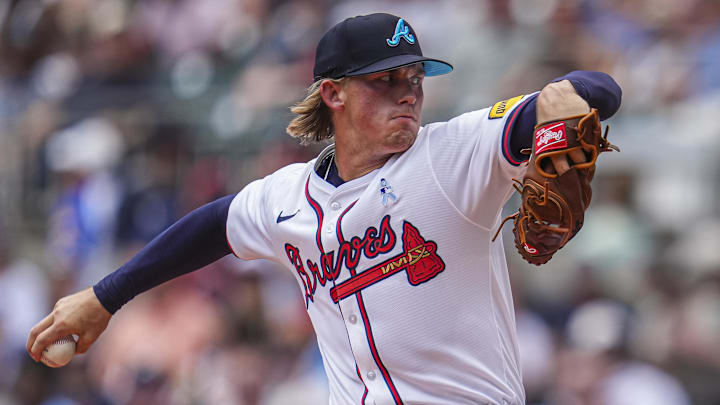
If the Braves succeed in adding a marquee starter, the ripple effect would be immediate. The top of the rotation—already strong with Sale, Schwellenbach, and Strider—would become even more formidable, and the question of who fills the fifth starter role would essentially disappear. That scenario would push younger or less established arms further down the depth chart, making it even more likely that Waldrep opens the season in Triple-A despite his impressive 2025 cameo.
MORE: Phillies bring back firepower tank as spring training draws near
Ultimately, Waldrep’s situation reflects both his promise and the Braves’ organizational strength. His performance late last season showed he is close to being a long-term contributor at the major league level. Yet Atlanta’s depth, health improvements, and ambition to contend at the highest level mean that roster spots will be earned through intense competition.
While Waldrep may not break camp with the Braves in 2026, his emergence has ensured that he remains firmly on the team’s radar—and well-positioned to make an impact when the opportunity arises.
Atlanta Braves Lacking Room For Hurston Waldrep
Braves Top Prospect Lose 2026 Roster Spot, From Waldrep’s vantage point, the roster squeeze is less about talent and more about roster mechanics — specifically, the flexibility the organization has with him compared to others.
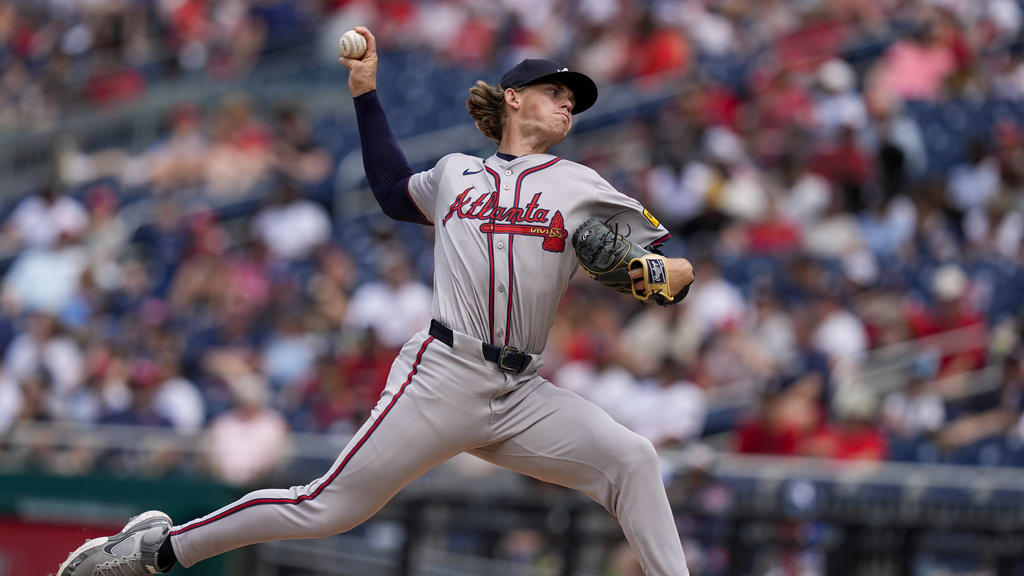
As Bowman notes, the group consisting of Holmes, Elder, Wentz, and Perez all share one critical detail: none of them have minor league options remaining. That reality forces the club’s hand. If those pitchers are to remain in the organization, they must occupy a spot on the major-league roster in some form, whether in the rotation, the bullpen, or a depth role.
Perez, in particular, appears to be at a crossroads typical of veteran pitchers at this stage of their careers. Rather than agreeing to be stashed in the minors, he’s far more likely to move from team to team in search of a big-league role. His value lies in dependability and experience — he can soak up innings when needed, especially if Lopez and/or Holmes aren’t fully ready when the season begins. That makes him a short-term stabilizer, even if his ceiling is limited.
MORE: Orioles Get Promising Update on Pursuit of Astros’ 3.66 ERA Star
Holmes and Wentz bring a different kind of appeal. Both have experience working out of the bullpen, which gives the coaching staff added flexibility. They can be deployed in multiple roles depending on matchups, injuries, or workload concerns, making them easier to carry on a roster that’s constantly adjusting. That versatility increases their chances of sticking, even if neither has a guaranteed spot locked down.
Elder’s situation is far less clear-cut. After showing promise during a strong 2023 campaign, he’s followed it up with two disappointing seasons, leaving his trajectory uncertain. Unlike the others, Elder still carries some residual value based on past performance, but the margin for error is thin. If he fails to win a roster spot out of camp, he could quickly become a trade candidate, especially for a club willing to gamble on a rebound. His future with the organization feels the most unsettled of the group.
Waldrep, meanwhile, finds himself on the opposite side of the roster equation. Unlike the four pitchers ahead of him in this logjam, he still has a minor league option remaining. That single detail may ultimately determine his opening-day destination. Teams often prioritize roster flexibility early in the season, and having the ability to send a player to Triple-A without exposure to waivers is a powerful incentive — even if that player might be one of the better pure talents in the mix.

For Waldrep to avoid starting the season at Triple-A Gwinnett, he would likely need to outperform not just one, but multiple pitchers who are effectively protected by their lack of options. Leapfrogging Perez and Elder would be the minimum requirement, and even that may not be sufficient given the organization’s need to preserve depth and avoid losing arms for nothing. Performance alone may not be enough to override the practical realities of roster construction.
In many ways, this situation underscores a common tension in modern roster management: balancing long-term development with short-term necessity. Waldrep’s future may be brighter, but the present-day calculus favors pitchers who cannot be moved without consequence. As a result, his likely path to open the season involves continued seasoning in the minors, not because he’s unworthy, but because he’s one of the few pieces the club can still move freely.
Ultimately, Waldrep’s fate appears less tied to his own shortcomings and more to the structure of the roster around him. Unless circumstances change — through injury, trade, or a truly overwhelming spring performance — the combination of option status and organizational depth suggests that Triple-A is the most probable starting point for his season.
Pitch Mix Change Could Boost Waldrep’s Outlook
Waldrep’s introduction to the major leagues in 2024 could hardly have gone worse. Entering the year with considerable hype and ranked as the organization’s No. 2 prospect by MLB.com, expectations were high that he could quickly make an impact. Instead, his first taste of big-league action proved overwhelming.

In just his first two appearances, Waldrep was tagged for a staggering 13 earned runs, struggling to find command, consistency, or confidence against major league hitters. The rough outings immediately raised concerns about whether he had been rushed, and the organization wasted little time in pulling the plug. He was sent back to the minor leagues, where his name largely disappeared from the conversation. For more than a year, Waldrep worked out of the spotlight, trying to rebuild both his mechanics and his approach.
MORE: Red Sox reportedly taking flier on four-year major league veteran
That time away turned out to be critical. Rather than stubbornly sticking with what clearly wasn’t working, Waldrep and the coaching staff took a hard look at his pitch mix and made sweeping changes ahead of the 2025 season. Most notably, he all but abandoned his four-seam fastball, a pitch that had been getting punished at the highest level.
In its place, he leaned heavily on a cutter and a sinker, using those two offerings as his primary fastballs. The shift gave him more movement, better control of the strike zone, and far more opportunities to induce weak contact. Just as important, it helped him avoid the kind of straight, hittable velocity that big-league hitters had feasted on during his disastrous debut.
The most dramatic evolution in Waldrep’s arsenal, however, came with the increased usage of his splitter. What had once been more of a complementary pitch became the centerpiece of his entire approach. During the 2025 season, Waldrep threw the splitter 32.4% of the time, a remarkably high rate for a pitch that is often used situationally.
The results were eye-opening. The splitter generated a massive 45.4% whiff rate, consistently diving under bats and giving hitters fits whether they were ahead or behind in the count. It quickly became his go-to weapon, a pitch he could trust to miss bats when he needed an out and limit damage when runners reached base.
As Waldrep grew more comfortable with his revamped repertoire, the results on the field began to follow. Nowhere was that more evident than in August, when he looked like a completely different pitcher than the one fans remembered from 2024.
Over 35.2 innings that month, Waldrep allowed just four earned runs, showcasing improved command, sharper sequencing, and a newfound confidence on the mound. He attacked hitters rather than nibbling, trusted his movement, and consistently worked deeper into games. The combination of the cutter, sinker, and devastating splitter kept opponents off balance and prevented them from sitting on any one pitch.

September wasn’t quite as dominant, but even that slight step back came with important context. Over four starts, Waldrep posted a 6.10 ERA, numbers that on the surface suggest regression. Yet those outings also featured signs of continued growth, as he battled through tougher lineups and adjusted when hitters began game-planning specifically for his splitter-heavy approach.
MORE: Mets get significantly excellent news on injured reliever
Rather than unraveling, he showed an ability to make in-game tweaks, limit big innings, and keep his team competitive even when he didn’t have his best stuff. For a young pitcher still early in his career, those experiences may prove just as valuable as his dominant stretches.
Taken as a whole, Waldrep’s 2025 season painted a picture of a pitcher who learned from early failure and emerged stronger because of it. The ugly debut in 2024 now looks less like a defining moment and more like a harsh but necessary lesson. By overhauling his pitch mix, embracing his splitter as a true out pitch, and committing to a style that suits his strengths, Waldrep transformed himself into a far more effective and reliable arm. While there will undoubtedly be ups and downs ahead, the overall trajectory is extremely encouraging.
The final numbers suggest that Waldrep has done more than simply survive at the major league level — he has positioned himself as a long-term piece of the rotation. His ability to miss bats, induce weak contact, and adjust when challenged points to sustainability rather than a short-lived hot streak.
What once looked like a cautionary tale of a top prospect stumbling out of the gate has instead become a story of adaptation and growth. If his late-2025 performance is any indication, Waldrep is no longer just a name on a prospect list, but a pitcher who could be anchoring the rotation for years to come.


Be the first to comment