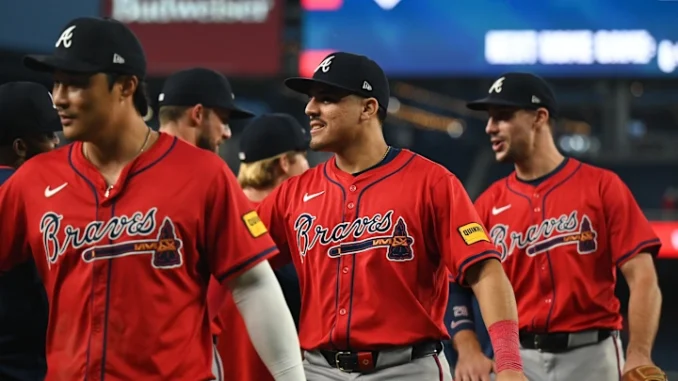
As Major League Baseball’s Spring Training period draws closer, the Atlanta Braves have begun making difficult roster decisions, parting ways with a group of minor league players in order to reshape their organizational depth. Among the names released, one stands out more than the others due to the expectations once placed upon him: former high-profile international signee Diego Benitez.
When Benitez first entered the Braves’ system in 2022, he was viewed as one of the crown jewels of that year’s international signing class. The organization committed a staggering $2.5 million signing bonus to the Venezuelan teenager, a figure that accounted for nearly half of Atlanta’s entire international bonus allotment for that period.
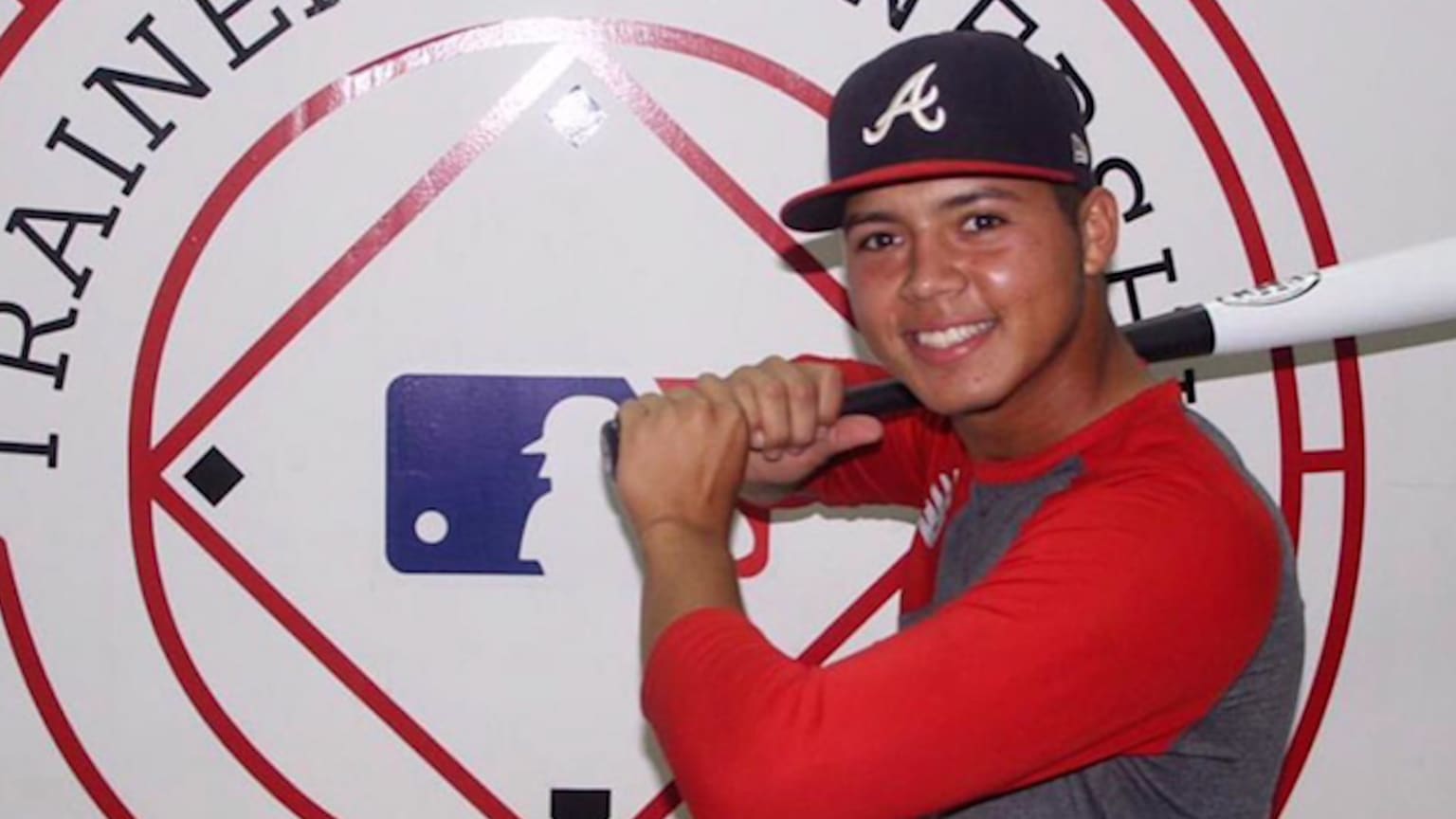
Such a financial commitment underscored just how strongly the Braves believed in Benitez’s potential and future projection. At the time, the signing was celebrated internally and externally as a bold investment in a player expected to become a cornerstone prospect.
MORE: Orioles official transactions land 34 strikeouts proved right-hander
Early scouting evaluations painted Benitez as a rare blend of offensive and defensive tools, the kind of player teams hope will mature into a franchise-caliber talent. His name quickly rose through prospect rankings, and within months of signing, he was widely regarded as one of the most exciting young players in the Braves’ minor league pipeline.
In fact, industry evaluators and talent scouts were so enamored with his skill set that some began drawing lofty comparisons to established Major League stars, including All-Star third baseman Manny Machado.
At the time of Benitez’s signing, MLB analyst Jesse Sanchez offered an enthusiastic breakdown of the young infielder’s abilities in a report for MLB.com. Sanchez highlighted Benitez’s ability to generate hard contact across the entire field, noting that the teenager already possessed the raw strength necessary to drive the baseball out of the park.
According to that early assessment, Benitez showed advanced bat speed for his age and a mature offensive approach, traits that suggested he could eventually develop into a middle-of-the-order threat.

Sanchez’s evaluation also emphasized Benitez’s defensive promise. Scouts praised his smooth footwork, reliable hands, and strong throwing arm, which was described as having “plus-plus” potential. That arm strength, combined with solid instincts and athleticism, led many to believe Benitez could remain at a premium infield position as he climbed the minor league ladder.
MORE: Atlanta Braves injury news, suffer significant offseason injury
Additionally, his speed was viewed as an asset, with projections suggesting he could become an above-average runner once he physically matured.
However, even in those glowing early reports, there were notes of caution. Like many teenage prospects entering professional baseball, Benitez was expected to face challenges adjusting to advanced pitching. Plate discipline and pitch recognition were identified as areas that would require refinement over time. While those shortcomings were not considered alarming—especially given his youth—they were factors that would ultimately play a significant role in his professional trajectory.
Despite being ranked as the 10th-best international prospect in his signing class, Benitez struggled mightily once he began competing in organized professional games. Over several seasons in the minor leagues, his offensive performance never came close to matching the expectations set by his signing bonus or early scouting reports.

Across 776 plate appearances, Benitez managed a batting average of just .201, barely clearing the Mendoza Line. For a player once touted for his offensive upside, that level of production proved deeply concerning.
MORE: St. Louis Cardinals Reportedly Interested in Free Agent Mets’ Pitcher
Perhaps even more disappointing was the absence of the power that scouts once believed would become a defining trait of Benitez’s game. In those same 776 plate appearances, he hit only 10 home runs, a modest total that fell far short of projections for a player once viewed as a future slugger. Line drives and authoritative contact were rare, and pitchers at the lower levels increasingly exploited his weaknesses, particularly his difficulty identifying breaking pitches and adjusting to velocity changes.
As Benitez progressed through the Braves’ system, his struggles persisted. Adjustments failed to produce meaningful improvements, and his development stagnated. While some prospects require additional time to find their footing, organizations must eventually weigh potential against performance. Now 20 years old, Benitez reached a critical juncture where the Braves had to determine whether continued investment made sense.
Ultimately, the organization concluded that Benitez no longer projected as a viable major league contributor. His release signals that the Braves, despite their initial belief in his talent, felt confident that his ceiling would not justify a roster spot or further developmental resources. In the highly competitive landscape of professional baseball, such decisions are difficult but necessary, especially for teams that prioritize efficiency and long-term planning.
While Benitez’s outcome may seem surprising given his pedigree, it is far from uncommon in the world of international scouting and player development. The reality is that projecting the futures of 16- and 17-year-old athletes is an inexact science, even with advanced analytics and global scouting networks. Physical growth, mental development, adaptability, and injury risk all introduce variables that can dramatically alter a player’s path.

The Braves’ own history serves as a reminder of how unpredictable this process can be. Several of the organization’s current stars entered professional baseball with far less fanfare and significantly smaller signing bonuses.
Second baseman Ozzie Albies, for example, signed for just $350,000 as an international amateur, while superstar outfielder Ronald Acuña Jr. joined the Braves for a mere $100,000. Neither player was viewed as a sure thing at the time, yet both exceeded expectations and developed into elite major league performers.
MORE: Diamondbacks Ace To Bolt For 2-Year, $54M Deal With Orioles
Their success illustrates the inherent volatility of prospect evaluation. Large signing bonuses and high rankings do not guarantee future stardom, just as modest investments do not preclude greatness. This unpredictability is what fuels both the excitement and the risk of the international amateur market.
That dynamic is also why the Braves remain optimistic about their latest wave of international signings. For the current signing period, the organization was allotted an international bonus pool of $6,679,200. Interestingly, the largest individual bonus awarded this year was $1.5 million, a notable reduction from the massive investment made in Benitez just a few years earlier. This shift suggests a more diversified approach, spreading resources across multiple prospects rather than concentrating heavily on a single player.
In many ways, the Braves’ decision to move on from Benitez reflects the harsh realities of professional baseball development. For every highly touted prospect who reaches the major leagues, countless others fall short despite talent, opportunity, and organizational support. While Benitez’s journey with the Braves did not unfold as hoped, his story serves as a reminder of both the promise and peril that define international scouting.
As Spring Training approaches and a new season looms, the Braves continue refining their system, making room for the next generation of prospects who will attempt to beat the odds. For Benitez, the future remains uncertain, but his experience underscores a truth known throughout baseball: potential is only the beginning, and success is never guaranteed.



Be the first to comment