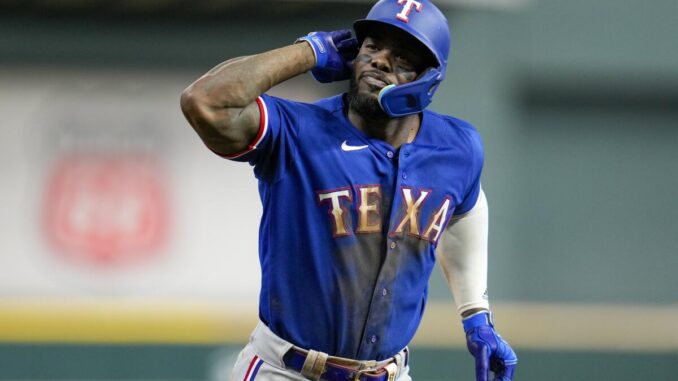
The Texas Rangers have not exactly been quiet this winter, even if their activity pales in comparison to the jaw-dropping offseason from a few years ago when the organization committed more than half a billion dollars to reshape the franchise by signing Corey Seager, Marcus Semien, and Jon Gray.
That spending spree fundamentally altered the trajectory of the team and set expectations at a level that is difficult to replicate year after year. Still, by most reasonable standards, the Rangers’ current offseason has been productive, deliberate, and revealing in terms of organizational priorities.
Rather than engaging in splashy free-agent pursuits, Texas has focused on targeted adjustments. The club executed one significant trade, sending Semien to the New York Mets in exchange for Brandon Nimmo, thereby reshaping the lineup’s balance and defensive alignment.

In free agency, the Rangers handed out four major league contracts, bringing in catcher Danny Jansen, veteran reliever Chris Martin, right-hander Alexis Diaz, and left-handed swingman Tyler Alexander. On the margins, Texas also made several waiver claims, adding Michel Otañez, Willie MacIver, and Zak Kent to the organization.
Offensively, the Rangers have clearly made changes with intent. However, comments from president of baseball operations Chris Young suggest that the club may be nearing the end of its position-player shopping. Speaking with members of the Texas beat over the weekend, Young indicated that the front office’s attention has largely shifted toward the pitching staff.
MORE: Mets-Angels Blockbuster Trade Proposal Lands 37-Home Run Outfielder
He expressed confidence in the group of hitters currently assembled and emphasized that improving the pitching infrastructure is now the primary focus. While Young stopped short of completely ruling out another offensive addition, he stressed that any further moves would need to arise from opportunity rather than necessity, particularly as the free-agent market thins out and prices fluctuate late in the winter. His comments, relayed by Shawn McFarland of the Dallas Morning News, painted a fairly transparent picture of the organization’s mindset.
That stance is understandable when examining the current roster construction. The Rangers effectively addressed one of their most pressing needs by replacing non-tendered outfielder Adolis Garcia with Nimmo, whose on-base skills, defensive reliability, and experience in center field provide a different but arguably more stable profile. Behind the plate, Jansen steps into the role vacated by Jonah Heim, another veteran who was surprisingly non-tendered as part of the team’s broader cost-management approach.
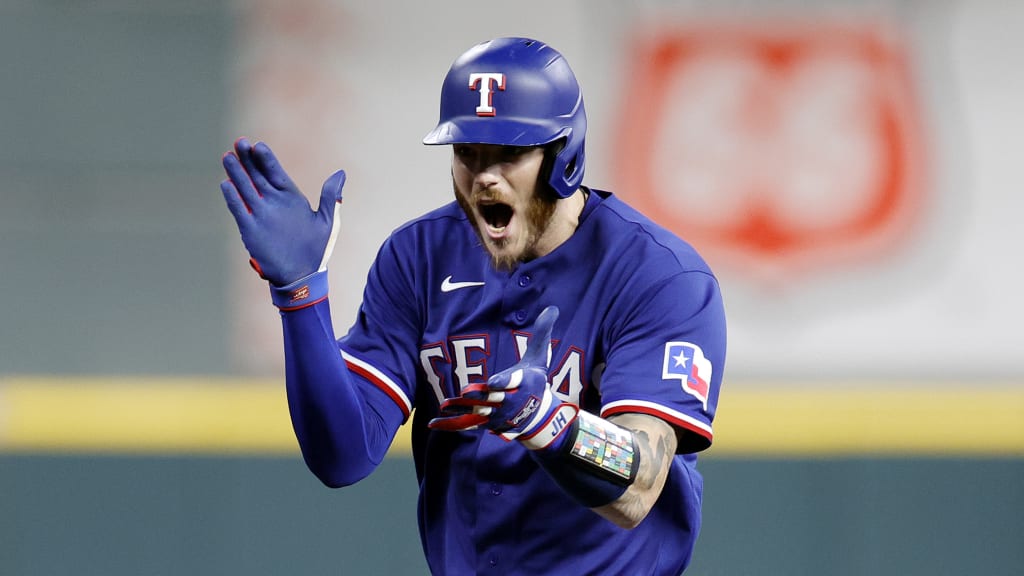
Following the Semien trade, the Rangers made it clear that second base would likely be handled internally. Since that deal, Josh Smith has emerged as the leading candidate to assume regular duties at the position. Smith’s versatility and contact-oriented approach fit with what Texas appears to value in its complementary lineup pieces.
Elsewhere, much of the everyday lineup is already spoken for. Seager remains the offensive centerpiece, anchoring the infield and middle of the batting order. Alongside him, Wyatt Langford emerged as one of the team’s most impactful hitters last season and is expected to play a central role again in 2026. Evan Carter, while unable to fully replicate his sensational 2023 rookie campaign, has continued to be a productive contributor when healthy—though injuries have been a persistent concern over the past two seasons.
MORE: Cardinals confirmed another elite prospect addition
At third base, the Rangers are taking a measured approach with Josh Jung, who endured a frustrating 2025 season marked by inconsistency and health setbacks. Jung, along with corner bats Jake Burger and Joc Pederson, might have seemed like potential change-of-scenery candidates earlier in the winter.

Instead, the club appears committed to giving all three an opportunity to rebound. In Pederson’s case, financial realities likely eliminated any trade possibilities. Owed $18.5 million in 2026, Pederson would have been difficult to move after producing a .181/.285/.328 slash line, even if Texas were willing to absorb a significant portion of the remaining salary.
Still, there is a reasonable argument that the Rangers’ offense could benefit from one more capable bat, particularly someone with the flexibility to cover first base, second base, third base, or designated hitter duties. Last season’s struggles at the infield corners and the lack of proven depth on the bench remain areas of concern. Yet these needs must be balanced against the organization’s broader financial objectives.
MORE: Diamondbacks officially solidify bullpen with the signing of superstar righty
Throughout the winter, it has become increasingly apparent that Texas is attempting to reduce payroll. According to RosterResource projections, the Rangers’ current commitments sit around $176 million—roughly $40 million below the $216 million payroll they carried into Opening Day of the 2025 season. That reduction signals a shift away from the all-in spending approach of recent years, likely influenced by ownership’s appetite for sustainability rather than repeated luxury-tax flirtations.
Exactly how much financial flexibility ownership is willing to provide for the 2026 roster remains unclear. However, the current trajectory suggests that another major acquisition—whether a star hitter or frontline pitcher—is improbable.
There has been some speculation that teams missing out on marquee infielders such as Alex Bregman or Bo Bichette could explore buy-low scenarios involving Jung. Such a deal might involve a swap for a former high-end pitching prospect seeking a fresh start. To date, however, there is little evidence that those discussions have gained traction.

Back in mid-December, shortly after the signings of Jansen, Diaz, and Alexander, reports suggested the Rangers were still seeking a right-handed bat and some additional rotation depth. While that right-handed hitter may technically remain on the wish list, it does not appear to be an urgent priority as things stand now.
MORE: Mets make move to acquire Nationals ace
The reasoning becomes clearer when examining the pitching staff, particularly the rotation. At the top, Texas boasts an impressive trio: Jacob deGrom, Nathan Eovaldi, and Jack Leiter. When healthy and performing to expectations, that group can rival nearly any rotation in the league.
However, the margin for error is slim. Left-hander Cody Bradford is expected to miss at least the first half of the season after undergoing UCL surgery in June. His absence forces the Rangers to lean heavily on internal depth options. As currently constructed, the club would need at least two pitchers from a group including Kumar Rocker, Jacob Latz, Jose Corniell, and non-roster invitee Nabil Crismatt to emerge as reliable rotation pieces.

Rocker remains one of the organization’s most intriguing arms, but his transition to the major leagues has been uneven. While the raw talent is undeniable, consistency and durability have yet to fully materialize at the highest level.
Latz provided useful innings last season in both relief and spot starts, posting a 2.84 ERA, but his underlying metrics raise red flags. A strikeout rate of 21.8 percent paired with a walk rate north of 10 percent, along with a 4.37 SIERA, suggest that his surface-level success may not be sustainable.
MORE: Red Sox fills Alex Bregman void with the addition of Mariners’ star slugger Eugenio Suarez
Health concerns further complicate matters. DeGrom’s remarkable 2025 comeback—logging 172 2/3 innings after making just nine starts combined in 2023 and 2024—was a triumph, but his extensive injury history cannot be ignored. Eovaldi, meanwhile, was limited to 22 starts last season due to elbow and shoulder issues and later underwent sports hernia surgery during the offseason. Leiter, though highly regarded, is still establishing himself at the big-league level.
Taken together, the rotation is powerful at the top but perilously thin beyond that. A single injury to any of deGrom, Eovaldi, or Leiter would place enormous strain on the remaining depth. Two injuries could leave Texas scrambling to field a rotation composed almost entirely of untested or inexperienced arms.
In that context, even a modest addition—a veteran starter on a one-year deal—could provide valuable insulation. Re-signing someone like Patrick Corbin, or targeting comparable back-end options such as Chris Paddack or Aaron Civale, would significantly enhance the club’s stability.
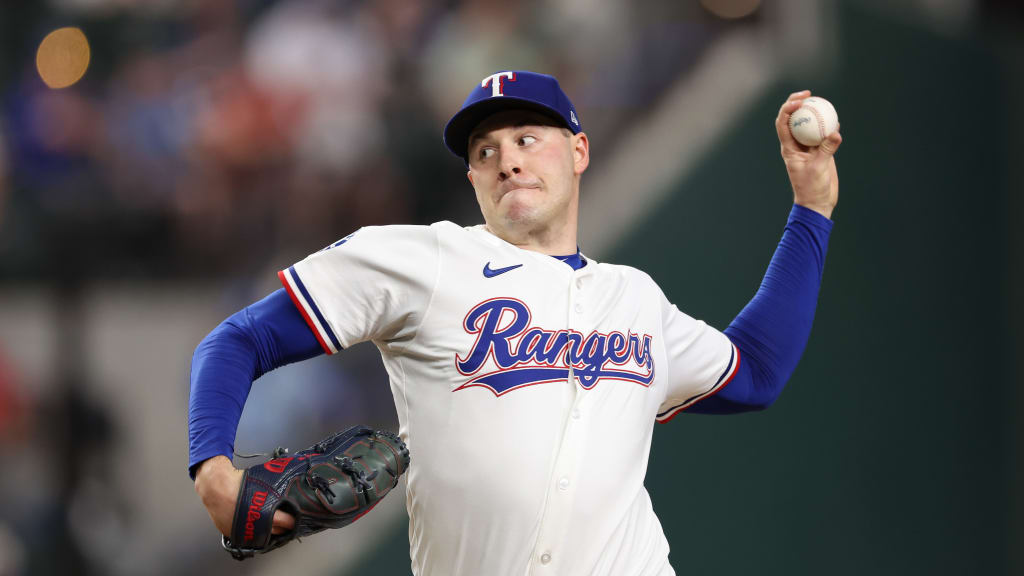
The bullpen, while deeper than the rotation, is not without its own question marks. Holdovers Robert Garcia and Cole Winn return, joined by newcomers Diaz, Alexander, and Martin—who re-signed with the Rangers on a second one-year deal to continue pitching for his hometown club. Diaz and Alexander were both signed with the hope that a change in environment could unlock better results, while Martin remains a steady veteran presence.
MORE: Braves trade top prospect Hurston Waldrep for Brewers’ $15M Young arm to fill major void
Winn’s sub-2.00 ERA from last season stands out, but his peripheral statistics suggest regression may be looming. As things currently stand, there are at least two bullpen spots that remain unsettled—and possibly three, if Rule 5 pick Carter Baumler is not guaranteed a roster spot. Fortunately, the late stages of free agency often feature an abundance of experienced relievers willing to accept low-cost, one-year deals, providing Texas with options to reinforce the bullpen without overextending financially.
In sum, the Rangers’ offseason has been defined less by headline-grabbing moves and more by careful calibration. The front office appears comfortable with the current offensive core, cautious about long-term financial commitments, and acutely aware of the pitching staff’s fragility. Whether that approach proves sufficient will depend largely on health, internal development, and the club’s ability to capitalize on opportunistic additions as spring training approaches.


Be the first to comment