Even though it’s only the middle of January, the New York Mets are behaving like an organization racing against the clock.
With Spring Training drawing nearer by the day, there’s a growing sense that the roster is still a work in progress. Several holes remain obvious, and the lack of resolution is becoming harder to ignore. The most glaring issue is still in the outfield, where depth and impact are clearly lacking. That has been the focus of most public discussion, but it isn’t the only area causing concern.
Less loudly discussed, yet just as pressing, is the state of the pitching staff. The bullpen could benefit from another reliable arm, someone capable of handling leverage innings and stabilizing the group over a long season. While the current relief corps has potential, it still feels one dependable piece short of inspiring real confidence.
The bigger question mark, however, lies at the top of the rotation. Adding a true frontline starter wouldn’t just fill a need—it would reshape the entire outlook of the team. A proven ace could ease pressure on the rest of the staff, create balance throughout the rotation, and immediately raise expectations both inside and outside the clubhouse. Without that addition, the Mets risk entering the season relying too heavily on internal projections and best-case scenarios.
MORE: Red Sox fills Alex Bregman void with the addition of Mariners’ star slugger Eugenio Suarez
All of this makes the timing especially notable. As camps approach and options begin to disappear, every remaining rumor or report carries added weight. The Mets may not be out of moves to make, but the margin for error is shrinking quickly. In that environment, even a single new development can feel significant, which is why a recent report has drawn particular attention and added intrigue to what has already been a tense stretch of the offseason.
Why MacKenzie Gore Even Came Up
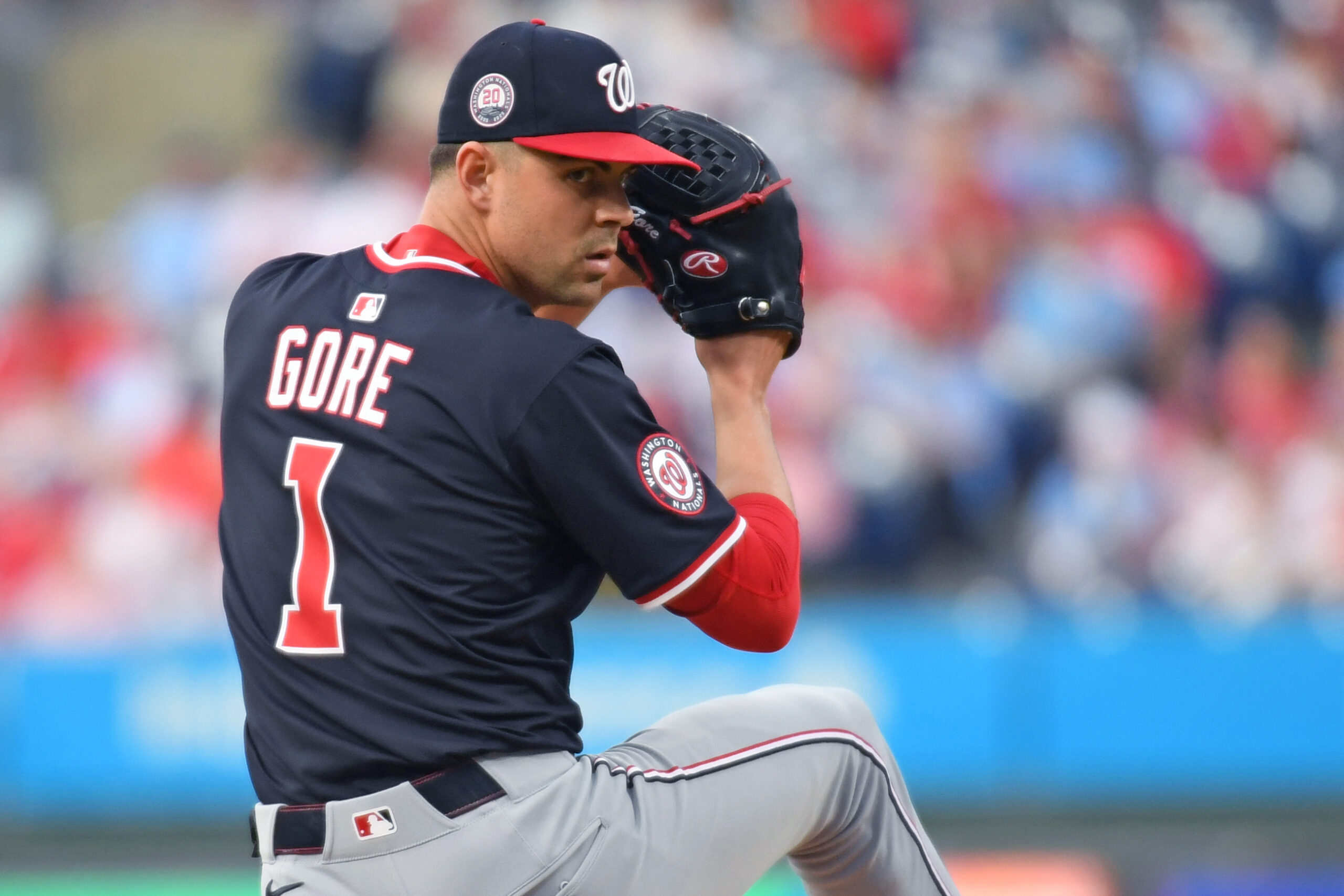
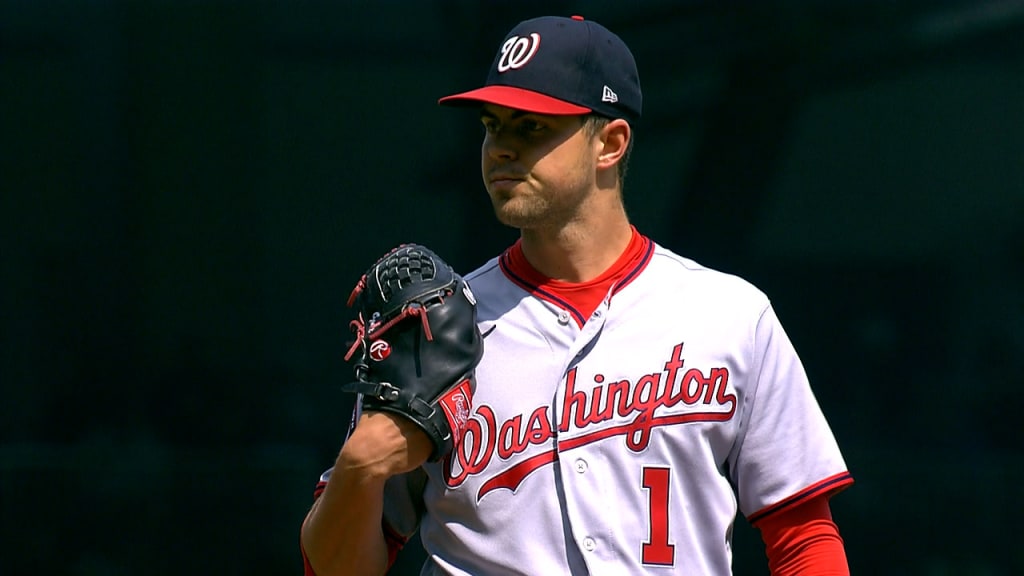
According to Mets on SI reporter Pat Ragazzo, the New York Mets recently reached out to the Washington Nationals to gauge the availability of left-handed starter MacKenzie Gore. The inquiry, however, went no further. The Nationals’ asking price was described as staggeringly high, effectively shutting down any real momentum before talks could develop.
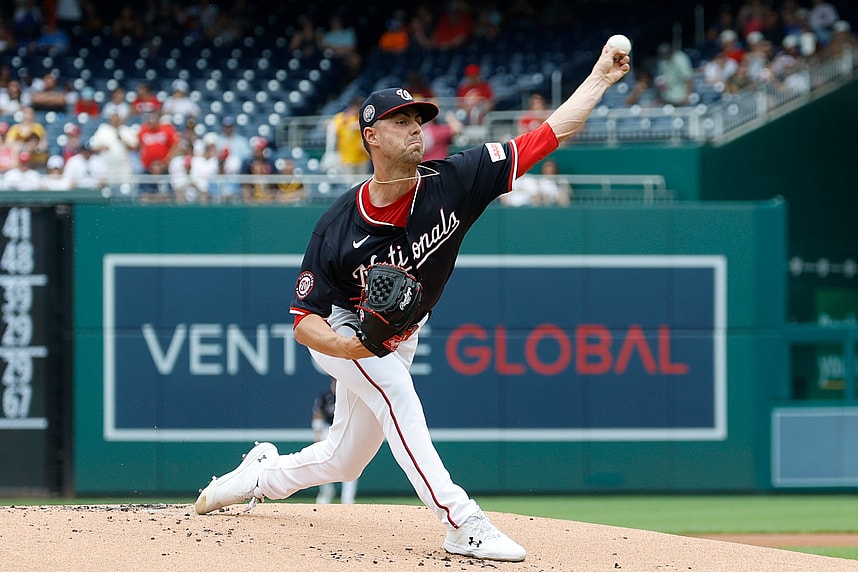
That response alone says a great deal about how Washington evaluates Gore internally. Front offices rarely attach extreme trade demands to a player unless they believe he still has significant upside to unlock. An “astronomical” price tag is not just about present performance; it reflects confidence in future growth. In this case, it suggests the Nationals see Gore as more than just a solid mid-rotation arm. They appear to believe he has another level in him that has not fully surfaced yet at the major league level.
On paper, Gore’s 2025 season was respectable but hardly headline-grabbing. He posted a 4.17 ERA and a 1.35 WHIP while shouldering a heavy workload, numbers that place him firmly in the “reliable but unspectacular” category at first glance. For many casual observers, those surface stats might make Washington’s stance seem excessive. But focusing solely on ERA risks missing the more meaningful indicators of a pitcher’s true talent.
Strikeouts are often a better barometer of sustainable success, and in that area Gore clearly stood out. He punched out 185 batters, a total that signals swing-and-miss stuff and the ability to overpower hitters rather than merely survive contact. When a pitcher racks up strikeouts at that rate, it usually points to raw ingredients that can support improvement, especially with refinement and better sequencing.
A deeper dive into the advanced metrics strengthens that argument. Gore’s Fielding Independent Pitching (FIP) checked in at 3.74, noticeably lower than his ERA. That gap implies that factors outside his direct control—defense, timing, or batted-ball luck—may have inflated his run prevention numbers. In other words, the quality of his pitching was better than the results suggest, and with more favorable circumstances, the statistical line could look significantly cleaner.
Context matters as well. Gore is still relatively young and carries the pedigree of a former elite prospect, someone once viewed as a potential frontline starter. Players with that background often take uneven paths to fully realizing their ability, especially when development environments are less than ideal. Washington’s recent history with pitcher development has drawn skepticism around the league, raising the possibility that Gore has not yet been maximized.
MORE: Braves trade top prospect Hurston Waldrep for Brewers’ $15M Young arm to fill major void
Put all of that together—age, strikeout production, underlying metrics, and unrealized upside—and the Nationals’ firm stance begins to make more sense. From their perspective, trading Gore now would mean selling before the payoff, especially if they believe internal adjustments or a more stable roster around him could unlock a higher ceiling.
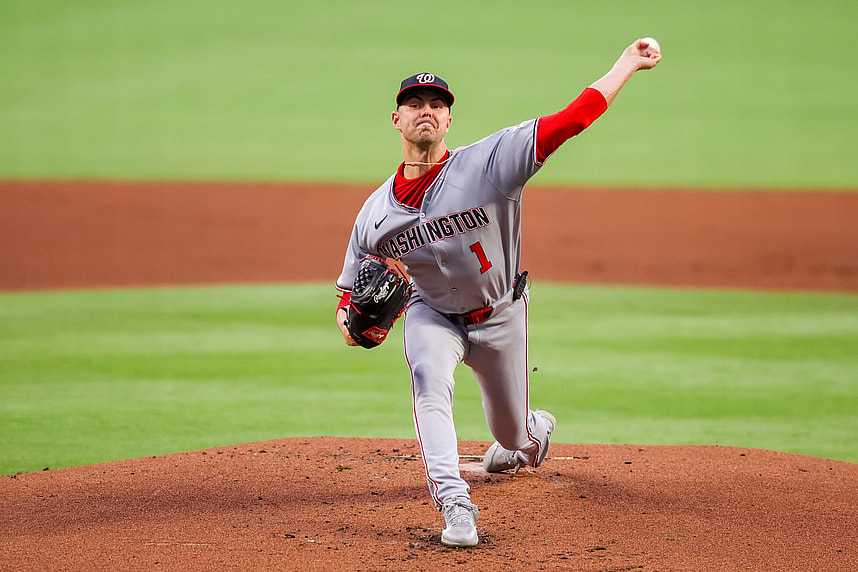
This is precisely the type of arm the Mets should continue monitoring. Even if the current price is prohibitive, identifying pitchers whose performance indicators outpace their traditional stats is how teams find value. Gore fits that mold almost perfectly: good results, better process, and room to grow. For a club always searching for controllable pitching with upside, it is no surprise the Mets at least knocked on the door—even if, for now, it remained firmly closed.
The Upside the Mets Actually Need
The current state of the New York Mets rotation is defined more by volume than by certainty. There are plenty of arms available, but outside the very top of the group, there are lingering questions about long-term dependability and upside. The Mets are not short on options; what they lack is a clear sense of confidence once you move past the front of the rotation.
At the top, Kodai Senga remains the unquestioned cornerstone. When healthy, he sets the tone and gives the staff a true point of stability. Behind him, David Peterson has settled into a role that suits him well, offering consistency and the ability to cover meaningful innings without much drama. Sean Manaea adds a veteran presence, someone who has been through different situations and understands how to navigate a big-league season. Clay Holmes rounds out the mix as a dependable but limited option—useful, steady, but not someone who dramatically shifts expectations.
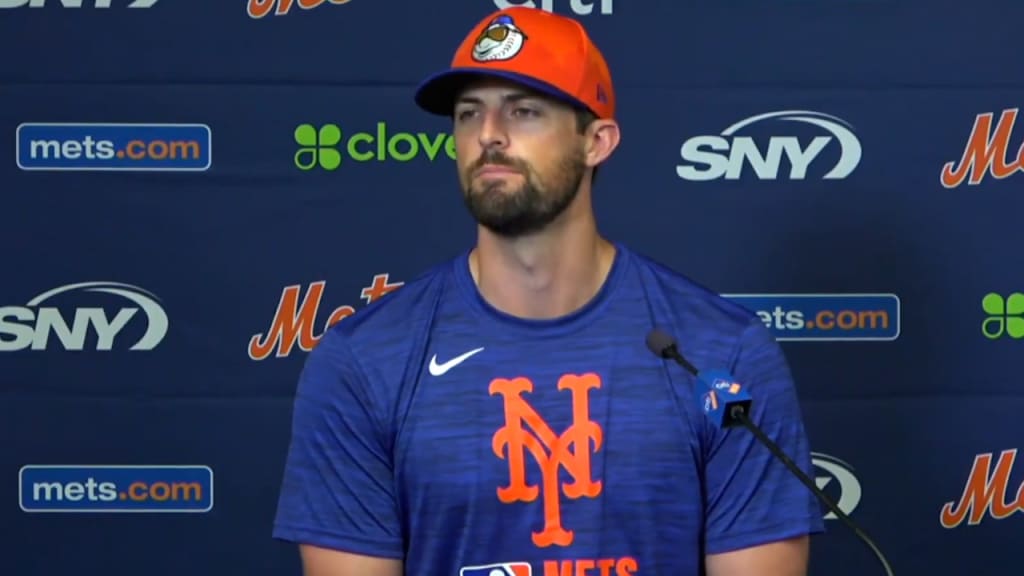
Beyond the established names, the Mets also have legitimate depth in the pipeline. Prospects like Nolan McLean, Brandon Sproat, and Jonah Tong represent the next wave of arms that could eventually impact the major-league roster. Their presence gives the organization flexibility and hope for the future, but relying on prospects always comes with uncertainty. Development is rarely linear, and expecting young pitchers to immediately stabilize a rotation can be risky.
MORE: Angels makes another low-risk, high-reward signing
What the Mets truly lack is a starter who already has proven himself at the major-league level and is still young enough to realistically elevate his game. That kind of pitcher bridges the gap between present reliability and future upside—someone who can help now while also growing into a more impactful role over time.
This is where MacKenzie Gore stands out as an ideal fit. He does not need to suddenly transform into a Cy Young contender to justify his value. Even incremental improvements—sharper command, better pitch sequencing, and more efficient use of his fastball—would significantly raise his ceiling. With modest progress in those areas, he could quickly become a pitcher who alters the shape of a rotation rather than simply filling a spot.
Importantly, even if that next step never fully materializes, Gore already offers something the Mets rotation is missing: a reliable, mid-rotation arm who can take the ball every fifth day and compete at a high level. Pitchers with that blend of youth, experience, and upside are among the most sought-after assets in baseball. That reality explains why teams demand such steep prices for them—players like this are expensive precisely because they are so hard to find.
The Cost Problem Is Real
This is the point where the Mets need to show restraint and a clear sense of priorities.
MacKenzie Gore still has two full seasons of team control left, covering 2026 and 2027, and that reality alone pushes his trade value higher than his surface numbers might suggest. When you factor in his age, draft pedigree, and the belief that his best years may still be ahead of him, it is understandable why Washington Nationals would set a steep asking price. From their perspective, they are not under pressure to move him and can afford to demand a return that reflects both present value and future upside.
That does not mean the Mets are obligated to meet that price. In fact, they should be very firm about where their limits are. Any proposal that requires including Nolan McLean or Carson Benge should immediately be taken off the table. Those players represent core building blocks for the organization, not just trade chips. As the Mets attempt to compete now while also avoiding the pitfalls of short-term thinking, protecting that tier of talent is essential.
The challenge for the Mets is finding a way to improve the major-league roster without undermining the long-term vision. Sacrificing premium prospects for a pitcher with only two years of control would tilt the balance too far toward urgency, leaving the system thinner at a time when depth and flexibility are increasingly important. Holding onto players like McLean and Benge ensures that the team has affordable, high-upside contributors who can support the roster in the coming seasons.
MORE: Alex Cora officially makes stunning announcement regarding Red Sox’s hitter
That does not mean talks with Washington should be dismissed entirely. If the Nationals are open to a more nuanced framework—one that centers on a different mix of prospects, complementary pieces, or even major-league depth—the discussion becomes far more reasonable. In that scenario, the Mets could explore ways to add pitching help without compromising the foundation they are trying to establish.
If Washington remains inflexible and continues to insist on elite prospects as the centerpiece of any deal, the smartest move is simply to walk away. Doing so should not be viewed as a missed opportunity or a sign of hesitation. Instead, it reflects sound decision-making and disciplined roster construction. Sometimes the best trade is the one you choose not to make, especially when the cost threatens to outweigh the long-term benefit.
Why the Conversation Matters Anyway
Even if this inquiry never progresses beyond an initial conversation, the mere fact that the Mets picked up the phone is meaningful in itself.
It shows an organizational mindset that goes beyond simply patching together innings or stockpiling serviceable arms. The Mets are clearly not satisfied with a rotation built purely on reliability and predictability. They are searching for ceiling, not just stability. History has shown time and again that teams relying only on pitchers with modest upside often run out of answers when October arrives. At some point, a contender needs someone who can outperform expectations and change the complexion of a postseason series.
That is why a pitcher like Gore fits what the Mets appear to be seeking. He represents the kind of calculated gamble that can pay off in a big way. He is young, armed with obvious talent, and still unfinished as a product. There is a sense that more is in there—that his best version has not yet been fully realized. For an organization that believes strongly in its ability to refine mechanics, optimize pitch usage, and create marginal gains, that type of profile is especially appealing.
This is not about chasing a sure thing. It is about identifying players who could become something more in the right environment. A pitcher like Gore carries risk, but he also carries the potential to take a real step forward if everything clicks. Those are the kinds of bets that separate teams merely trying to get through the regular season from those trying to win deep into the fall.
MORE: Cardinals Officially Sign Superstar Reliever
Of course, interest alone does not guarantee a deal. The Mets may ultimately decide the acquisition cost is too steep. Washington may hold firm, confident that patience will only increase the value of a controllable, high-upside arm. In that scenario, walking away would not be a failure—it would be discipline. Smart front offices know when to push and when to pivot.
Still, the instinct behind the call is what matters most. The timing makes sense, the target makes sense, and the logic is sound. The Mets are evaluating where they are as a franchise and acknowledging that safe, low-ceiling solutions are rarely enough. They are looking for impact, even if that means accepting some uncertainty along the way.
Whether this particular pursuit goes anywhere or not, it offers a window into how the Mets are thinking. They are aiming higher, willing to explore difficult conversations, and open to bold moves if the opportunity aligns with their long-term vision.
Now the next chapter depends on how the standoff unfolds. Either Washington softens its stance, or the Mets redirect their focus and find their next significant pitching upgrade elsewhere. Either way, the approach itself suggests a team that understands what it takes to move from contention to true championship credibility.

Be the first to comment