
For much of the past decade, the Chicago White Sox have struggled to find stability in right field. While the organization has cycled through a variety of internal options, short-term fixes, and role players, none have truly claimed the position as a long-term solution. That ongoing need may now push Chicago to explore the free-agent market once again, particularly as the club looks to solidify its lineup heading into the new season.
One name that has recently surfaced as a potential option is veteran outfielder Michael Conforto. According to reports, the White Sox are showing interest in Conforto, a move that could provide them with a more established presence on the corner of the outfield. The information was first shared by Jon Heyman of the New York Post, a longtime and well-connected MLB insider.
If Chicago were to pursue Conforto seriously, the appeal is understandable. On paper, he offers experience, left-handed power, and a track record that, at his best, once placed him among the more dangerous offensive outfielders in the league. For a White Sox team that has often lacked consistency and production from the right-field spot, Conforto represents a relatively low-risk gamble with the potential for a meaningful payoff.

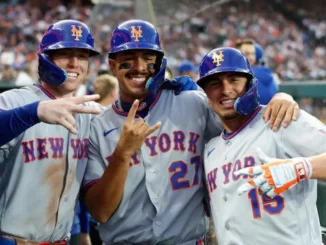
Still, Conforto’s career arc has been anything but straightforward. Early on, he looked like a cornerstone player for the New York Mets, emerging as a polished hitter with power to all fields and strong plate discipline. His breakout culminated in an All-Star selection in 2017, a season that firmly established him as one of baseball’s rising stars. Between 2017 and 2020, Conforto was a consistent source of power, belting 97 home runs over that four-year span and serving as a key run producer in the Mets’ lineup.
During that stretch, Conforto appeared to be entering the prime of his career. He combined solid defense with offensive production, showing the ability to hit for both average and power. Many around the league viewed him as a player poised for sustained success and possibly even stardom. Expectations were high, and his performance largely justified them—at least for a time.
However, the years that followed told a different story. Injuries began to take a toll, interrupting his rhythm and limiting his availability. At the same time, inconsistency at the plate crept into his game. While flashes of his former self remained, the overall production declined, and Conforto struggled to recapture the level of impact he once had. For a player who had previously looked like a franchise fixture, the downturn was noticeable and, in some ways, surprising.
MORE: Braves to Sign $61 Million Red Sox’s Pitcher
Now, as Conforto approaches his age-33 season, he finds himself at a crossroads. No longer the young, ascending talent he once was, he must instead convince teams that he still has enough left in the tank to be a reliable everyday contributor. For clubs like the White Sox, that uncertainty is both a concern and an opportunity. If Conforto can stay healthy and rediscover even part of his earlier form, he could outperform expectations and provide solid value. If not, the move would likely be viewed as another short-term attempt to plug a long-standing hole.
From Chicago’s perspective, the timing makes sense. The team has endured years of uneven results, and addressing right field has remained an unresolved issue. Bringing in a veteran like Conforto could add stability while also offering upside that younger, unproven options may not. Additionally, his experience in high-pressure markets and postseason environments could bring a level of professionalism and leadership to a roster still searching for consistency.
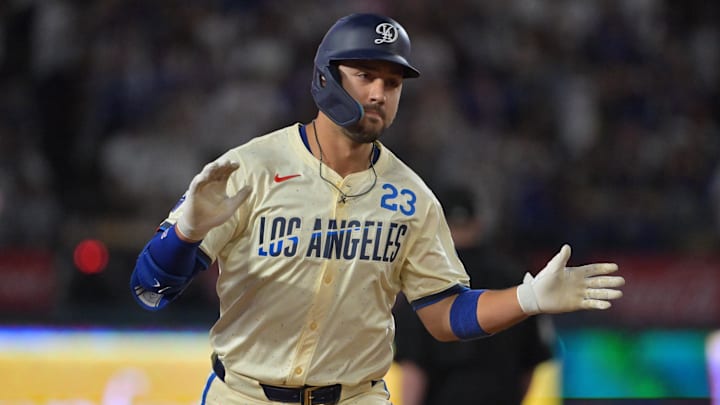
Ultimately, any potential signing would hinge on Conforto’s ability to prove that his best baseball is not entirely behind him. The tools that once made him an All-Star haven’t disappeared, but they have been dulled by time, injuries, and uneven performance. For the White Sox, the decision comes down to whether they believe a change of scenery—and a fresh opportunity—could spark a rebound.
If Chicago does move forward, Opening Day could feature a familiar name in an unfamiliar uniform, representing both a solution to a long-standing problem and a personal redemption opportunity for a veteran trying to write the next chapter of his career.
What Does Conforto Bring to the Chicago White Sox?
At the peak of his career, Michael Conforto was known for legitimate, middle-of-the-order power and a well-rounded offensive profile. That version of Conforto, however, has become increasingly difficult to find. Since departing the New York Mets, he has managed only 47 home runs across the past three seasons combined—a modest total for a corner outfielder once viewed as a reliable power source.

While he delivered a pair of seasons that hovered around league average with the San Francisco Giants, his offensive production ultimately stalled after moving on to the Los Angeles Dodgers, where the decline became far more pronounced.
MORE: Mets push for Yankees’ outfielder after Kyle Tucker whiff
The 2025 campaign was especially alarming. Over 138 games, Conforto turned in the worst statistical season of his career, batting just .199 and posting a meager .637 OPS. Those numbers weren’t simply the result of poor luck on balls in play or a brief cold stretch that dragged down an otherwise respectable year. Instead, they reflected a broader erosion in overall performance. According to data tracked by Baseball Savant, many of the underlying indicators that once supported his offensive value were no longer present.
To be fair, not everything completely cratered. Conforto still showed above-average bat speed, suggesting that raw strength and the ability to generate quick hands through the zone haven’t disappeared entirely. His plate discipline, particularly his walk rate and ability to avoid chasing pitches well outside the strike zone, also remained solid. Those traits point to a hitter who still understands the strike zone and hasn’t lost his feel for professional at-bats.
Unfortunately, nearly every other offensive metric told a more troubling story. His quality of contact lagged well behind league norms, with fewer balls being struck with authority and consistency. Hard-hit rates, expected slugging numbers, and overall run production all fell below average.
In simple terms, even when Conforto made contact, it rarely resulted in meaningful damage. The combination of weaker contact and a dwindling ability to drive the ball with consistency left him vulnerable to pitchers who no longer needed to treat him as a true power threat.
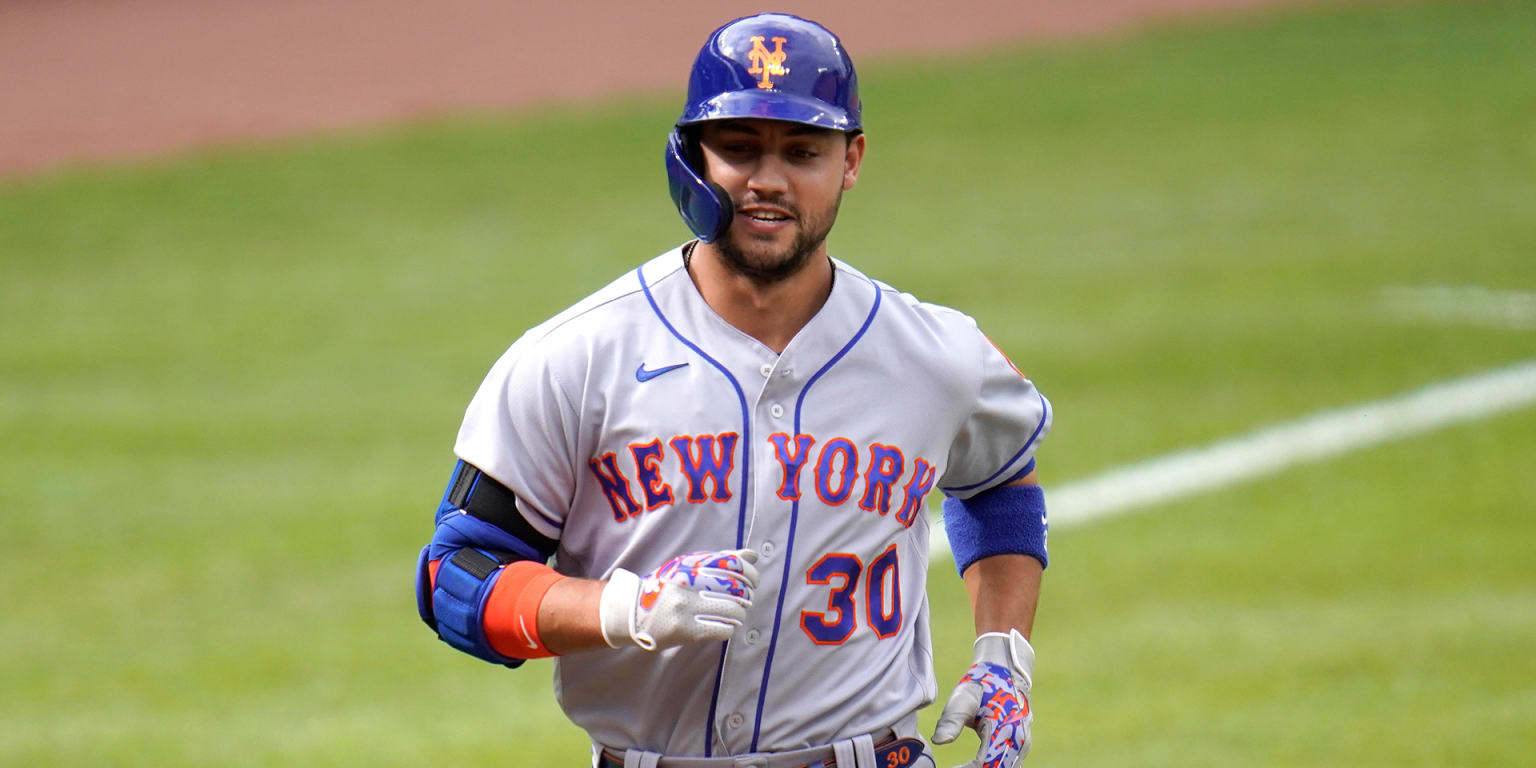
If the offensive downturn were the only concern, teams might still be tempted to gamble on a rebound, particularly given his track record and name recognition. However, his defensive performance in 2025 only compounded the problem. Once considered a serviceable corner outfielder, Conforto graded out as one of the weaker defenders at his position.
He finished the season with a -8 Outs Above Average, placing him in the fifth percentile among outfielders. That figure suggests not just a slight decline, but a player who struggled significantly to convert playable balls into outs.
MORE: Padres officially land another minor-league deal
Speed has never been a defining feature of Conforto’s game, but the erosion there has become impossible to ignore. In 2025, his sprint speed ranked in just the 18th percentile. For an outfielder—particularly one who is no longer providing strong offensive value—that lack of range and quickness is a major liability. Reduced speed affects not only his defensive coverage but also his ability to take extra bases, beat out infield hits, or apply pressure on opposing defenses.
Taken together, the full picture is bleak. Conforto offered minimal offensive impact, subpar defense, and limited athleticism during what amounted to one of the poorest seasons by a regular position player in 2025. For a young, upward-trending roster focused on athleticism, versatility, and long-term upside, there is little in his recent performance that clearly fits that vision. Younger players with developing skill sets or veterans who bring elite defense, speed, or leadership often provide more tangible value.
Still, baseball decision-making is rarely absolute. Context matters. With certain roster constructions, Conforto could theoretically be viewed as a low-risk flier—someone who might benefit from reduced expectations, a platoon role, or a specific matchup-based deployment. His remaining strengths in bat speed and plate discipline hint at the possibility, however slim, of a modest bounce-back if mechanical tweaks or health improvements come into play.
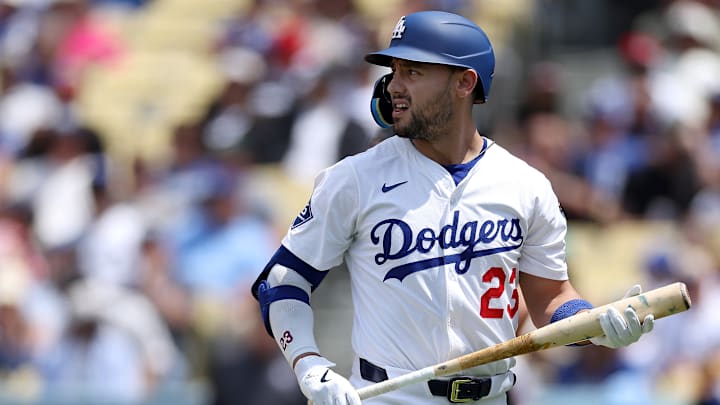
The question, then, isn’t whether Conforto is the player he once was—that answer appears clear—but whether there is enough left to justify a roster spot in the right circumstances. For teams desperate for left-handed depth or hoping to extract marginal value from a veteran on a short leash, the gamble might make sense. For most competitive, forward-looking clubs, though, his recent track record suggests that sentimentality and reputation would be doing far more work than production.
Conforto’s Fit With Chicago
At the moment, the club’s outfield picture is unsettled and full of moving parts. Andrew Benintendi appears penciled in for left field, while Luis Robert Jr. is expected to patrol center. Even those assignments, however, come with an asterisk, as both players remain potential trade chips depending on how the front office chooses to proceed. That uncertainty makes the situation in right field even more complicated, as there is no clear-cut favorite to seize the job on a permanent basis.
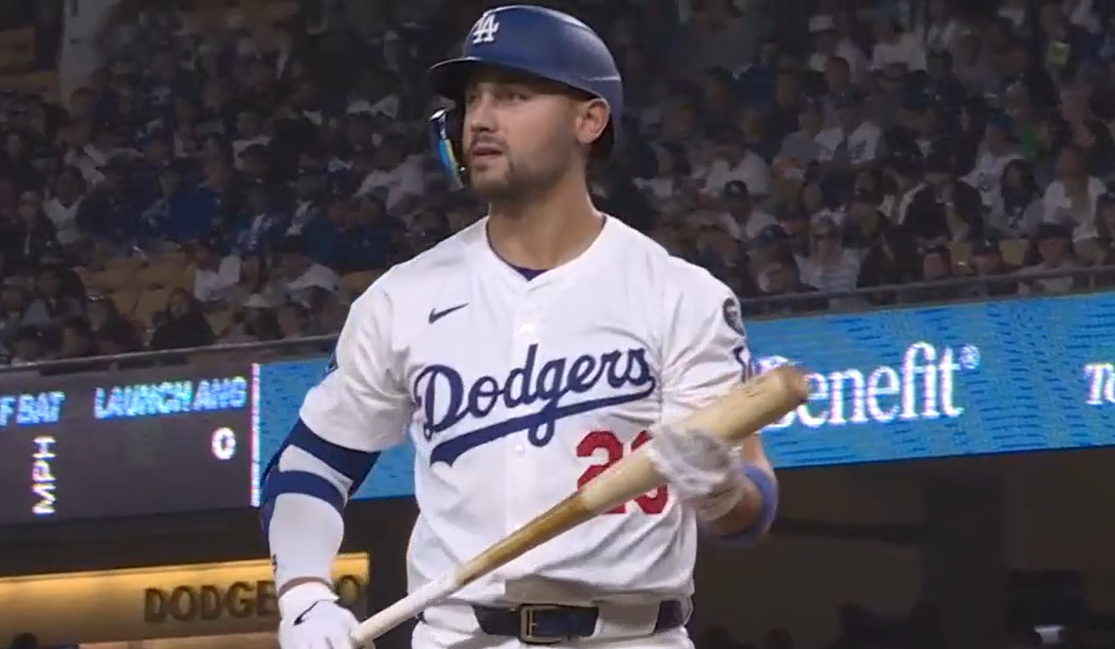
A handful of younger options are expected to compete for right-field time, including Brooks Baldwin, Tristan Peters, Derek Hill, Everson Pereira, and a few others lurking on the organizational depth chart. Among this group, Baldwin and Pereira seem to have a slight edge because they already have major league experience and possess tools the organization finds intriguing. Still, none of the other candidates should be dismissed outright, especially in a season that figures to prioritize evaluation and development over short-term certainty.
Baldwin’s case is perhaps the most straightforward to analyze. During the 2025 campaign, he struggled to establish himself as an everyday contributor, finishing with a .697 OPS. While there were moments that hinted at his upside—occasional power, flashes of solid defense—those highlights were too inconsistent to erase concerns.
At this stage, Baldwin has not done enough to convince decision-makers that he can be relied upon as a long-term solution. He remains in the mix largely because of opportunity rather than because he has firmly earned the role.
MORE: Cardinals officially jumpstart rebuild with the addition of top outfielder
Pereira, on the other hand, represents more of a projection play. Once viewed as a top-75 overall prospect by Baseball America, his reputation was built on raw tools and long-term upside rather than immediate polish. That potential still exists, but it comes with limited big-league exposure—just 65 at-bats at the major league level.
If he were to break camp as the starting right fielder, it would signal that the front office, led by General Manager Chris Getz, is willing to prioritize ceiling over proven production. Such a move would be a calculated gamble, reflecting confidence in player development rather than comfort with experience.
All of this internal debate, however, could be rendered irrelevant in the not-too-distant future. Looming in the background is Braden Montgomery, the organization’s most exciting prospect. Ranked No. 35 overall by MLB Pipeline, Montgomery is widely regarded as the crown jewel of the system and the clear outfielder of the future. There is a realistic chance that he could make his major league debut shortly after the All-Star break, a timeline that dramatically alters the calculus for the rest of the roster.

Montgomery’s impending arrival changes how the organization must think about stopgap solutions. If he is truly ready to take on a significant role by midseason, then investing playing time in veterans who do not fit the long-term plan becomes harder to justify. The franchise is young, trending upward, and increasingly focused on transitioning out of its rebuild. That context makes it difficult to rationalize adding or retaining players whose primary value is simply filling innings rather than contributing to the next competitive core.
This is where the conversation around Michael Conforto becomes particularly relevant. Conforto, at this stage of his career, profiles as a short-term placeholder rather than a foundational piece. While there is nothing inherently wrong with stopgap players, they serve a specific purpose—bridging the gap until prospects are ready.
MORE: Braves officially lose another pitcher
With Montgomery on the verge and several younger outfielders already needing evaluation, the fit just is not there. Conforto would likely take at-bats away from players the organization needs to assess, without offering meaningful upside beyond short-term stability.
For a team like the Chicago White Sox, which is positioning itself to emerge from a rebuild sooner rather than later, roster spots are increasingly valuable. Every decision now must balance patience with progress. Carrying a veteran whose role would be temporary runs counter to that goal, especially when internal options—however imperfect—can provide development opportunities and clarity about the future.
In the end, the right-field situation remains unsettled by design. The organization appears content to let competition play out, knowing that the landscape could shift dramatically once Montgomery is ready. Until then, Baldwin, Pereira, and the rest of the group will get their chances, even if none has yet seized the role outright. What is clear is that the focus has shifted away from short-term fixes and toward identifying which young players can be part of the next contending team. In that environment, veterans who do not align with the long-term vision simply do not make much sense.



Be the first to comment