The Philadelphia Phillies appeared to be firing on all cylinders for much of last season, excelling across nearly every phase of the game. Their offense was productive, the bullpen held firm in high-leverage moments, and the starting rotation consistently gave the team a chance to win. For long stretches, Philadelphia looked like a club capable of making a deep postseason run — and perhaps even bringing another championship back to the city.
That momentum, however, was derailed at the worst possible time.
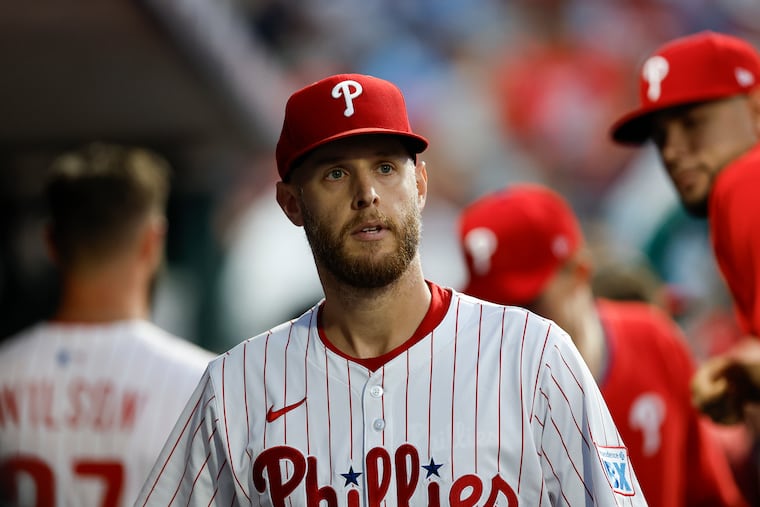
As the regular season wound down and playoff positioning took center stage, the Phillies were dealt a massive blow when ace right-hander Zack Wheeler was sidelined due to a serious medical issue. Wheeler, who had been the stabilizing force atop the rotation, was diagnosed with a blood clot in his right upper extremity. The timing could not have been worse, as Philadelphia was preparing for the grind of October baseball.
The news sent shockwaves through the organization and the fanbase alike. Losing any starter late in the year is difficult, but losing a pitcher of Wheeler’s caliber — one who consistently delivers elite performances in big moments — was nothing short of devastating.
MLB.com reporter Byron Kerr detailed the situation following a frustrating loss late in the season.
“Phillies right-handed starter Zack Wheeler was placed on the injured list with a right upper extremity blood clot, Phillies president of baseball operations David Dombrowski announced Saturday following the Phillies’ 2-0 loss to the Nationals,” Kerr reported.
For a team that had relied so heavily on Wheeler’s durability, consistency, and leadership, the absence created a ripple effect that was impossible to ignore. Not only did it weaken the rotation, but it also forced Philadelphia to lean more heavily on arms that were already being carefully managed. As the postseason approached, the Phillies suddenly faced uncertainty in an area that had once been a strength.
A Mostly Successful Offseason — With One Major Exception
Despite the disappointment of how the season ended, the Phillies entered the offseason with a clear objective: keep the core intact and make small, targeted improvements rather than dramatic changes. Philadelphia’s front office, led by president of baseball operations David Dombrowski, largely succeeded in that mission.
MORE: Phillies Announce Spring Training Non-Roster Invitees
Most of the team’s key contributors who reached free agency were retained, ensuring continuity and familiarity heading into the new season. That approach made sense for a roster that had proven it could compete at the highest level when healthy.
There was, however, one notable loss the Phillies could not avoid.
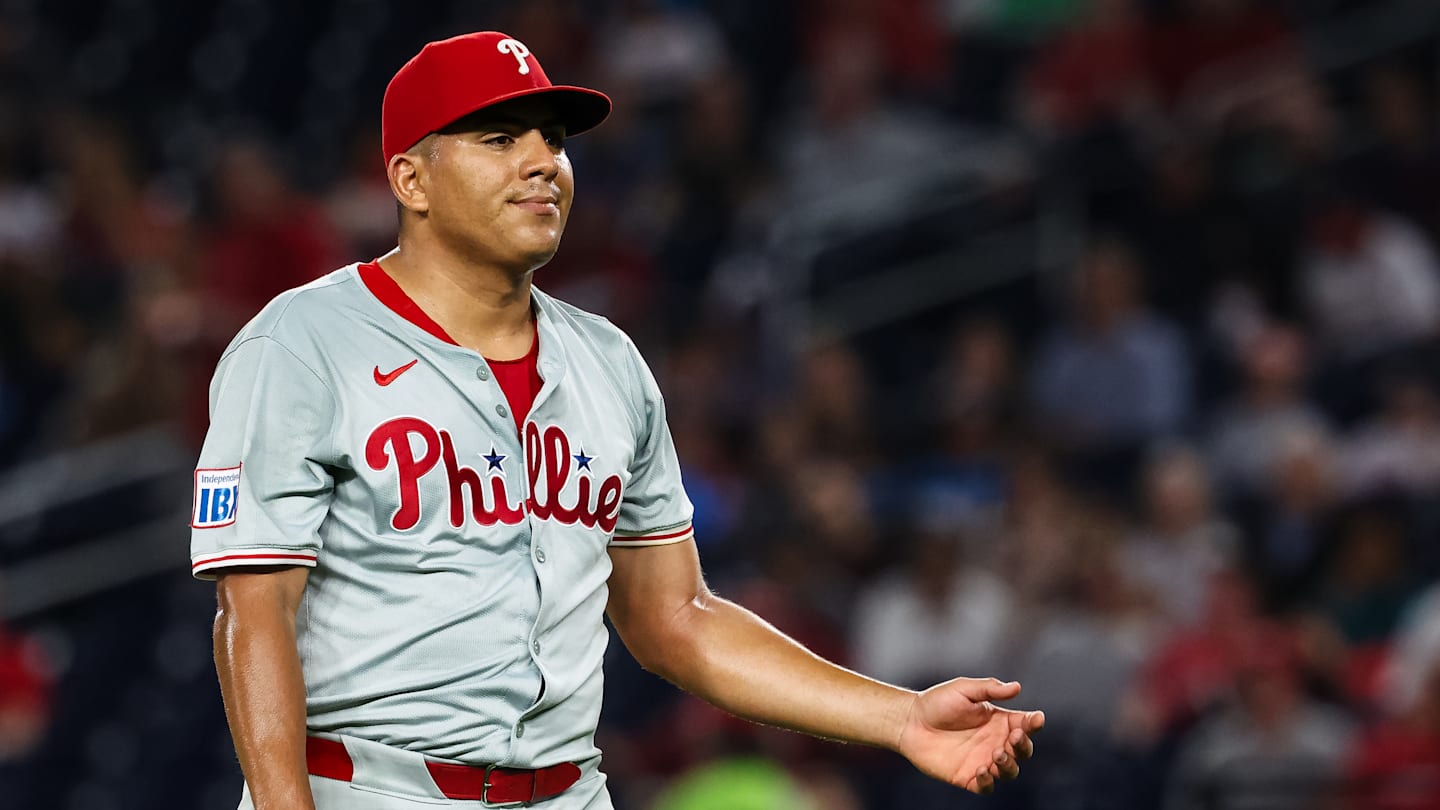
Left-handed starter Ranger Suárez, who had been a critical part of Philadelphia’s rotation, departed via free agency and signed a lucrative contract with the Boston Red Sox. Suárez had developed into a dependable and often dominant presence on the mound, and his departure left a noticeable void behind Wheeler, especially with questions still surrounding the ace’s health.
ESPN detailed the terms of Suárez’s agreement with Boston:
“Left-hander Ranger Suárez and the Boston Red Sox finalized their $130 million, five-year contract Wednesday. Suárez gets a $3 million signing bonus, payable within 30 days of the deal’s approval by Major League Baseball, and salaries of $7 million this year, $15 million in 2027, $30 million in each of the following two seasons and $35 million in 2030. The deal includes a $35 million mutual option for 2031 with a $10 million buyout.”
MORE: Braves To Trade Sean Murphy To Pirates For $77 Star, To Solidify Both Teams
That contract reflected just how highly Suárez was valued around the league. While the Phillies may have wanted to keep him, matching those financial commitments would have required sacrifices elsewhere on the roster. Ultimately, Philadelphia chose to stay disciplined rather than overextend.
Still, losing Suárez created an undeniable need within the rotation — one that becomes even more pressing if Wheeler is not able to return quickly or operate at full strength.
The Door Remains Open for Another Move
Although much of the offseason business is already complete, the Phillies are not necessarily finished making additions. Starting pitching remains one of the most valuable commodities in baseball, and teams with championship aspirations rarely stop searching for ways to improve their rotation depth.
That reality has led to speculation about whether Philadelphia could make one more move before the season begins.
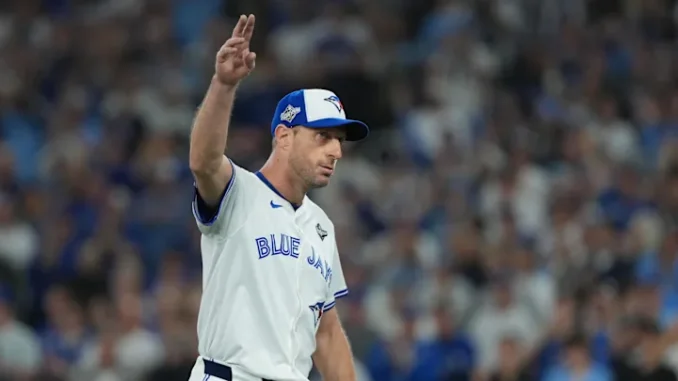
FanSided contributor Christopher Kline recently proposed a potential solution: signing veteran right-hander Max Scherzer.
Kline argued that adding Scherzer could serve as both a short-term fix and a strategic safeguard, especially with young prospect Andrew Painter expected to compete for a rotation spot in spring training.
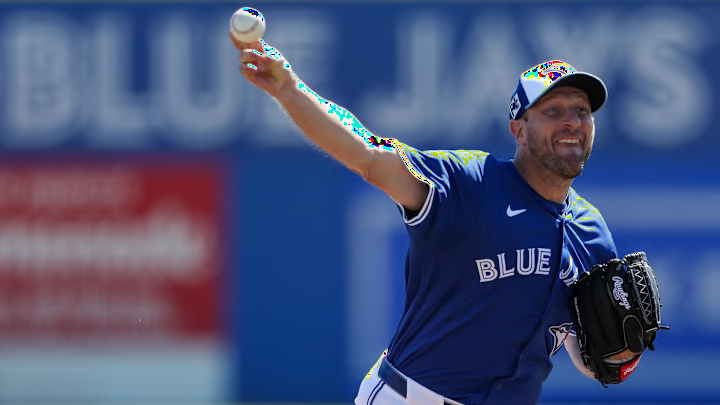
“All signs point to Painter competing for a job in spring training,” Kline wrote. “But if the Phillies can find an upgrade over Walker — or a complement to him, should Painter fail to earn a spot — it will solidify their standing in a rapidly improving NL East. Scherzer fits the bill. He’d serve as a simple one-year investment and a stopgap until Wheeler returns from the IL.”
The logic behind the suggestion is straightforward. Philadelphia does not necessarily need a long-term solution; they need stability and reliability until Wheeler is fully healthy and Painter proves he is ready to shoulder a major league workload.
“Scherzer is probably the best team he can realistically join,” Kline continued. “This move wouldn’t excite Phillies fans, but it’d fulfill a basic need without long-term baggage.”
Why Max Scherzer Makes Sense
While Max Scherzer may no longer be in his physical prime, his résumé remains one of the most impressive among active pitchers. A three-time Cy Young Award winner, Scherzer has built a Hall of Fame–caliber career defined by competitiveness, durability, and postseason success.
MORE: Mets send Brett Baty to the Mariners for switch-pitcher in 3-player blockbuster deal
Perhaps most importantly for Philadelphia, Scherzer brings something that cannot be taught: championship experience.
The veteran right-hander has won two World Series titles and has pitched in countless high-pressure games across multiple postseason runs. For a Phillies team that has come close to the ultimate prize but fallen short — most notably in their World Series loss to the Houston Astros — that experience could prove invaluable.
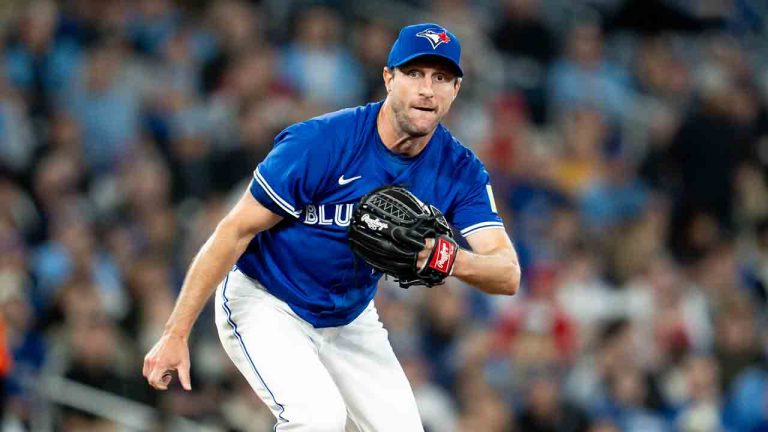
Even if Scherzer is no longer the overpowering force he once was, he remains capable of delivering quality innings and keeping a team competitive. In a rotation that already features strong arms, his presence would not need to carry the load every fifth day. Instead, he could provide leadership, reliability, and the occasional vintage performance.
From a roster-construction standpoint, a one-year deal also makes sense. Philadelphia would avoid long-term financial commitments while buying time for Wheeler’s recovery and Painter’s development. Once Wheeler returns, Scherzer could slide into a different role or serve as valuable depth as the season progresses.
A Rotation Worth Watching
If the Phillies were to land Scherzer and eventually welcome back a healthy Zack Wheeler, their starting rotation could quickly transform into one of the most complete units in the National League.
With Wheeler anchoring the staff, supported by a mix of established veterans and emerging young talent, there would be no obvious weak link. Depth — often the deciding factor over the course of a long season — would become a major strength rather than a concern.

That kind of rotation could be particularly important in a National League East that continues to grow more competitive. Teams like the Atlanta Braves and New York Mets are constantly seeking ways to improve, and standing still is rarely an option for contenders.
MORE: Braves Officially Makes Perfect Reunion After Recent Setback
For Philadelphia, the goal remains clear: not just returning to the postseason, but finally clearing the championship hurdle that has eluded this core group.
Adding a pitcher like Max Scherzer may not generate headlines or jersey sales, but baseball championships are often won through pragmatic, unglamorous decisions. Stability, experience, and depth tend to matter most when October arrives.
If the Phillies choose to make that final move, it could be the quiet addition that ultimately makes all the difference.

Be the first to comment