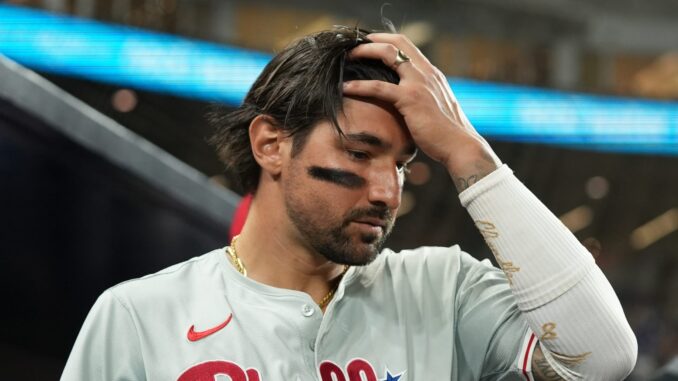
For much of the offseason, the Philadelphia Phillies have been quietly but persistently exploring ways to reshape their roster, and one name that has hovered near the center of those discussions is veteran outfielder Nick Castellanos.
Despite being just a season removed from All-Star recognition, Castellanos has reportedly been available in trade talks for months. Yet as spring training approaches, no agreement has materialized, leaving his future with the organization uncertain and the Phillies still searching for a workable solution.
The prolonged nature of the situation suggests that Philadelphia’s motivation is not rooted in a lack of belief in Castellanos’ talent, but rather in the financial and roster implications tied to his contract. Castellanos is owed a significant amount of money over the remaining years of his deal, and the Phillies, a team with championship aspirations and an already sizable payroll, are looking for flexibility.
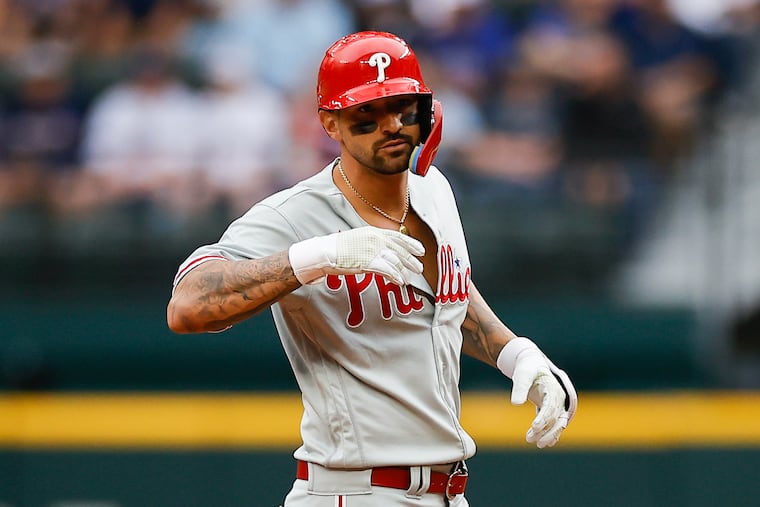
Shedding his salary would open doors to other roster upgrades or allow the front office to better allocate resources across pitching depth, bench production, or future extensions.
MORE: Dodgers blockbuster trade sends Roki Sasaki to Giants for $90 million ace
Even though no trade has been completed to this point, league insiders widely believe the Phillies will remain active on the trade market, particularly as Opening Day draws closer. History has shown that deals involving larger contracts often come together late in the offseason or even during spring training, when teams gain a clearer picture of their needs and roster deficiencies. Castellanos, given his resume and recent flashes of offensive production, remains a viable trade candidate under the right circumstances.
One such potential scenario was recently explored by Bleacher Report’s Tim Kelly, who proposed a deal that would send Castellanos to the Colorado Rockies before the start of the regular season. While speculative, the idea gained traction because it aligns with both teams’ organizational tendencies and current roster construction.
Kelly noted that Castellanos expressed openness earlier in the offseason to playing first base if a team asked him to do so. That willingness to adapt defensively could significantly broaden his appeal, particularly to clubs that may not have a clear long-term solution at the position or are looking for lineup versatility. For a team like the Rockies, who often prioritize offense due to their home ballpark, a player willing to shift between positions could be especially attractive.
At present, Colorado’s projected lineup features left-handed hitters at several key offensive spots. Mickey Moniak is expected to fill the designated hitter role, Troy Johnston is penciled in at first base, and Jake McCarthy is slotted into right field.
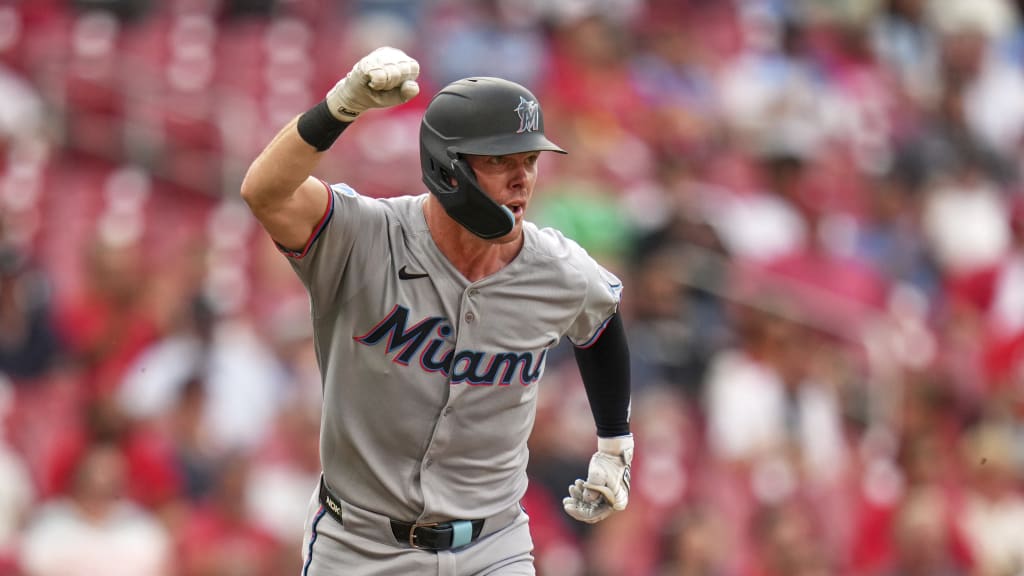
While each player brings certain strengths to the table, none carry Castellanos’ track record as a middle-of-the-order bat with postseason experience. Adding a right-handed hitter like Castellanos could help balance the lineup and provide protection for Colorado’s younger offensive pieces.
MORE: Cardinals Latest Trade Sends Top Lefty to Blue Jays
Coors Field, long known as one of the most hitter-friendly environments in Major League Baseball, also plays a major role in this hypothetical fit.
Castellanos has consistently been a line-drive hitter with power to all fields, a profile that has historically translated well in Denver. Even if he were to split time between right field, first base, and designated hitter, the offensive environment could allow him to post strong counting stats and rebuild some of the value that dipped earlier in his Phillies tenure.
Kelly also pointed out that Castellanos showed encouraging signs as recently as the second half of the 2024 season, when he posted an .839 OPS. That stretch served as a reminder that, despite inconsistencies, he still possesses the bat speed and approach necessary to be a productive everyday player. If placed in the right situation, particularly one that emphasizes offense, Castellanos could experience a bounce-back campaign.
From Colorado’s perspective, the gamble would be twofold. First, they would be betting that Castellanos can recapture his offensive form in a new environment. Second, they would be banking on the possibility that a strong first half could turn him into a valuable trade chip by July. The Rockies have frequently used this strategy in the past, taking on veterans with larger contracts in exchange for prospects, then flipping them at the deadline if things break right.
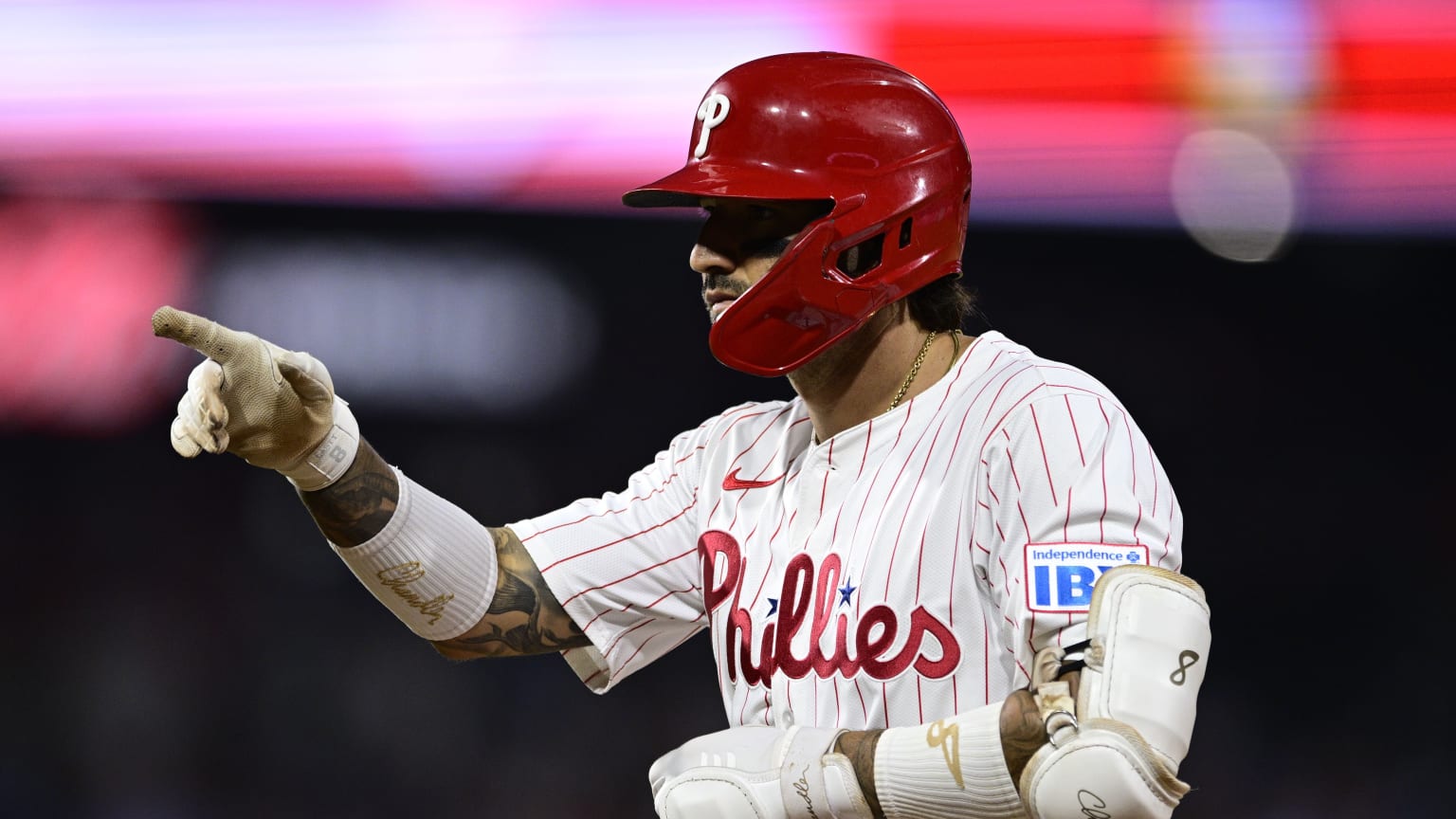
This approach fits neatly with the broader perception of Colorado’s front office, which has shown a willingness to absorb salary when incentivized by young talent.
Over the past few months, the Rockies have been loosely connected to Castellanos in league circles, largely because of their assumed openness to taking on his remaining contract if the deal also includes prospect capital. For a franchise that often operates on the fringes of contention, acquiring young assets while maintaining lineup competitiveness can be a practical middle ground.
MORE: 3 players Red Sox regret letting them go
On the Phillies’ side, the motivation is clear. Philadelphia boasts considerable outfield depth, making Castellanos somewhat redundant from a roster standpoint. With multiple capable outfielders already in place, keeping Castellanos would likely relegate him to a platoon or semi-regular role, an inefficient use of both his skill set and his salary. Paying premium money for a part-time contributor is not an appealing proposition for a team trying to maximize every roster spot.
As a result, the Phillies would almost certainly be willing to sweeten a deal by including a prospect if it meant fully removing Castellanos’ contract from their books.
While giving up young talent is never ideal, Philadelphia’s farm system has improved in recent years, and the front office may view such a move as a necessary cost of doing business. Clearing payroll space could ultimately provide more long-term value than holding onto a prospect blocked at the major-league level.

Financial flexibility remains a driving force behind this entire situation. Castellanos’ contract limits the Phillies’ ability to make additional moves, whether that involves addressing pitching depth, reinforcing the bullpen, or preparing for future negotiations with core players. In an era where marginal upgrades can make the difference between a deep playoff run and an early exit, reallocating resources efficiently is paramount.
MORE: Everything to know about SF Giants closer role as spring training nears
There is also the matter of clubhouse dynamics and lineup construction. Castellanos has been a professional presence, but lineup consistency is critical for a contending team. If his role were to fluctuate throughout the season, it could create unnecessary complications. A clean break, even if costly in terms of prospect capital, might be the most straightforward solution.
Timing will be key. As spring training progresses, injuries, underperformance, or unexpected developments around the league could shift market dynamics in Philadelphia’s favor. Teams that currently appear set may suddenly find themselves in need of offensive help, and Castellanos’ name could resurface in conversations. The Phillies, by keeping him available, position themselves to act quickly if an opportunity arises.
Meanwhile, Castellanos himself remains something of a wildcard. His openness to playing first base signals a desire to remain an everyday player and contribute meaningfully wherever he lands. For a veteran at this stage of his career, adaptability can be the difference between fading into a limited role and extending one’s productive years. A move to a team like Colorado, where expectations are different and opportunities more flexible, could be mutually beneficial.
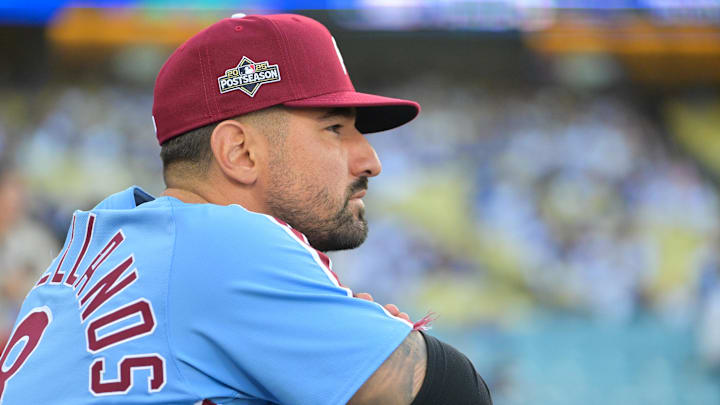
Ultimately, the situation underscores the complexities of modern roster management. Talent, contracts, positional depth, and competitive timelines all intersect in ways that make simple solutions rare. For the Phillies, moving Castellanos is less about talent evaluation and more about strategic optimization. For the Rockies, acquiring him would represent a calculated risk with potential upside both on the field and in future trade value.
As Opening Day approaches, the clock continues to tick. Whether Castellanos remains in Philadelphia, lands in Colorado, or ends up elsewhere entirely, his name is likely to stay in trade rumors until a final decision is made. What seems increasingly clear, however, is that the Phillies are motivated to find a resolution, and they are willing to be creative — even aggressive — to achieve it.
In the end, Castellanos’ fate may hinge on which team is most willing to balance short-term financial commitments against long-term organizational goals. Until that balance is struck, the offseason saga surrounding the All-Star outfielder will remain one of the more intriguing storylines to watch as the league transitions from winter speculation to on-field action.


Be the first to comment