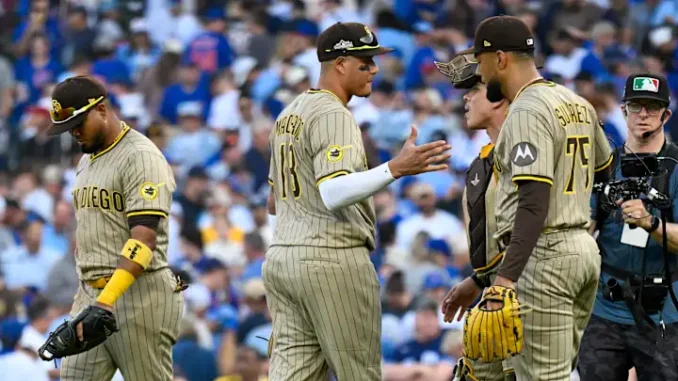
San Diego Padres news today and rumors. The San Diego Padres entered this offseason fully aware that the pitching staff would force a series of difficult decisions. Their rotation was already thin, their payroll had little room to stretch, and several key arms carried far more medical red flags than the team wanted to admit publicly. Yet, in an unexpected twist, He may have solved one of those dilemmas for them before the front office ever had to face it directly.
When He rejected the Padres’ $22.025 million qualifying offer, it was easy to interpret the move as a setback. Losing a versatile pitcher who had shown flashes of top-tier ability is rarely framed as a positive, especially for a club that lacks depth. On the surface, it looked like another problem for an organization already managing a complicated offseason.

But a closer look reveals that his decision might actually be a blessing for San Diego. Because of the team’s financial constraints, retaining King at that price would have tightened the payroll even further, potentially preventing the front office from addressing multiple other needs. And while King is often viewed as durable and reliable, his own injury history is more extensive than commonly perceived. Keeping him at such a salary would have carried notable risk for a franchise trying to stabilize its rotation.
MORE: Mets blockbuster land White Sox’s $20 million centerfielder
With King choosing to test the open market, the Padres gain unexpected flexibility. They avoid committing significant money to a pitcher whose long-term outlook remains uncertain, and they regain the freedom to explore alternative arms—possibly even multiple pitchers—for the same financial cost. In a way, King’s departure removes a major decision from their plate, allowing the club to redirect resources toward building a more balanced and sustainable staff for 2026 and beyond.
Michael King’s free agency gamble might actually help the Padres’ rotation plan
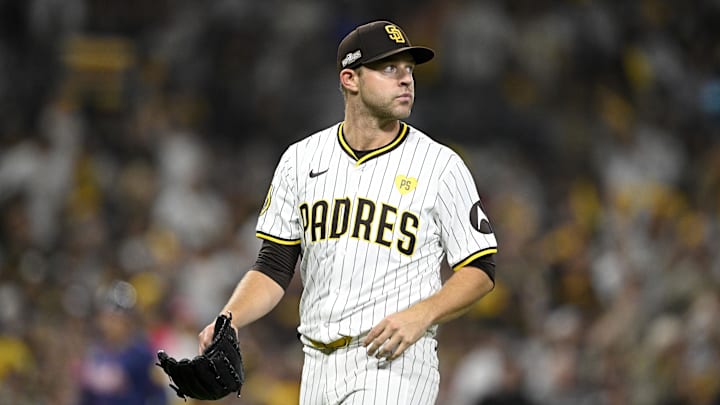
The Padres enter this offseason with a clear and pressing need: stability. After enduring a 2025 season full of rotation turbulence, they simply cannot afford another roll of the dice on a pitcher who might or might not be available every fifth day. That’s why Michael King’s decision to reject their qualifying offer may ultimately work to the team’s benefit, even if at first glance it appears to be a setback.
King is a dynamic arm when everything is clicking, and few dispute how electric he can be at the top of a rotation. But the past year made it impossible to ignore the uncertainties tied to his workload. Expecting him to routinely deliver a full slate of 30 starts seems more like an optimistic projection than a realistic plan.
The San Diego Padres news today and rumors took a calculated risk in extending the qualifying offer — a figure just above $22 million for one year — because the cost of reliable mid-rotation pitching continues to soar across the league. In that context, tendering the QO wasn’t an irresponsible move.

It was a hedged bet: retain King for a single season without being locked into long-term risk if he accepted, or collect draft-pick compensation if he declined. By turning down the offer, King removed the possibility of San Diego feeling obligated to commit multiple years to a pitcher whose durability has become increasingly difficult to project.
MORE: Done Deal: Atlanta Braves officially confirmed another blockbuster deal
No one questions King’s skill set. When healthy, he flashes genuine ace-level dominance. His stuff, pitchability, and ability to miss bats all suggest a pitcher capable of anchoring a contender’s rotation. Yet that upside was overshadowed in 2025 by a string of interruptions — physical issues, inconsistent stretches, and stops and starts that made it hard for him to regain rhythm for any sustained period.
Instead of being the dependable force the Padres hoped would stabilize their starting group, King became a symbol of the volatility that plagued their pitching staff.
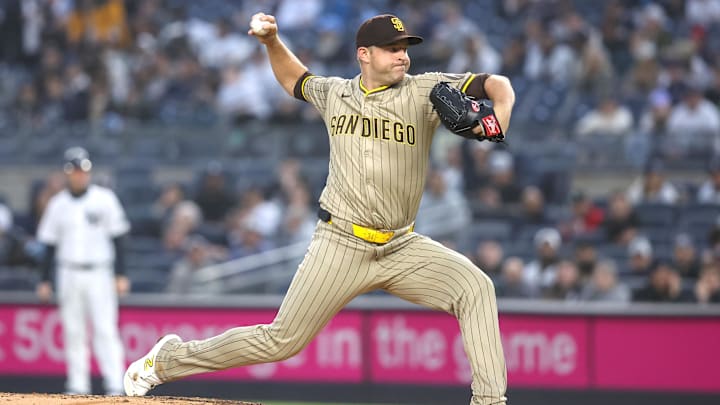
He ultimately wrapped up the season with just 15 starts, posting a respectable 3.44 ERA despite the limited workload. On a per-start basis, he often looked like the pitcher many evaluators rave about. But the broader concern — his ability to stay on the field — remains at the forefront of any team’s evaluation.
That makes his market one of the offseason’s more intriguing puzzles. Teams acknowledge the risk, but they also recognize the upside. Pitchers with King’s level of talent rarely reach free agency, even with health questions attached.
Industry projections have coalesced around a contract in the three-year range, with estimates landing between $69 million and $75 million. That works out to roughly $23 million per season — essentially identical to the qualifying offer number, only stretched across a longer commitment. Another projection model envisions a shorter-term, high-AAV bet: two years at around $56 million.
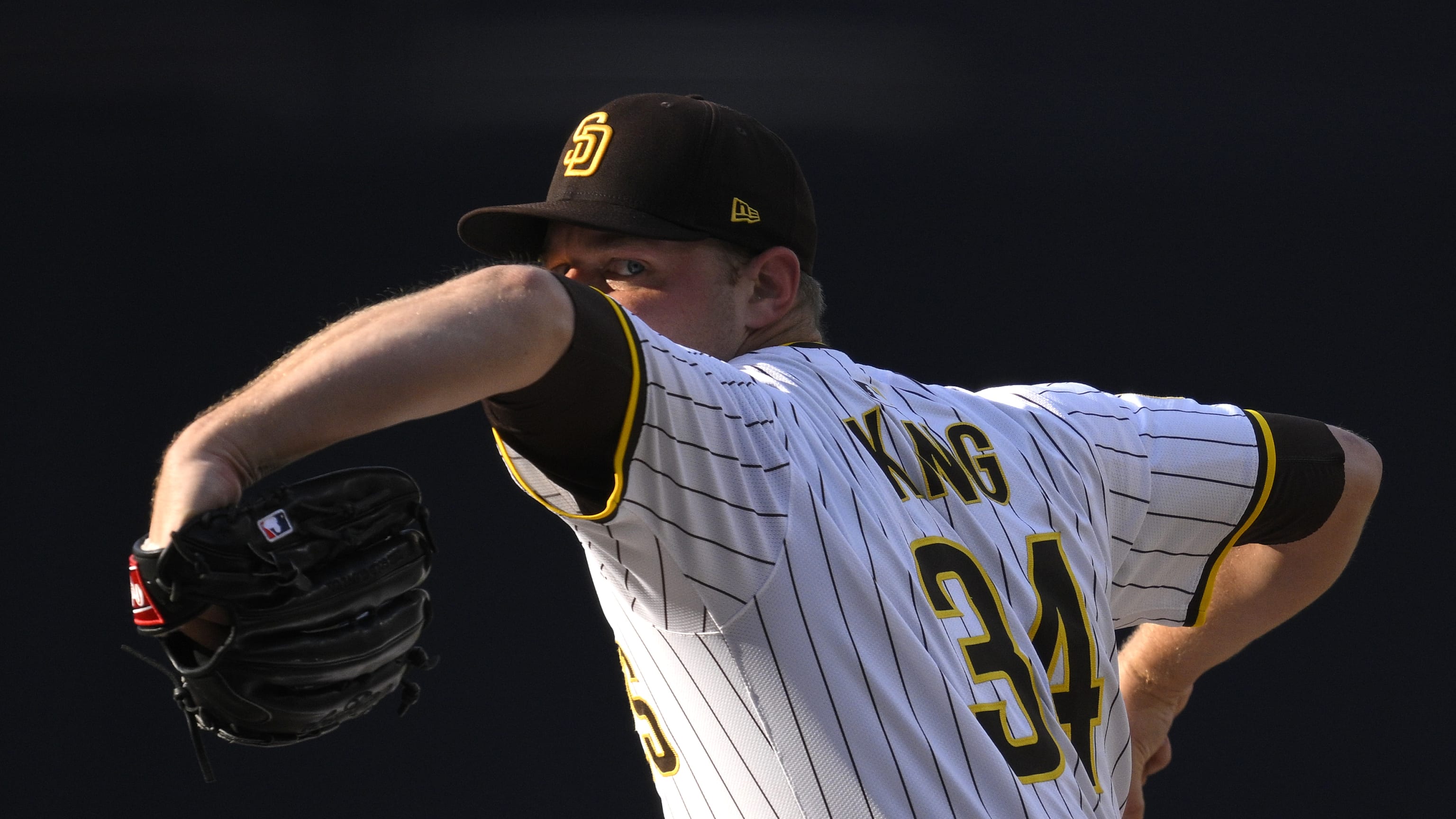
That kind of deal would allow a signing team to gamble on King’s rebound potential without venturing into longer-term danger, while giving King an opportunity to reset his durability baseline before hitting the market again.
But whether it’s two years or three, any team signing him must be comfortable taking on real physical uncertainty. For the Padres, already dealing with a depleted and injury-burdened rotation, adding another pitcher with a significant durability question mark could complicate the bigger goal of building a reliable staff.
They need arms they can count on — pitchers who can absorb innings, reduce bullpen strain, and keep the rotation from collapsing under the weight of one or two injuries. King may yet thrive somewhere else, and it wouldn’t be surprising if he delivers stretches of brilliance reminiscent of the pitcher San Diego envisioned as a foundational piece.

But given the price tag and the volatility attached, the Padres might be better served investing their resources into a sturdier option — someone with a track record of taking the ball consistently across an entire season.
MORE: Giants blockbuster land affordable former D-backs pitcher to solidify bullpen
King’s decision to decline the qualifying offer doesn’t repair the Padres’ rotation issues on its own. They still need multiple reliable arms, and they still face a difficult balancing act between cost, risk, and upside. However, his choice does give them something valuable: clarity. With King off the board at the QO price and the team freed from the pressure of negotiating a multi-year pact with him, San Diego can more cleanly redirect its financial flexibility toward targets who more closely align with their needs.
In a winter where stability means everything for the Padres, King walking away might be less of a setback and more of an opportunity. It puts the organization in a position to focus on securing the type of long-term reliability their rotation has lacked — the kind of foundation they need if they hope to re-establish themselves as a consistent contender moving forward.
MORE MLB NEWS:
-
BREAKING: Blue Jays to Lose Bo Bichette to Fierce Rival Boston Red Sox
-
PLAN B: Mariners’ Make Significant Blockbuster Trade Move For Diamondbacks’ Versatile Infielder Amid Jorge Polanco Uncertain
-
Royals-Red Sox Perfect Blockbuster Trade Upgrades Outfield
-
Mets’ 3-Team Blockbuster Trade Nab Intriguing $31 Million All-Star Pitcher
-
Mariners to land 56-HR third baseman as replacement for Eugenio Suarez
-
Breaking: Cardinals’ superstar officially pushing toward surprising offseason move after problematic relationship




Be the first to comment