The Boston Red Sox may want to explore a potential pitching addition by evaluating a right-hander who was recently removed from the roster of the New York Yankees. With roster flexibility always at a premium and pitching depth often tested over the course of a long season, taking a chance on a young arm with some upside could prove to be a low-risk, potentially rewarding move.
The pitcher in question is 25-year-old Cade Winquest, who found himself in an unusual situation after being designated for assignment. His journey to this point has been somewhat unconventional, shaped in part by the intricacies of Major League Baseball’s roster rules and the dynamics of the Rule 5 Draft.
The Yankees initially acquired Winquest during the Major League phase of the 2025 Rule 5 Draft, selecting him with the No. 11 overall pick. This selection indicated that New York saw enough promise in his abilities to justify carrying him on their major league roster, at least initially.
Before joining the Yankees organization, Winquest spent the first three years of his professional career developing within the St. Louis Cardinals system. He had originally been drafted by St. Louis in the eighth round of the 2022 MLB Draft, a selection that placed him among a large group of hopeful prospects aiming to climb through the minor league ranks. Like many mid-round picks, his path required steady development, consistency, and the ability to adapt to increasingly competitive levels of play.
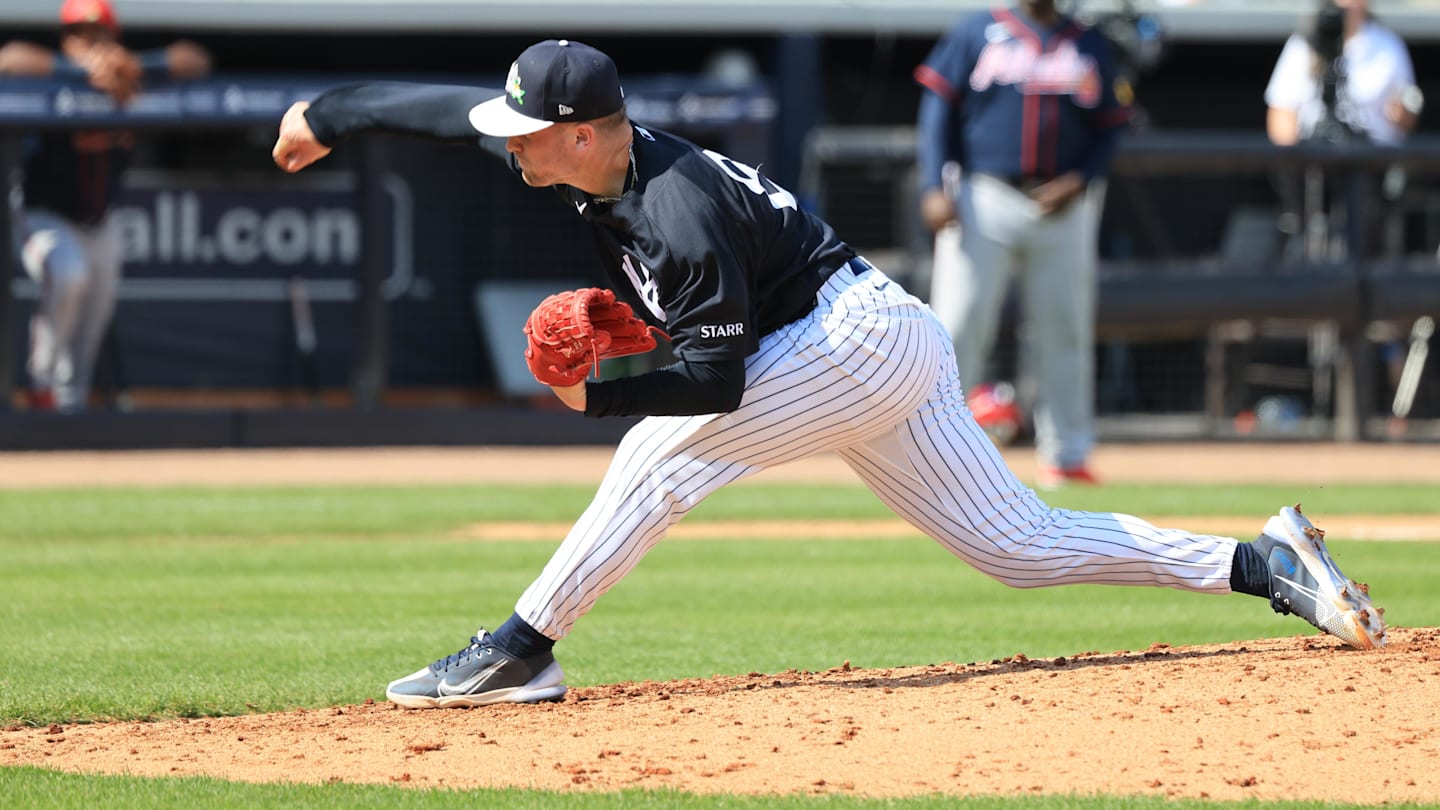
Winquest officially began his professional career in 2023, marking his debut season in organized baseball. Over the next few years, he gradually built up experience across multiple levels of the Cardinals’ minor league affiliates. In total, he appeared in 58 games within the organization, gaining valuable innings and refining his pitching repertoire. While he may not have been considered one of the Cardinals’ top-tier prospects, he evidently showed enough potential to catch the attention of other teams around the league.
MORE: Braves-Angels Trade Lands Didier Fuentes, Luke Sinnard, Conor Essenberg In 4-Player Deal
That attention culminated in his selection by the Yankees in the Rule 5 Draft, a mechanism designed to give opportunities to players who might otherwise be blocked within their original organizations. By selecting Winquest, New York committed to keeping him on their major league roster or risk losing him. It was a calculated gamble—one that suggested the Yankees believed he could either contribute immediately or develop quickly enough at the big league level.
Interestingly, Winquest managed to impress enough during spring training to earn a spot on the Yankees’ roster coming out of camp. Making a major league roster through the Rule 5 process is no small feat, as it requires outperforming other players who may have more experience or established track records. However, despite securing that roster spot, he never actually appeared in a regular-season game for New York.
According to Jon Heyman of the New York Post, the Yankees ultimately decided to designate Winquest for assignment. This move effectively removed him from their 40-man roster and placed his immediate future in limbo. Heyman succinctly reported the development, noting that Winquest had made the team out of spring training but did not get the opportunity to make his major league debut.
Being designated for assignment, especially as a Rule 5 pick, introduces a unique set of circumstances. Under Rule 5 regulations, players selected in the Major League phase must remain on the selecting team’s active roster. If the team decides it can no longer carry the player, it must first expose him to waivers. Should another team claim him, that new club must also adhere to the same Rule 5 restrictions, meaning the player must remain on their major league roster as well.
If Winquest clears waivers without being claimed, the Yankees are then required to offer him back to his original organization—the Cardinals. This step is a key component of the Rule 5 system, as it ensures that teams cannot simply stash selected players in the minors without consequence. In many cases, players in this situation do end up returning to their former clubs, particularly if other teams are hesitant to commit a roster spot to someone who has yet to prove himself at the major league level.
For the Red Sox, this scenario presents an interesting opportunity. If they believe Winquest has untapped potential, they could consider placing a waiver claim and taking on the Rule 5 obligation. Doing so would require a willingness to keep him on the major league roster, which is not always easy, especially for a team trying to remain competitive. However, it could also allow Boston to acquire a controllable arm without surrendering prospects or other assets in a trade.
MORE: Red Sox Officially Announce Super Trade With Cardinals
There is always an element of risk involved in such a move. Winquest has yet to pitch in a major league game, and his track record in the minors, while respectable, does not guarantee success at the highest level. On the other hand, pitchers often develop later than position players, and a change of scenery—combined with the right coaching—can sometimes unlock previously unseen potential.
Ultimately, the decision for Boston would come down to roster flexibility and long-term vision. If they have room to experiment and are intrigued by Winquest’s skill set, taking a chance could be worthwhile. If not, they may choose to pass and allow another organization—or even the Cardinals—to take the next step in his development.
In any case, Winquest’s situation highlights the complexities of roster management in Major League Baseball, as well as the opportunities that can arise from them. For a player still searching for his first big league appearance, the next few days could prove pivotal in determining where his career heads next.
The Red Sox should take a chance on the former Yankee
Even with the concerns surrounding his recent performance, the Boston Red Sox would be wise to at least evaluate Cade Winquest as a potential addition to their pitching staff. At this stage of his career, Winquest remains something of an unknown at the major league level, as he has yet to make his official debut.
His results during Spring Training with the New York Yankees did not inspire much confidence on the surface, as he posted a 7.20 ERA over the course of nine appearances out of the bullpen. Those numbers, admittedly, are far from impressive and would typically raise questions about a pitcher’s readiness to compete at the highest level.
MORE: Mets under the radar move sign $22M Braves World Series champion to bolster bullpen
However, statistics from Spring Training can often be misleading, especially for pitchers who are adjusting to new roles, facing inconsistent competition, or experimenting with different aspects of their repertoire. What stands out more than his inflated ERA is the fact that the Yankees still chose to include him on their roster despite those struggles.
That decision carries weight. The Yankees organization has developed a reputation over the years for identifying and refining pitching talent, often turning overlooked arms into valuable contributors. Their ability to evaluate pitchers is widely respected across the league, so their willingness to give Winquest a shot suggests there is something intriguing beneath the surface.
From a scouting perspective, Winquest possesses tools that are difficult to teach. His fastball is a legitimate weapon, capable of reaching the upper 90s in velocity, which immediately gives him a baseline level of effectiveness. Pitchers who can throw that hard will always draw attention, particularly when paired with a secondary pitch that shows promise.
In Winquest’s case, his curveball has been graded as a plus offering, indicating that it has the potential to be an above-average pitch at the major league level. A combination like that—a high-velocity fastball and a quality breaking ball—often forms the foundation for success, especially in a bullpen role where pitchers can rely on a smaller mix of pitches and focus on maximizing their strengths.

Interestingly, Winquest’s role has evolved over time. During his tenure in the St. Louis Cardinals’ minor league system, he spent a significant portion of his development as a starting pitcher. In 2025 alone, he appeared in 25 games across the minors, with 23 of those outings coming as a starter.
Over that span, he posted a respectable 3.99 ERA while splitting time between Double-A and High-A levels. Those numbers suggest that he was capable of handling a starter’s workload and navigating opposing lineups multiple times through the order. That kind of experience can be valuable, even if his long-term future ultimately lies in the bullpen.
MORE: Braves officially add more pitching help to the 40-man roster in trade with Angels
The Yankees made the decision to transition him into a relief role during Spring Training, a move that is not uncommon for pitchers with his profile. Shifting from starting to relieving can sometimes unlock a pitcher’s full potential, allowing them to focus on their best pitches and pitch with greater intensity over shorter outings.
It can also lead to an increase in velocity, as pitchers are no longer required to conserve energy for extended appearances. While the early results in this new role were not ideal, it is important to remember that such transitions often come with an adjustment period.
For the Red Sox, the timing of a potential move could make sense given their current situation. With Johan Oviedo sidelined due to injury, the team finds itself in need of additional pitching depth. Injuries are an inevitable part of a long baseball season, and having capable arms ready to step in can make a significant difference.
Winquest’s background as a starter makes him particularly appealing in this context, as he has the ability to provide multiple innings if needed. That kind of versatility is highly valuable, especially in today’s game where bullpen usage is more dynamic than ever.

Beyond his immediate utility, there is also the element of upside to consider. Winquest is still relatively young and continues to develop as a pitcher. His raw tools—namely his fastball velocity and the potential of his secondary pitches—suggest that there is room for growth.
Sometimes, all a player needs is the right environment or a slight adjustment in mechanics or approach to unlock that potential. The Red Sox have had success in the past with reclamation projects and Rule 5 selections, finding value in players who were overlooked or undervalued by other organizations. Winquest could very well fit into that mold.
MORE: Understand 17-year-old top prospect can now be considered new Phillies player, as first Australian MLB signing of 2026
Another factor working in Boston’s favor is the relatively low risk associated with taking a chance on a player like Winquest. Since he was a Rule 5 selection, the process surrounding his roster status provides a built-in safety net.
If the Red Sox were to acquire him and things did not pan out, they could follow a similar path to what the Yankees are currently doing—designating him for assignment and potentially returning him to his original organization, the Cardinals, for a minimal cost. This kind of low-commitment opportunity makes it easier for teams to take calculated risks without jeopardizing their long-term plans.
It is also worth noting that the Yankees’ interest in Winquest is not something that should be dismissed lightly. Organizations do not make Rule 5 selections arbitrarily; they identify players they believe have untapped potential or specific traits that can translate to success at the major league level.
The fact that the Yankees saw enough in Winquest to select him and keep him on their roster, even after a rough Spring Training, speaks volumes about their internal evaluation. For the Red Sox, it would not be unreasonable to trust that assessment and see if they can extract value from the same player.

In the short term, Winquest represents an intriguing option for a team dealing with injuries and looking to bolster its pitching staff. He may not be a finished product, and there is certainly some risk involved given his lack of major league experience and recent struggles. However, the potential reward could outweigh those concerns. If he can refine his command, adjust to his bullpen role, and take advantage of his natural abilities, he could develop into a useful contributor.
Ultimately, the decision comes down to whether the Red Sox are willing to take a chance on a player with upside but limited track record at the highest level. Given their current need for pitching depth and their history of success with similar players, it seems like a worthwhile gamble. At the very least, bringing Winquest into the organization would provide an opportunity to evaluate him more closely and determine whether he can be part of their plans moving forward.
With Oviedo expected to miss time, the Red Sox have a clear incentive to explore all available options. Winquest may not be a guaranteed solution, but he offers a combination of tools, experience, and potential that makes him an appealing candidate. Even if his stint with the team ends up being brief, the cost of taking that chance is minimal, and the potential upside makes it a move worth considering.

Be the first to comment