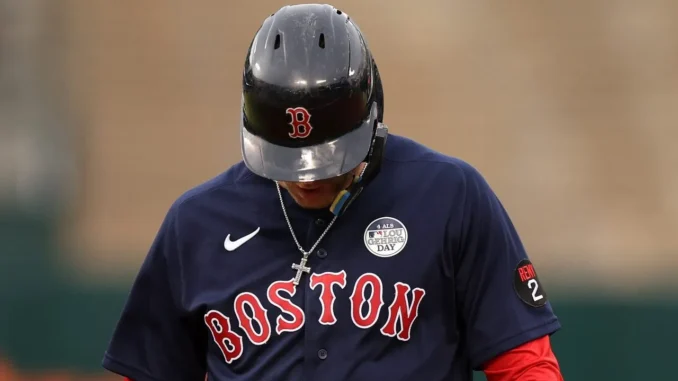
The Boston Red Sox are in the final stages of preparing for the start of a new Major League Baseball season, focusing not only on their big-league roster but also making important decisions throughout their farm system. As Opening Day approaches, organizations often take time to reassess their depth, evaluate player development progress, and make difficult calls regarding prospects who have not met expectations.
In that spirit, the Red Sox made a notable move on Wednesday by parting ways with minor league outfielder Juan Chacon, signaling the end of a once-promising chapter within their player development pipeline.
Chacon’s release marks a significant moment when considering the expectations that surrounded him at the beginning of his professional career. Originally signed during the 2019–2020 international free agent period, Chacon was viewed as one of the standout talents available on the international market that year.

The Red Sox demonstrated their belief in his potential by awarding him a signing bonus of $900,000, the largest they committed to any international prospect during that signing window. That level of investment underscored the organization’s confidence that Chacon could eventually develop into a meaningful contributor at higher levels of the minor leagues, and perhaps even reach the majors.
MORE: Seattle Mariners official 2026 Opening Day roster
Hailing from Venezuela, Chacon entered the Red Sox system with a reputation for strong contact skills, advanced plate discipline for his age, and the kind of offensive profile that suggested he could grow into a consistent hitter. Early returns seemed to support that optimism. In his first professional experience, which came in the Dominican Summer League, Chacon delivered an impressive statistical performance that quickly placed him on the radar of evaluators within the organization and beyond.
Over the course of 47 games in the DSL, Chacon compiled a .311 batting average, complemented by a .426 on-base percentage and a .384 slugging percentage. Those numbers painted the picture of a hitter who could consistently reach base and handle pitching at that level with relative ease. While he did not display significant power—recording only eight extra-base hits—his ability to put the ball in play and avoid outs stood out.
He totaled 43 singles, demonstrating a contact-oriented approach, and showed patience at the plate by drawing 26 walks. Within his team context, Chacon’s performance was even more notable: he led his squad in total hits and ranked third in walks, further emphasizing his offensive contributions.
At that stage, the lack of power was not viewed as a major concern. Many young international prospects begin their careers with a focus on contact and approach, with power expected to develop as they mature physically and refine their swing mechanics. As such, Chacon’s debut season was widely considered a success and reinforced the belief that the Red Sox had made a smart investment.
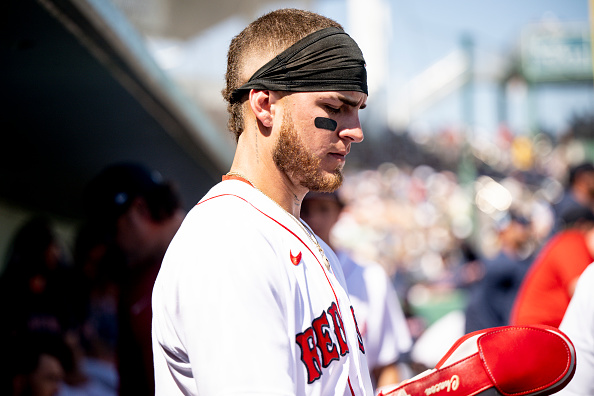
However, the trajectory of Chacon’s career began to shift in the seasons that followed. The transition from the Dominican Summer League to more competitive environments often presents challenges, and for Chacon, that adjustment proved difficult. In his next season, he split time between the Florida Complex League and Single-A competition. Rather than building upon his initial success, his performance took a noticeable step backward.
MORE: Angels Officially Whittle Down Their Roster, Land Swingman Before Opening Day
During that campaign, Chacon struggled to maintain the same level of offensive production, finishing with a .207 batting average. The drop in performance raised concerns about his ability to handle more advanced pitching, as well as questions about whether his skill set would translate effectively as he moved up the minor league ladder. Pitchers at higher levels tend to have better command, more varied arsenals, and a greater ability to exploit weaknesses, and Chacon appeared to be grappling with those adjustments.
The following season offered some signs of improvement, but not enough to fully restore confidence in his long-term outlook. Playing in Single-A, Chacon posted a .241 batting average and recorded a .685 OPS over 57 games.
While these numbers represented progress compared to the previous year, they still fell short of the expectations typically associated with a highly regarded international signing. Evaluators often look for steady upward trends in performance, particularly from players who received significant signing bonuses, and Chacon’s incremental gains were viewed as modest at best.
As Chacon continued to advance through the system, the challenges persisted. By 2024, he had reached the High-A level, a step that typically separates legitimate prospects from organizational depth players. Unfortunately, his offensive struggles became even more pronounced. Over the course of that season, Chacon hit just .203 and posted an OPS below .600, indicating ongoing difficulties in making consistent contact and generating impactful at-bats.
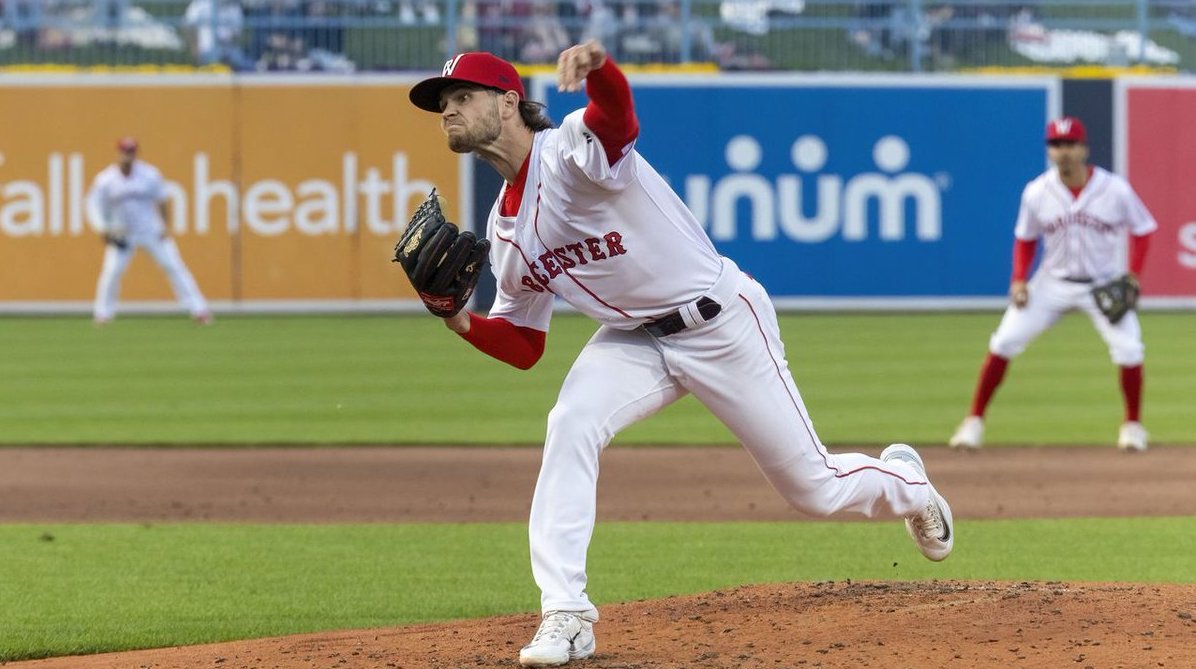
At this stage of development, players are generally expected to demonstrate clearer signs of growth, whether through improved plate discipline, power development, or overall offensive consistency. For Chacon, those indicators were largely absent.
MORE: White Sox Officially Make Shocking Roster Move with Another Super Addition
Despite the setbacks, the Red Sox continued to give Chacon opportunities to prove himself, reflecting both their initial investment and the understanding that player development is rarely linear. Prospects can take time to adjust, and late breakthroughs are not uncommon in baseball. Entering the 2025 season, it was evident that Chacon was approaching a critical juncture in his career.
With multiple seasons of underwhelming performance behind him, the upcoming year represented a final opportunity to demonstrate that he could still fulfill some portion of his early promise.
During that season, Chacon split his time between High-A and Double-A, marking his first exposure to the latter level. Double-A is often considered one of the most challenging steps in the minor leagues, as it features a blend of advanced prospects and experienced players who are close to major league readiness. Unfortunately for Chacon, the results once again fell short. Across 53 games, he posted a .225 batting average, continuing a pattern of inconsistent offensive output.
While there may have been moments of improvement or flashes of potential, the overall body of work did not provide enough evidence to suggest a meaningful turnaround was imminent. For an organization like the Red Sox, which must continually evaluate and prioritize its minor league talent, such prolonged struggles become increasingly difficult to overlook.

Adding to the situation was Chacon’s performance during spring training leading up to the current season. Although spring training statistics are often taken with a grain of salt, they can still influence roster decisions, particularly for players on the fringe. In Chacon’s case, he went hitless in five at-bats, failing to make an impression during a period when opportunities to stand out are especially valuable.
MORE: “Welcome to Philadelphia” Phillies Reportedly Re-sign Highly Touted Ace
Ultimately, the decision to release Chacon reflects the cumulative weight of several seasons of unmet expectations. From a player once viewed as one of the organization’s most intriguing international signings, his trajectory did not align with the development path the Red Sox had envisioned. Four consecutive seasons of below-average offensive production, combined with limited signs of progression, led the organization to conclude that it was time to move in a different direction.
Such decisions are a routine but often difficult aspect of managing a professional baseball organization. For every highly touted prospect who fulfills their potential, there are many others whose careers take a different path. Factors such as adjustments to higher levels of competition, physical development, mental resilience, and even external circumstances all play a role in shaping a player’s journey.
For Chacon, the end of his time with the Red Sox does not necessarily mark the end of his baseball career. Players who are released from one organization often find opportunities elsewhere, whether through minor league contracts with other teams, independent leagues, or international play. In some cases, a change of environment can provide a fresh start and help a player rediscover their form.
From the Red Sox’s perspective, the move allows them to reallocate resources and roster space to other players within their system. Minor league rosters are limited, and organizations must balance the need to develop young talent with the reality of performance-based evaluation. By releasing Chacon, the Red Sox open up opportunities for other prospects to advance and receive playing time.

Looking back, Chacon’s journey serves as a reminder of the inherent uncertainty in prospect development. Even players who generate significant excitement early in their careers are not guaranteed success, and the path to the major leagues is often filled with challenges and setbacks.
MORE: Angels Quietly Make Another Roster Cut
While his initial performance in the Dominican Summer League hinted at a bright future, sustaining that success against increasingly difficult competition proved to be a hurdle he could not overcome within the Red Sox system.
As the team shifts its focus to the upcoming season, the decision underscores their commitment to maintaining a competitive and evolving roster at all levels. While parting ways with a former top international signing is never taken lightly, it reflects the organization’s broader strategy of continually assessing talent and making decisions that align with their long-term goals.
In the end, Chacon’s tenure with the Red Sox will be remembered as one that began with considerable promise but ultimately did not reach the heights many had anticipated. His story is one of both potential and the challenges of realizing it, illustrating the unpredictable nature of baseball development and the difficult choices teams must make along the way.

Be the first to comment