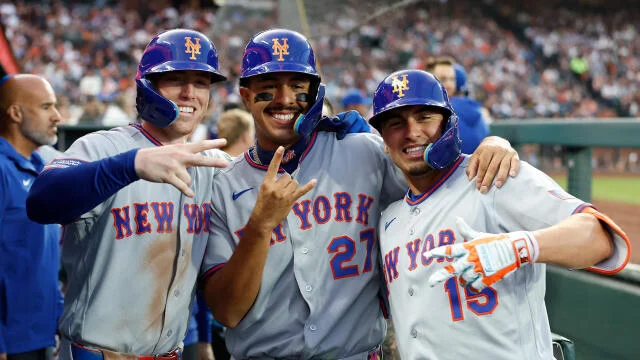
The New York Mets entered the 2025 Major League Baseball season with considerable momentum and high expectations, quickly establishing themselves as one of the most dominant teams in the league during the early months. Their strong start created the impression that they were legitimate contenders, perhaps even the best team in baseball at that point.
However, what initially appeared to be a promising campaign ultimately unraveled in dramatic and unexpected fashion. Instead of sustaining their early success and securing a postseason berth, the Mets experienced a steep and prolonged downturn that completely derailed their season, culminating in a disappointing failure to reach the playoffs.
At one stage, the Mets held an impressive 45–24 record, which not only placed them firmly at the top of the standings but also gave them the best record across all of Major League Baseball. Their performance during this stretch suggested a well-balanced and highly competitive team capable of making a deep postseason run. Yet, as the season progressed, their level of play declined sharply.
Over the remainder of the year, the team posted a 31–47 record, a stark contrast to their earlier dominance. This dramatic reversal in fortunes saw them fall behind not just playoff contenders but also teams that struggled for much of the season, including the Colorado Rockies, Minnesota Twins, and Washington Nationals in terms of performance during that stretch.
The extent of the Mets’ decline drew widespread attention and criticism from analysts and insiders. Jeff Passan of ESPN famously characterized the team’s downfall as something far worse than a typical slump. In his assessment, the situation could not simply be described as a “collapse,” a term often used in sports to denote a late-season decline.
Instead, he described it as a “disintegration,” emphasizing just how thoroughly the team had fallen apart. His comments underscored the severity of the Mets’ struggles and reflected a broader sentiment that their season had spiraled beyond recovery.
MORE: Braves officially add more pitching help to the 40-man roster in trade with Angels
Looking ahead to the 2026 campaign, it became clear that the Mets needed to make significant changes, particularly in their pitching staff. While their offense had shown flashes of competence, their pitching rotation had proven to be a major weakness throughout the 2025 season.
The inability to consistently deliver strong performances on the mound was widely viewed as one of the primary reasons behind their late-season collapse. Recognizing this critical flaw, the organization made it a priority to upgrade its starting pitching during the offseason.
In pursuit of this goal, the Mets engaged in an extended effort to acquire a top-tier starting pitcher who could anchor their rotation and provide stability. This search ultimately led them to strike a deal with the Milwaukee Brewers, resulting in the acquisition of All-Star pitcher Freddy Peralta. Along with Peralta, the Mets also brought in fellow right-handed pitcher Tobias Myers, further bolstering their pitching depth.
The trade, as reported by Jorge Castillo of ESPN, marked the culmination of the Mets’ persistent offseason pursuit of a frontline starter. However, the deal came at a significant cost. In exchange for Peralta and Myers, New York parted with two of its most highly regarded prospects, Brandon Sproat and Jett Williams. Both players were viewed as key pieces of the Mets’ future, making the trade a bold and potentially risky move aimed at addressing immediate needs rather than long-term development.
As the 2026 season got underway, the Mets showed signs of modest improvement but had yet to fully establish themselves as a dominant force. At 4–4 through their first eight games, the team’s performance could best be described as average. While not indicative of the struggles that plagued them in the latter half of 2025, their record also suggested that there was still considerable work to be done. Consistency remained an issue, and it was clear that the team was still in the process of finding its identity.
MORE: Understand 17-year-old top prospect can now be considered new Phillies player, as first Australian MLB signing of 2026
In addition to strengthening their starting rotation, the Mets also turned their attention to improving their bullpen, which had undergone notable changes. One of the most significant developments was the departure of star closer Edwin Díaz, who joined the Los Angeles Dodgers.
Díaz’s exit left a considerable void in the Mets’ relief corps, as he had been one of the most reliable and dominant closers in the league. Replacing his production would be no easy task, and the team needed to explore additional options to reinforce their bullpen.
In an effort to address this need, the Mets made a low-risk move by signing veteran reliever Luke Jackson to a minor league contract. The signing, first reported by Will Sammon of The Athletic, represented a strategic attempt to add depth and experience to the pitching staff without making a major financial commitment.
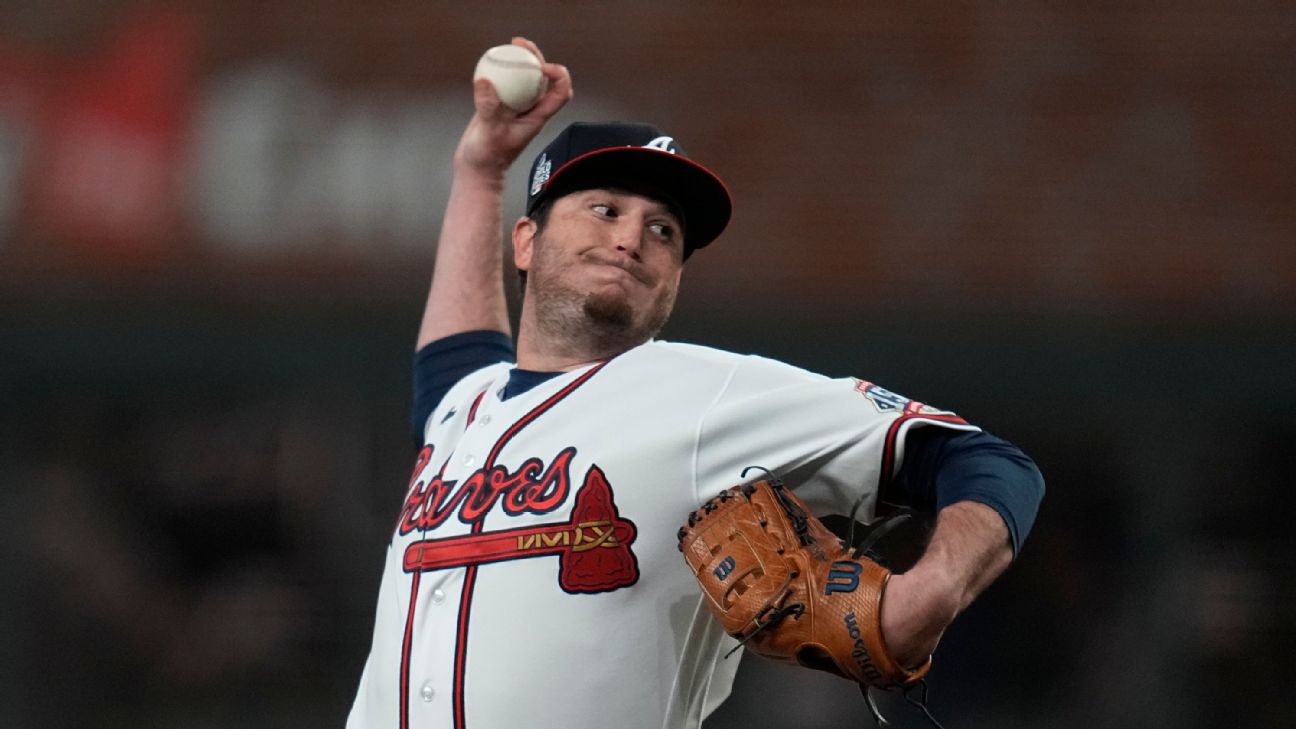
Jackson is perhaps best known for his role with the Atlanta Braves during their 2021 championship season, when he served as a dependable member of the bullpen and contributed to the team’s successful World Series run. His track record suggests that he has the potential to be a valuable asset if he can regain his form.
Over the course of his career, Jackson has earned approximately $22 million, reflecting his status as a seasoned major league pitcher. While he may no longer be at the peak of his abilities, the Mets are giving him an opportunity to prove that he can still contribute at a high level. If he performs well, he could earn a spot on the major league roster and play a meaningful role in the team’s bullpen.
MORE: Diamondbacks officially makes crucial roster move after recent update
Overall, the Mets’ approach heading into the 2026 season reflects a combination of urgency and cautious optimism. After the disappointment of 2025, the organization has taken deliberate steps to address its weaknesses, particularly in the pitching department. The acquisition of a proven starter like Peralta, along with the addition of depth pieces such as Myers and Jackson, demonstrates a clear commitment to improving the team’s performance.
However, questions remain about whether these moves will be enough to propel the Mets back into contention. The early results of the 2026 season suggest that the team is still a work in progress, and much will depend on the performance of their revamped pitching staff. If their new additions can deliver consistent results and the team can avoid the kind of prolonged slump that derailed them the previous year, the Mets may yet have a chance to reestablish themselves as a competitive force in Major League Baseball.
In the end, the Mets’ journey from dominance to disappointment in 2025 serves as a cautionary tale about the unpredictability of baseball. It also highlights the importance of depth, resilience, and adaptability in maintaining success over the course of a long and demanding season. As they move forward, the Mets will be hoping that the lessons learned from their collapse will translate into a more stable and successful campaign in 2026.



Be the first to comment