
Arizona Diamondbacks_Major League Baseball’s long winter hiatus has officially come to an end. After months of roster maneuvering, trade speculation, free-agent signings, and endless projections about how the upcoming season might unfold, the Diamondbacks and the rest of the league have finally transitioned from talk to action.
On Tuesday, pitchers and catchers arrived in Scottsdale to kick off Spring Training, marking the true beginning of the 2026 campaign. The energy shift was immediate and unmistakable. What had been a quiet offseason filled with calculated decisions and patient waiting has now given way to the hum of fastballs popping into gloves, the crack of early batting practice swings, and the steady rhythm of preparation that defines this time of year.
We’re stationed at Salt River Fields to take in every detail from the first day of camp, analyzing how Arizona’s most prominent players looked as they took the field for their initial workouts. The first day of Spring Training can be deceptively simple on the surface—light throwing sessions, conditioning drills, early bullpen work—but beneath that routine lies a great deal of significance.
This is where adjustments begin to show, where offseason training pays off, and where coaching staffs begin shaping their vision for how the season will unfold. For the Diamondbacks, Day 1 was less about spectacle and more about intention. The club appears determined to approach this camp with a refined strategy designed to sharpen readiness without pushing players beyond reasonable limits.

Manager Torey Lovullo addressed that balance directly. In previous years, Arizona has occasionally needed extra time to hit its stride once the regular season began. Whether due to lingering injuries, players easing into game shape, or simply the natural rhythm of a long season ramping up, the team has sometimes looked like it was still finding its footing in April.
MORE: Mariners Confirmed Another Stunning Minor League Deals
Lovullo made it clear that this year’s approach aims to correct that pattern. The goal is to have players prepared to compete at a high level right out of the gate, while still respecting the physical demands that come with the marathon of a 162-game schedule.
Lovullo emphasized that “getting up to speed” doesn’t mean overextending arms or overloading position players with unnecessary reps. Instead, the staff has restructured the early days of camp to maximize efficiency. Bullpen sessions are being carefully mapped out.
Live batting practice will be phased in strategically. Conditioning drills are tailored to individual needs rather than implemented as a one-size-fits-all regimen. The idea is to compress the timeline of competitive readiness without increasing the risk of fatigue or injury. It’s a delicate equation, but one the Diamondbacks believe they’re prepared to solve.
On the field, several of Arizona’s cornerstone players already look sharp. Pitchers displayed solid velocity in their initial bullpen sessions, and early mechanics appeared crisp and repeatable. Catchers worked on receiving and framing drills, reacquainting themselves with pitchers they’ll guide throughout the season.
The first-day intensity was controlled yet focused—exactly the tone Lovullo and his staff wanted to set. Veterans moved with purpose, while younger players absorbed every instruction, knowing that roster spots and roles can shift during these early weeks.
MORE: Cardinals reportedly nail final offseason move to solidify bullpen in latest Pirates’ blunder
While much of the attention centered on preparation and conditioning, another significant storyline emerged from the front office. General manager Mike Hazen provided updates regarding left-handed pitcher Andrew Saalfrank, whose injury has created uncertainty within the Diamondbacks’ bullpen structure heading into 2026. Saalfrank had carved out an important role as a reliable late-inning option, particularly against tough left-handed hitters. His absence alters the calculus for how Arizona constructs its relief corps.

Hazen acknowledged that Saalfrank’s injury is not a minor setback. Though the team remains hopeful about his eventual return, there is no immediate timeline that guarantees his availability early in the season.
That reality forces the Diamondbacks to consider alternative alignments within their bullpen. Internal candidates will have opportunities to step forward, but Hazen did not rule out external additions. In fact, he made it clear that the organization is actively evaluating the remaining free-agent market for pitching reinforcements.
MORE: Understand Tigers’ first baseman signs minor-league deal with Cardinals
This willingness to continue adding arms reflects both prudence and ambition. Even before Saalfrank’s injury, bullpen depth was an area the front office monitored closely. Relief pitching can fluctuate dramatically from year to year, and successful teams often prioritize redundancy in that department. Hazen’s comments suggest that Arizona is not content to rely solely on existing options. The club remains open to bolstering its staff with experienced free agents who can provide stability and flexibility.
Hazen’s remarks also underscored a broader philosophy guiding the Diamondbacks this winter: calculated aggressiveness. Arizona has shown it’s prepared to invest in upgrades when the fit is right, but it won’t make impulsive moves simply to generate headlines. Each potential signing must align with both the team’s competitive timeline and its clubhouse culture. That careful evaluation process was evident in the recent addition of veteran slugger Carlos Santana.
The Diamondbacks officially finalized Santana’s signing, bringing another experienced bat into the fold. At first glance, some observers wondered why Arizona prioritized Santana over other available hitters. The front office, however, saw a combination of attributes that made him particularly appealing.
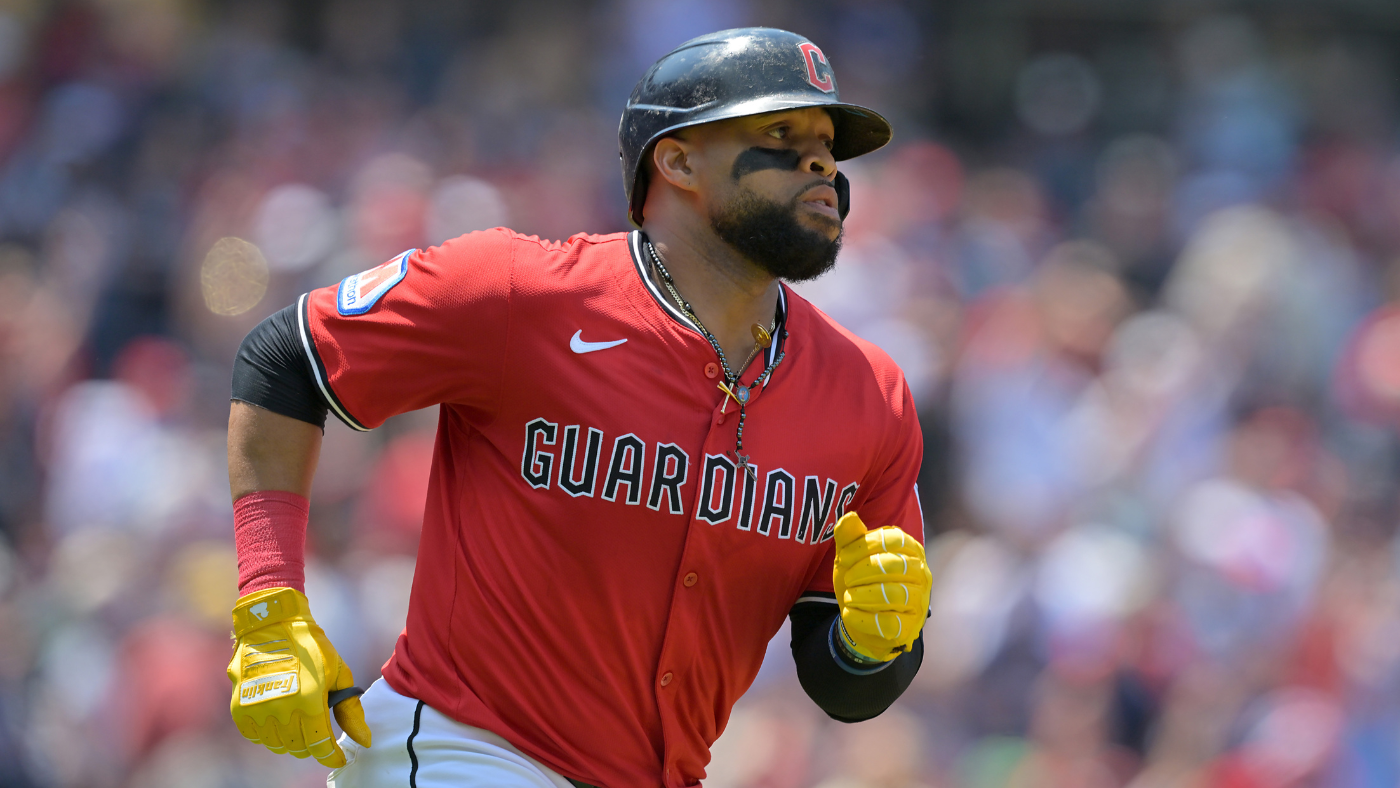
Santana offers switch-hitting versatility, a disciplined approach at the plate, and a long track record of postseason experience. He’s known for his ability to work counts, draw walks, and deliver timely power—qualities that complement Arizona’s existing lineup.
Beyond the statistical profile, Santana’s leadership presence played a significant role in the decision. The Diamondbacks value clubhouse chemistry, especially as younger players continue to mature into core contributors. Santana’s reputation as a mentor and steady voice resonated with the organization. In a division that demands resilience and consistency, having a veteran who has navigated both success and adversity is viewed as an asset.
MORE: White Sox reunite with pitcher dealt in 3-way trade with Dodgers, Cardinals
The front office also evaluated positional flexibility when considering Santana. His experience at first base and designated hitter provides roster adaptability, enabling Lovullo to rotate players strategically throughout the season. This flexibility becomes especially important during long road trips and stretches of consecutive games, when maintaining freshness can influence performance. Santana’s addition isn’t merely about offense; it’s about creating options.
As camp progresses, the interplay between veterans and emerging talent will shape much of the Diamondbacks’ identity. Spring Training offers opportunities for competition, but it also fosters collaboration. Younger pitchers will test themselves against established hitters. Bench players will seek to carve out defined roles. Coaches will fine-tune defensive alignments and situational strategies. Every drill, every bullpen session, every batting practice round contributes to a broader narrative of preparation.
Lovullo reiterated that the team’s emphasis this spring is clarity. Players should understand their expected roles early, allowing them to prepare mentally as well as physically. Ambiguity can sometimes linger in camp, particularly regarding bullpen hierarchies or lineup configurations. By establishing direction sooner, Arizona hopes to reduce uncertainty and accelerate cohesion.
At the same time, the Diamondbacks recognize that flexibility remains essential. Injuries, performance fluctuations, and unforeseen circumstances inevitably arise. Maintaining adaptability without sacrificing structure is a recurring theme within the organization’s messaging. Hazen’s openness to additional pitching acquisitions reinforces that mindset.

There is also a palpable sense of accountability throughout the camp. Arizona’s leadership group appears keenly aware that last season’s lessons—both positive and challenging—should inform this year’s approach. Rather than dwelling on missed opportunities or near successes, the team is channeling those experiences into preparation. The objective isn’t merely to compete; it’s to sustain competitiveness over the full arc of the season.
MORE: Giants provides absolutely stunning update regarding designated hitter ahead of spring training
Day 1 at Salt River Fields may not have featured dramatic headlines or highlight-reel moments, but its significance lies in the foundation it establishes. The offseason’s speculation has given way to tangible progress. Arms are building strength. Timing is being refined. Communication between pitchers and catchers is being reestablished. The early atmosphere suggests a club intent on minimizing early-season sluggishness and maximizing readiness.
As the Diamondbacks move deeper into Spring Training, attention will increasingly shift to game action. Cactus League contests will provide clearer indicators of roster construction and performance trends. For now, however, the emphasis remains on preparation, evaluation, and strategic planning.
Hazen’s comments about continuing to explore free-agent pitching options hint that roster evolution may not be complete. Injuries and depth considerations ensure that front-office vigilance remains necessary. Meanwhile, the Santana signing reflects a targeted effort to balance experience with opportunity.
In sum, the Diamondbacks’ first day of Spring Training signals more than the end of the offseason—it marks the beginning of a carefully orchestrated campaign to align talent, health, and strategy. From Lovullo’s accelerated yet measured conditioning plans to Hazen’s ongoing roster assessments, Arizona appears committed to entering 2026 with purpose and precision. The coming weeks will reveal how effectively those plans translate into performance, but the tone has been set: the wait is over, and the work has begun.




Be the first to comment