Arizona Diamondbacks pitching prospect Spencer Giesting has been sidelined after suffering an oblique injury, leading to his placement on the minor league 7-day Injured List while with the Reno Aces. The setback is expected to keep the 24-year-old left-hander out of action for an extended period, with early estimates suggesting he could be unavailable for at least a month, and possibly longer depending on how his recovery progresses. The injury comes at an unfortunate time for both Giesting and the organization, as he was in the midst of an important transition in his pitching role.
Prior to the injury, Giesting had been undergoing a shift in responsibilities on the mound. After primarily working as a starting pitcher earlier in his career, the Diamondbacks had recently begun converting him into a reliever. More specifically, the plan was to utilize him in a multi-inning relief role, a hybrid position that allows pitchers to bridge the gap between starters and late-inning bullpen arms. This type of role can be especially valuable for teams looking to manage workloads, cover innings efficiently, and provide flexibility in various game situations.
The transition itself represented a significant development in Giesting’s career path. Moving from the rotation to the bullpen often requires adjustments not only in physical preparation but also in mindset and pitching approach. Starters typically pace themselves over several innings, relying on a mix of pitches and long-term strategy to navigate opposing lineups multiple times.
In contrast, relievers—particularly those asked to handle multiple innings—must be ready to enter games on short notice and deliver high-intensity performances right away. For Giesting, this change was an opportunity to carve out a potentially quicker route to contributing at the major league level, especially given the team’s needs.
Unfortunately, the oblique injury interrupts that process. Oblique strains are known to be tricky for pitchers, as the muscles involved play a crucial role in the rotational motion required for throwing. Even minor strains can limit effectiveness, while more severe cases can take weeks or even months to fully heal. Because pitching places repeated stress on the core, teams are typically cautious with these types of injuries to avoid setbacks or long-term complications. As a result, Giesting’s recovery timeline may depend heavily on how well he responds to rest and rehabilitation in the coming weeks.
MORE: Mariners Confirmed the Departure of Experience Veteran Catcher
The timing of this injury is particularly challenging for the Diamondbacks’ pitching depth, especially on the left-handed side of the bullpen. Even before Giesting was sidelined, the organization’s supply of reliable left-handed relief options was considered relatively thin. Left-handed pitchers often play specialized roles in bullpens, such as matching up against tough left-handed hitters or providing balance to predominantly right-handed staffs. Losing a potential contributor like Giesting, even temporarily, further reduces the team’s flexibility in that area.
In addition to impacting organizational depth, Giesting’s absence also delays his personal development. The transition to a multi-inning relief role was not just a short-term experiment but potentially a defining move for his future. Time on the injured list means fewer opportunities to gain experience in this new capacity, refine his approach, and demonstrate his effectiveness in shorter stints. For young pitchers, consistent game action is critical for growth, and interruptions like this can slow momentum.
Despite the setback, there is still optimism surrounding Giesting’s long-term outlook. At 24 years old, he remains a relatively young arm with time to recover and continue progressing. If he can return healthy and resume his role transition successfully, he could still become a valuable piece for the Diamondbacks, particularly given the increasing importance of versatile pitchers in today’s game. Multi-inning relievers who can handle a variety of situations are highly sought after, and Giesting’s skill set could fit well into that mold once he is back on the field.
For now, however, the focus will be on recovery. The organization will likely take a cautious approach, ensuring that Giesting regains full strength before returning to competitive action. Rehabilitation from an oblique injury often includes rest, followed by gradual reintroduction of throwing activities, bullpen sessions, and eventually game appearances. The priority will be to avoid aggravating the injury, which could extend his absence even further.
In the meantime, the Diamondbacks will need to explore other options to compensate for the loss. This could involve promoting other minor league pitchers, adjusting bullpen roles at the major league level, or even seeking external additions if the need becomes more pressing. Regardless of how they address the situation, Giesting’s injury serves as a reminder of how quickly pitching depth can be tested over the course of a season.
Overall, this development is a setback for both the player and the organization. Giesting was in the process of adapting to a new role that could have accelerated his path to the majors, while the Diamondbacks were looking to bolster a thin area of their pitching staff. While the injury temporarily halts that progress, there remains hope that he will recover fully and resume his development later in the season.
Diamondbacks’ Spencer Giesting suffers oblique injury
During the 2025 campaign, Giesting showed meaningful progress in his overall development. Pitching in the hitter-friendly environment of the Texas League, he managed to post a solid 3.67 ERA while suiting up for the Double-A Amarillo Sod Poodles. That performance marked a noticeable step forward for the young left-hander and demonstrated his growing ability to handle advanced competition despite challenging conditions that typically favor hitters.
His success at Double-A did not go unnoticed. Midway through the season, Giesting earned a promotion to the Triple-A level, a significant milestone in any prospect’s journey. However, the transition proved to be difficult at first. Competing in the Pacific Coast League, which is widely known for its unforgiving offensive conditions, Giesting struggled to find consistency early on. Over the course of his first nine starts at that level, he recorded a 9.77 ERA, reflecting the challenges he faced while adjusting to more experienced hitters and less forgiving pitching environments.
Despite the rough introduction to Triple-A, Giesting did not allow those early struggles to define his season. As the year progressed, he began to settle in and make the necessary adjustments. By August, there were clear signs that he was turning a corner. During that month, he delivered three quality starts in which he pitched six strong innings each time, limiting damage and showing improved command and composure on the mound. These outings suggested that he was becoming more comfortable at the higher level and beginning to harness his potential more effectively.
MORE: Angels teasing strange logo change which erupt social media behavior
His improvement carried over into the final month of the season. In September, Giesting finished strong, compiling a 3.38 ERA. This late-season surge not only lowered his overall numbers but also reinforced the idea that he was trending in the right direction. After a difficult start in Triple-A, he managed to regain his footing and end the year on a positive note, giving evaluators reason to believe that he could continue to develop into a reliable arm.
Heading into the 2026 season, Giesting participated in Cactus League action during spring training. He made seven appearances, all coming out of the bullpen, as the organization experimented with his role. His results were somewhat mixed. While he did experience a few outings where he struggled, he also recorded four scoreless appearances, indicating flashes of effectiveness in shorter stints. The shift to a relief role appeared to be part of a broader effort to expand his versatility and potentially prepare him for a multi-inning bullpen role at higher levels.
Once the regular season began, Giesting made his first appearance for the Reno Aces at the Triple-A level. Working in relief, he allowed just one run over three innings of work. It was a modest but encouraging start, suggesting that he could provide value out of the bullpen while continuing to refine his approach.
Although Giesting was not widely viewed as being on a rapid path to the major leagues, he still represented an important piece of organizational depth, particularly on the left-handed side. His ability to handle multiple innings and his recent improvements made him a useful option within the system.
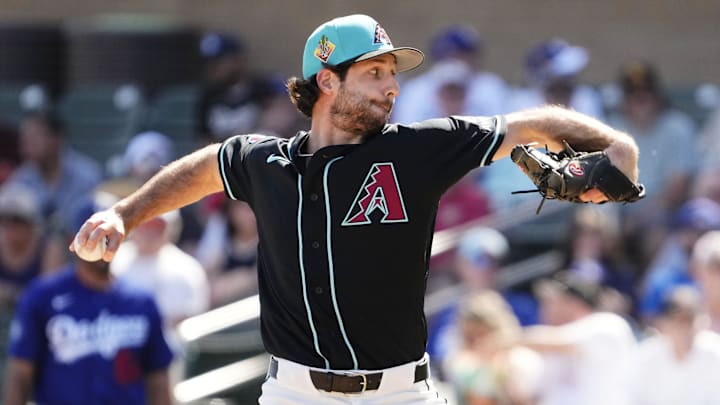
With that context in mind, his injury becomes more significant. Even if he was not expected to contribute at the big league level immediately, the loss still impacts the team’s overall pitching depth. The Diamondbacks had already seen their supply of left-handed relief options become somewhat limited, and Giesting’s absence further reduces their flexibility. In a long season where injuries and performance fluctuations are inevitable, having capable arms available at various levels is crucial.
Ultimately, Giesting’s 2025 season told a story of growth, adversity, and adjustment. He proved he could succeed at Double-A, struggled initially after a promotion, but then showed resilience by finishing strong. His early 2026 appearances hinted at continued development, even as he transitioned into a different role. Now, with the injury temporarily halting his progress, both the player and the organization will be hoping he can recover quickly and resume the upward trajectory he had begun to establish.
Diamondbacks’ left-handed pitching depth is thin
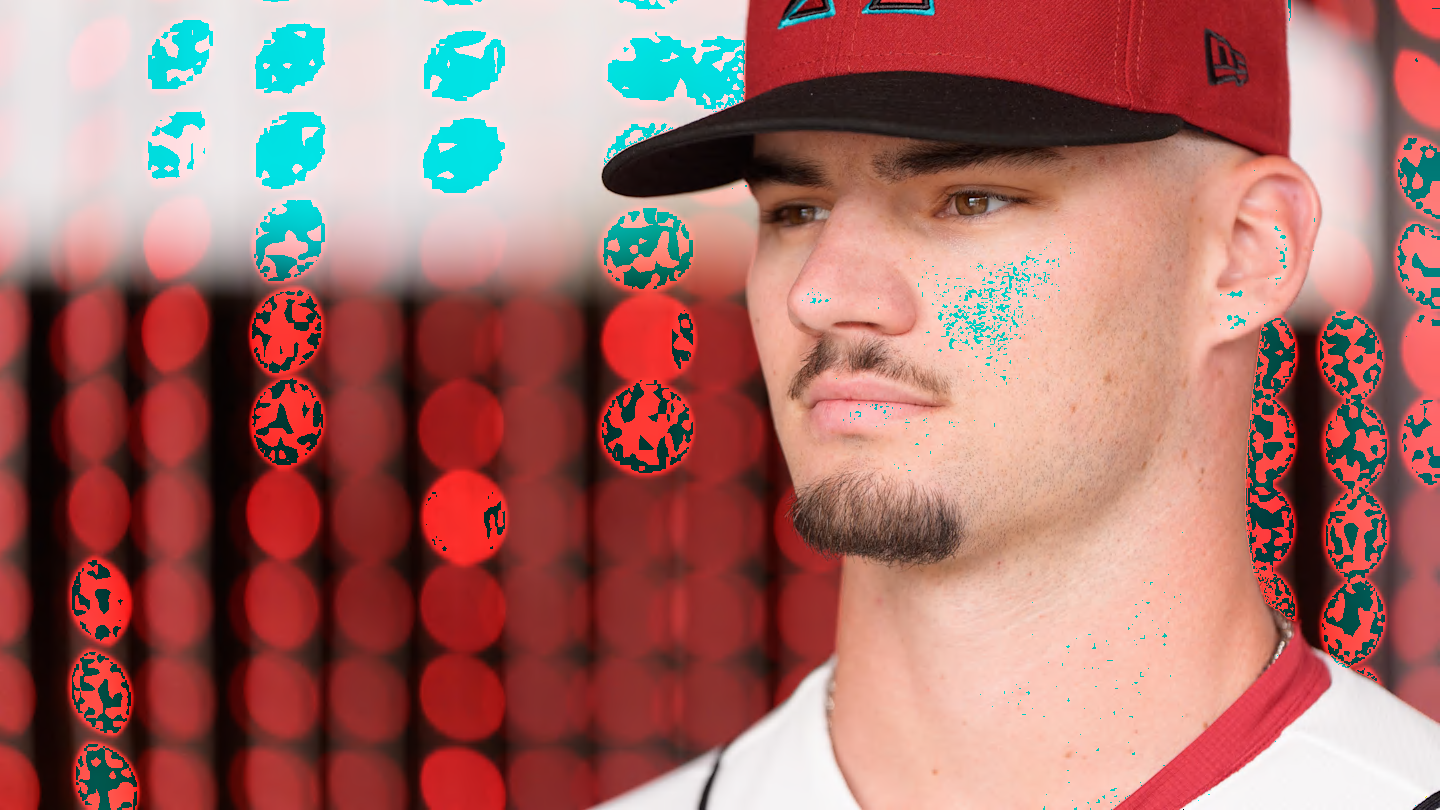
Arizona’s current major league roster notably lacks a true left-handed reliever, creating a visible gap in the bullpen structure. At present, Eduardo Rodriguez stands as the only left-handed pitcher on the active roster, but he serves in a starting role rather than providing relief innings. This imbalance leaves the team without a situational southpaw option out of the bullpen, something that can be particularly important when facing lineups stacked with dangerous left-handed hitters.
Within the organization, there are a few left-handed pitchers who initially appeared to be viable candidates to step into that bullpen role. Brandyn Garcia and Philip Abner both entered the season with a chance to compete for a spot at the major league level. However, each has encountered challenges that have slowed their progression and prevented them from securing a place on the roster.
MORE: San Francisco Giants Officially Announce Stunning Roster Move
Garcia’s primary issue has been his inconsistency with command. While his raw stuff has shown promise, he has struggled to consistently throw strikes, which is a critical requirement for any pitcher hoping to succeed in high-leverage major league situations. Even though his early Triple-A performance might look respectable on paper—having allowed just one run across his first 3.1 innings—the underlying concern remains his ability to locate pitches effectively. Without improved control, it becomes difficult for the coaching staff to trust him in important moments against big league hitters.
Abner, on the other hand, is dealing with a different developmental hurdle. Rather than command, his focus has been on improving his effectiveness against right-handed batters. As a left-handed pitcher, it is common to initially excel against same-sided hitters, but to be a reliable bullpen arm at the highest level, a pitcher must demonstrate the ability to handle hitters from both sides of the plate.
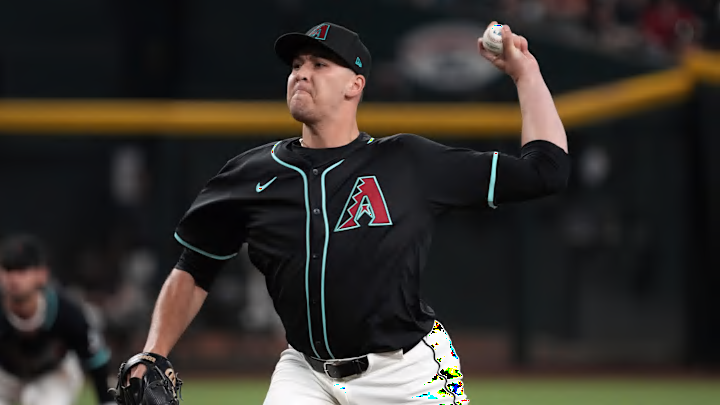
Abner’s early-season results in Triple-A reflect some of these struggles, as he has surrendered three runs—two of them earned—in just two-thirds of an inning. While such a small sample size does not define a pitcher’s overall ability, it does highlight the ongoing adjustments he needs to make before being considered a dependable option in the majors.
Beyond Garcia and Abner, the organization also has a pair of left-handed starting pitching prospects—Mitch Bratt and Kohl Drake—who have shown encouraging signs early in the season. Both pitchers have delivered solid performances in their respective roles, suggesting that they possess the potential to contribute at higher levels in the future. However, their experience during spring training served as a reminder that there is still a noticeable gap between minor league success and major league readiness.
MORE: Red Sox Doing Some Housecleaning, Officially Release Highly Touted Outfielder
When facing big league competition in the spring, both Bratt and Drake appeared somewhat overwhelmed at times. The jump in talent level exposed areas where further refinement is needed, whether in pitch execution, sequencing, or overall command. These struggles do not diminish their long-term potential, but they do reinforce the idea that additional time in the minor leagues would be beneficial for their continued development.
Another factor complicating the situation is the organization’s reluctance to transition either Bratt or Drake into relief roles prematurely. While converting a starting pitcher into a reliever can sometimes accelerate their path to the majors, it also comes with trade-offs. Starters typically carry greater long-term value due to their ability to handle larger workloads and impact games over multiple innings. As a result, teams are often cautious about making such a transition unless it is clearly the best path forward for the player and the organization.
This caution is especially relevant for Arizona given its current lack of depth in the starting rotation. The injury to right-handed pitcher Cristian Mena, who is dealing with a shoulder issue and has been placed on the 60-day injured list, has further thinned the team’s starting pitching options.

With fewer healthy starters available, maintaining depth in that area becomes even more critical. Converting promising young starters like Bratt or Drake into relievers at this stage could weaken the organization’s ability to withstand additional injuries or performance setbacks within the rotation.
Taken together, these circumstances leave Arizona in a somewhat precarious position when it comes to left-handed pitching. While there are internal options with potential, none are currently in a position where they can confidently fill the role of a reliable major league left-handed reliever. Garcia needs to refine his command, Abner must improve his performance against right-handed hitters, and both Bratt and Drake require more seasoning before being considered ready for the next level.
Until one or more of these pitchers takes a significant step forward, the team may need to explore alternative solutions to address this imbalance. Whether through internal development, strategic role adjustments, or potential roster moves, finding a dependable left-handed presence in the bullpen will likely remain a priority as the season progresses.

Be the first to comment