Atlanta Braves minor league news. The Atlanta Braves quietly added organizational depth to their outfield late last year, agreeing to a minor league contract with DaShawn Keirsey Jr. in December. The signing flew largely under the radar and was first reflected on Keirsey’s player page at MLB.com, but it represents a low-risk move that fits neatly into Atlanta’s ongoing strategy of stockpiling versatile, athletic depth options who can compete for roster spots while providing insurance at Triple-A.
Keirsey entered free agency following a turbulent offseason with the Minnesota Twins. After spending several years in the organization that originally drafted him, the Twins designated the outfielder for assignment in November and subsequently chose not to tender him a contract.
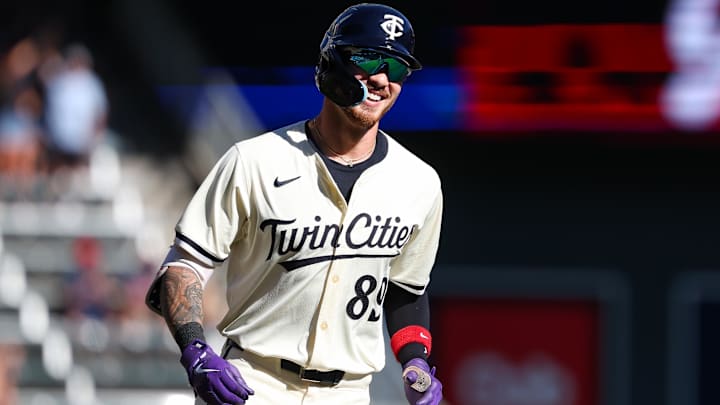
That decision made Keirsey available on the open market for the first time in his professional career, bringing an end to his tenure with Minnesota and opening the door to a fresh opportunity elsewhere.
Although Keirsey had technically made his major league debut in 2024 with a brief six-game cameo, the 2025 season marked his first extended exposure to the highest level of the sport. Over the course of the year, he appeared in 74 games for Minnesota.
MORE: Boston Red Sox Today Trade Rumors, Sees 2-For-1 Trade Idea With Cardinals’ Fan Favorite Star To Boston
However, that figure is somewhat misleading, as Keirsey was rarely used as an everyday player or even as a regular starter. Instead, the Twins deployed him almost exclusively in specialized roles, leaning on his athleticism late in games rather than trusting his bat for extended stretches.
Across those 74 appearances, Keirsey logged just 88 plate appearances. The majority of his playing time came as a late-inning defensive replacement, pinch-runner, or occasional pinch-hitter. As a result, he never had the chance to find much of an offensive rhythm, and his numbers at the plate reflected that reality. In limited action, Keirsey posted a .107 batting average with a .138 on-base percentage and a .179 slugging percentage. He managed to leave the yard twice but otherwise struggled to make consistent contact or impact the ball when given opportunities to hit.
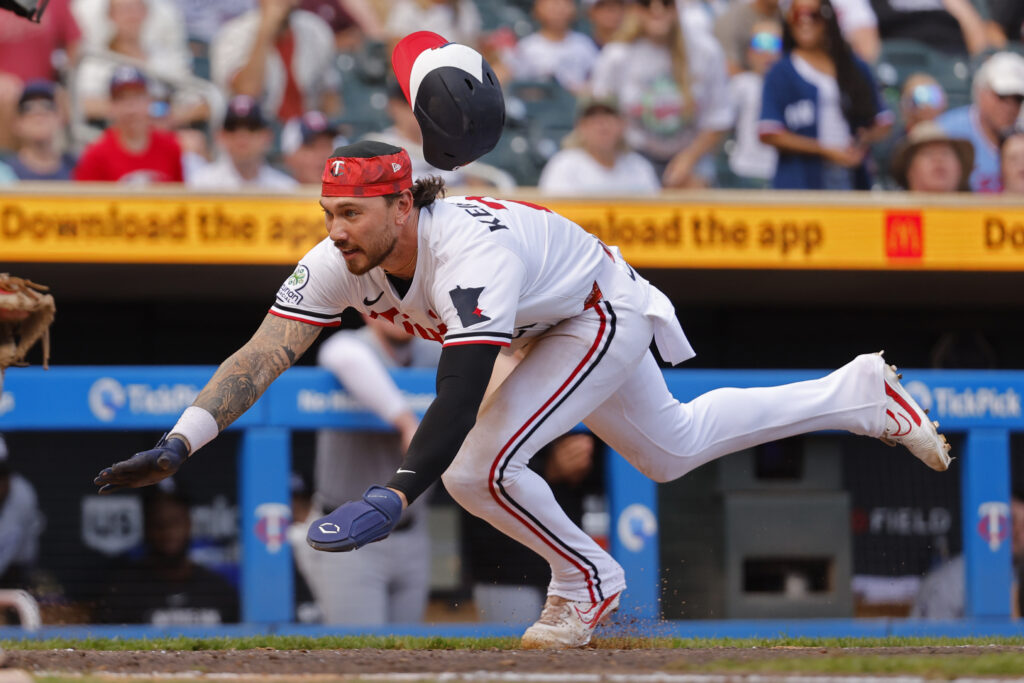
Where Keirsey did make a noticeable contribution was on the bases. Despite the lack of offensive production, he showcased his speed by swiping 10 bases in 13 attempts.
His willingness to run and his ability to pressure opposing defenses reinforced the idea that his value, at least at the major league level so far, lies more in his legs and glove than in his bat. Still, the limited offensive sample size leaves open the question of whether his struggles were a true reflection of his abilities or simply the product of sporadic usage and unfamiliarity with major league pitching.

At 28 years old, Keirsey is no longer viewed as a traditional prospect, but his minor league track record suggests there may still be more upside to unlock. Over 186 games and 818 plate appearances at the Triple-A level, he has consistently shown a far more complete offensive profile than his brief major league résumé would indicate. In those minor league contests, Keirsey produced a strong .284/.363/.448 slash line, demonstrating an ability to reach base, hit for extra bases, and contribute power when given regular playing time.
MORE: St. Louis Cardinals Latest News Confirmed to Build Around Their Utility Man Instead of Trade
That offensive production was paired with legitimate speed. During his Triple-A career, Keirsey launched 19 home runs while also stealing 51 bases in 58 attempts. Those numbers highlight a rare blend of pop and quickness, especially for a player capable of handling premium defensive positions in the outfield. His baserunning instincts, efficiency, and aggressiveness have long been considered some of his best tools, and they remain a key part of what makes him an intriguing depth option.
Defensively, Keirsey brings versatility that organizations value highly when constructing a 26-man roster. Throughout his minor league career, he has logged time at all three outfield spots, with the bulk of his experience coming in center field.
That positional flexibility allows a club to move him around as needed and makes him a viable late-inning defensive upgrade in multiple alignments. His range, athleticism, and arm strength have generally drawn positive reviews, further reinforcing his profile as a defense-first outfielder who can impact games without necessarily starting them.
That said, there are legitimate concerns that have followed Keirsey throughout his career and have likely prevented him from securing a permanent role in the majors thus far. Chief among them is his tendency to strike out at elevated rates.
Even during productive stretches in the minors, swing-and-miss issues have cropped up, raising questions about how well his approach will translate against top-tier pitching on a consistent basis. Major league arms, with their improved command and pitch sequencing, have exploited those weaknesses so far, though again in a limited sample.
MORE: Baseball rookies news premier rookies in 2025? MLB Network ranked them
Age is another factor working against him. At 28, Keirsey is no longer developing in the traditional sense, and any kind of breakout would classify him as a late bloomer. While baseball history is filled with examples of players who figured things out later than expected, the margin for error narrows considerably as players approach their late 20s. For Keirsey, that reality adds urgency to his opportunity in Atlanta, as he may not have many more chances to establish himself as more than a fringe big leaguer.
Originally selected by Minnesota in the fourth round of the 2018 MLB Draft, Keirsey spent his entire professional career in the Twins organization prior to this offseason. That continuity allowed him to climb steadily through the minor league system, but it also meant he was competing against a familiar set of organizational depth charts and evaluators year after year. A change of scenery, therefore, could prove beneficial, offering a fresh perspective and a new developmental environment that might better align with his skill set.
With the Atlanta Braves minor league news, Keirsey will enter spring training competing for a backup outfield role or, at minimum, positioning himself as one of the top call-up options should injuries arise during the season. Atlanta has built a reputation for maximizing the value of role players, particularly those who can defend multiple positions and contribute on the basepaths. In that sense, Keirsey fits the mold of players the organization has successfully utilized in the past.
From Atlanta’s standpoint, there is virtually no downside to the move. Minor league contracts carry minimal financial risk, and the Braves have the roster depth to absorb the possibility that Keirsey never becomes more than a Triple-A contributor. Even if he does not crack the Opening Day roster, his presence provides experienced depth at Gwinnett and ensures the club has a capable defender and baserunner ready if the need arises.
The challenge for Keirsey will be standing out in what has become a crowded outfield picture. Atlanta’s everyday alignment is well established, led by stars such as Ronald Acuña Jr. and Michael Harris II, while veteran additions and returning contributors fill out the rest of the mix. Jurickson Profar and newly signed Mike Yastrzemski add further layers of experience and flexibility, making it difficult for an outsider on a minor league deal to force his way into the conversation.
MORE: Red Sox Latest Trade Made Official Aggressive Offer To Superster Baseman “Ultimate Return”
Beyond the regular starters, the Braves also have several players earmarked for bench roles, including Eli White and utilityman Mauricio Dubón. Both offer defensive versatility and speed, similar traits to those Keirsey brings, which means he will need to differentiate himself with strong spring performances and consistent execution. Additionally, veterans like Ben Gamel and Brewer Hicklen are also expected to be in camp on minor league contracts, further intensifying competition for limited roster spots.
In this context, Keirsey’s path to meaningful playing time is narrow but not nonexistent. Injuries, underperformance, or shifting roster needs could all open doors over the course of a long season. If he can demonstrate improved contact skills while continuing to showcase his speed and defense, he could carve out a niche as a useful depth piece or late-inning specialist.
Ultimately, Keirsey’s signing represents a classic “nothing to lose” move for the Braves and a pivotal opportunity for the player himself. For Atlanta, it is another example of smart roster management and depth-building. For Keirsey, it is a chance to reset his career, prove that his minor league success can translate, and show that his brief struggles in the majors do not define his ceiling.
Whether that opportunity turns into a lasting role remains to be seen, but as spring training approaches, Keirsey will have every incentive to make the most of a fresh start in a new organization—one that values exactly the kind of athletic versatility he brings to the table.



Be the first to comment