The Chicago Cubs appear to be on the verge of completing a notable addition to their pitching staff, as reports indicate they are close to finalizing a trade with the Miami Marlins for right-handed starter Edward Cabrera.
According to The Athletic, discussions between the two organizations have progressed to the point where a deal could be completed soon, although no official announcement has been made by either side.
Details regarding what Miami would receive in return have not yet surfaced publicly, but given Cabrera’s age, performance profile, and remaining years of club control, the expectation around the league is that the Marlins would seek a prospect-heavy package, likely centered on young talent with upside rather than established major leaguers.
Cabrera, who is set to turn 28 in April, is coming off what many evaluators consider the most complete season of his major-league career. During the 2025 campaign, he emerged as one of the more effective and intriguing arms in Miami’s rotation, blending power stuff with improving command and durability.

His overall results reflected that growth. Cabrera finished the season with run-prevention numbers that stood out not only within the Marlins’ staff but also in comparison to league averages. His ERA+ settled at an impressive 125, meaning he was 25 percent better than the league-average pitcher after accounting for park and era effects. That mark represented a clear step forward from his earlier seasons, when flashes of dominance were sometimes offset by inconsistency or health concerns.
Underlying metrics supported the notion that Cabrera’s 2025 success was not a fluke. He posted a career-best Fielding Independent Pitching (FIP) of 3.83, suggesting that his performance was backed by strong strikeout, walk, and home-run suppression rates rather than being overly dependent on defensive support or luck.
MORE: Reds latest reunion facilitate trading Brady Singer
Perhaps just as important for teams evaluating him as a trade target, Cabrera also reached new territory in terms of workload. The 137⅔ innings he logged last season represented a career high, signaling that he was able to handle a more substantial role in the rotation across a full campaign. For a pitcher whose career had previously been interrupted by injuries, that durability milestone carried significant weight in trade discussions.
Looking at Cabrera’s broader résumé, his track record paints the picture of a pitcher who has consistently been at least above average when healthy. Over parts of five major-league seasons, he has compiled a career ERA+ of 108, indicating sustained effectiveness relative to the league norm.
His cumulative WAR of 7.1 reflects both his run prevention and his ability to miss bats, traits that teams covet when searching for rotation upgrades. While he has not yet reached the elite tier reserved for perennial Cy Young contenders, Cabrera’s body of work suggests a pitcher with the potential to anchor the middle or even the front of a rotation if things break right.
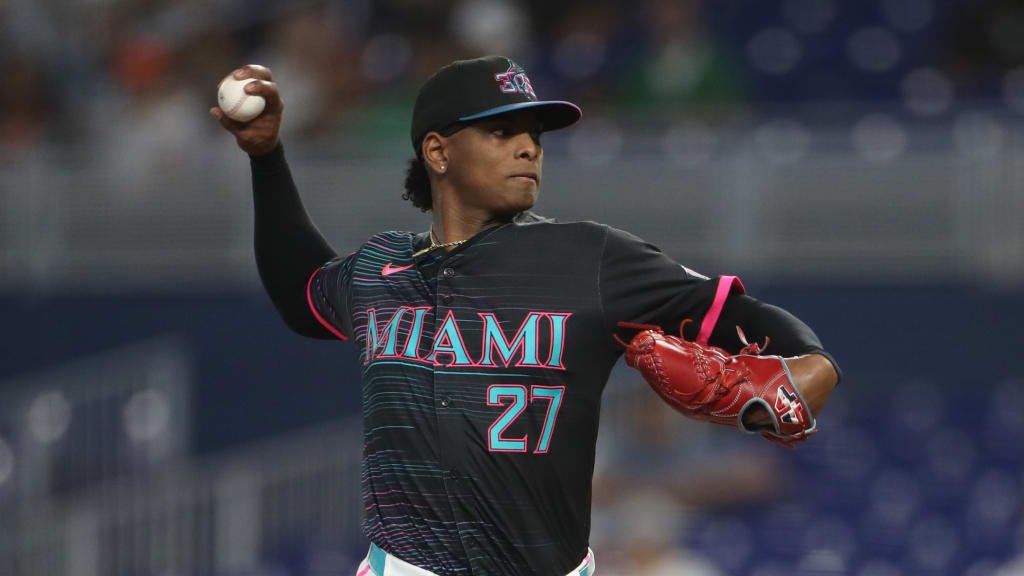
It is little surprise, then, that CBS Sports previously identified Cabrera as one of the most appealing trade candidates of the 2025–26 offseason. That designation was driven by more than just his surface-level results from last year. Scouts and analysts have long been enamored with Cabrera’s raw arm talent, which ranks among the best in the league.
During the 2025 season, his average fastball velocity checked in at 96.9 miles per hour, placing him in the 87th percentile among all major-league pitchers. When compared strictly to starting pitchers, his velocity ranking would have been even more eye-catching, underscoring just how rare it is to find a starter who can maintain that kind of premium heat over multiple innings.
Velocity, however, is only part of the story. Cabrera pairs his power fastball with a diverse five-pitch repertoire that allows him to attack hitters in a variety of ways. His secondary offerings include a curveball and slider that have both graded out as plus pitches, particularly in terms of their ability to generate swings and misses.
MORE: Philadelphia Phillies trade discussions land Twins catcher
During the 2025 campaign, each of those breaking balls produced a swinging-strike rate north of 40 percent, an elite figure that highlights how difficult they are for opposing hitters to square up. In addition to those two pitches, Cabrera mixes in other offerings that help him change speeds and eye levels, keeping batters off balance and preventing them from sitting on any one pitch.
Statcast data further reinforces Cabrera’s value. Last season, he ranked around the 75th percentile across Major League Baseball in strikeout percentage, chase rate, whiff rate, and groundball percentage. That combination is particularly appealing: pitchers who can miss bats while also keeping the ball on the ground tend to be more resilient to fluctuations in luck and more capable of escaping jams.
For a team like the Cubs, which plays its home games in an environment where weather conditions can influence run scoring, having a pitcher who can induce weak contact and limit home runs is a significant asset.

Another factor enhancing Cabrera’s appeal on the trade market is his contractual situation. He is not scheduled to reach free agency until after the 2028 season, meaning any team that acquires him would gain multiple years of control at arbitration-level salaries rather than paying full market value.
In an era where frontline starting pitching has become increasingly expensive and scarce, that kind of cost certainty carries enormous value. It allows a team to allocate resources elsewhere on the roster while still benefiting from high-end pitching production.
MORE: Red Sox to Trade Pitcher to Orioles After Resurgent Season
Of course, Cabrera’s profile is not without risk. Over the course of his career, he has dealt with several arm-related injuries that have interrupted his development and limited his availability at times.
He has spent time on the injured list with elbow tendinitis and a shoulder impingement, and as recently as last September, he was sidelined by an elbow strain. Those issues are impossible to ignore when evaluating a potential trade, particularly for a pitcher whose value is so closely tied to his arm strength and breaking-ball effectiveness.
That said, there are reasons for optimism. The 2025 season represented a step forward not only in performance but also in health. Cabrera made a career-high 26 starts, suggesting that he and the Marlins found a routine or approach that allowed him to stay on the mound more consistently.
The Cubs, if they complete this trade, will undoubtedly be betting that Cabrera can build on that progress and avoid significant arm problems going forward. Their medical staff and player development group will likely have conducted extensive evaluations to determine whether his recent durability is sustainable.

If Cabrera does remain healthy, the upside is considerable. His combination of velocity, pitch mix, and improving command gives him the potential to function as a frontline starter, capable of matching up against top arms in a playoff series. Even if he settles in as a high-quality No. 2 or No. 3 starter, that outcome would still represent a meaningful boost for a Cubs rotation that is aiming to contend in a competitive National League landscape.
From a roster-construction standpoint, Cabrera would be joining a pitching staff that already features a mix of established veterans and emerging talent. On the left-handed side, the Cubs have Matthew Boyd and Shota Imanaga, both of whom provide different looks and skill sets.
Boyd brings experience and a track record of success when healthy, while Imanaga has quickly established himself as a reliable option with strong command and deception. On the right-handed side, the rotation includes Jameson Taillon, a steady veteran presence, and Cade Horton, who is coming off what many consider a highly encouraging rookie season.
MORE: Former Detroit Tigers’ Triple-A hurler officially signs with Red Sox
Horton’s development has been one of the organization’s brighter stories, and pairing him with another high-upside arm like Cabrera could give the Cubs a formidable one-two punch for years to come.
Depth is another area where the Cubs have positioned themselves well. Colin Rea provides valuable rotation insurance and flexibility, capable of stepping in as a starter or working in long relief if needed.
Additionally, left-hander Justin Steele is expected to return at some point after recovering from Tommy John surgery. While it remains to be seen exactly when Steele will be back and how effective he will be in his first season post-surgery, his presence adds another layer of upside to the staff.
Viewed in that context, adding Cabrera would not simply be about filling an immediate need; it would be about reshaping the overall complexion of the rotation. With multiple pitchers capable of missing bats and handling significant workloads, the Cubs could enter the season with one of the deeper and more dynamic starting staffs in the league. That depth would be particularly valuable over the course of a long season, when injuries and performance fluctuations are inevitable.
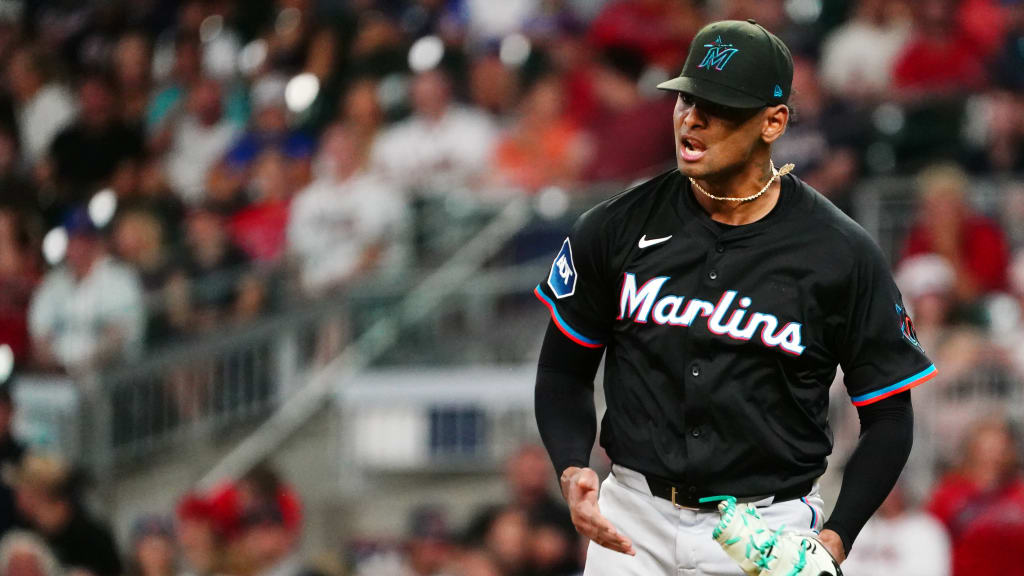
For the Marlins, moving Cabrera would signal a willingness to leverage one of their most valuable assets to address other organizational needs. Miami has long been known for developing pitching, and trading from that surplus to acquire young position players or prospects could align with their broader roster-building strategy. While parting with a pitcher of Cabrera’s caliber is never easy, the potential return could help accelerate their next competitive window.
MORE: Angels’ Mike Trout Announces Off-Field Gesture Amid MLB Offseason
Until the trade is officially announced, there will naturally be speculation about the final pieces involved and the broader implications for both clubs. Still, the mere possibility of Cabrera joining the Cubs has already generated significant buzz, reflecting how highly he is regarded across the league. If the deal is completed, it would stand as one of the more impactful pitching moves of the offseason, reshaping expectations not only for Chicago’s rotation but also for the competitive balance within the National League.
In sum, the reported agreement between the Cubs and Marlins represents a convergence of opportunity and ambition. Cabrera’s recent performance, underlying metrics, and remaining team control make him an attractive target for a club looking to strengthen its pitching foundation.
At the same time, his injury history introduces an element of risk that will follow him wherever he goes. For the Cubs, the gamble appears calculated: if Cabrera stays healthy and continues on the trajectory he established in 2025, the reward could be a high-end starter capable of elevating the entire staff.
For the Marlins, the move could provide valuable resources to address other areas of the roster. Either way, the potential trade underscores how a single arm, when paired with the right context, can carry far-reaching implications for two franchises moving in different but equally deliberate directions.

Be the first to comment