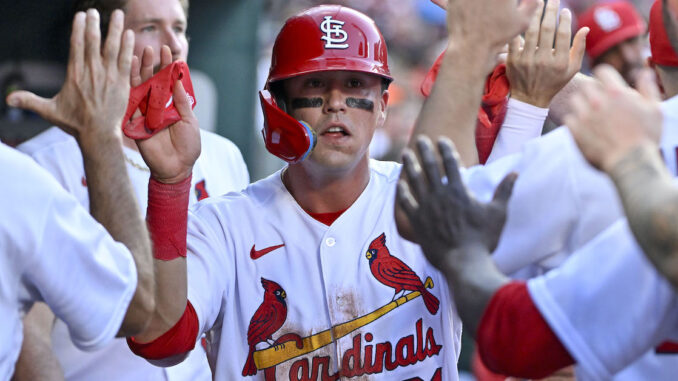
The St. Louis Cardinals appear committed to reshaping their roster this offseason, and that process has increasingly resembled a full-scale sell-off rather than a minor retooling. Reports surfacing out of Queens before the Luis Robert trade suggest that the New York Mets had expressed interest in Cardinals outfielder Lars Nootbaar, further reinforcing the notion that St. Louis is open for business.
The organization has already signaled, both publicly and through its actions, that players who are not viewed as foundational pieces for the next competitive Cardinals core are available. In that context, Nootbaar has emerged as a logical trade candidate.
At this stage of his career, Nootbaar no longer fits neatly into the Cardinals’ long-term plans. Now 28 years old, the outfielder has just two seasons of team control remaining before he reaches free agency. For a club that appears to be pivoting toward younger, controllable talent, players in that service-time window often become expendable. While Nootbaar has shown flashes of being a valuable everyday contributor in the past, the front office seems unconvinced that his best years align with the timeline of the next Cardinals contender.
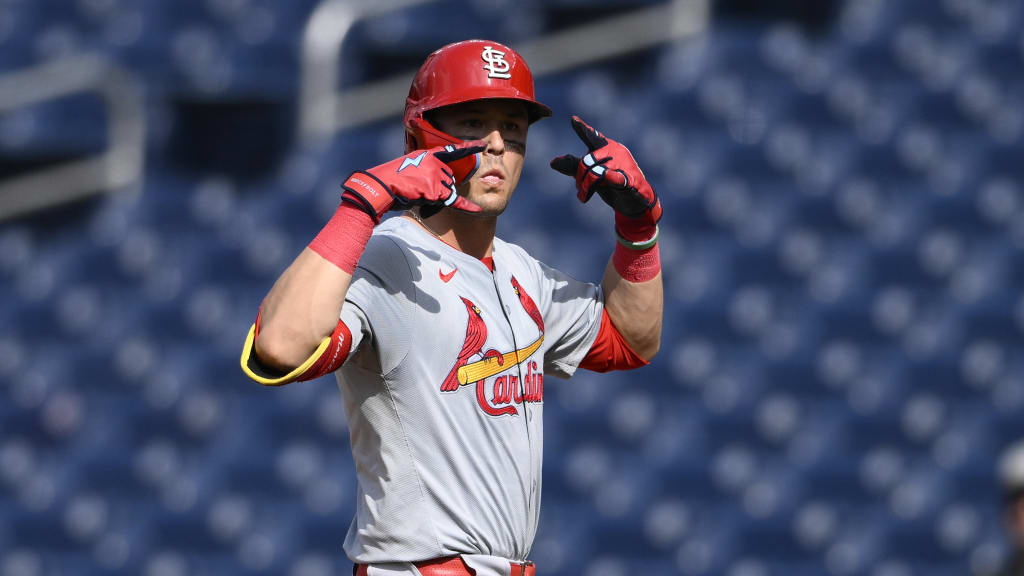
One of the most notable developments in Nootbaar’s 2025 campaign was his improved durability. Injuries had been the defining obstacle of his early career, limiting both his availability and his ability to establish consistency. In 2025, however, he largely put those concerns to rest by appearing in 135 games. From a health standpoint, that alone represented a meaningful step forward and gave the Cardinals a clearer look at what Nootbaar can provide over something close to a full season.
MORE: “Fights for return to role” Cardinals evaluating catching depth
Unfortunately for both player and team, the performance did not match the improved availability. Despite spending far more time on the field, Nootbaar struggled to produce at a level that would justify a long-term role as a cornerstone piece.
He finished the season with a .234 batting average, a .325 on-base percentage, and a .361 slugging percentage, numbers that fall well short of impact territory for a corner outfielder. His 13 home runs further underscored the lack of power output, particularly for a player whose offensive value is expected to outweigh defensive shortcomings.
That said, Nootbaar’s offensive profile is not without redeeming qualities. Plate discipline has long been one of his calling cards, and that remained intact throughout the season. He continues to draw walks at a solid rate and rarely expands the zone, making him a consistently difficult at-bat for opposing pitchers.
His ability to avoid strikeouts and force pitchers to work counts has allowed him to maintain a respectable on-base percentage even when the hits are not falling. From a process standpoint, Nootbaar still resembles a hitter with a strong foundation.
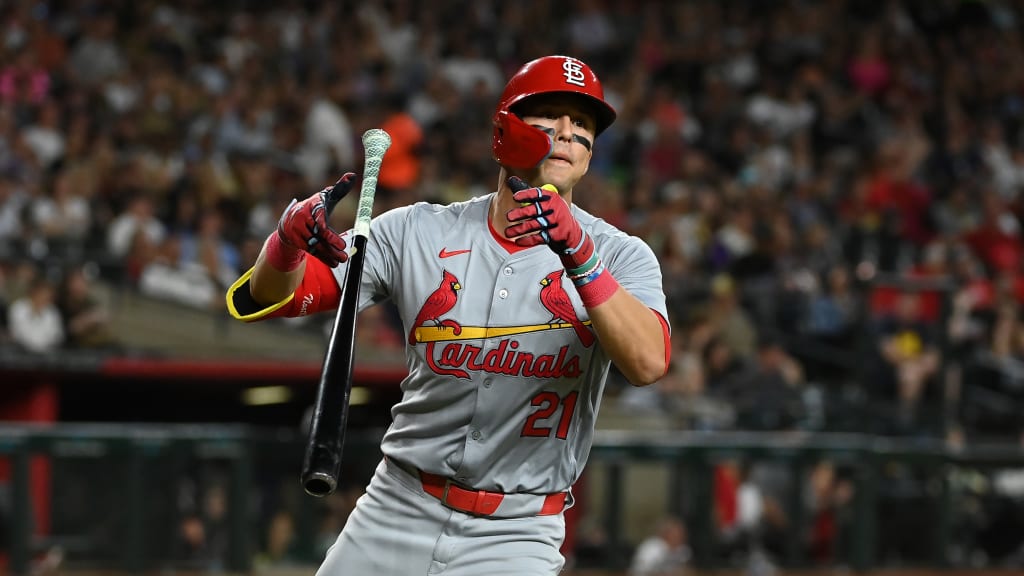
However, the margin for error narrows considerably when defense is not a strength. Nootbaar’s glove has graded out as below average, placing even more pressure on his bat to carry his overall value. When the offensive production dips, there is little else to offset it, making stretches of underperformance more damaging to his overall profile. For Nootbaar to reassert himself as an above-average regular, the offensive ceiling he flashed earlier in his career must reemerge.
The most glaring issue holding Nootbaar back from reaching that ceiling is his lack of power production. From 2024 to 2025, his slugging percentage declined by 56 points, a substantial drop that explains much of his reduced impact at the plate.
MORE: Phillies confirmed to sign veteran Max Scherzer ‘upgrade over Walker’
Importantly, this decline does not appear to be driven by a loss of physical tools. His bat speed remains intact, and underlying indicators suggest that he is still capable of hitting the ball with authority. The problem lies less in how hard he hits the ball and more in how and where that contact is being made.
Nootbaar’s batted-ball profile suggests that subtle adjustments could unlock more damage. In previous seasons, he found success elevating the baseball to his pull side, particularly to right field, where his strength plays best.
Recently, that lift has diminished, resulting in more harmless contact and fewer extra-base hits. A refined approach that emphasizes getting the ball in the air during hitter-friendly counts could help restore some of the power that has gone missing.

If Nootbaar can begin consistently driving pitches to right field again, the ripple effects could extend beyond the slugging numbers alone. More power would likely force pitchers to approach him with greater caution, leading to fewer strikes and more opportunities for him to leverage his excellent plate discipline. In that scenario, his walk rate could climb even higher, increasing his on-base value while also improving the quality of pitches he sees when he does choose to swing.
For teams like the Mets, Nootbaar represents a classic buy-low candidate: a player with a strong offensive foundation, proven on-base skills, and untapped upside if the power returns. For the Cardinals, however, the calculus appears different. With a shifting competitive window and a desire to acquire assets that better align with the future, moving a player like Nootbaar now—before his remaining control diminishes further—makes strategic sense.
Ultimately, Nootbaar’s situation highlights the crossroads both he and the Cardinals find themselves at this offseason. For St. Louis, it is about reallocating resources and resetting expectations. For Nootbaar, it is about rediscovering the elements of his offensive game that once made him a rising contributor rather than a trade rumor. Whether that resurgence happens in St. Louis or elsewhere remains to be seen, but the path forward is clear: the power must return if he is to reach his full potential.
Lars Nootbaar has the tools to be the Cardinals next top trade chip
Unlike All-Star Brendan Donovan, whose trade value may never be higher and who makes the most sense to move before Opening Day, it is far more reasonable for the Cardinals to keep Lars Nootbaar in St. Louis until at least the trade deadline. The two players are at very different points in their value cycles, and that distinction matters greatly for a front office trying to navigate a transitional period.
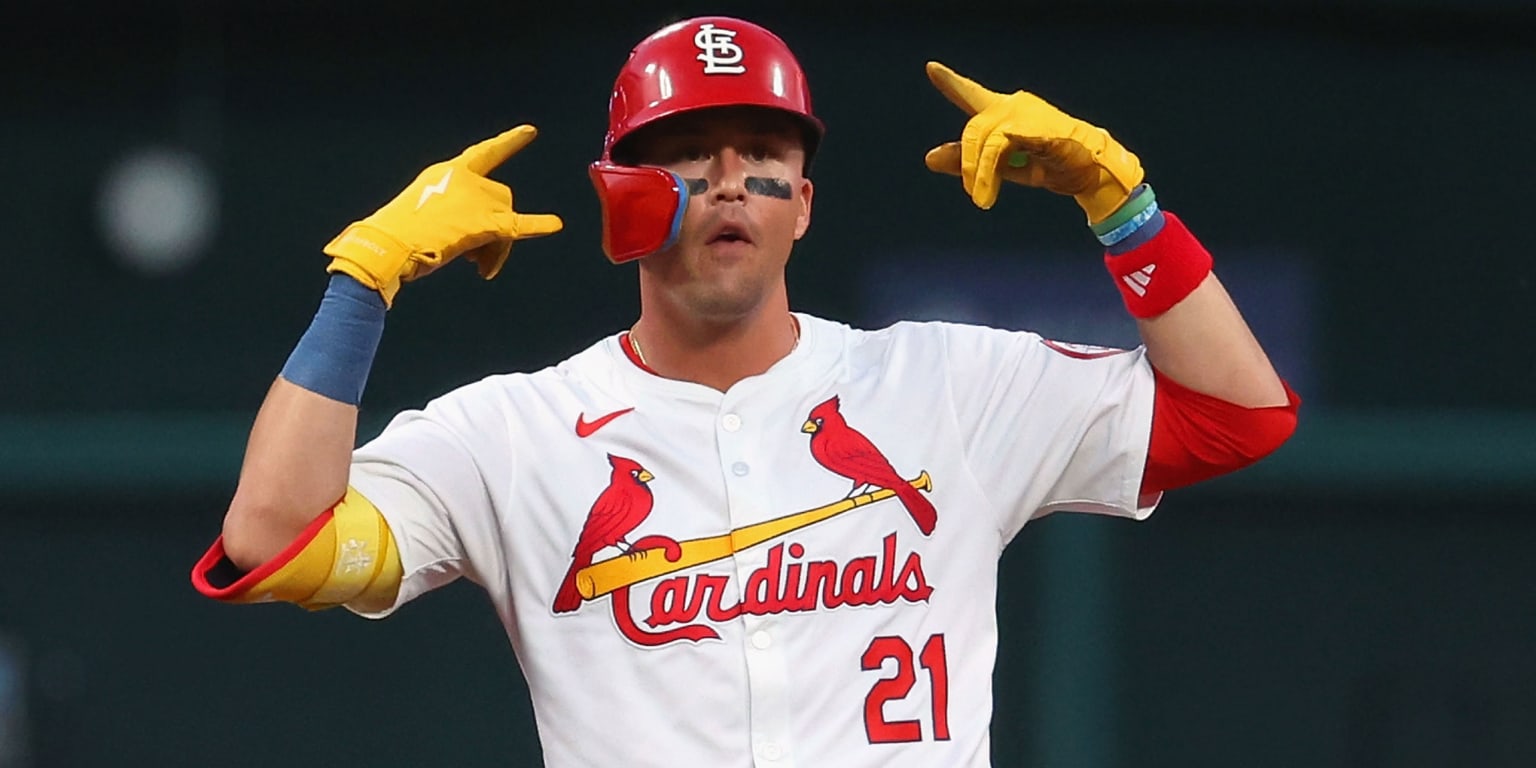
Donovan is coming off a career-defining season, one in which nearly everything broke right for him. When a player reaches that kind of peak while the organization around him is clearly trending downward, the cold, pragmatic move is often to cash in. From a business standpoint, it’s the cleanest way to accelerate a reset and restock the system with younger talent that better aligns with the club’s timeline.
MORE: Braves To Trade Sean Murphy To Pirates For $77 Star, To Solidify Both Teams
Nootbaar’s situation, however, is far more nuanced. His 2025 campaign was one of the most disappointing seasons of his career, marked by inconsistency, diminished production, and the familiar frustration of availability concerns. For that reason alone, moving him immediately would offer little upside for the Cardinals.
His trade value is currently suppressed, and dealing him now would almost certainly result in a modest return that does little to move the needle. Instead, St. Louis finds itself in a position where patience could be rewarded. Giving Nootbaar another runway to rebuild his value represents a low-risk, high-upside gamble for a team that has little to lose in the short term.
If Nootbaar were to struggle again or spend significant time on the injured list, the calculus wouldn’t change much. The return he would bring back in that scenario wouldn’t be particularly compelling anyway, and the Cardinals wouldn’t be forfeiting a premium asset. In that sense, holding onto him carries minimal downside.
The real intrigue lies in the alternative outcome—one that the Cardinals are quietly betting is still possible. Nootbaar has already shown that he can be an above-average major league outfielder with on-base skills, power from the left side, and a style of play that energizes a clubhouse. If he manages to rediscover that form, even partially, his value could rebound in a meaningful way.
There’s also the timing element to consider. The trade deadline is an entirely different marketplace than the early offseason or spring training. Contending teams tend to operate with urgency in July, often paying premiums for short-term help due to injuries, underperformance, or playoff positioning.
Recency bias becomes a powerful force, and front offices are more willing to overlook past struggles if a player is producing in the moment. Should Nootbaar catch fire in the first half and even flirt with an All-Star selection—a realistic outcome given his past performance—the Cardinals could leverage that momentum to inflate his asking price well beyond what would be possible now.
MORE: Mets send Brett Baty to the Mariners for switch-pitcher in 3-player blockbuster deal
From St. Louis’ perspective, this approach aligns neatly with a broader retooling strategy. The organization doesn’t need to rush every decision, nor does it need to tear everything down at once. Holding onto Nootbaar allows the front office to keep its options open.
If he rebounds, he becomes either a valuable trade chip or a potential piece to help stabilize the roster during a transitional phase. If he doesn’t, the outcome is largely what it would have been anyway—just delayed by a few months.
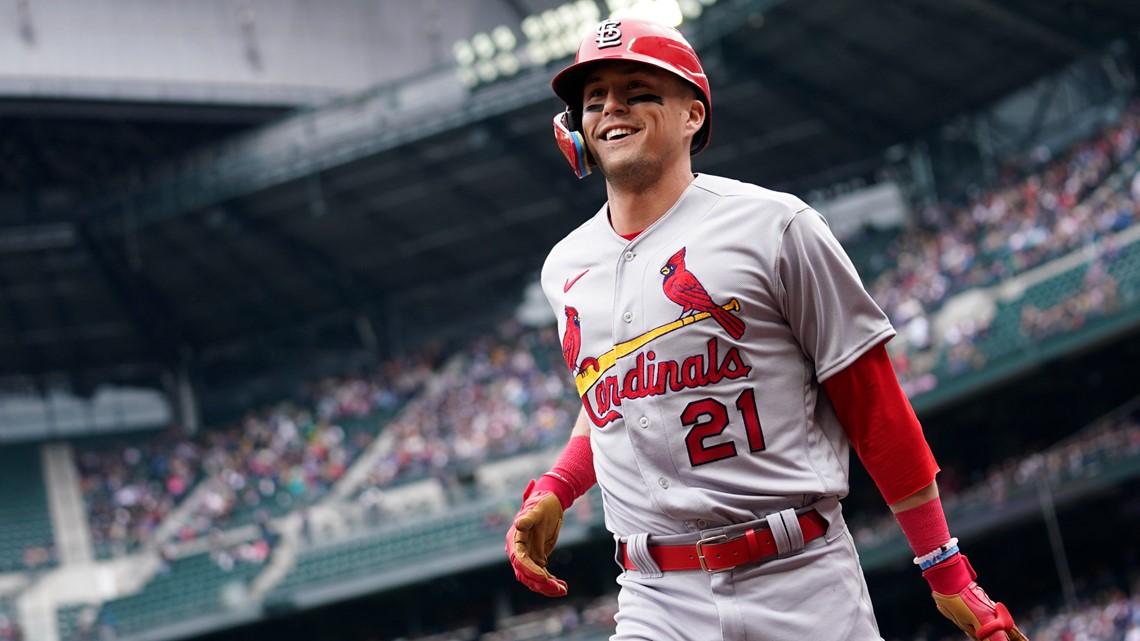
There’s also an intangible element that shouldn’t be dismissed. Nootbaar is a homegrown Cardinal, a player whose personality, energy, and visible joy have made him a fan favorite. In a period where the franchise is searching for its next identity, players like him still carry meaning beyond the stat sheet.

While sentimentality shouldn’t drive roster decisions, it does factor into how organizations manage transitions, especially when the competitive window isn’t clearly defined. Allowing Nootbaar one more opportunity to reestablish himself feels like a fair and measured choice.
MORE: Braves Officially Makes Perfect Reunion After Recent Setback
Ultimately, Nootbaar may indeed become another footnote in the Cardinals’ ongoing rebuild, a player who bridged eras but didn’t quite fit the next contending core. If that’s how his tenure in St. Louis ends, it will still be remembered fondly.
His infectious enthusiasm, highlight-reel moments, and unmistakable presence left a mark that numbers alone can’t fully capture. Whether he plays his way into the Cardinals’ future or boosts his value enough to help shape it indirectly, giving him the chance to do so is a sensible bet.
In contrast to Donovan’s clear sell-high scenario, Nootbaar represents patience, optionality, and upside. For a team recalibrating its direction, that combination is worth holding onto—at least until the market, and Nootbaar himself, reveal exactly what his next chapter should be.

Be the first to comment